So, you’re thinking about getting your Class A CDL. It's a solid career move, but it's not something you can just jump into. There's a clear path you need to follow, starting with a few crucial steps before you ever get behind the wheel.
Think of it as a checklist. You'll need to meet some basic requirements, pass a physical, get your learner's permit, go through training, and then finally pass your skills test. Let’s break down that first part: making sure you're eligible from day one.
Your Starting Line for a CDL Class A
Before you spend a dime on study guides or start looking at schools, you need to make sure you meet the fundamental requirements. These aren't school rules; they're set by the Federal Motor Carrier Safety Administration (FMCSA) and your state DMV. Getting this stuff sorted out first saves a ton of headaches later on.
The trucking industry needs good drivers, badly. There are over 1.24 million CDL Class A jobs in the U.S., but with the average driver's age at 47, a lot of veterans are heading toward retirement. This opens up a huge opportunity for new folks to build a stable, long-term career.
The CDL Class A Eligibility Checklist
Use this table as your go-to reference. If you can check off every box, you’re ready to take the next step.
| Requirement | Details | Why It Matters |
|---|---|---|
| Minimum Age | 18+ for in-state (intrastate) driving. 21+ for crossing state lines (interstate). | Most over-the-road (OTR) and regional jobs require you to be 21, as you'll be driving across the country. |
| Valid Driver's License | A standard, non-commercial license from your state of residence. | This proves you have basic driving experience and a legal right to operate a motor vehicle. |
| Clean Driving Record | No major disqualifying offenses (e.g., DUI, leaving an accident scene). | Safety is everything. Companies and insurers look for responsible drivers, and your record is your resume. |
| Proof of Residency | U.S. Birth Certificate, Passport, or Lawful Permanent Resident Card. | The FMCSA requires all commercial drivers to be U.S. citizens or have legal authorization to work here. |
| Social Security Card | The physical card is often required for verification. | This is used to verify your identity and employment eligibility with the Social Security Administration. |
Confirming these details upfront is the single best thing you can do to ensure a smooth process. I’ve seen students get delayed for weeks simply because they couldn't find their birth certificate or Social Security card.
Don't Let Paperwork Slow You Down
Seriously, track down these documents now. Put them all in one folder so you're ready to go. You’ll need to present them when you apply for your Commercial Learner's Permit (CLP) and when you enroll in a training program. Waiting until the last minute is a recipe for frustration.
My best advice? Make copies. Keep the originals in a safe place at home and have digital or physical copies ready. It just makes life easier when you're juggling applications and appointments.
The road to getting your CDL starts with these foundational steps, as you can see below.

As the chart shows, eligibility is the gate. Pass through it, and you're on to the medical exam and your permit tests—the real start of your training journey.
Why Your Driving Record Is So Important
A clean driving record isn't just a box to check; it’s a reflection of your professionalism. While a minor speeding ticket from five years ago probably won't stop you, a pattern of irresponsible driving or a serious offense like a DUI absolutely can.
Trucking companies are entrusting you with a rig and cargo worth hundreds of thousands of dollars. They are looking for safe, reliable people who won't be a liability on the road. A spotless record tells them you're a low-risk professional they can count on. It's why a quality training program from a school like Patriot CDL doesn't just teach you to pass the test—it prepares you to be the kind of driver companies are eager to hire.
Earning Your Commercial Learner's Permit
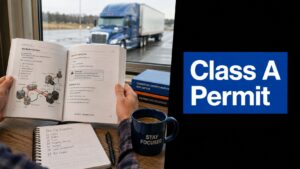
Before you can even think about getting behind the wheel of a big rig, you have to get your Commercial Learner's Permit (CLP). This is your official ticket to start hands-on training, and you earn it by proving you've got the essential knowledge down cold. You do that by passing a series of written tests at your local DMV.
I've seen countless new drivers try to tackle this by just reading the thick CDL manual from front to back. It's a noble effort, but it's not the smartest way to study. A little strategy goes a long way here, helping you pass the first time so you can get out of the classroom and onto the road where the real learning happens.

The Three Core CLP Exams
To qualify for a Class A permit, you need to clear three key written tests. The bar is high—most states demand you score 80% or better on each one. Here’s what you’re up against:
- General Knowledge: This is the big one. It's the longest and covers the widest range of material, from basic vehicle control and spotting road hazards to emergency protocols and critical federal regulations.
- Air Brakes: This exam is hyper-focused. You need to know the entire air brake system inside and out, including how to inspect it, how it works, and exactly what to do if something goes wrong.
- Combination Vehicles: Here, it’s all about the unique physics of driving a tractor-trailer. You'll be tested on proper coupling and uncoupling procedures, understanding concepts like offtracking, and the dynamics that can lead to a rollover.
A word of advice: don't take these tests lightly. The questions are often written to be tricky. They're designed to check if you can apply the rules to a real-world situation, not just spit back a memorized fact. That's precisely why a smart study plan is your best tool.
A Proven Study Strategy That Works
Don't let the size of the CDL manual intimidate you. The key is to break it down into focused, manageable chunks. Think of it as eating an elephant one bite at a time.
The goal isn't just to pass the tests—it's to actually learn the material. The information in these sections will form the foundation of your entire career as a safe, professional driver.
First, go straight to the table of contents in your state's CDL manual and find the specific sections for General Knowledge, Air Brakes, and Combination Vehicles. Forget everything else for now. Zero in only on the material you'll be tested on.
As you read, get active with it. Don't just highlight. Make your own flashcards for key terms, numbers, and rules. For instance, a great flashcard would be: "What's the minimum legal tread depth on a front steer tire?" The answer is 4/32 of an inch. The act of writing it down yourself helps burn it into your memory.
Use Practice Tests to Your Advantage
Reading and making notes is one thing, but sitting for the actual test is another. This is where online practice tests become invaluable. They get you used to the multiple-choice format and the pressure of a timed exam, so there are no surprises when you get to the DMV.
Make sure you use practice tests that give you instant feedback. A good one won't just tell you that you're wrong; it will show you the right answer and explain the "why" behind it. This is how you find your weak spots. If you keep getting dinged on questions about the air brake system, you know exactly what chapter you need to go back and review.
Keep taking those practice tests until you're consistently scoring in the 90% range. That extra 10% buffer gives you the confidence and breathing room you need to hit that 80% passing score on the real deal, even if you get a few curveball questions. A targeted approach like this will get you ready in no time. If you want some more in-depth strategies, we've got you covered. You can check out our guide on the permit process for more expert tips.
Alright, you've got your Commercial Learner's Permit. This is where the rubber really meets the road, because now you have to make the single most important decision of your new career: choosing a CDL training program.
This choice is huge. The school you go to will build the foundation for your entire professional driving life, shaping your skills, your on-road confidence, and frankly, how seriously top-tier companies take you as a candidate. Think of it less as just a class and more as your entry point into the industry.
You'll find a few different paths to getting licensed. There are private academies, community college courses, and even company-sponsored programs where a carrier fronts the cost of your training in exchange for a work contract. They all have their pros and cons, but the end goal is always the same: to get you skilled, licensed, and ready for a successful career.

What Separates a Great Program From a Mediocre One
Let's be clear: not all CDL schools are created equal. To get the best education for your money, you have to look past the price tag and dig into the details. A solid curriculum goes way beyond just the driving maneuvers. It should cover the nitty-gritty stuff like hours-of-service regulations, proper trip planning, and defensive driving tactics that actually keep you safe.
Here are the things I tell every new driver to look for:
- A Low Student-to-Instructor Ratio: You need one-on-one time, especially when you're wrestling with a tricky backing maneuver. Small class sizes mean you get real coaching. A 4:1 ratio or better for your in-cab training is the gold standard.
- Plenty of Behind-the-Wheel (BTW) Time: Reading a book won't teach you how to handle a rig. Nothing replaces actual seat time. Ask for the specific number of hours you'll spend on the practice range and out on public roads. More BTW hours directly build your confidence for test day.
- Modern, Well-Maintained Trucks: You should be training on equipment that’s similar to what you'll find in the real world. Learning on old, beat-up trucks is a disservice and can be flat-out unsafe.
Your Class A CDL is the key to operating the biggest rigs on the road. It allows you to drive any combination of vehicles with a gross weight of 26,001 pounds or more, as long as the trailer you're towing is over 10,000 pounds. This covers everything from tractor-trailers and tankers to flatbeds. Motivated students can even find accelerated programs that get them certified and ready for hire in as little as three weeks.
How to Vet Schools and Ask the Right Questions
Once you have a shortlist of potential schools, it's time to put on your investigator hat. Your mission is to find a program that doesn't just teach you to pass the test, but actually helps you launch your career. Don't be shy about asking tough questions—your future is on the line.
The first thing to check is their job placement rate. A good school will have strong relationships with local and national carriers and won't hesitate to share their placement stats. A great follow-up question is, "Which companies hire your graduates the most?"
A school's job placement support speaks volumes about its reputation. If the big-name carriers are consistently recruiting their students, it’s a huge sign that the school produces quality, professional drivers.
Next, go read recent student reviews on Google, Yelp, or trucking forums—not just the hand-picked testimonials on the school's homepage. You're looking for patterns in the feedback. Are people consistently praising the instructors? Complaining about broken-down trucks? Frustrated with the office staff? You can also check out accelerated CDL training programs that are designed to get you working faster.
The Bottom Line: Tuition and Financing
CDL school is a real investment. Tuition can run anywhere from $3,000 to $10,000, so it's critical to know exactly what you're paying for. You need to ask if the sticker price includes things like your exam fees, the DOT medical card, and other required supplies.
When you call a school for information, have these questions ready:
- What is the total, all-inclusive cost of the program from start to finish?
- Do you offer any payment plans or have financing options?
- Do you accept VA benefits like the GI Bill® for veterans?
- Are there any grants or scholarships I might be eligible for?
Getting a clear financial picture from the start prevents nasty surprises later on. It lets you plan properly and choose a school you can afford, so you can focus on what matters most: mastering the rig and earning that CDL Class A.
Passing Your DOT Medical Examination
Before you can even think about getting behind the wheel for training, you’ll need to pass the Department of Transportation (DOT) physical. This is a non-negotiable step. It's a health screening specifically designed to ensure you’re physically up to the task of safely operating a commercial vehicle.
The exam isn't something you can get from your family doctor, unless they are specifically a certified medical examiner listed on the FMCSA's National Registry. These examiners know exactly what the physical demands of trucking are and what to look for.
Knowing what's coming can take all the stress out of this appointment. A little bit of prep goes a long way in preventing frustrating delays that could hold up your training.
What the Examiner Will Check
The DOT physical is a comprehensive evaluation, focusing on any health issues that could compromise your ability to drive safely. The examiner is going to assess several key areas.
Here's what you can expect them to look at:
- Vision and Hearing: You'll need to meet minimum standards, but you can use your glasses or hearing aids. The common vision requirement is 20/40 acuity in each eye and with both eyes combined.
- Blood Pressure: This is a big one. Your blood pressure generally needs to be at or below 140/90 mmHg. More drivers get flagged for this than you might think.
- Urinalysis: This isn’t a drug test for the physical itself (that's a separate test). It’s a basic screening for underlying medical issues, like checking for sugar in your urine which could indicate diabetes.
- Overall Physical Health: The doctor will go over your medical history and conduct a hands-on exam, checking your heart, lungs, mobility, and anything else that could be a concern on the road.
Be completely honest on your medical history forms. Trying to hide a condition is a bad idea—it can lead to immediate disqualification and serious trouble later. Many health issues are perfectly manageable and won't stop you from getting a CDL as long as they're properly treated and documented.
The single best tip I can give is to avoid caffeine and high-sodium foods for at least 24 hours before your appointment. This small change can help keep your blood pressure reading in a healthy range and prevent a potential "white coat syndrome" spike.
Preparing for a Smooth Appointment
Walking into your appointment prepared can make the entire process quick and painless. If you have any known medical conditions, bringing the right paperwork is crucial. It’s also smart to learn more about CDL requirements in your state, as there can be minor differences.
For example, if you have a known heart issue, you’ll likely need a note from your cardiologist clearing you to operate a commercial vehicle. If you treat sleep apnea with a CPAP machine, bring a printout from the device showing at least 30 days of compliance.
Some conditions, if not properly managed, can be disqualifying. This includes uncontrolled high blood pressure, epilepsy, certain heart problems, or significant vision/hearing loss. However, for many of these, the FMCSA offers waiver or exemption programs if your specialist can document that your condition is stable. Being proactive is the name of the game here.
Mastering the Three-Part CDL Skills Test
Alright, this is it. After all the studying and training, the CDL skills test is the last hurdle between you and your Class A license. Don't think of it as one big exam, though. It’s actually a series of three distinct tests, each designed to prove you can handle a big rig safely and professionally.
You’ll face the Pre-Trip Vehicle Inspection, the Basic Control Skills Test (your backing maneuvers), and finally, the On-Road Driving Test. You have to pass all three to earn your CDL, so let's break down exactly what you need to know to walk away with a pass on each one.
First Up: The Pre-Trip Vehicle Inspection
Before you even think about turning the key, you have to prove you know your truck inside and out. The pre-trip inspection is a walking, talking test where you guide the examiner around the vehicle, pointing out dozens of components and explaining what you’re checking for.
Frankly, this part is all about memorization. You can’t fake it. The examiner is looking for a specific, systematic routine. You need to point, name the part, and state that it's secure and not damaged. Forgetting a few key items can mean an automatic fail, so a solid routine is non-negotiable.
The key is to start at the exact same spot every time—maybe the front bumper—and work your way around in a consistent circle. This builds the muscle memory you'll need when the pressure is on. I always tell my students to break the truck down into manageable zones:
- Zone 1: The Engine Compartment (fluids, belts, hoses, and all that good stuff under the hood)
- Zone 2: The Front Axle (tires, rims, suspension, and brakes)
- Zone 3: The Driver's Side (fuel tank, trailer connections, and tandem axles)
- Zone 4: The Rear of the Trailer (lights, doors, and reflective tape)
- Zone 5: The Passenger Side (circling back to where you started)
Practice your script out loud. It might feel strange talking to an empty truck, but verbalizing the checks helps burn them into your memory. If you want a masterclass on building a bulletproof routine, we have a complete guide on how to perform the perfect CDL pre-trip inspection.
Next: The Basic Control Skills Test
Once the examiner is satisfied you know the vehicle, it's time to show you can control it. You'll head to the practice range to perform several low-speed backing maneuvers. This isn't about speed; it's about proving you have good depth perception and total command of that trailer.
The exact maneuvers you'll perform can vary a bit from state to state, but you can bet on seeing some combination of these three core skills:
- Straight-Line Backing: Sounds easy, right? You just back the truck and trailer straight for about 100 feet within a marked lane. The biggest mistake rookies make here is oversteering. Small, constant corrections are the secret.
- Offset Backing: Here, you'll have to back the rig from one lane into an adjacent one. It's a test of your ability to get the trailer angled correctly and then straighten it out smoothly.
- Alley Dock: This is the one that trips people up the most. You’ll be asked to back the trailer from a 90-degree angle into a narrow, coned-off "dock." Precision is everything.
The secret weapon for every backing maneuver is G.O.A.L.—Get Out And Look. There's no shame in it, and there's no limit on how many times you can do it. Stop, set your brakes, and check your clearances. A good examiner would much rather see you be safe than be fast.
Your reference points are your best friend. Your instructors will show you how to use your mirrors to line up points on your trailer with marks on the ground. Trust those points. They are far more reliable than just trying to "feel" your way through it.
Finally: The On-Road Driving Test
This is the final piece of the puzzle. You'll take the examiner out onto public streets and highways to demonstrate you can operate the truck safely in the real world. The examiner isn't there to trick you; they just want to see you apply the rules of the road like a pro.
The drive usually lasts between 30 and 60 minutes, and they are watching everything. Pay extra close attention to how you handle:
- Intersections: Making those wide right and left turns without hopping a curb (off-tracking) is crucial.
- Lane Changes: Use your signals every time, check your mirrors religiously, and merge smoothly.
- Highway Driving: Getting up to speed to merge safely and leaving plenty of space between you and the vehicle ahead.
- Railroad Crossings: Know the exact procedure for stopping at crossings and follow it to the letter.
Above all, show them you're looking far down the road. You need to see that changing traffic light or merging car well in advance and react smoothly, not suddenly. Every move you make, from your turns to your shifting, should communicate that you're a controlled, confident, and professional driver who has earned that CDL Class A.
Got Questions About Getting Your Class A CDL? We've Got Answers.

The road to a Class A license is paved with questions. It’s totally normal. As you go from studying for your permit to practicing your backing skills, new uncertainties are bound to surface. We've heard them all, so we’ve put together answers to the questions we get asked most often.
How Long Does This Whole Thing Actually Take?
This is usually the first thing people want to know: "How long until I'm holding that license?" The honest answer is, it depends. But for most people, it's a lot faster than you might think.
If you can commit to a full-time program, you could be ready to test in as little as three to four weeks. That’s an intense but incredibly efficient timeline that covers classroom knowledge and a ton of hands-on driving practice.
Of course, life can get in the way. A few things can stretch that timeline out:
- Your Schedule: Can you go full-time? Or do you need a part-time or weekend program to fit around your current job? Many schools offer flexible options, which might take a couple of months instead of one.
- Study Time: How quickly you absorb the material for the written permit test is up to you.
- The DMV: Let's be real—sometimes you're at the mercy of your local DMV's schedule for booking appointments.
Even with those variables, you’re looking at weeks or maybe a few months, not years. It's one of the fastest ways to jumpstart a whole new career.
Which Endorsements Should I Bother With?
Your standard Class A is your golden ticket, but endorsements are what unlock the VIP rooms. Think of them as special certifications that prove you can handle specific types of freight, which often means more job choices and better pay.
You don't need every single one, but a few make a huge difference right out of the gate.
- N – Tank Vehicle: This lets you haul liquids. You'd be surprised how many "non-tanker" jobs still involve some kind of liquid freight. It’s a very versatile endorsement to have.
- T – Double/Triple Trailers: This one is a must if you want to work for LTL (less-than-truckload) carriers, pulling two or three trailers at once.
- H – Hazardous Materials (Hazmat): This requires a TSA background check, but it's often worth it. Hauling hazmat usually comes with a nice pay bump.
Pro tip: The best time to get the "N" and "T" endorsements is right when you're taking your other written permit tests. You're already in study mode. If you get both the Tanker and Hazmat endorsements, you earn the "X" endorsement, which is a powerful combination that makes you a top-tier candidate for many companies.
What Happens If I Fail My Skills Test?
First, take a deep breath. Failing a portion of the CDL test happens. A lot. It doesn't mean you're not cut out for this; it just means you're human. It is absolutely not the end of the road.
The examiner will provide feedback on what went wrong. Listen to it. That information is gold. Maybe you touched a cone during the offset back or forgot a mirror check on a right turn. Whatever it is, that's your new focus.
This is where a good school proves its worth. A quality training program won't just abandon you. They'll give you the extra practice and coaching you need to nail it the next time. Most states require a short waiting period before you can retest, which is the perfect amount of time to polish that specific skill.
Don't let the fear of failing hold you back. See it as part of the process, learn from it, and get back in the driver's seat.
Ready to stop wondering and start driving? The first step in learning how to get a CDL Class A is finding a training program that fits your goals. At Patriot CDL, we offer accelerated programs and expert instruction designed to get you on the road to your new career quickly and confidently.