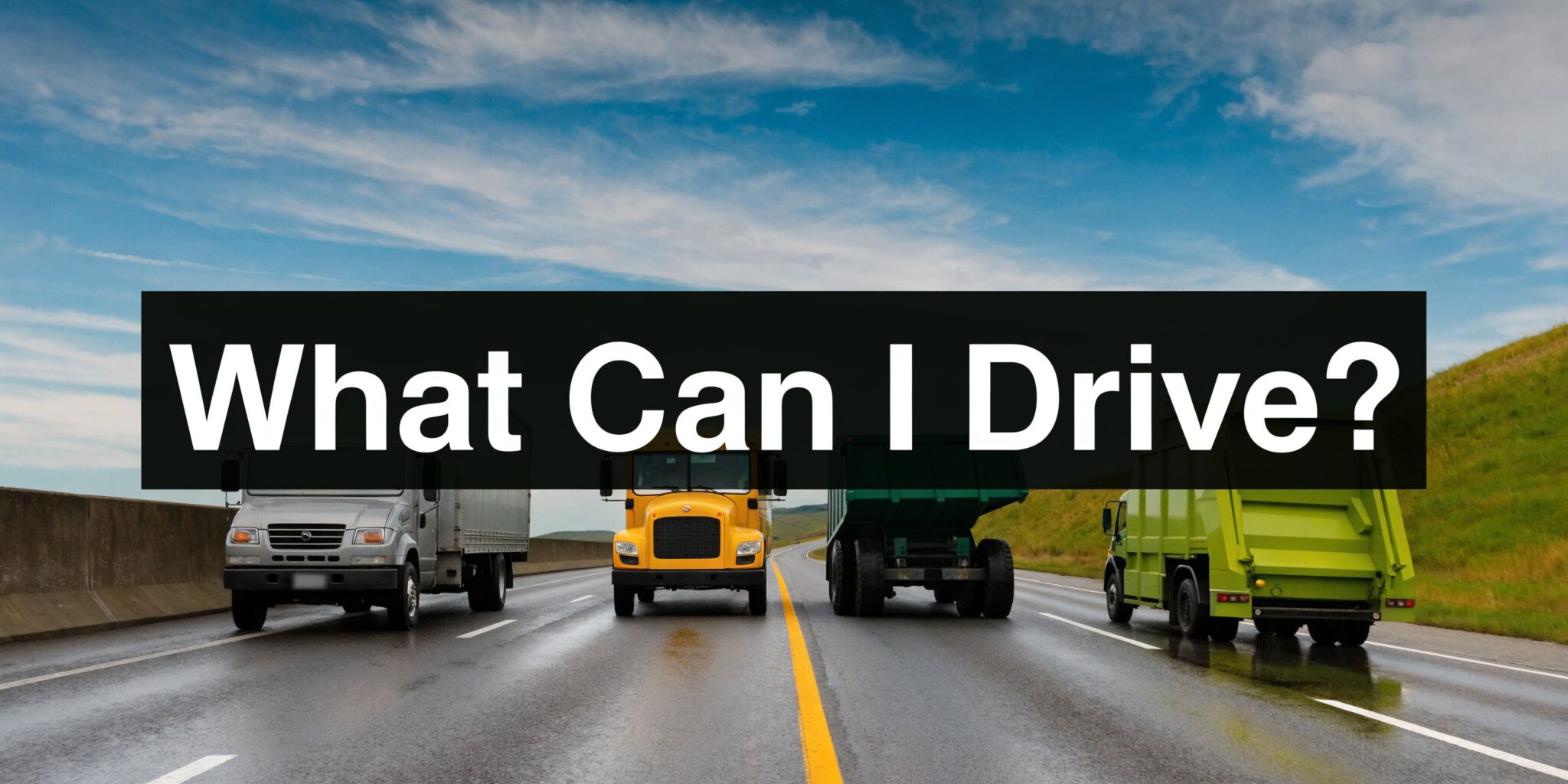
You may be asking this because you keep seeing the same vehicles every day. A school bus on the morning route. A box truck backing into a store delivery zone. A dump truck rolling out of a jobsite before dinner.
Those jobs look different from the long-haul trucking image many envision. They often stay local. They often follow a repeatable schedule. And for many new drivers, that is the primary appeal.
If you have typed class b cdl what can i drive, you are probably not just asking about vehicle rules. You are really asking a career question. Can this license get me into solid work without living on the road? In many cases, yes.
What a Class B CDL Means for Your Career
A lot of students come in with the same story. They are working retail, warehouse, landscaping, construction support, or another physically demanding job. They do not mind hard work. They just want a path with more structure and a clearer future.
Then they notice who is driving the big local vehicles in town. The bus drivers know their routes. The delivery drivers are home for dinner. The city truck crews work steady shifts. That is where Class B starts to make sense.
This license sits in a practical middle ground. It is commercial driving, but it does not automatically mean cross-country hauls, sleeper cabs, or weeks away from home. For many people, that difference matters more than anything else.
Why many new drivers look at Class B first
Some students want to enter the workforce quickly. Others are changing careers and need a path they can explain to their family in one sentence: “I’m training for a license that can put me in a local truck or bus job.”
A Class B path can fit people who want:
- Local schedules: Many Class B roles are tied to a city, county, school district, utility company, or local delivery network.
- Predictable routines: Repeating routes and familiar service areas help new drivers build confidence.
- Visible job options: You can point to the vehicles around your town and identify the work.
That local focus also connects to how companies run their operations. If you want to understand the employer side of route planning, maintenance, and driver coordination, these fleet management best practices give helpful context.
The career question behind the license question
When people ask what they can drive, I encourage them to ask one more thing. What kind of life do I want attached to that vehicle?
Driving a school bus, dump truck, garbage truck, or straight truck can lead to work that feels grounded. You serve a route, a neighborhood, a jobsite, or a community. That is different from chasing freight across several states.
If you are comparing training options and want to see what a school offers for this route into commercial driving, you can review the program details at https://patriotcdl.com/program/.
A Class B CDL is often less about “going farther” and more about finding work that fits your home life.
Defining Your Driving Privileges with a Class B CDL
The legal definition matters because it tells you exactly where the line is. Once you understand that line, the vehicle list starts to make sense.
A Class B CDL authorizes you to operate a single commercial vehicle with a GVWR of 26,001 pounds or more, and you may tow a trailer with a GVWR of up to 10,000 pounds according to this Class B CDL guide.

What GVWR Means
GVWR stands for Gross Vehicle Weight Rating. Think of it as the manufacturer’s maximum safe operating weight for that vehicle.
That rating includes the vehicle itself, plus fuel, cargo, passengers, tools, and anything else the vehicle carries. It is not just what the truck weighs empty.
Students often get confused here. They look at a truck and think, “That does not seem huge.” But the law is based on the vehicle’s rating, not your guess from the parking lot.
The easiest way to picture Class B
Use this simple comparison:
| Vehicle type | How to think about it |
|---|---|
| Standard car or pickup | Personal vehicle, not in Class B territory |
| Large single-body commercial vehicle | Class B usually applies here |
| Truck pulling a heavy large trailer combination | That usually points toward Class A |
The key phrase is single vehicle. A dump truck with one main body is different from a road tractor pulling a large trailer. A city bus is different from a semi. A straight truck is different from a tractor-trailer combination.
What kinds of vehicles fit this rule
According to the same source, common Class B vehicles include:
- Straight trucks and box trucks
- Large buses, including city transit, school, and tour coaches
- Dump trucks
- Garbage trucks
- Cement mixers
That source also notes that the National Private Truck Council estimates roughly 15 to 20% of Class B CDL jobs are in local or regional delivery roles. That helps explain why so many people interested in work-life balance start here.
If you want to review the licensing basics before choosing a training path, the CDL requirements page at https://patriotcdl.com/cdl-requirements/ is a useful checklist.
If the vehicle is one heavy unit, not a large combination rig, you are usually thinking in the right Class B direction.
From School Buses to Dump Trucks Your Class B Vehicle List
Once the rule clicks, the main question becomes easier. What does this look like on the street and on the job?
Here are the vehicles most students picture when they search class b cdl what can i drive.

School buses
A school bus role is one of the clearest examples of a Class B career with routine. Your day often follows the school calendar and a repeatable route. You are not just moving a vehicle. You are managing stops, timing, student safety, and neighborhood awareness.
This work fits people who like structure and community contact. It also calls for patience. You need calm judgment more than speed.
City and transit buses
Transit driving is different from school transportation, but it shares the same local nature. You may work fixed city routes, follow dispatch instructions, and interact with many passengers in a single shift.
This type of driving suits someone who can stay focused in traffic and handle frequent stops without getting rattled. Urban awareness matters a lot.
Straight trucks and box trucks
Many students initially picture themselves driving these. A straight truck or box truck usually supports local delivery, furniture movement, store restocking, event setup, or route-based service work.
The truck is large enough to require commercial skill, but it still feels manageable to many beginners because it is one unit. If you end up in this lane, it also helps to understand the business side of risk, cargo, and vehicle protection. This overview of commercial box truck insurance can help you understand what operators and employers think about.
Dump trucks
Dump truck work is common around construction, paving, excavation, landscaping supply, and municipal projects. The driving itself matters, but so does jobsite awareness.
A dump truck driver needs to think beyond the road. Soft ground, tight turns, backing areas, and uneven loads all affect how the day goes. Many drivers like this work because it is active and connected to visible projects.
Here is a quick visual of common Class B vehicle types in the field:
Garbage trucks and sanitation vehicles
Sanitation driving is demanding, but it is steady and important work. Routes are local, the purpose is clear, and many positions are tied to municipal or contracted services.
These jobs often appeal to people who prefer practical work over customer-facing delivery roles. The route may start early, but it is usually rooted in one local area.
Cement mixers and utility vehicles
Cement mixer drivers support construction schedules, and timing matters. You are part of a coordinated operation, not just a driver heading from point A to point B.
Some utility repair vehicles also fall into the Class B category. That can include service trucks used in infrastructure and field maintenance work. These jobs often connect driving with hands-on support for crews.
The bigger point
The vehicle tells you a lot about the lifestyle.
- Bus jobs often center on people, routes, and schedules.
- Delivery jobs often center on stops, timing, and service areas.
- Construction-support jobs often center on sites, materials, and local movement.
- Sanitation jobs often center on repeat routes and public service.
That is why this license attracts people who want commercial driving without the long-haul identity.
Adding Endorsements to Your Class B License
Think of endorsements as add-ons that widen your lane. Your Class B license gives you the base vehicle category. Endorsements can qualify you for more specialized work.
The letters can look intimidating at first, but the idea is simple. Each endorsement says, “This driver has met extra requirements for a certain kind of vehicle or cargo.”
Passenger and school bus endorsements
The P endorsement covers passenger transport. If you want to operate a vehicle built to carry many passengers, this matters.
The S endorsement is for school bus operation. In practice, school bus driving usually involves both the passenger side and the school bus-specific side. That means extra testing and a stronger focus on safety procedures.
These endorsements often match people who want a steady route and a role tied to the community. You are not just driving. You are responsible for people on board.
Tank and hazardous materials endorsements
The Tanker endorsement applies when the job involves hauling liquid or similar cargo in a tank vehicle. Tank work changes how the vehicle feels on the road, so the knowledge matters.
The Hazardous Materials endorsement applies when the vehicle carries materials subject to placarding rules. That path usually brings more screening and additional testing because the responsibility is higher.
In plain terms, endorsements can move you from general driving roles into more specialized hiring pools.
Why endorsements matter for job options
Some students want to get licensed and start working as soon as possible. Others are willing to add credentials right away to open more doors.
Consider this simple approach:
- Want to drive a bus full of passengers? Look at P.
- Want to drive a school bus? You will need the school bus path.
- Want to operate a tank vehicle? Tanker matters.
- Want hazmat-related work? Hazardous materials rules apply.
Restrictions matter too. For example, if you are dealing with transmission-related limits on your CDL, information about removing one can help you plan your next step. This page on the https://patriotcdl.com/e-restriction-removal-course/ explains that topic clearly.
Endorsements do not replace your Class B license. They build on it and can change which employers call you back.
Choosing Your Path Class A vs Class B CDL
Some students already know they want local work. Others are torn between the large combination rigs and the single-unit vehicles they see in town.
The decision is not about better versus worse. It is a lifestyle decision first.

A simple side-by-side view
| Question | Class A CDL | Class B CDL |
|---|---|---|
| Main vehicle type | Combination vehicles, usually truck plus larger trailer | Large single vehicles |
| Typical image | Semi-truck and trailer | Bus, dump truck, box truck, garbage truck |
| Driving feel | More trailer management, wider turns, more backing complexity | One main unit, often more direct to learn visually |
| Common lifestyle fit | Long-haul or broader freight options | Local or regional work with more routine |
| Best for | Drivers who want maximum vehicle flexibility | Drivers who want stable local roles |
When Class A makes sense
Class A often fits people who want to handle the biggest combinations and keep more freight categories open. If you like the idea of interstate driving, larger route variety, and the tractor-trailer world, that route may fit your goals.
Some students want that. They want the scale of a semi, the challenge of trailer handling, and the travel.
When Class B makes sense
Class B is often the better fit if your first priority is home time. If you want to drive professionally but keep your work rooted in one city or region, this path deserves a serious look.
You may also prefer the day-to-day rhythm of single-unit vehicles. Many new drivers find them less intimidating than a full tractor-trailer combination.
Guiding Your Decision
Ask yourself these questions:
- Do I want local work, or do I want open-road variety?
- Would I rather learn a large single vehicle first, or jump into combination vehicles?
- Does being home most nights matter more to me than having the broadest license category?
- What vehicles do I see myself driving every week?
A lot of confusion clears up when you stop asking which license sounds bigger and start asking which workday sounds better.
The Steps to Earn Your Class B CDL
Once you know the type of vehicle and lifestyle you want, the process becomes more straightforward.
Since 2022, new Class B applicants have been required under federal law to complete Entry-Level Driver Training from a registered provider before taking the skills test, and training programs typically run about 3 to 6 weeks with a focus on air-brake operation and pre-trip inspections. Studies of graduates show first-time CDL pass rates in the 70 to 80% range when accelerated Class B training is paired with FMCSA-compliant ELDT, according to this Class B CDL training guide.

Step one meets reality fast
You start by confirming basic eligibility in your state. Then you prepare for the written side so you can earn your Commercial Learner’s Permit.
That first phase is where many students realize CDL training is not mysterious. It is study, repetition, and learning how commercial rules differ from ordinary driving.
If you are getting ready for the permit side, working through practice material tied to the https://patriotcdl.com/general-knowledge-test/ can help you focus your studying.
Training is where confidence gets built
After the permit, you complete the required ELDT with a registered provider. This includes theory and behind-the-wheel instruction.
This part matters because it turns abstract rules into habits. You learn what to look for on a pre-trip. You learn how air brakes behave. You learn how to position the vehicle on city streets, not just on paper.
One training option in this space is Patriot CDL, which offers accelerated CDL instruction with hands-on work in areas like pre-trip inspections, backing maneuvers, and road driving.
Your road to the skills test
Most students move through the same practical sequence:
- Study the permit material: Learn signs, safety rules, and commercial vehicle basics.
- Complete ELDT: Finish the federally required training from a registered provider.
- Practice inspections: Build a repeatable walk-around routine and say what you are checking.
- Train in the vehicle: Work on turns, braking, backing, and lane control.
- Take the skills test: Show that you can inspect, control, and drive the vehicle safely.
Students improve faster when they stop trying to memorize everything at once and instead repeat the same inspection and driving routines until they feel natural.
What new drivers usually worry about
They worry about the size of the vehicle. They worry about making a mistake during the pre-trip. They worry about backing.
That is normal.
A Class B path rewards repetition. The more often you perform the same inspection, the same setup, the same turn, and the same stop, the more the process settles down. Most strong CDL students are not fearless. They are coachable and consistent.
Your Questions About the Class B CDL Answered
Do I need a medical card
For many commercial driving situations, you will need to meet medical qualification requirements. Check your state rules and the type of driving you plan to do so you know what applies before training starts.
Can I upgrade later to Class A
Yes. Many drivers start with Class B, get experience in local work, and later decide to move into Class A. That can be a smart path if you want income sooner and more options later.
Is the pre-trip inspection a big deal
Yes. It is one of the most important habits in commercial driving because it trains you to catch safety issues before the vehicle moves. If you want to understand what examiners expect, this pre-trip inspection guide is a useful place to start: https://patriotcdl.com/pre-trip-inspection/
Can a Class B CDL lead to a stable career
Yes. It often leads to jobs built around local service, repeat routes, and practical daily work. That is exactly why many students choose it.
If you want a direct path into commercial driving and prefer work that can keep you closer to home, Patriot CDL offers training information for students pursuing Class B and other CDL goals.