You're probably in one of two spots right now. You're either thinking about leaving a job that tops out too fast, or you've already decided trucking makes sense and now you're trying to figure out how to turn that decision into a paycheck in Richmond.
That's where many get stuck. They can find job boards. They can find salary snapshots. What they can't always find is the actual path from “I want to drive” to “I'm hired, cleared, and in orientation.”
Mapping Your Route into Richmond's Trucking Industry
Richmond works well for trucking because freight moves through this market from several directions. That matters when you're looking for truck driving jobs richmond va candidates can land, especially if you want options instead of a single lane or carrier type.
The market has real earning potential. According to U.S. Xpress truck driving jobs in Richmond, Virginia, CDL-A dedicated truck drivers in the region earn between $1,300 and $1,700 per week.

A lot of people assume the hard part is choosing a company. Usually it isn't. The hard part is lining up the sequence correctly so you don't waste time applying before you're qualified, or signing up for training without understanding what carriers will ask for next.
The route that actually works
If you want a clean entry into this field, think in this order:
- Choose the right license path. Most new drivers targeting tractor-trailers in this market need a Class A route, not the smaller option.
- Handle your medical and driving record early. A bad surprise here can delay everything.
- Target employers that hire newer drivers. Plenty of listings exist, but not all of them are built for recent graduates.
- Apply like a low-risk professional. Recruiters want clear information, quick responses, and no missing pieces.
The candidates who move fastest are usually not the ones with the flashiest resumes. They're the ones who show up prepared, answer the phone, and submit complete paperwork the first time.
Richmond gives you multiple directions to go once you're qualified. Some drivers want home-daily work. Others take regional or over-the-road positions first to build clean experience, then move into a more selective dedicated account later.
If you're still deciding whether Virginia is the right starting point, review the broader training and licensing overview through Virginia CDL training options. Use that as background, then make your decisions based on the job type you want, not just the closest school or the loudest ad.
Getting Qualified Your Commercial Driver's License
You can have the motivation, the cash for training, and a clean schedule, then still stall out if you choose the wrong CDL path for the jobs you want in Richmond. I see that mistake with new drivers who sign up fast, then learn later that the carriers they want prefer Class A, certain endorsements, or a school that gives them enough backing and road time to interview well.

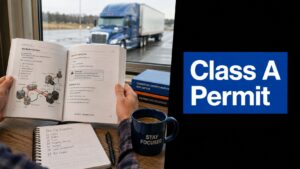
For those targeting tractor-trailer work around Richmond, the right starting point is Class A. It gives you access to more freight types, more entry-level carrier options, and a better chance of finding a first job that fits your home time and pay goals. Class B can make sense for straight-truck or local equipment roles, but it narrows your options early.
That distinction matters here. Richmond has port-related freight, distribution freight, foodservice, dedicated accounts, and regional lanes running up and down I-95. If your goal is to get hired soon after school, train for the license that matches the broadest slice of that market.
What employers want from a new CDL holder
Richmond-area recruiters usually screen new drivers the same way. They want to know whether you finished the required training, can pass the state process, take instruction well, and show up looking like a low-risk hire.
A good school helps with more than the permit and road test. It should give you enough pre-trip repetition, range work, and on-road practice that you can speak clearly about your training in an interview. That is one reason programs with a solid local reputation, including schools like Patriot CDL, tend to stand out with carriers that hire recent graduates.
Endorsements also matter, but timing matters too. New drivers often ask whether they should get every endorsement right away. My advice is simple. Add endorsements that match the freight you plan to chase first. Hazmat and Tanker can open better-paying paths, but they also come with extra screening, study time, and in some cases freight you may not want as your first assignment.
Your license path in plain terms
The clean route looks like this:
- Confirm you meet the basics first. Age, identification, residency, and driving history need to line up before you spend money on training.
- Get your Commercial Learner's Permit. That means passing the knowledge tests before you can move to behind-the-wheel training.
- Complete entry-level driver training with an approved provider. New Class A drivers need ELDT before the skills exam.
- Train for the full skills test. Pre-trip inspection, backing maneuvers, and road driving all count.
- Choose endorsements with a purpose. Pick the ones that fit the freight and employers you plan to target in Richmond.
If you want the formal checklist in one place, review the Virginia CDL requirements and license steps.
A short video can help if you learn faster by seeing the sequence laid out visually.
What to look for in a training program
Choose the school the same way a carrier will choose you. Look for proof, not promises.
The strongest programs are organized, direct, and honest about what new drivers struggle with. They explain the permit sequence, give you repeated backing practice instead of one quick run-through, and spend real time on pre-trip inspection. They also prepare you for the first hiring conversation, which is the piece many schools gloss over.
Use this checklist:
- Structured range time. You need repetition on offset, straight-line, and alley dock backing.
- Serious pre-trip coaching. Weak pre-trip habits cost people points on the test and confidence in interviews.
- Road training beyond the yard. City traffic, lane control, turns, and space management matter in Richmond.
- Clear testing support. You should know the order of each step and what documents you need before test day.
- Hiring awareness. The program should understand which local and regional employers will consider recent graduates.
One practical rule has held up for years. If a school cannot explain how its training helps you pass the permit, pass the skills test, and speak confidently to a Richmond recruiter, keep looking.
Preparing Your Professional Driver Paperwork
A CDL gets attention. Your paperwork gets you cleared.
This is the part many first-time drivers underestimate. They focus on school and road skills, then stall out because a clinic finds an issue, a driving record pulls late, or an application asks for details they should've gathered weeks earlier.

The DOT medical exam is where many plans break
One of the biggest avoidable setbacks is the physical. According to Roehl's paid truck driver training details for Richmond, a common pitfall is failing DOT medical certification, with a 20 percent dropout rate due to undetected conditions like sleep apnea. The same source notes that proactively scheduling an FMCSA-compliant physical can help reduce that risk.
Don't wait until a recruiter tells you to get checked. Handle it early enough that you can address any issue without blowing up your timeline.
The paperwork stack you should have ready
Keep your documents organized before you start applying. At minimum, be ready with:
- Driver's license and identification. Make sure everything matches exactly.
- Medical card status. If you've completed your physical, keep copies handy.
- Driving history details. Be ready to fully discuss tickets, suspensions, or gaps.
- Work history. Carriers don't like vague dates or unexplained blanks.
- Endorsement status. If you've earned any, list them clearly and consistently.
A lot of applicants lose ground because they answer one version on the application, a different version in the interview, and a third version when safety calls. That raises risk immediately.
What Richmond-area recruiters usually care about
Clean records help. Honest records matter even more.
If you've had issues, disclose them correctly and let the company decide. Recruiters can work with some history. They can't work with missing facts that show up later in screening.
Use this checklist before submitting anything:
| Item | What to check |
|---|---|
| License details | CDL class matches what you claim |
| Medical status | Current and documented |
| Employment dates | No guesswork |
| Traffic issues | Accurate and complete |
| Contact info | Phone and email monitored daily |
If your paperwork is sloppy, a carrier assumes your logs, inspections, and communication will be sloppy too.
That's why this step matters. In trucking, paperwork isn't separate from safety. Employers treat it as proof of how you operate.
Finding the Right Truck Driving Openings in Richmond
You finish school, get your CDL, and start applying in Richmond. Ten applications later, you still have no clear answer because many postings look open to everyone until a recruiter asks for six months or a year of experience. That gap between being licensed and being employable is where new drivers usually get stuck.
Richmond has plenty of freight. The work involves sorting out which carriers will consider a recent graduate, which accounts are worth your first year, and which listings are wasting your time.
Start with the account, not the headline pay
New drivers often search by cents per mile or sign-on bonus. Recruiters do the opposite. We look at whether your background matches the account, the schedule, the equipment, and the insurer's hiring rules.
In Richmond, most openings fit into three practical lanes:
Local jobs can be a good long-term target if you want to sleep at home and build a steady routine. The catch is that many local fleets around Richmond want drivers who can back in tight spaces, handle city traffic around I-95 and industrial corridors, and show up on strict start times. Those jobs are often less forgiving with brand-new CDL holders.
Regional jobs are often the best first step for a recent graduate. You get more home time than full OTR, but carriers still have room to train you into the work. If I were advising a new Richmond driver with a clean record and flexible schedule, I would tell them to look hard at regional fleets first.
OTR jobs usually offer the widest entry point. You can get hired faster, build safe miles, and come back to stronger local options later. The trade-off is lifestyle. If you are not ready for nights away from home, the turnover will catch up with you fast.
Read job ads like a safety department will
A posting can say "CDL driver needed" and still be a poor fit for a graduate. Slow down and look for the details that decide whether you belong in that applicant pool.
Check these items every time:
- Recent graduate language. Phrases like "new CDL holders welcome," "paid training available," or "finishing program accepted" matter.
- Type of freight. Dry van, foodservice, flatbed, tanker, and container work all create different first-year pressure.
- Home time wording. "Home weekly" can mean a 34-hour reset, not weekends at home.
- Touch freight expectations. Some new drivers can handle unloading. Others burn out fast if they did not expect it.
- Equipment and route style. Automatic day cabs, sleepers, dedicated accounts, and slip-seat operations all affect your first year more than the ad copy suggests.
A short, targeted search beats mass applying. If you need help tightening your resume before you start sending applications, RankResume's ATS optimization tips can help you clean up formatting and keywords without making the resume sound fake.
Which Richmond-area employers are usually worth a new driver's time
For recent graduates, the safest targets are carriers with structured onboarding, established trainer programs, or a documented history of hiring out of CDL schools. Those employers are usually better at bringing a new driver in without guessing their way through the first 90 days.
That does not always mean the highest starting pay. It often means a better chance of getting hired, finishing training, and staying employed long enough to build usable experience.
Here is the trade-off I tell new drivers to accept. Your first job does not need to be your dream account. It needs to give you safe miles, solid habits, and a clean work history. After that, Richmond opens up.
You should also keep up with Richmond trucking career articles and updates so you can spot what local employers value, which route types fit new drivers, and where recent grads tend to make avoidable mistakes.
Build a short list of companies that fit your actual profile. Then apply with purpose. That approach gets more recruiter responses than spraying applications across every listing you can find.
Nailing the Application and Driver Interview
A generic application tells a recruiter you're applying everywhere and thinking nowhere. In this business, that reads as risk.
A strong trucking application is simple, clear, and easy to verify. You want the recruiter to understand your CDL class, endorsements, driving status, work history, and availability within seconds.
What your resume must show immediately
Put the most important information near the top. Don't make a recruiter hunt for it.
Include these items early:
- CDL class. State it plainly.
- Endorsements. List every current endorsement up front.
- License and medical readiness. If complete, make that visible.
- Driving record summary. If it's clean, say so plainly.
- Relevant work history. Safety-sensitive or equipment-based jobs help, even if they weren't trucking roles.
If you need to sharpen one area before interviews, spend time on your inspection routine. Reviewing pre-trip inspection guidance for CDL students can help you sound more confident and more credible when a recruiter asks safety questions.
What recruiters usually ask
The best answers are direct. No speeches. No trying to impress people with vague enthusiasm.
Common questions include:
Why do you want this route type?
Give a practical answer tied to schedule, freight, or long-term goals.Can you describe your training?
Mention permit prep, yard skills, pre-trip work, backing, and road practice clearly.What does safety mean to you?
Talk about inspection discipline, communication, and following process.Any issues on your record or in your work history?
Be honest, brief, and consistent.
What helps and what hurts
Here's the difference I've seen repeatedly.
| Works | Doesn't work |
|---|---|
| Answering calls quickly | Letting recruiter calls go cold |
| Clear, accurate dates | Guessing employment history |
| Honest disclosure | Hoping screening won't catch issues |
| Calm safety-focused answers | Talking only about money |
| Asking smart questions | Applying with no idea what the job is |
A recruiter can train a newer driver. A recruiter won't volunteer to manage someone who's hard to reach, vague, or careless with details.
That's the mindset to carry into every interview. You don't need to sound like a veteran. You need to sound dependable.
Richmond Truck Driver Salary and Your Next Steps
If you're evaluating this move as a career change, the pay picture in Richmond is one of the strongest reasons to take the path seriously.
According to Indeed's truck driver salary data for Richmond, VA, truck drivers in Richmond earn an average of $1,881 per week, which is 10 percent above the national average. The same salary data shows entry-level positions average $68,446 per year, and experienced drivers can reach as much as $3,770 per week depending on role, experience, and specialization.
How to think about earnings the right way
Don't evaluate trucking pay by a single headline number. Look at the job behind the number.
Ask yourself:
- What schedule comes with that pay?
- Is the freight specialized or general?
- Does the company hire recent graduates, or only experienced drivers?
- Are endorsements or tougher lanes part of the reason it pays more?
Those questions matter more than chasing the biggest listing on the page.
For broader context on how compensation can vary by route type and experience level, this guide to truck driving salaries is a useful companion read. Use it for comparison, then bring your focus back to Richmond-specific job fit.
The practical next move
A lot of drivers make one of two mistakes. They either rush into the first opening they see, or they freeze because they're trying to find the perfect first job.
You don't need the perfect first job. You need a credible first job that builds clean experience, safe habits, and better options later.
If you already have a CDL but need to tighten your skills before applying again, a CDL refresher course for returning or rusty drivers can make sense. That's especially true if your confidence on inspections, backing, or road procedure isn't where it needs to be.
Richmond offers a real path here. Get qualified. Get your paperwork clean. Target employers that fit your profile. Apply like a professional. Then build from there.
If you're ready to start that path, Patriot CDL is a practical place to begin. Their accelerated training helps new drivers build the skills, testing readiness, and confidence needed to move from CDL planning into real truck driving work in the Richmond market.