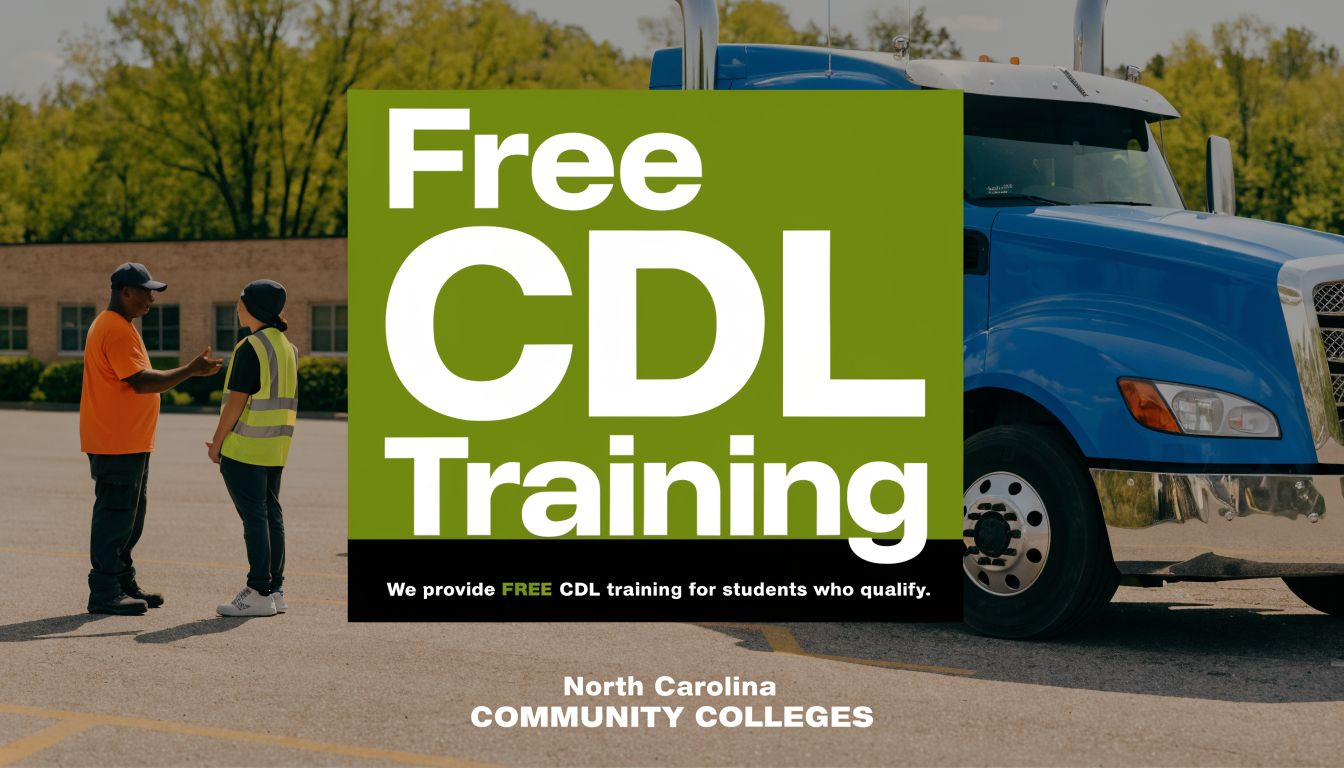
Wondering why “free CDL training in NC” sounds straightforward online, but gets confusing the moment you start comparing programs? The problem is that these options are not interchangeable. A WIOA-funded Class A program, a company-sponsored apprenticeship, and a paid transit operator job can all reduce your upfront cost, but they lead to different schedules, licenses, employers, and long-term career paths.
The smartest way to approach North Carolina CDL training is to sort programs by pathway first, then compare schools inside that lane. That approach saves time and prevents a common mistake I see all the time. People chase the word free, then realize too late that the program only fits school bus work, requires an employment commitment, or trains for a Class B license when they really wanted Class A freight work.
Cost is only one part of the decision. Schedule, licensing goal, contract terms, and job type usually shape the better choice. Some drivers need a grant-funded community college route through NCWorks or WIOA. Some are better off with a carrier apprenticeship that trades flexibility for a direct hiring path. Others want a city or university transit job that pays them while they train.
If you are still deciding which CDL path fits, it helps to start with permit prep and licensing basics before comparing schools. North Carolina applicants can review the CDL permit requirements and study process to get clear on what comes first.
A good search for free CDL training in NC should answer a few practical questions fast. Do you need Class A or Class B? Are you aiming for over-the-road freight, local delivery, or passenger transit? Can you commit to a fixed daytime schedule, or do you need the shortest route back to paid work? If you are also thinking ahead to the job itself, these fleet safety and compliance tips are worth bookmarking.
This guide is built around that real-world sorting process, so you can compare funded and low-cost options by the kind of career they lead to, not just by the tuition line on a website.
1. Patriot CDL North Carolina

What if the best option for you is not the one labeled "free"? Patriot CDL North Carolina belongs near the top of this guide for that reason. It gives readers a useful baseline before they compare grant-funded community college seats, carrier-sponsored apprenticeships, and paid transit training.
Patriot fits the self-funded lane. That path usually makes sense for people who want a faster start, more control over where they work after school, and no obligation to stay with one employer just to repay training. In North Carolina, that trade-off can be smart for career changers who care more about time to earnings than the lowest tuition number on paper.
Why it stands out
The appeal is straightforward. Patriot offers Class A and Class B training built around permit prep, DOT medical steps, yard skills, road driving, and test readiness. For students who do not qualify for WIOA, GI Bill funding, or an employer-paid seat, a direct private-school route can be the cleanest way into the market.
Speed is the primary differentiator here. A shorter training timeline can reduce time away from work and get you to job applications sooner. I usually tell people to compare total cost, not just tuition. A program that looks cheaper can end up costing more if it stretches out your return to a paycheck.
Practical rule: If you are paying your own way, measure the decision against lost income, commute time, and whether the school leaves you free to choose local, regional, or over-the-road work after licensing.
Patriot also covers an early hurdle that knocks out plenty of applicants. The permit stage trips people up before they ever touch the truck. Their North Carolina CDL permit guide helps clarify what to study and what paperwork to line up before training starts.
Trade-offs to know
Patriot is strongest for students who want flexibility after graduation. You pay out of pocket in exchange for keeping your employment options open. That is a different model from company programs that cover training but tie the student to a work commitment.
The pace can also be a drawback. Accelerated training works well for motivated students who can absorb a lot quickly. Someone who wants more classroom repetition, a slower schedule, or access to public funding may do better in the community college or NCWorks pathway covered later in this guide.
Pros
- Fast path to licensing: Good fit for students who want to move into Class A or B training without waiting on grant approval or employer intake cycles.
- Practical skills focus: Training centers on pre-trip inspection, backing, road driving, and test preparation.
- More career freedom after school: No built-in carrier contract limiting where you can apply first.
- Support on early steps: Permit prep and medical guidance help reduce avoidable delays.
Cons
- Usually not the free route: Students need to budget for tuition and related licensing expenses.
- The pace is demanding: Some learners will do better with a longer schedule and more repetition.
- You may need to confirm local details directly: Availability, timing, and program logistics can change, so it is worth calling before you commit.
2. Southeastern Community College Truck Driver Training

If you want a public-school setting with a published cohort and straightforward training structure, Southeastern Community College Truck Driver Training is a practical option to watch. Community college CDL programs often work best for students who want a more traditional schedule and stronger administrative support.
SCC is especially appealing when the registration waiver is active. That's the kind of short-term opening that can turn a “maybe later” plan into an immediate start.
Best fit
This option works best for someone who wants Class A training in a college environment, not a carrier contract. It also suits students who like fixed dates and orientation details rather than open-ended start windows.
Before you enroll, make sure you understand the state requirements tied to permit status, medical certification, and testing. Patriot CDL's overview of North Carolina CDL requirements is a helpful plain-English reference if you want to confirm what you'll need before class starts.
Free registration is helpful. It doesn't erase every other expense tied to licensing, medical paperwork, or endorsements.
Pros
- Clear public-school structure: Community college scheduling is easier for students who want a defined calendar.
- Skills-test focus: The program is built around NC CDL exam preparation.
- Good for accountability: Fixed cohorts help students who do better with external structure.
Cons
- Limited seat timing: If the next class fills, you wait.
- Some costs can remain: Physicals, permits, and endorsement-related expenses may still land on the student.
3. Millis Training Institute Free Apprenticeship Program

Millis Training Institute is for people who want one thing above all else: a direct line from training into a driving job. That's the classic carrier-sponsored trade. You avoid large upfront tuition, but you give up some freedom in exchange for that sponsorship.
At the Eden campus, the in-house setup is the draw. Classroom work, road work, company equipment, and on-site testing reduce handoff problems that can slow down students in other models.
Where apprenticeships work well
Company training works best when you're comfortable with the employer relationship before day one. You're not just choosing a school. You're choosing your likely first driving job, your initial dispatch environment, and your early career lane.
If you're new to federal training rules, Patriot CDL's ELDT guide is a useful primer before you compare apprenticeship programs against independent schools.
Pros
- Low upfront barrier: Apprenticeship branding usually means little or no tuition out of pocket at the start.
- Employment path is built in: You don't have to train first and job hunt later.
- Operational continuity: Training and testing in one ecosystem can make the process smoother.
Cons
- Commitment comes with the deal: Company-paid training usually ties you to that employer for a period.
- Lifestyle matters: If you don't want trainer time or over-the-road expectations, this model can feel restrictive.
4. TransTech WIOA and NCWorks funding

TransTech tuition assistance information is a good example of how free CDL training in NC often works in practice. The school itself may not be universally free, but tuition can be covered for eligible students through WIOA, NCWorks, and some local support partnerships.
This route suits job seekers who want a recognized commercial school format but don't want to self-fund. It also helps students who need a campus closer to home because TransTech has a broad footprint in North Carolina.
Funding first, school second
The mistake many applicants make is contacting the school before confirming funding eligibility. With WIOA-style support, your funding conversation often determines whether the program is effectively free.
North Carolina's broader training ecosystem includes WIOA tuition vouchers through NCWorks for unemployed and underemployed people, along with community college delivery across multiple counties through Vance-Granville Community College's CDL information. That matters because it confirms the pathway is real, even if each local office applies its own process and timeline.
Pros
- Strong no-cost potential: Eligible students can sometimes get tuition covered.
- Regional access: Multiple campuses make commuting easier for many applicants.
- Practical middle ground: You get the structure of a commercial school without needing a carrier contract.
Cons
- Eligibility decides everything: If you don't qualify, the price picture changes.
- Approval can take time: Funding paperwork can slow down your start date.
5. Johnston Community College Truck Driver Training School

Johnston Community College Truck Driver Training is the kind of program I usually recommend to students who want a solid public training environment and don't mind a more traditional pace. The appeal isn't hype. It's predictability.
The on-site third-party skills testing is a strong advantage. When a school can keep training and testing close together, students often have an easier time staying sharp.
Who should consider JCC
JCC fits career changers who want Class A training but prefer a college environment over a carrier pipeline. It's also a sensible target if you're pursuing sponsorship through WIOA, VA-related support, or vocational rehabilitation and want a school that already works with those channels.
If pre-trip inspection is your weak spot, spend extra time on it early. Patriot CDL's pre-trip inspection study guide is a practical supplement because pre-trip errors sink a lot of otherwise capable students.
A school with on-site testing removes friction. It doesn't remove the need to practice the inspection script until you can deliver it cleanly under pressure.
Pros
- Established program feel: Community colleges tend to offer stronger administrative routine than many startup schools.
- Testing convenience: On-site third-party testing reduces extra logistics.
- Aid-friendly setup: Sponsorship pathways can make this close to free for eligible students.
Cons
- Not everyone gets funding: Sponsorship is earned through eligibility, not assumed.
- Schedule rigidity: Daytime blocks can be tough if you're still working full time.
6. Caldwell Community College and Technical Institute Truck Driver Training

Caldwell Community College & Technical Institute truck driver training fits a specific lane in this guide: the community-college route for students who want Class A training, access to public funding, and no obligation to sign on with one carrier right after graduation.
That distinction matters. Some free CDL paths trade tuition for a work commitment. Caldwell is better for people who want to keep more control over where they apply after school, even if that means working through grant eligibility and sticking to a fixed class schedule.
Caldwell's value is practical, not flashy. You get a structured training environment, a college setting that already works with funding channels, and a format that tends to suit career changers who do better with routine than with rushed, carrier-driven programs.
The trade-off is time. A Monday through Friday daytime schedule can be a problem if you are still trying to hold a full-time job while training.
If you go this route, treat permit prep seriously before class starts. Air brakes is a common place to lose points on the written side, and Patriot CDL's air brakes practice test for North Carolina CDL students is a useful study tool if you need extra repetition.
Who should consider Caldwell
Caldwell makes sense for students in western North Carolina who want the grant-funded school model instead of a company-sponsored pipeline. It is a strong fit for someone who wants options after training, values a college-run program, and can commit to weekday attendance.
It is a weaker fit for students who need evening flexibility or want to get hired and paid during training.
Pros
- Good fit for the grant pathway: Strong option for students trying to reduce tuition through public funding rather than employer sponsorship.
- College-run structure: Clear scheduling and a more straightforward administrative process than many small private schools.
- More post-school freedom: You can pursue local, regional, or over-the-road jobs without a built-in carrier commitment.
Cons
- Funding is not automatic: Eligibility, timing, and available money can change from term to term.
- Weekday schedule limits flexibility: This format is harder for working adults and caregivers.
- Slower start than hire-first options: If your priority is immediate income, a transit or employer-paid route may fit better.
7. Charlotte Area Transit System eSERVE Academy

Charlotte Area Transit System eSERVE Academy is the best example on this list of a hire-first transit pathway. If you want local driving work and steady municipal employment, this can beat a Class A school for the right person.
This is not a trucking-school substitute. It's a different career lane. You're training for bus operations, usually with a Class B and passenger focus, inside a city transit system.
Why transit can be the smarter free path
Many people search free CDL training in NC assuming Class A is the only worthwhile option. That's not true if your real goal is stable local work, predictable home time, and an employer that trains you as part of onboarding.
Pros
- You earn while training: Paid training changes the risk calculation completely.
- Local work focus: Strong fit for people who don't want over-the-road life.
- Structured employer pipeline: Hiring, training, and job placement sit in one system.
Cons
- Wrong fit for freight goals: If you want tractor-trailer work, this won't replace a Class A path.
- Hiring standards still apply: Transit agencies screen carefully.
8. ECU Transit Paid Bus Operator Training

ECU Transit training expectations are practical and refreshingly direct. New hires are paid through training, and the employer reimburses DMV CDL-related costs. For students and local residents in eastern North Carolina, that's a credible zero-tuition path into a CDL B role.
This model works especially well for people who don't have much cash on hand but can pass a hiring process and commit to bus operations.
A good fit for local stability
University transit jobs aren't glamorous, but they can be a smart entry point. You build commercial driving experience, learn passenger safety expectations, and avoid taking on tuition debt.
If your budget is tight and your goal is a local driving job, a paid Class B pathway is often a better first move than borrowing money for Class A before you're sure you want over-the-road work.
Pros
- Training is paid: That reduces immediate financial pressure.
- Fee reimbursement helps: The employer eases permit and licensing cost friction.
- Local schedule appeal: Campus operations can fit people who want to stay close to home.
Cons
- It's not a Class A freight route: Different vehicle, different career track.
- Job format may vary: Some transit roles are more campus-oriented than full-time freight jobs.
9. GoDurham Bus Operator Training

GoDurham operator hiring information shows another version of the employer-paid path. You don't necessarily need a CDL to apply, but you do need to secure a commercial learner permit before training starts.
That detail matters. A lot of applicants hear “training provided” and assume every step is free from day one. Usually it isn't. The permit step is often still on you.
Practical fit check
GoDurham makes sense if you want a municipal driving role and you're comfortable handling the permit first. It's less attractive if you're trying to jump directly into Class A trucking.
Pros
- Lower barrier to apply: You may be able to get in the door before holding the full CDL.
- Employer-led training: Once hired, the system supports the licensing path.
- Good local career option: Bus work can provide stability and routine.
Cons
- You still need the permit: That requires preparation and DMV follow-through.
- Transit only: This won't turn into a Class A long-haul credential path by itself.
10. Old Dominion Freight Line Driver Training Program

Old Dominion Freight Line career information fits a different pathway than the grant-funded schools and transit jobs above. This is the employer ladder model. You get in with a major North Carolina based LTL carrier, learn its operation from the inside, and work toward a driving role through the company.
For the right applicant, that trade-off is attractive. Old Dominion has a strong reputation in LTL, and LTL work often appeals to people who want a more structured schedule than entry-level over-the-road trucking. The catch is timing. This path usually makes more sense for someone willing to build into the seat, not someone trying to finish school fast and start pulling a trailer next month.
Who should seriously consider ODFL
Choose this route if your goal is long-term fit with one employer, not just the cheapest way to get a CDL. Starting in operations can give you a better read on freight handling, dock pace, safety expectations, and how the company promotes from within. I usually tell readers to compare this against the community college and WIOA paths based on one question: do you need a license first, or do you want a company home first?
That distinction matters in North Carolina. A college program can get you licensed faster. An employer ladder can lead to a steadier job match if you already know you want LTL and are comfortable earning your way into it.
Pros
- Low upfront training cost: This path can reduce or avoid self-paying for CDL school.
- Good fit for LTL-minded applicants: Better option for people who value regional or structured freight work.
- Company-specific development: You learn the standards, pace, and expectations of the carrier you may stay with.
Cons
- Slower path to the driver's seat: You may need to start in a support or dock role first.
- Less flexible than independent training: This route ties your progress to one employer's hiring and promotion process.
- Selective environment: Well-known carriers can be tougher to enter than an open-enrollment school.
10 NC CDL Training Programs: Free & Funded Options Compared
| Program | Core Features ✨ | Practical Readiness ★ | Cost / Funding 💰 | Best For 👥 | Unique Selling Point 🏆 |
|---|---|---|---|---|---|
| Patriot CDL, North Carolina 🏆 | Accelerated Class A/B, hands‑on maneuvers, permit & DOT prep | ★★★★★ | 💰 Competitive tuition, contact for rates | 👥 Fast‑track career changers, working adults | 🏆 Fast, practical 3‑week option; end‑to‑end support |
| Southeastern Community College (SCC), Truck Driver Training | ELDT‑aligned Class A, scheduled cohorts, skills prep | ★★★★ | 💰 Free registration (limited); fees for DOT/permits | 👥 Local students, budget‑conscious learners | Published schedule & community‑college credibility |
| Millis Training Institute (MTI), Free Apprenticeship Program | Company‑sponsored apprenticeship, on‑site testing, paid mileage | ★★★★ | 💰 Tuition‑free as apprentice; employment contract typical | 👥 Candidates seeking direct employer hire | In‑house testing + paid trainer phase |
| TransTech, WIOA/NCWorks & Goodwill | WIOA‑approved, multi‑campus, ELDT‑aligned, Goodwill partners | ★★★★ | 💰 Potential full tuition via WIOA/NCWorks (eligibility req.) | 👥 WIOA‑eligible applicants across NC | Regional access + funding pathways |
| Johnston Community College, Truck Driver Training | 8‑week Class A, on‑site 3rd‑party testing, ELDT curriculum | ★★★★ | 💰 Published costs; WIOA/aid can reduce to $0 | 👥 Students preferring structured college programs | Long track record + on‑campus testing |
| CCC&TI, Truck Driver Training | Multiple sites/schedules, college scholarships, system funds | ★★★★ | 💰 Scholarship/system funds may cover tuition (varies) | 👥 Eligible regional applicants | System‑level funding earmarked thru 2026 |
| CATS, eSERVE Academy | Paid training, CDL B/P for transit, municipal employer | ★★★★ | 💰 Paid while training, no tuition | 👥 Candidates seeking steady local bus/operator jobs | Paid municipal academy with benefits |
| ECU Transit, Paid Bus Operator Training | Paid training, DMV cost reimbursement, CDL B/P path | ★★★★ | 💰 Paid training + DMV fee reimbursement | 👥 Students/local residents seeking bus roles | University‑backed employer support |
| GoDurham, Bus Operator Hiring with Training | Hire‑first model, CLP required pre‑training, employer training | ★★★ | 💰 Employer‑provided training after hire; CLP fees apply | 👥 Local hires wanting transit careers | Apply without CDL; employer pathway to CDL |
| Old Dominion Freight Line, Driver Training Program | Paid in‑house CDL A training, dock‑to‑driver, ~6‑week path | ★★★★ | 💰 Paid training if hired; no tuition outlay | 👥 Candidates open to LTL/dock‑to‑driver route | Earn‑while‑you‑learn with established carrier |
Choosing Your Route and Hitting the Road
Which kind of "free" CDL training fits the job you want in North Carolina?
That is the question that matters at the finish line. A lot of applicants get stuck comparing schools when they should be choosing a pathway. Grants and workforce funding work best for people who want a Class A, more job freedom, and time to wait for approval. Company apprenticeships make more sense for people who want to start earning quickly and can accept an employer tie-in. Transit and bus operator programs fit applicants who want local routes, steady schedules, and a Class B or passenger-focused career.
Money is only one part of the decision.
A program can cost little up front and still be a poor fit if the schedule clashes with your current job, the training pace is too fast, or the post-training commitment points you toward work you do not want. I have seen applicants chase "free" and end up restarting the process because they picked the wrong license class or ignored the hiring obligation attached to the training.
The practical move is to sort your options in this order. Pick the license first. Then pick the work style. Then pick the funding model.
- License: Do you need Class A for tractor-trailers, or will a Class B with passenger or school bus endorsements match the work you want?
- Work style: Are you aiming for local, regional, over-the-road, transit, or school transportation?
- Funding model: Do you want grant-funded training with more employer choice later, paid employer training, or a contract program that trades flexibility for speed?
Free training also demands follow-through. As noted earlier in the article, some tuition-free public driver training pipelines have struggled with completion and retention. That does not make those programs bad. It means the students who finish usually have a realistic schedule, solid permit prep, and a clear reason for choosing that path.
Before you apply, ask direct questions and get specific answers:
- What license and endorsements am I earning?
- Which costs still come out of pocket? Permit fees, DOT physical, drug screen, endorsements, road test fees, and license issuance can still land on you.
- What happens after graduation? Open job market, internal placement, or a work commitment with one employer.
- How is training scheduled? Full-time days, nights, weekends, split schedule, or paid employee training.
- What support is available if I fall behind? Extra range time, retest policies, permit prep, and instructor access matter more than the brochure.
Apply to more than one pathway if you are serious. NCWorks approvals can take time. Carrier hiring classes can pause. Community college seats can fill. The people who get on the road fastest usually keep two or three live options in play instead of waiting on one answer.
If you want a fast, practical path into trucking with flexible scheduling and focused hands-on preparation, Patriot CDL is worth a serious look. It's a strong option for students who want to train quickly, build real test-ready skills, and keep control over where they work after earning their CDL.