
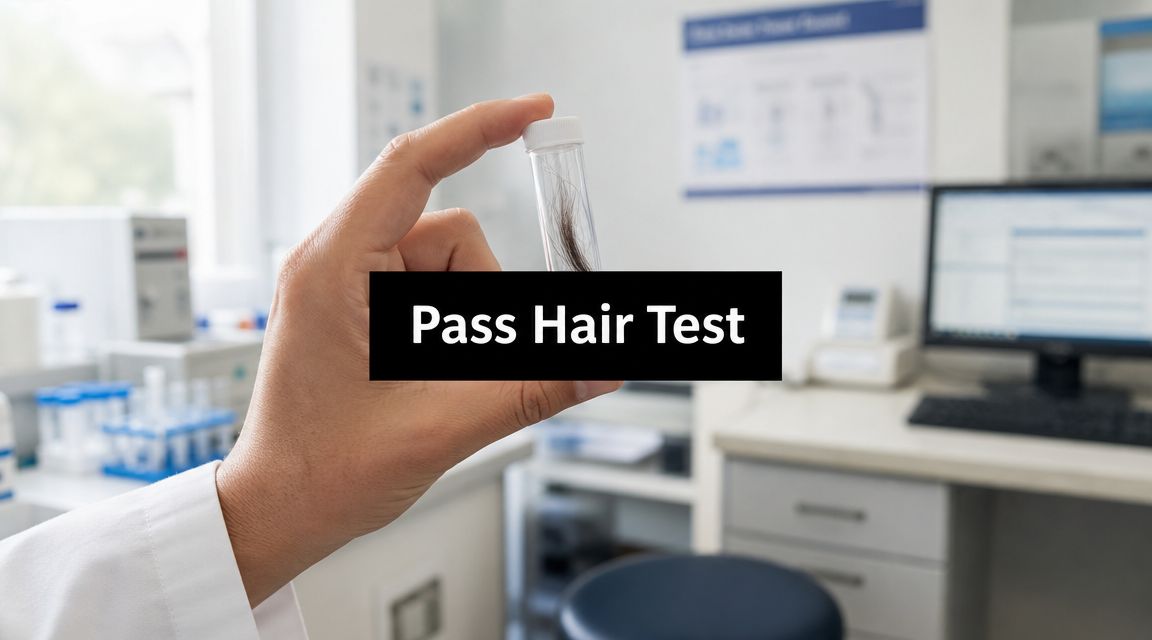
You're probably here because a carrier, recruiter, or school told you there's a hair test in the hiring process, and now the clock feels loud. You want a straight answer about hair follicle test how to pass. You also want somebody to stop the internet nonsense before you waste money, wreck your hair, or worse, damage a driving career before it starts.
I'm going to give you the answer the way I'd give it to a new CDL student. Most of the advice online is junk. It's built to sell panic products, not protect your future. A hair test is about history, not tricks. If you're also trying to sort out broader screening questions, including alcohol detection in drug tests, learn the testing basics first so you know what employers are looking for.
If you're entering trucking, treat this like a career decision, not a last-minute cleanup project. Read, verify company requirements, and use practical guidance that keeps you employable, including credible training resources such as the Patriot CDL blog.
Facing the Hair Test Understanding the Stakes
A lot of applicants hit this issue the same way. They pass the interview, start thinking about orientation, then hear the words “pre-employment hair test” and panic. That panic sends people straight into search results full of miracle shampoos, kitchen-sink remedies, and anonymous forum posts from people who won't be around to help when a failed screen costs you a job offer.
That's the wrong move.
A CDL career starts with judgment. Carriers in safety-sensitive roles pay attention to how you handle pressure before you ever touch a truck. If your response is to chase shortcuts, you're already thinking like somebody who solves problems badly.
Practical rule: Don't spend your energy looking for a magic product. Spend it understanding the test, the timeline, and the employer's process.
The hard truth is simple. If you're asking about hair follicle test how to pass because you used recently and think there's a fast fix, there usually isn't. If you're asking because you want to protect your future, there is a useful answer. Know how the test works, stop believing myths, handle prescriptions properly, and make decisions based on time and policy.
What's really at stake
This isn't just about one lab result. It's about whether a carrier sees you as a risk or as a professional. In trucking, that matters. A failed or disputed result can delay hiring, force extra documentation, and put you in a defensive position before your first dispatch.
The mindset that helps
Approach this like pre-trip inspection. Facts first. Wishful thinking last. Drivers who build long careers don't gamble on rumors. They learn the system and stay inside it.
How a Hair Follicle Test Actually Reads Your History
You can wash your hair, cut it, dye it, and panic for three straight days. None of that changes the core fact. The lab is looking for evidence your body deposited into the hair as it grew.
People call it a hair follicle test, but the sample usually comes from the hair shaft, cut close to the scalp. That detail matters. Labs are not judging what is sitting on the surface today. They are examining what entered the hair from inside the body over time.

How substances get into hair
Hair grows in stages, and drug metabolites can become part of the hair while it forms. Once that happens, ordinary washing does not erase the record. A collector cuts a small sample near the root because the newest growth sits closest to the scalp.
Healthline explains that labs commonly test about 1.5 inches of scalp hair, which usually gives a window of about 90 days, and substances may take about 5 to 7 days to become detectable in hair, according to Healthline's explanation of hair follicle drug testing. For a CDL applicant, that timeline matters more than internet folklore. If you are trying to plan your entry into the industry, review the basic CDL requirements for new drivers before you apply so you understand where testing fits in the hiring process.
Why carriers use hair testing
Carriers use hair testing to screen for a longer pattern of use. This is its main purpose. Urine testing is better at showing recent exposure. Hair testing gives employers a broader hiring-risk picture before they put someone in a safety-sensitive seat.
Quest Diagnostics describes hair testing as a method that can identify repeated drug use over a longer detection window than urine in its overview of hair drug testing for employers.
A hair test is a history check, not a same-day cleanliness check.
New drivers miss that distinction all the time. They focus on what they did this week and ignore what the sample can reflect across the past few months. That mistake costs people job offers.
The practical consequence
If use was extremely recent, hair may not show it right away because the hair has to grow enough for the lab to test the segment. If the concern is repeated use during the lookback period, assume the test was built for that exact problem. That is why this guide puts career protection ahead of gimmicks. The only dependable strategy is time, abstinence, and knowing the employer's process.
Separate one issue from another. Hair testing for hiring is different from public discussion about current marijuana impairment tools. If you want that wider context, read this piece on addiction insights on marijuana testing.
Why Detox Shampoos and Home Remedies Fail
Let's deal with the biggest lie first. Detox shampoos are not a reliable pass strategy. Neither are vinegar mixes, detergent scrubs, baking soda pastes, or the latest “method” posted by somebody selling bottles and hope.
The reason is basic science. These products work on the outside of the hair. The target in drug testing is inside the hair structure after exposure has already been incorporated through the body. That's why surface-level cleaning claims keep collapsing under real lab testing.
What the lab is actually checking
Independent and lab-oriented sources say most shampoos, cosmetic treatments, and home remedies have little effect on drug metabolites in hair, and they are not dependable under confirmatory testing such as GC-MS or LC-MS/MS, according to AlphaBiolabs' review of common hair test myths.
That means two things.
- Surface tricks are weak: Washing, scrubbing, and coating hair don't reliably remove what is already embedded.
- Confirmation matters: Even if something changes the hair cosmetically, the lab process is built to detect substances with more than a superficial look.
Hair Test Myths vs. Reality
| Common Myth | Scientific Reality |
|---|---|
| Special detox shampoo will clean the sample | Most shampoos have little effect on metabolites in hair and aren't dependable |
| Bleaching or dyeing guarantees a negative result | Cosmetic treatment may alter hair, but it isn't a reliable pass method |
| Home remedies can “flush” the hair | Hair doesn't work like urine. Historical exposure is incorporated into growth |
| If the hair smells clean, the test is beaten | Labs don't rely on smell or surface appearance |
| A harsh routine is better than normal care | Aggressive treatment can damage hair without solving the real problem |
Why desperate methods backfire
Applicants often make the mistake of thinking “doing something” is better than doing nothing. Not here. Harsh treatments can leave hair damaged, patchy, or suspiciously altered, and you still may not solve the actual testing problem.
Don't confuse effort with effectiveness. A painful routine can still be useless.
Another bad instinct is stacking methods. Shampoo, bleach, redye, scrub again. That approach usually just creates more damage and more anxiety. It doesn't create a dependable negative result.
The advice I'd give a student
Keep normal grooming. Don't chase miracle products. Don't rely on a forum story from somebody whose timeline, usage pattern, and employer process you can't verify. If your plan depends on a product ad being honest, that plan is weak.
Legitimate Strategies for Navigating a Hair Test
If you want the career-safe answer to hair follicle test how to pass, it comes down to time, documentation, and professionalism. Not tricks.

Start with the only reliable strategy
Labcorp's position is blunt and I agree with it. The only reliable pass strategy is prolonged abstinence, because aggressive shampooing can't remove metabolites already embedded in the hair shaft. Labcorp also notes that the specimen is washed and processed before confirmation by methods such as gas chromatography and mass spectrometry in its guidance on hair drug testing.
That means your best move is not to “beat” the test. Your best move is to stop adding new exposure and allow clean hair growth over time.
How to think about timing
Don't calculate from wishful thinking. Calculate from your last use and the employer's collection schedule. Then give yourself margin. In hiring, being almost ready and being ready are two different things.
Use this approach:
- Stop immediately. If your goal is a clean employment start, the first smart move is no further use.
- Ask what the company requires. Some carriers use hair testing as part of pre-employment screening, especially in safety-sensitive roles.
- Don't volunteer for timing you don't control. If your window is questionable, it may be smarter to delay an application than force a bad result.
- Keep your hair normal. No extreme treatments, no shaving stunts, no panic chemistry.
- Prepare your documents before the test day. That includes any valid prescriptions.
If you're still in training or deciding when to enroll, align your timeline with a realistic start date and a practical program path such as the CDL training program.
Career advice: A delayed application is usually easier to recover from than a failed screen tied to a rushed decision.
Handle prescriptions the right way
Here, adults separate themselves from amateurs. If you have a valid prescription for a medication that could raise questions, don't hide it and don't overshare randomly at collection. Follow the official process.
The Medical Review Officer, or MRO, is there to evaluate legitimate medical explanations when a result needs review. Your job is to be organized.
Bring or have ready:
- Your current prescription information: Use current, accurate pharmacy and prescriber details.
- Your photo identification: Keep your basic test-day documents in order.
- Your contact availability: If the MRO needs to reach you, answer promptly.
- Your honesty: Don't alter dates, doses, or prescriber information.
What professionalism looks like on test day
Show up on time. Follow instructions. Don't argue with the collector. Don't offer stories nobody asked for. If there's a legitimate medical issue, handle it through the proper review channel.
That's what a hireable driver does. Calm, prepared, and document-ready.
The Risk of Short Hair and Body Hair Samples
You show up for a pre-employment hair test with a fresh buzz cut, thinking you just reduced the lab's options. What you may have done instead is invite a body-hair collection and a worse outcome for your application.
If scalp hair is too short to collect, the collector may turn to body hair. That can make the detection period less predictable and often less favorable for the applicant. Health Street's discussion of hair drug testing facts and myths explains why shaving or cutting hair is not a reliable workaround.

Why shaving isn't a solution
Collectors and employers have seen this move before. A shaved head does not cancel the test. It changes the collection site.
That matters because scalp hair is usually chosen for a more standardized recent window, while body hair can reflect a longer and less tidy history. If you are trying to guess your timing, body hair makes that guess riskier, not safer. For CDL applicants, that is the opposite of a smart plan.
The plain truth is simple. If your strategy depends on “not enough hair,” you do not have a strategy. You have wishful thinking.
Who needs to pay special attention
This issue is common for applicants who:
- Keep a shaved head or very tight buzz cut
- Got a major haircut right before applying
- Assume a collector cannot proceed without scalp hair
- Are applying for safety-sensitive driving jobs and need to line up training, licensing, and hiring with real screening rules, including applicants comparing California CDL training options
Short hair does not give you control. It gives the collector another route.
That is the bigger lesson here, and too many applicants miss it. Internet advice treats the test like a puzzle to beat. A CDL career is not built on tricks. It is built on staying eligible, understanding company policy, and refusing to make a short-term decision that can block a long-term job.
Protecting Your CDL Career A Professional Approach
A professional driver doesn't build a career one test at a time. A professional driver builds habits that make tests routine, boring, and easy to pass. That's where you want to get.
Hair testing is used because employers in safety-sensitive roles want a better look at long-term risk. Research cited by Testing.com says hair testing is 6 to 10 times more effective at identifying drug users than urinalysis, and 85% of the drug users identified by a hair test could pass a urine screen. That's why it has become a key part of screening for safety-sensitive roles.
Think bigger than this one hiring moment
If you're serious about trucking, stop thinking like an applicant trying to squeak through one checkpoint. Think like a driver who wants to stay employable. That means understanding company policies, respecting drug testing as part of the safety culture, and getting help early if substance use is becoming a problem.
A lot of career damage happens because people wait too long. They hope the issue will solve itself. Then they rush into an application when their timeline is still bad, their paperwork is sloppy, and their judgment is worse.
What a stable career path looks like
It usually comes down to a few plain rules:
- Stay clean if you want options: The easiest test to pass is the one you never have to worry about.
- Know carrier policy before applying: Don't assume every company handles screening the same way.
- Treat paperwork like part of the job: Prescriptions, identification, and communication matter.
- Get confidential help before a crisis: If you're struggling, address it before it reaches hiring day.
- Ask direct questions: Recruiters and program staff can explain process issues better than anonymous forums can.
The attitude carriers trust
Carriers trust drivers who show consistency. They want people who can follow regulations, manage details, and make safe decisions without drama. That starts before your first road test and before your first dispatch.
If you're trying to get your CDL, act like a professional now. Keep your record clean. Respect the screening process. If you need guidance about training steps, scheduling, or getting started the right way, use a direct contact path like Patriot CDL's contact page.
The best answer to hair follicle test how to pass is the one nobody likes because it's the truth. Give it time, follow the rules, and don't gamble with your future.
If you want a straight path into trucking, Patriot CDL can help you build it the right way with practical training, clear expectations, and support that treats your CDL as a long-term career move, not a quick transaction.