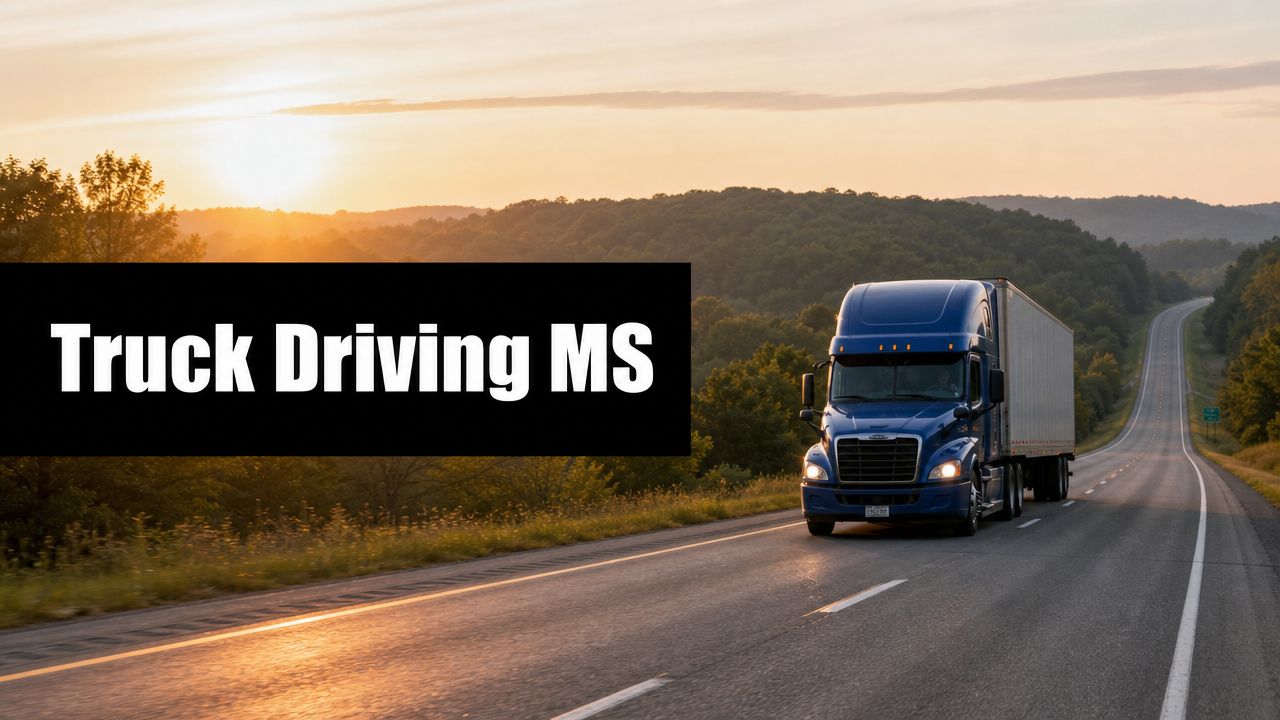
If you're looking at truck driving jobs in Mississippi, there's a good chance you're trying to solve a practical problem. You want stable work. You want a path that doesn't require a four-year degree. And you want to know whether trucking is a realistic move, not just something that sounds good in an ad.
That's the right question.
Mississippi does offer real opportunity in trucking, but the smart way to approach it is to separate job volume from true entry-level access. A lot of people see hundreds of listings and assume they can jump straight into a home-daily local route with strong pay. Sometimes that happens. Often, it doesn't. The drivers who move fastest are the ones who understand the market before they spend money on training.
Why Mississippi is a Great Place to Start Your Trucking Career
You finish CDL training, start checking job boards, and see plenty of openings across Mississippi. Then a crucial question arises. Which of those jobs can a new driver get?
That gap is why Mississippi can be a smart place to begin. The state has enough freight activity, warehouse demand, port connections through the Gulf region, and regional traffic through nearby states to give new drivers more than one possible entry point. The advantage is not that every opening is beginner-friendly. The advantage is that you are not depending on one small town employer or one narrow type of route to get started.

The national outlook supports that logic. The U.S. Bureau of Labor Statistics reports a median annual wage of $57,440 for heavy and tractor-trailer truck drivers in May 2024, and projects 237,600 openings per year from 2024 to 2034, largely from replacement demand in the occupation, according to the BLS occupational outlook for heavy and tractor-trailer truck drivers.
For a new driver in Mississippi, that number is a benchmark, not a promise. First-job pay often lands below what experienced drivers quote online. Home-daily routes can be harder to get than OTR or regional starter positions. Some employers will train recent CDL graduates into a fleet seat quickly. Others want six months to two years of verifiable experience before they hand over the better schedules.
That is the practical appeal here. Mississippi gives beginners room to start, build safe miles, and move up instead of waiting for the perfect first job.
I tell students to judge the market by one standard. Can you get in, stay employed, and improve your options within the first year? In Mississippi, the answer is often yes if you approach the search realistically and train for the jobs that hire new CDL holders.
If you are comparing schools, timing your permit, or trying to understand the first steps, review the state-specific details on Mississippi CDL training options. The strongest start usually comes from a simple plan: get licensed, target fleets that hire rookies, and treat the first job as paid experience that opens better doors next.
Understanding the Mississippi Trucking Job Market
A new CDL holder in Mississippi can scroll job boards for an hour and come away with the wrong picture. The ads make it look like local, home-daily, higher-paying work is everywhere. Then you read the fine print and find the actual filter. Many of those jobs want recent tractor-trailer experience, a very clean MVR, or a work history that proves you can run without much supervision.
That gap between advertised openings and true entry-level openings is what new drivers need to understand first.
Local jobs draw the most interest, and the toughest screens
Plenty of students want one outcome. Get licensed, get hired, and sleep at home every night. That can happen in Mississippi, but local Class A work is often the part of the market with the strictest hiring screen.
The reason is simple. Local fleets usually run tight delivery windows, work in traffic, back into crowded customer yards, and deal with claims risk up close. A carrier would rather hand those routes to a driver with proven time behind the wheel than train around those pressures on a busy account.
So the ad may say "local CDL-A" and the pay may look strong. A key question is whether the company hires recent graduates.
Specialized freight pays more because the carrier is buying experience
Higher-paying freight usually comes with higher expectations. Brakebush lists Mississippi CDL-A reefer positions on its Mississippi driver hiring page, and that kind of work commonly asks for established OTR experience before a driver can get in.
That pattern makes sense. Reefer freight often means strict appointments, temperature control discipline, and less room for error when a load is delayed. Carriers in those lanes are paying for reliability they can verify.
I tell students to read pay rates with one question in mind. "What did the driver have to prove to get that seat?"
What new drivers can usually get first
For many beginners, the practical first job is regional or OTR with a fleet that hires recent CDL school graduates. It may not be the schedule you want long term. It may be the job that gets you the six months to one year of safe, verifiable experience that better local jobs ask for later.
That first year matters more than the ad that catches your eye today.
Here is the market in plain terms:
| Job type | Why drivers want it | What blocks many beginners |
|---|---|---|
| Local | Home-daily schedule, hourly pay, predictable routine | Experience screens are often stricter |
| Regional | More starter opportunities, steady freight | Nights away from home are common |
| OTR or specialized | Bigger upside over time, access to premium lanes later | New drivers may need to earn experience first |
Read the posting the way a recruiter reads your application
A lot of applicants waste time by applying to every job with a good rate and hoping a recruiter makes an exception. That approach rarely works. Recruiters screen for missing requirements first.
Check these details before you apply:
- Experience requirement: If the ad asks for recent tractor-trailer time, assume it is a real filter unless a recruiter says they accept new graduates.
- MVR standard: Look for language about accidents, violations, and how far back the company checks.
- Route reality: "Local" can still mean night dispatch, weekend work, touch freight, or long duty days.
- Equipment or endorsement needs: Tanker, hazmat, doubles, or reefer background can narrow the field fast.
If you are still sorting out what a carrier can legally require from a new commercial driver, review the basic CDL permit and license requirements by state. If you also want to compare test prep expectations in another state, you can prepare for your CDL test in Florida.
The Mississippi job market rewards drivers who start with a realistic target. Get licensed, aim for fleets that hire rookies, protect your record, and use the first job to qualify for the second one.
Earning Your Mississippi Commercial Driver License
Your CDL is the gatekeeper. Without it, truck driving jobs in Mississippi stay theoretical. With it, you can start matching yourself to real job categories and building a plan around route type, equipment, and endorsements.
Nationally, the Bureau of Labor Statistics says heavy and tractor-trailer truck drivers usually need a commercial driver's license and often attend a professional truck driving school, as noted in the earlier Mississippi hiring data from Indeed. That's why the licensing process deserves attention. Every mistake here delays your first paycheck.
Mississippi CDL classes at a glance
The first decision is simple. You need to know which class matches the work you want.
| CDL Class | Allows You to Drive… | Typical Jobs |
|---|---|---|
| Class A | Combination vehicles such as a tractor with trailer | Tractor-trailer freight, regional runs, OTR, many local Class A routes |
| Class B | Single vehicles that are larger and not typically pulling the same kind of combination trailer | Straight trucks, some delivery work, certain local commercial routes |
| Class C | Certain smaller commercial vehicles that require special handling or passenger/hazard rules | More specialized commercial roles depending on vehicle and cargo |
For those targeting freight hauling, Class A is the practical choice because it opens the broadest range of jobs.
What you need before the road test
The paperwork side isn't glamorous, but it matters. Most students need to line up a few essential requirements before they can test and hire out:
- DOT medical qualification: Employers want to know you're medically cleared for commercial driving.
- Learner's permit preparation: You need the written knowledge side handled before skills testing.
- Identity and state compliance documents: Missing paperwork slows down enrollment and testing.
- Training on inspection and backing: Recruiters expect a driver who can talk through a pre-trip and control the truck safely in close quarters.
If you're sorting out the licensing process step by step, Patriot CDL's CDL requirements guide is a practical place to review the main checkpoints.
Endorsements can change your options
Not every new driver needs every endorsement right away. But the right endorsement can widen your choices. Tanker, doubles/triples, or hazmat-related opportunities can matter depending on the jobs you're targeting and the employers in your area.
The mistake is waiting too long to think about them.
A lot of drivers treat endorsements like an optional extra. In practice, they're often a job-access tool. If you're comparing permit study habits or wanting a simple example of how schools help students study for state CDL exams, this resource on how to prepare for your CDL test in Florida shows the kind of structured prep that helps in any state.
A permit gets you in the truck. Good training gets you through the skills test. Smart endorsements can widen the number of recruiters willing to call you back.
Your Roadmap from Training to Your First Trucking Job
The biggest mistake new drivers make isn't choosing trucking. It's assuming the path from training to paid work will somehow sort itself out. It usually doesn't. You need a sequence. You need funding clarity. And you need training that matches employer expectations.

Roadmaster's Jackson facility received a $1.5 million renovation, and the school says it offers in-house financing, WIOA and VR eligibility, veterans' benefits, carrier tuition reimbursement, job placement assistance, and pre-qualification support during training, according to coverage of the Jackson school expansion. That matters because training-to-employment friction is real. Adults don't just need a school. They need a plan that fits bills, schedule, and hiring timing.
Choose a program that matches your reality
Some students can train full time and move quickly. Others are working, supporting family, or juggling inconsistent schedules. The wrong training format can derail a good career decision.
Look for these practical factors:
- Schedule fit: A program has to work with your life, not your ideal life.
- Hands-on yard time: Backing, coupling, uncoupling, and pre-trip repetition matter more than polished marketing.
- Permit and test support: Good programs help students stay on track through the written and road-test process.
- Employment focus: Training should lead into actual hiring conversations, not just graduation.
One option to review is Patriot CDL's training program, especially if you're comparing hands-on CDL preparation, flexible scheduling, and job-focused instruction.
Funding matters more than people admit
People often ask which funding route is "best." That's the wrong question. The better question is which route you can realistically complete without blowing up your finances halfway through.
Common paths include:
- Self-pay if you want maximum independence and can cover the cost.
- Workforce funding such as WIOA or VR if you qualify and can handle the paperwork.
- Veterans benefits if you're eligible and want to apply existing education support.
- Carrier reimbursement models if you're comfortable tying your early career moves to a hiring path.
Each one has trade-offs. Self-pay can give you flexibility. Reimbursement can lower out-of-pocket pressure. Workforce funding can help, but it may involve timing and approval steps.
Think in phases, not one big leap
A realistic trucking launch usually looks like this:
| Phase | What you're trying to accomplish |
|---|---|
| Pre-enrollment | Confirm schedule, funding path, and document readiness |
| Training | Build inspection habits, backing control, road confidence |
| Testing | Pass written and skills requirements cleanly |
| Early job search | Target carriers and fleets that actually hire newer drivers |
The process works better when you stop treating "get a CDL" as one event. It's a chain. Each link affects the next one.
How to Find and Land Entry-Level Trucking Jobs
You finish training, get your CDL, start searching, and hit the same wall a lot of new drivers hit in Mississippi. The job board looks full. The true entry-level options are a much smaller slice of that list.

That gap matters more than the headline pay on a posting. A new driver can waste weeks applying to jobs that were never realistic fits in the first place. The better approach is to sort openings by what a carrier will accept from a recent graduate.
Read postings like a recruiter reads them
Job titles do not tell you enough. "Local," "dedicated," and "home daily" can still come with screening standards that shut out a new CDL holder.
Check the details that decide whether an application has a real shot:
- Experience language: "Recent tractor-trailer experience" usually means paid road time, not just school hours.
- Freight and handling: Flatbed, tanker, oversized, and heavy-touch freight often bring tougher hiring standards.
- Shift structure: Overnight, weekend, and extra-stop routes may be easier to enter than the most desirable daytime runs.
- Insurance limits: Sometimes the carrier likes your application, but its insurance policy sets the minimum experience threshold.
- Record requirements: Tickets, preventable accidents, failed drug tests, or job hopping can knock out an entry-level candidate fast.
I tell students to ask one direct question before spending time on a long application: "Do you hire drivers straight out of school?" That question saves a lot of frustration.
Your first job should help you build safe habits, steady experience, and a cleaner resume for the next move.
Focus on channels that actually hire recent grads
New drivers usually do better when they stop chasing every attractive ad and start targeting hiring paths built for beginners.
The strongest options often include:
- Trainee programs at larger carriers: These fleets tend to have orientation, coaching, and a process for bringing in recent graduates.
- Regional fleets with predictable starter lanes: They may not offer the schedule you want long term, but they often provide the miles and structure that help in year one.
- School placement contacts: Good schools know which recruiters are open to graduates right now, not six months ago.
- Direct recruiter calls: A short phone conversation can tell you more than a polished online posting.
- Smaller local fleets willing to train one driver at a time: These can be good opportunities, but only if the onboarding is organized and expectations are clear.
If you want more practical advice on screening employers, applications, and early-career decisions, the Patriot CDL career blog for new drivers is a useful place to keep learning.
For a visual overview of the hiring process, this video is worth a few minutes:
Build a resume that answers the recruiter's real concerns
A recruiter already knows you do not have a long driving history. The resume still needs to show why you are a reasonable first hire.
Put the useful facts near the top:
- CDL class and endorsements
- Training completion and school name
- Backing, pre-trip, coupling, and road training
- Work history that shows attendance, shift reliability, safety awareness, and equipment use
- Any customer-facing or delivery experience
- A clean, complete application with no sloppy gaps
Keep it simple. One page is usually enough for a new driver.
Veterans should translate military experience into hiring language a fleet understands. Equipment accountability, following procedures, documentation discipline, and safety culture all carry weight. The same goes for warehouse, construction, farming, delivery, or mechanical work. Those backgrounds can strengthen an entry-level application when they are described clearly.
Apply in a way that gives you a real chance
Sending 40 weak applications is less useful than sending 10 targeted ones. Match your application to the job. If the post mentions night driving, touch freight, or multi-stop work, show any related experience you already have. If a company wants a stable work record, make that easy to see.
Then follow up.
A polite call or email within a day or two helps separate you from applicants who clicked and disappeared. In entry-level hiring, responsiveness matters. Recruiters notice who answers the phone, sends documents quickly, and shows up prepared.
Your Fast Track to a Mississippi Trucking Career
A new CDL holder in Mississippi can do everything right, finish training, pass the state test, and still run into job ads that are not genuinely entry level. That catches a lot of people off guard. The fast track is not about chasing the best-looking posting. It is about aiming at the jobs that will hire you now, then using that first year to qualify for the jobs you want next.
That distinction matters.
Plenty of Mississippi ads promise strong hourly pay, better home time, or local schedules. Many of those roles still favor drivers who already have recent tractor-trailer time. As noted earlier, that gap between advertised jobs and real first-hire opportunities is one of the biggest reasons new drivers get discouraged. The answer is not to wait around for a perfect opening. The answer is to build a plan that gets you employable quickly and keeps your options open.
The drivers who move faster usually focus on three things:
- Choose training that reflects real work, not only the road test. Recruiters know the difference.
- Target trainee-friendly fleets first. Regional, OTR, and some dedicated accounts are often the practical starting point.
- Protect your first-year record. Attendance, safe backing, clean inspections, and good communication matter more than chasing a slightly better starting rate.
Equipment flexibility can help too. If an automatic-only restriction limits the jobs you can apply for, an E restriction removal course for broader equipment eligibility can make sense.
I tell new drivers to treat the first job as a stepping stone, not a life sentence. If the company gives you miles, decent supervision, and a fair shot to learn, it may be a smart first move even if it is not your ideal schedule. Six to twelve months of clean, documented experience can change your choices in a hurry.
Mississippi is still a practical place to start a trucking career. Freight moves through the state, training options exist, and carriers keep hiring. The key is seeing the market clearly. Go after the jobs that match your current experience, keep your expectations realistic, and use your first year to earn better ones.
If you're ready to move from research into action, Patriot CDL offers CDL training built around practical test prep, hands-on skill development, and support for getting from licensing into the job market. It's a sensible next step if you want a clearer path into trucking without wasting time on guesswork.