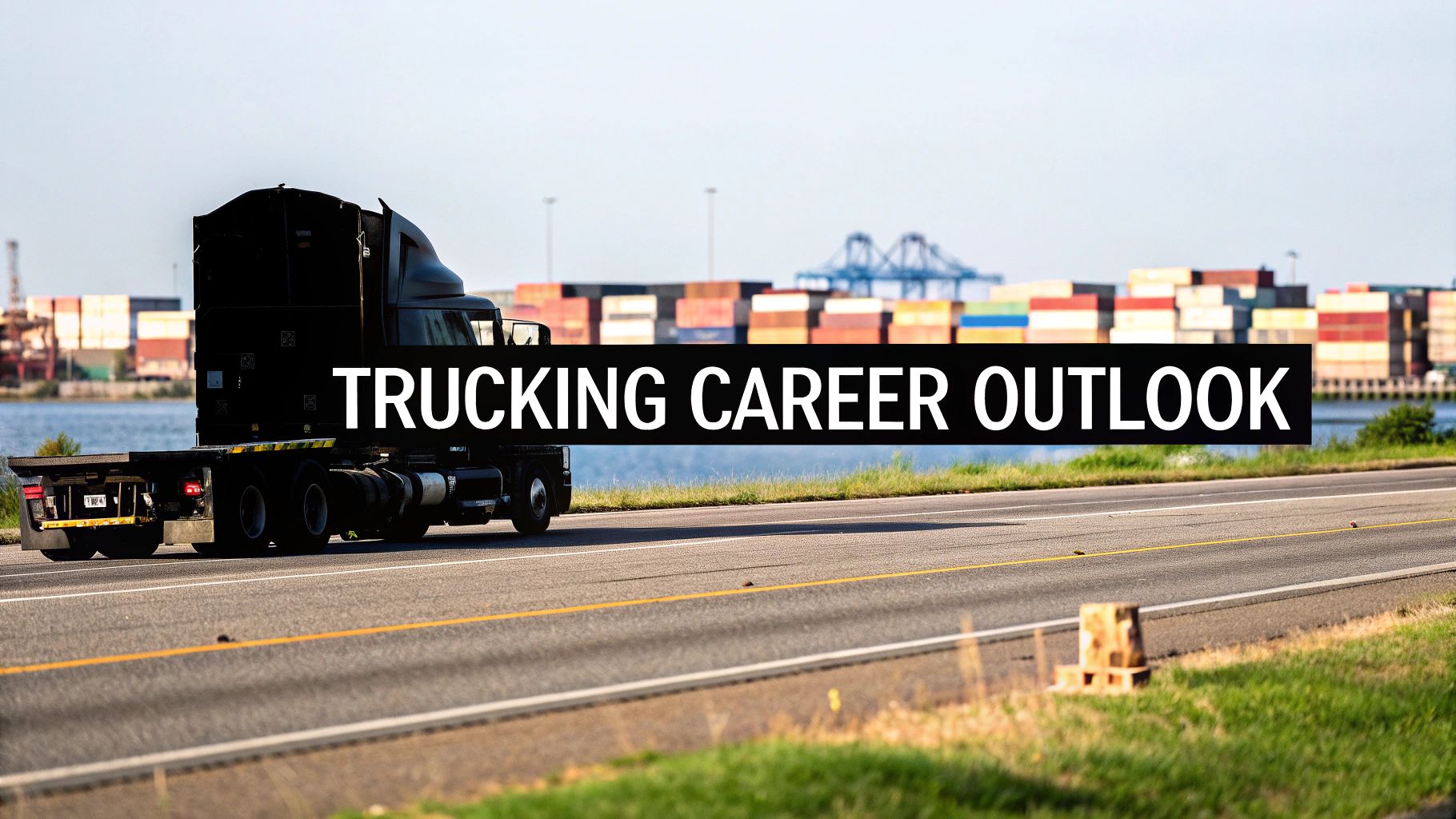
Let's cut right to the chase: is truck driving a solid career choice for the future? Absolutely. Think of the entire economy as a living, breathing thing. If that's the case, the trucking industry is its circulatory system, and drivers are the lifeblood pumping goods where they need to go.
Without professional drivers, the whole system grinds to a halt. Supply chains collapse. Shelves go bare. This isn't just a theory; it's a fundamental economic reality that keeps demand for skilled truckers consistently high.
Why the Road Ahead Looks Wide Open
When you see trucking for what it is—the essential gear that keeps the massive machine of commerce running—it’s easy to understand why the career outlook is so bright. This isn't some fleeting trend. It's a long-term reality baked into how our world works.
This incredible job security really boils down to two major forces at play: a persistent, industry-wide driver shortage and an aging workforce. A huge wave of veteran drivers is hitting retirement age, leaving a massive gap that the next generation needs to fill. This means qualified drivers aren't just wanted—they are desperately needed.
A Global Need for Drivers
This isn't just a problem here at home; it's a global issue. The worldwide trucking profession is staring down a massive shortage, with an estimated 3.6 million open driver jobs across 36 countries. Even when shipping demands fluctuate, this core deficit remains a huge headache for the global economy. The message is crystal clear: we need more skilled professionals behind the wheel, everywhere.
The constant demand for goods means a constant demand for drivers. As long as people need products, there will be a need for the professionals who deliver them, making trucking one of the most resilient career paths available.
So, to give you a clearer picture, let's break down the key factors shaping the truck driving career outlook. This table summarizes the current situation and what we can expect down the road.
Truck Driving Career Outlook at a Glance
| Factor | Current Status | Future Projection |
|---|---|---|
| Driver Demand | Extremely high due to a massive, ongoing shortage. | Demand is expected to remain strong as e-commerce grows and older drivers retire. |
| Job Security | Among the highest of any skilled trade; essential to the economy. | Very stable. The need for logistics and transport is constant. |
| Salary Potential | Competitive, with significant earning potential through bonuses and specialization. | Salaries are likely to increase as companies compete to attract and retain talent. |
| Technology Impact | Automation and logistics software are changing the job, but not replacing drivers. | Technology will increasingly assist drivers, improving safety, efficiency, and comfort. |
As you can see, the core elements point toward a stable and promising future. The industry is evolving, but the need for skilled drivers remains the bedrock of it all.
What This Means for Your Career
If you're looking for a fresh start or mapping out your first career, this is a landscape filled with opportunity. While other industries can be unpredictable, trucking offers a level of stability that's tough to find anywhere else. The constant need for drivers forces companies to compete for good people, and that puts you in the driver's seat, so to speak.
This competition works in your favor in a few key ways:
- Rock-Solid Job Security: The driver shortage means you’ll always have options and opportunities.
- Strong Compensation: To get drivers in the door, companies are offering better pay, sign-on bonuses, and solid benefits.
- Plenty of Room to Grow: You can build a real career here, whether you want local routes that have you home every night or specialized hauls that pay top dollar.
At the end of the day, the strong outlook for truck drivers comes down to a simple truth: the world runs on things being moved from one place to another, and truckers are the ones who make it happen.
Decoding the Nationwide Driver Shortage
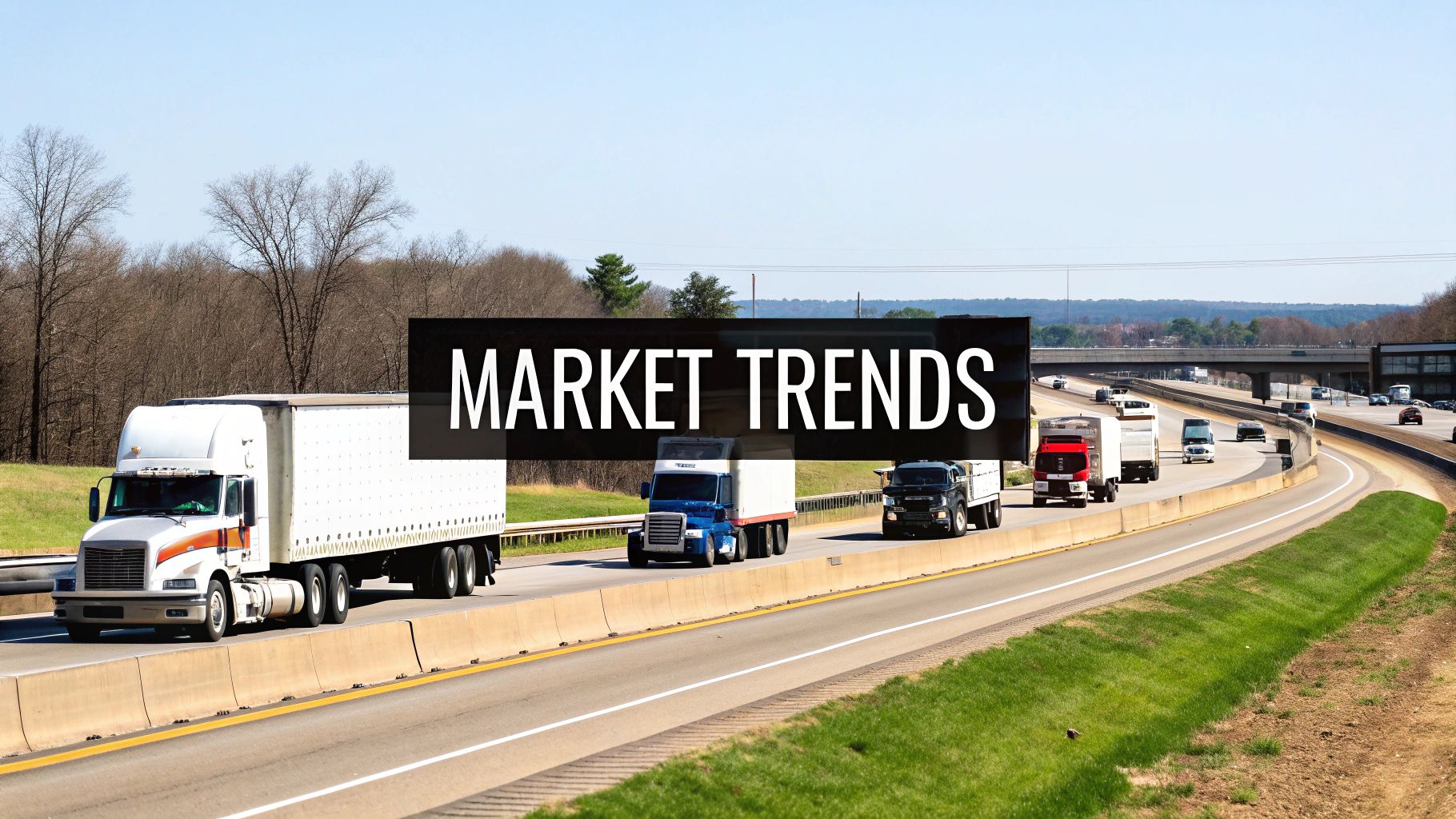
So, what's really behind the constant, high demand for professional truck drivers? It’s not just a momentary blip in shipping needs. We're looking at a deep, structural gap between the number of drivers the country needs and the number of people actually available to do the job. This ongoing driver shortage is the single biggest reason why the career outlook for truckers is so strong.
Think of it as a leaky bucket. For a long time now, the industry has been losing more drivers than it can bring in. The water level is getting dangerously low, and it's a problem with several complex causes—which means the need for new drivers isn't going away anytime soon.
The Demographic Cliff
A huge piece of the puzzle comes down to simple demographics. A massive wave of veteran drivers, the backbone of the industry for decades, is hitting retirement age. They’re hanging up their keys for good, and when they leave, they take a tremendous amount of skill and experience with them.
At the same time, not enough younger people are stepping in to fill their seats. This has created what many call a "demographic cliff"—a sharp drop-off in the workforce without a new generation ready to take over. The math is simple: there are far more empty trucks than there are qualified drivers to fill them.
And it’s not getting better. The American Trucking Associations (ATA) has been sounding the alarm for years, projecting the shortage could swell to 160,000 unfilled driver positions by 2030 if things don't change. It's not just about getting people in the door, either; keeping them is tough, with annual turnover rates for long-haul trucking companies sometimes hitting a staggering 90%.
Systemic Barriers to Entry
It’s not just about age, though. There are some very real hurdles that make it tough for new drivers to even get started. These roadblocks are a direct cause of the shortage and, ironically, help solidify the career outlook for those who successfully navigate them.
- High Upfront Costs: Let's be real, paying for CDL school and licensing isn't cheap. That initial investment can be a major stop sign for a lot of people.
- Regulatory Hurdles: The path to getting licensed isn't always straightforward. Newcomers have to work through a maze of requirements for licensing, special endorsements, and medical certifications.
- Lifestyle Perceptions: Many people still have an outdated image of what a trucker's life is like. These misconceptions can scare away great candidates who might otherwise thrive in the industry.
Understanding these root causes is key. The driver shortage isn't a fleeting trend—it's a structural problem built on demographics and systemic challenges, which in turn creates lasting job security for qualified professionals.
When you see what's really going on, it's clear why the demand for drivers is so stable. The industry's need is foundational, ensuring that a career behind the wheel offers a level of security that's becoming harder and harder to find in today's job market.
Exploring Your Earning Potential Behind the Wheel
Let’s talk money. A strong career outlook is great, but what does it mean for your wallet? When it comes to trucking, your paycheck isn't a single, fixed number. It's shaped by the choices you make, and one of the biggest is the type of route you decide to run.
Think of it as choosing your lifestyle. Over-the-Road (OTR) drivers are the long-haulers, crisscrossing the country and often earning the highest base salaries. The trade-off? You're away from home for weeks at a time.
Regional drivers stick to a specific part of the country, like the Southeast or the Midwest. This offers a nice balance—you still get solid pay, but you’re usually home every weekend. Then there are local drivers, who handle shorter routes and get to be home every single night, which is perfect if work-life balance is your top priority.
Specializing for Higher Pay
Want to really boost your income? The secret is in the specializations. Earning specific endorsements on your CDL is like adding powerful tools to your toolkit—they unlock higher-paying jobs that most other drivers can't take.
Here are a few of the big ones:
- Hazmat (H Endorsement): Hauling hazardous materials demands extra care and training. Because of that added responsibility, companies are willing to pay a lot more for it.
- Tanker (N Endorsement): Moving liquids, whether it's milk or industrial chemicals, requires a unique skill set to manage the "slosh." It’s a specialty that consistently pays well.
- Oversized Loads: If you’ve ever seen a truck hauling a massive wind turbine blade, you know this isn't a job for just anyone. It takes serious skill, and the pay reflects that.
Think of your standard CDL as your ticket to the game. Endorsements are what get you the front-row seats. Each one makes you a more valuable and versatile driver, leading directly to better pay and more job security.
Gaining these skills doesn't just bump up your salary; it makes you the kind of driver companies are actively looking for.
To put it into perspective, here's a look at how different specializations can affect your bottom line.
Earning Potential by Truck Driving Specialization
| Specialization | Average Annual Salary Range | Key Requirements |
|---|---|---|
| General Freight (OTR) | $65,000 – $85,000 | Standard Class A CDL, willingness to travel |
| Tanker Driver | $75,000 – $95,000 | Class A CDL with Tanker (N) endorsement |
| Hazmat Driver | $80,000 – $100,000+ | Class A CDL with Hazmat (H) endorsement |
| Oversized Load Driver | $90,000 – $120,000+ | Specialized training, permits, experience |
As you can see, the path you choose has a direct impact on your earnings. A little extra training for an endorsement can lead to a significant pay increase over the course of a year.
Your Experience Is Your Biggest Asset
At the end of the day, nothing beats experience. In the trucking world, a driver with a clean safety record and a few years under their belt can demand much higher pay than someone just starting out. Reliability is rewarded. Companies offer better routes, performance bonuses, and higher per-mile rates to the drivers they know they can count on.
Your license itself plays a big role, too. While a Class A CDL is the gold standard, some drivers have an "E" restriction, which means they can only operate trucks with automatic transmissions. Learning to drive a manual truck opens up a much wider range of job opportunities.
For drivers serious about maximizing their career, investing in an E restriction removal course is one of the smartest moves you can make. By constantly adding to your skills and experience, you’re the one in control of your financial future.
Your Roadmap to Becoming a Professional Driver
Feeling pulled toward the open road after seeing the strong career outlook for truckers? That's great news. The path to getting behind the wheel of a big rig is more straightforward than you might think. Let's break down exactly how you can go from where you are now to launching a new, rewarding profession.
The absolute first step—your ticket into the industry—is earning a Commercial Driver's License (CDL). This license is non-negotiable; it proves you have the skills and know-how to handle a large commercial vehicle safely. Your journey begins by finding and enrolling in a quality truck driving school to get the right training.
Choosing Your License Class
It's important to know that not all CDLs are created equal. The type of license you get will shape your career path, so it's smart to think about what kind of driving you want to do.
- Class A CDL: This is the big one. A Class A license lets you operate massive combination vehicles like tractor-trailers. It unlocks the most job opportunities, from long-haul routes across the country to specialized freight hauling.
- Class B CDL: If you're thinking more local, a Class B might be your ticket. This license covers single, heavy vehicles like dump trucks, straight trucks, and buses, making it perfect for construction or local delivery gigs.
- Class C CDL: This is for smaller commercial vehicles, like shuttle buses designed for 16 or more passengers or vehicles that transport certain hazardous materials in smaller quantities.
State-specific rules can differ slightly, so it’s always a good idea to look over the full CDL requirements to see exactly what’s needed where you live.
Navigating Training Costs and Programs
Let’s be honest: one of the first things people worry about is the cost of training. But don't let that stop you. There are plenty of ways to handle this investment. You can find financial aid, grants, and even company-sponsored training programs that can bring the upfront cost way down, sometimes to zero.
With sponsored programs, a trucking company will foot the bill for your education. The trade-off? You agree to drive for them for a certain amount of time once you're licensed. It's a fantastic way to get started without a huge initial financial hit.
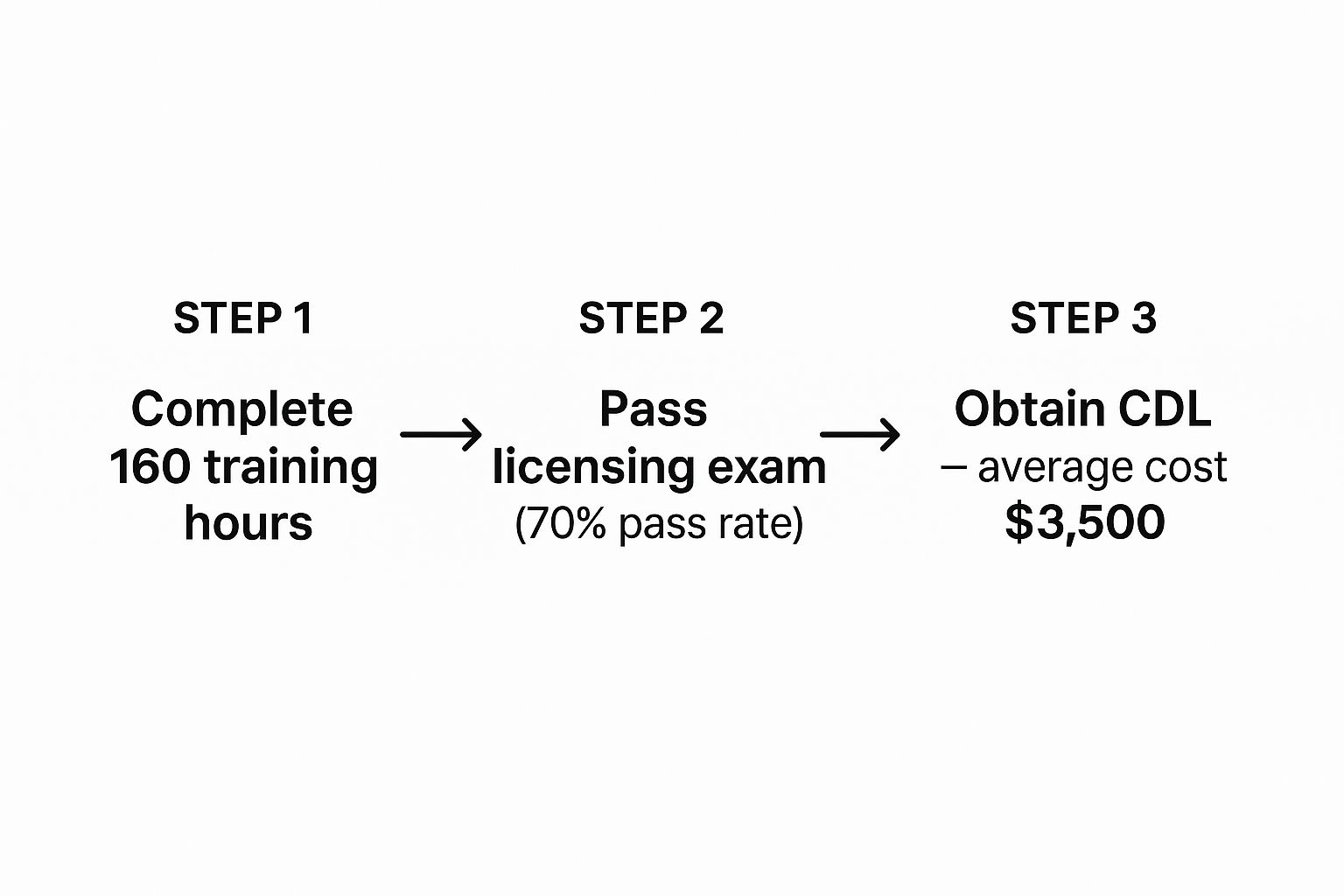
As you can see, getting your CDL is a very structured process. These financial hurdles aren't unique to the U.S., either. In France, for example, getting a commercial license can cost more than three times the country's minimum monthly wage, which is a massive barrier for new drivers.
By taking the time to explore all the different training and funding options, you can find a route that works for your budget and gets you on your way to a stable, in-demand career.
How Technology Is Shaping the Future of Trucking

Let's get right to the big question everyone asks: what about automation? It’s impossible to talk about the future of trucking without wondering if robots are coming for the job. The reality, though, is a lot more interesting than a simple replacement.
Technology isn't pushing drivers out; it’s changing the job description, making the work safer and more efficient than ever before.
The idea of fully driverless trucks handling icy mountain passes or navigating a chaotic downtown delivery is still a long way off. What we're actually seeing is a surge in driver-assist technologies. Think of it less like a sci-fi movie and more like a modern pilot's cockpit—it’s packed with advanced systems, but you still need a skilled professional at the controls.
These tools are built to support the driver, not to make them obsolete. In this new era, the role is shifting from a simple operator to an in-cab logistics manager. You'll be the one overseeing the sophisticated tech, solving problems on the fly, and handling the complex final-mile details that computers just can't manage.
The Rise of Smart Trucking
This isn't some far-off prediction; it's happening right now. Today’s trucks are rolling out of the factory with more tech than ever, turning the cab into a high-tech workspace.
Here are a few of the game-changers you'll find on the road:
- Telematics and ELDs: These systems are your automated logbook and performance coach rolled into one. They handle tracking hours, monitoring fuel consumption, and keeping an eye on vehicle health, so you can focus on driving safely.
- Advanced Safety Systems: Features like automatic emergency braking, lane-keeping assist, and blind-spot detection are like having a permanent co-pilot. They act as a second set of eyes, dramatically cutting down the risk of accidents.
- Enhanced Connectivity: Your truck is now a mobile command center. You get real-time updates on weather, traffic, and load status, allowing you to make smarter decisions and stay in constant communication with dispatch.
The modern truck cabin is becoming a command center. A driver's role is shifting towards strategic oversight and management, requiring a new set of skills that combine traditional road knowledge with technological proficiency.
Sustainability and Electric Trucks
Another huge shift on the horizon is the move toward sustainability. With the push for lower emissions and fuel costs, electric trucks are starting to hit the highways. It's a gradual change, but it’s an exciting one.
Operating an electric truck is a different ballgame. You'll need to think about managing battery range and planning routes around charging stations. As these vehicles become more common, drivers who know how to handle them will be incredibly valuable.
All this new technology highlights just how crucial great training is. To really succeed out there, you need a program that covers the federal Entry-Level Driver Training (ELDT) standards. To learn more, check out our guide on what the ELDT mandate means for you. This training ensures you’re not just ready for the CDL exam, but prepared to build a successful career in a tech-driven industry.
Your Next Move: From Outlook to On-the-Road
So, let's bring it all home. When you look at the big picture, the truck driving career outlook isn't just good—it's solid, dependable, and packed with real-world opportunities. We've talked about the driver shortage keeping demand high and how that's pushing salaries up to a really competitive level.
This isn't some pie-in-the-sky dream. There's a clear, straightforward path for new drivers to get started. You're not just getting a job; you’re stepping into a career that quite literally keeps our country moving. For anyone ready to grab the wheel, the road ahead is wide open.
How to Turn Potential into a Paycheck
Feeling the pull to get started? Your first, most critical move is finding a training school that actually gets you ready for the job, not just the test. Good training is what separates knowing about a great career from actually having one.
The best investment you can ever make is in yourself. A top-notch training program gives you more than a license—it gives you the confidence and skill to walk into a great job and succeed from day one.
A program worth its salt will give you the hands-on time and safety mindset that the best companies are looking for. Honestly, picking the right school is the first major decision that will shape the rest of your career.
If you’re ready to stop reading about this promising outlook and start living it, the next step is to look into professional training. The path to a stable, well-paying profession starts with the right education. You can learn more about starting your career with our professional CDL training program.
Got Questions? We've Got Answers
It's smart to have questions before jumping into any new career, and trucking is no different. Let's tackle some of the most common things people ask when they're thinking about getting behind the wheel.
Are Self-Driving Trucks Going to Take My Job?
Not anytime soon. While you hear a lot about autonomous trucks, the reality is that the technology is a long, long way from being able to handle everything a human driver does. Think about navigating a tight city street in a snowstorm or dealing with a tricky loading dock—that still requires a person in the cab.
For the foreseeable future, technology is more of a co-pilot. Driver-assist systems are making the job safer and easier, but the person in the driver's seat is still the captain of the ship. Your role is shifting more toward being an in-cab logistics expert, overseeing the tech and handling the complex parts of the job that only a human can. With the current driver shortage, skilled professionals are more valuable than ever.
What’s the Toughest Part About Starting Out?
Honestly? The first year. It’s a huge adjustment. You're learning to manage your time, handle long hours away from home, and navigate routes you’ve never seen before. It can feel like a lot all at once.
This is where the industry sees the most turnover. But here’s the good news: if you can get through that initial learning curve, you'll find yourself in a stable, well-paying career. Smart trucking companies know this, and many are beefing up their training and mentorship programs to help new drivers get their footing and stick around for the long haul.
That first year is all about building resilience. Push through it, and you'll open the door to a career with incredible job security and earning potential.
How Do I Make the Most Money as a Driver?
Once you get your license, the real path to higher pay opens up. It really comes down to a few key things: specializing, gaining experience, and being a safe, reliable driver.
Getting extra endorsements on your CDL is a huge salary booster. Things like hauling hazardous materials (hazmat), driving tanker trucks, or handling oversized loads all come with a bigger paycheck. On top of that, a clean driving record is gold. It not only gets you safety bonuses but makes you a top candidate for the best companies.
After a few years on the road, your value skyrockets. The most experienced drivers can eventually become owner-operators and run their own business, though that takes some serious business smarts. It all starts with a solid foundation, which means acing the written exams like the general knowledge test before you even get on the road.
What Is the Work-Life Balance Really Like?
This isn't a one-size-fits-all answer anymore. The "trucker is always gone" stereotype isn't the whole picture today. Your home time completely depends on the type of job you take.
- Over-the-Road (OTR): This is the classic long-haul job. You could be on the road for weeks at a time, seeing the country.
- Regional: This is a great middle-ground. You might cover a few states but are often home on the weekends.
- Local: Think delivery or construction jobs. These drivers are typically home every single night.
The industry is finally realizing that to attract the best people, they need to offer more flexibility. More companies are creating routes and schedules that let you have a life outside the truck.
Ready to stop wondering and start driving? Patriot CDL provides the expert training you need to launch a successful career with confidence. Visit us at https://patriotcdl.com to enroll and take the first step toward a stable, high-paying future on the open road.