When you see a big rig rolling down the highway, you're looking at a combination vehicle. The simplest way to think about it is as a multi-part vehicle: a powerful tractor unit up front pulling one or more trailers behind it. It's not one solid truck, but a linked-up system designed to haul serious amounts of freight.
What Makes It a Combination Vehicle?
The defining feature of any combination vehicle is its articulated design. This just means it has a pivot point that allows it to bend. This is the fundamental difference between a big rig and a straight truck, like a box truck or a dump truck, where the cab and cargo box are all built on one solid, rigid frame.
The tractor is the workhorse. It’s the front part with the engine, cab, and drive wheels—all the power is right there. Attached to it is the trailer, which is the unpowered unit built to carry the actual cargo.
The Key Components
To really get a feel for these vehicles, you need to know the basic parts and how they work together. It’s more than just a truck and a box on wheels.
- The Tractor Unit: Think of this as the brains and the brawn of the entire setup. It's where the driver sits, and it houses the engine, transmission, and all the controls.
- The Trailer: This is the cargo-carrying part. It could be the standard dry van, a flatbed for oversized loads, a tanker for liquids, or even multiple trailers linked together, which are often called doubles or triples.
- The Coupling System: This is the critical connection point. The most common system is the fifth wheel, a heavy-duty circular plate on the tractor that locks onto a kingpin on the trailer, creating a secure but flexible joint.
To give you a clearer picture, let's break down the core differences between a combination rig and a standard truck.
Key Characteristics of Combination Vehicles
| Characteristic | Combination Vehicle | Single-Unit Truck |
|---|---|---|
| Structure | Articulated (tractor + trailer) | Rigid (single frame) |
| Maneuverability | Complex; requires special skill | Simpler; drives more like a car |
| Cargo Capacity | Very high | Moderate to high |
| Primary Use | Long-haul freight | Local/regional delivery |
| Coupling | Yes (e.g., fifth wheel) | No |
This table really highlights why driving a combination vehicle is a completely different ballgame.
The articulated nature of these rigs is their greatest strength and biggest challenge. It allows for massive cargo capacity but demands a higher level of skill for maneuvering, especially when turning or backing up.
It’s this unique structure that makes specialized training and a Commercial Driver's License (CDL) an absolute must. To get a head start, you can dive into the knowledge needed by working through practice questions for your combination vehicles test. Getting a solid grip on these concepts is the first big step in your new career.
Getting to Know the Rigs: Common Combination Vehicles
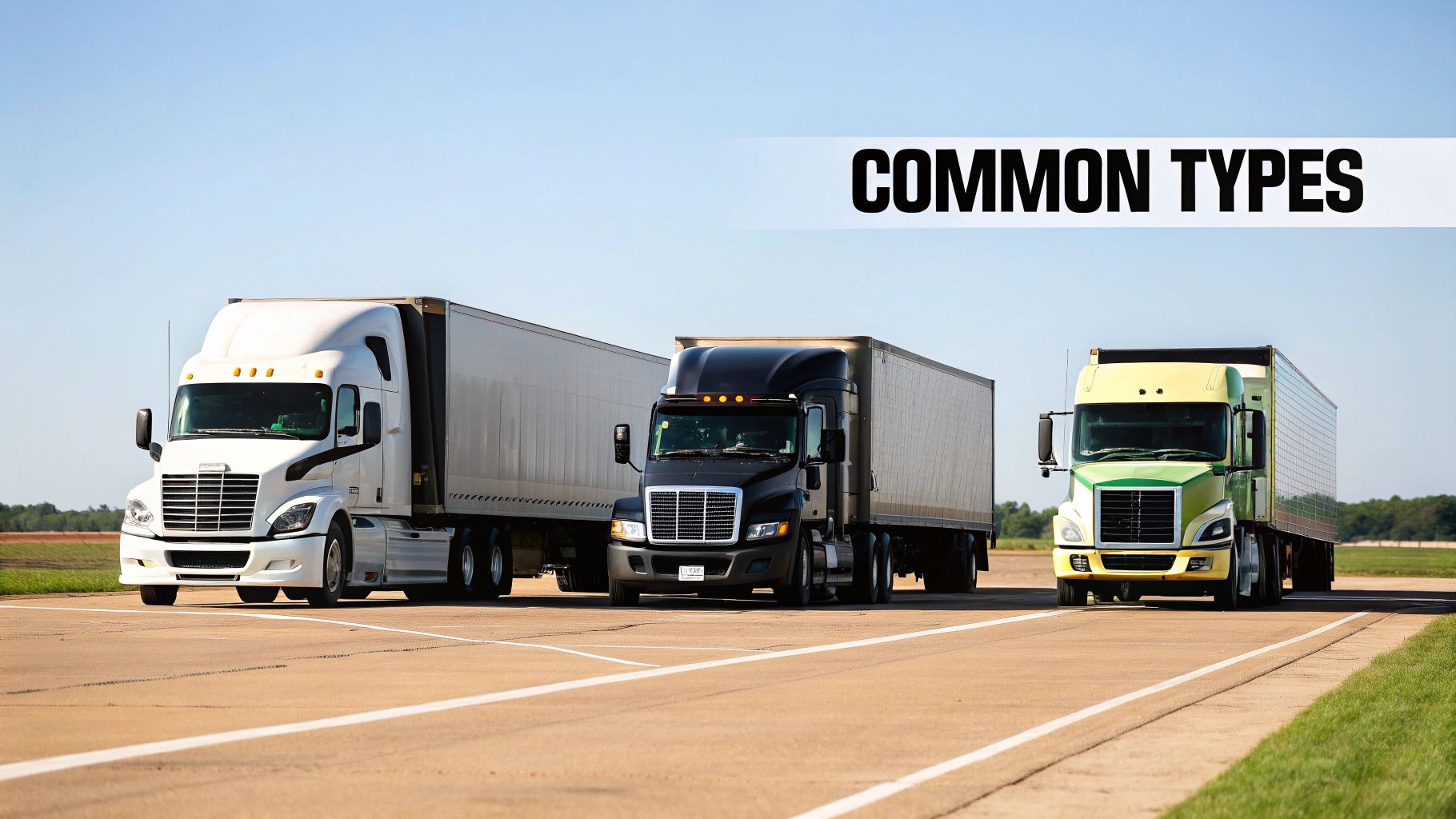
When you hear "combination vehicle," a few classic setups probably come to mind. While the category is broad, a handful of rigs truly own the asphalt. If you're looking to get behind the wheel professionally, you need to know these configurations inside and out, because each one handles differently.
The rig you see everywhere is the tractor-semitrailer. This is the classic "18-wheeler," the workhorse of the American freight industry. It’s made up of a powerful tractor unit pulling one long trailer, which is usually 53 feet long. This is the truck you’ll master first.
But sometimes, one trailer just isn't enough. That's when things get more interesting and a lot more challenging.
Putting It All Together: Multi-Trailer Rigs
To haul more freight in a single trip, companies use what are known as longer combination vehicles, or LCVs. These rigs are all about efficiency, but they demand a much higher level of skill and special CDL endorsements to operate safely.
- Doubles: Often called "twin trailers," this setup is a tractor pulling two shorter trailers. The trailers are linked together by a converter dolly, which acts as a fifth wheel for the rear trailer. You'll see these a lot in LTL (less-than-truckload) operations.
- Triples: Just like it sounds, this is a tractor pulling three trailers in a row. These are the giants of the road and are much less common. Because of their incredible length and the difficulty in handling them, they are only allowed in certain states and on specific routes.
Driving a multi-trailer rig means you're dealing with multiple pivot points. This dramatically increases the risk of the "crack-the-whip" effect, where the last trailer can swing out violently during a quick turn or lane change.
Here's the bottom line for new drivers: The longer the vehicle, the more complex it is to handle. A standard tractor-trailer is your starting point. Mastering doubles and triples is a whole other level of professional driving.
Before you can even think about handling the more advanced rigs, you have to nail the fundamentals. Acing your knowledge tests is the first step. You can see where you stand by taking a practice run with questions from the CDL combination vehicles test. Building that solid foundation is absolutely essential for operating safely and confidently on today's highways.
Understanding the Unique Safety Risks
Getting behind the wheel of a combination vehicle is a completely different world than driving a car or even a single-unit truck. The physics at play are just on another level. The sheer size and the way these rigs bend and move create unique forces that you, as the driver, have to constantly manage to stay safe.
One of the most classic dangers, especially with doubles and triples, is the "crack-the-whip" effect. Remember that playground game? A line of kids holding hands starts running and turning, and the last kid in line gets flung around with serious force. That's exactly what happens to your rear trailer if you make a sudden turn or lane change. It can swing out wide with an amplified, violent motion that can easily cause a rollover or a collision.
This is exactly why smooth, predictable movements aren't just a suggestion—they're an absolute necessity for any professional driver.
The High Center of Gravity Problem
Another huge safety factor is the high center of gravity. Picture trying to balance a tall, skinny pole versus a short, squat block. The pole tips over with the slightest nudge, right? A loaded semi-truck is that tall pole. All its weight is stacked high above the ground, making it naturally unstable.
This instability is your biggest enemy on sharp turns, highway ramps, or when you have to make a sudden move to avoid a hazard. The numbers don't lie: more than half of all truck driver deaths in crashes involving combination vehicles are the result of rollovers. And a fully loaded rig is about 10 times more likely to roll over than an empty one.
With a high center of gravity and all those dynamic forces pushing and pulling on the trailer, your margin for error is practically zero. Rollover prevention begins before you even start the engine.
Things like making sure your cargo is balanced correctly, managing your speed, and doing a comprehensive check of your equipment are your best defenses. A solid routine, like the one we cover in our guide to the CDL pre-trip inspection, is your first line of defense against these built-in risks. This is why proper training isn't just about passing the test; it's about mastering the skills to handle these forces day in and day out.
The Essential Skills of Coupling and Uncoupling
Connecting a tractor to a trailer might seem routine, but getting it wrong can have catastrophic consequences. Safely coupling and uncoupling is a fundamental skill that separates the pros from the amateurs, and it’s something every driver needs to master. There’s zero room for error when a dropped trailer or damaged equipment is on the line.
It all starts with a pre-connection inspection. Before you even think about backing up, you need to get out and look at your fifth wheel. Is it greased? Are the locking jaws open and ready to accept the kingpin? A few seconds of inspection here can save you a world of trouble later.
The Connection Sequence
Once you’ve confirmed the fifth wheel is ready, the next step is a slow, straight-back approach to align perfectly with the trailer's kingpin. After you hear and feel the connection lock, the real work of securing the vehicle begins.
- Hook Up the Lifelines: Connect the gladhands for the air lines and the electrical plug. You’re looking for a snug, secure fit with no leaks or frayed wires.
- Raise the Landing Gear: Crank the landing gear all the way up. It needs to be completely clear of the ground before you move.
- Do a Tug Test: This is your final, critical safety check. With the trailer brakes set, gently pull the tractor forward. If that kingpin isn't locked in, you want to find out now, not on the highway.
Proper technique is about more than just a secure connection; it's the first step in managing all the unique risks that come with driving a combination vehicle.
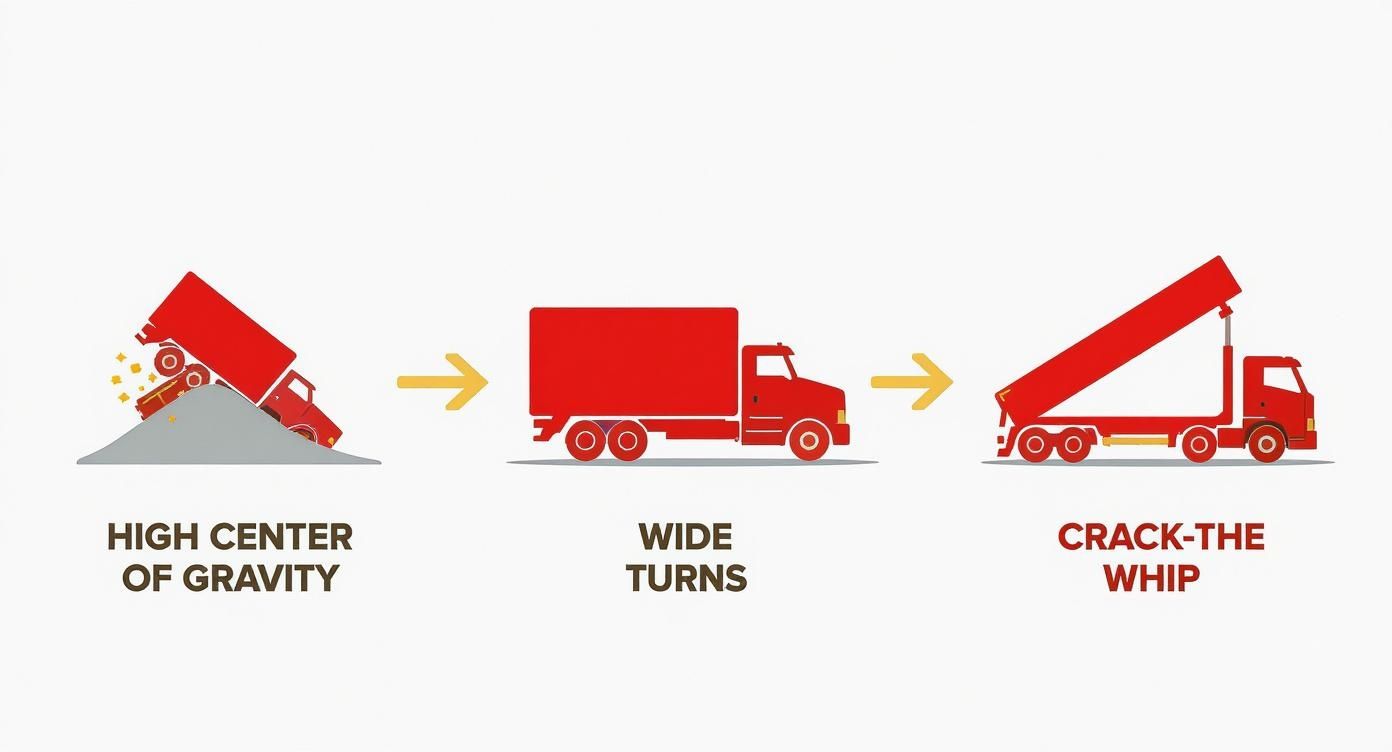
As you can see, things like a high center of gravity and the infamous "crack-the-whip" effect demand total control from the driver, and that control starts with a perfect hook-up.
Uncoupling is just as critical and requires the same methodical approach. You have to find solid, level ground, lower the landing gear until it's firmly supporting the trailer's weight, and only then do you disconnect your lines and pull the fifth wheel release.
A huge part of this entire process is managing your air supply correctly. The braking system is the heart of a safe combination vehicle, and you need to know it inside and out. If you're studying for your test, see how you stack up with these practice questions for the CDL air brakes test. Getting these procedures right, every single time, is what a safe driving career is built on.
Getting the Right License for the Big Rigs
Hopping into the driver's seat of a combination vehicle is a whole different world from driving your personal car. These massive rigs demand a professional skill set and, legally, a very specific type of license to go with it.
Operating these vehicles requires a valid Commercial Driver's License (CDL). It's not just a formality; a CDL is your proof that you have the deep knowledge and practical skills to safely manage the unique challenges of a big rig—from navigating tight corners to controlling its immense weight on the highway.
The Power of the Class A CDL
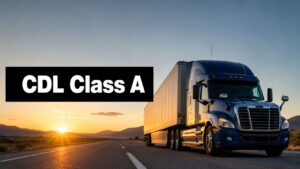
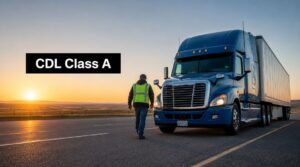
When you think of a classic tractor-trailer, you're thinking of a Class A vehicle. This is the top-tier license for any combination vehicle with a total weight of 26,001 pounds or more, specifically when the trailer you're hauling is heavier than 10,000 pounds.
Earning your Class A license doesn't just open one door; it opens nearly all of them. It automatically qualifies you to operate most Class B and Class C vehicles, giving you incredible flexibility and a major advantage in the job market. To get started on this path, you first need to understand the core qualifications, and our guide to CDL requirements breaks it all down for you.
To give you a clearer picture, here’s how the different CDL classes match up with the vehicles you'll see on the road.
CDL Classifications for Vehicle Types
This table breaks down the different CDL classes and what they authorize you to drive.
| CDL Class | Permitted Gross Vehicle Weight Rating (GVWR) | Examples of Combination Vehicles |
|---|---|---|
| Class A | 26,001 lbs. or more (with a trailer over 10,000 lbs.) | Tractor-trailers, truck and trailer combinations, flatbeds |
| Class B | 26,001 lbs. or more (with a trailer under 10,000 lbs.) | Straight trucks, large buses, box trucks |
| Class C | Designed to transport 16 or more passengers or hazardous materials (HazMat) | Small HazMat vehicles, passenger vans, small buses |
As you can see, the Class A license is the key to operating the largest and most common combination vehicles out there.
Why Endorsements Matter
Think of your CDL as the foundation. To really build a specialized, high-paying career, you’ll need to add endorsements to it. These are special qualifications that show you've passed additional tests and have proven expertise in handling specific types of cargo or equipment.
An endorsement on your license tells an employer you’re not just a driver; you're a specialist. This often leads to better pay, more desirable routes, and a more secure career.
A perfect example for combination vehicle drivers is the 'T' endorsement, which is an absolute must-have if you want to pull double or triple trailers. Getting familiar with these licensing steps is the first, most important move you can make toward a long and successful career behind the wheel.
Frequently Asked Questions
Even after covering the basics, it's totally normal to have a few lingering questions about combination vehicles. Let's tackle some of the most common ones we hear from students.
So, What's the Easiest Way to Define a Combination Vehicle?
Think of it as a team of at least two separate units working together. You've got the powered "tractor" up front—that's where the engine and the driver are—and at least one unpowered trailer in the back to haul the freight.
What truly makes it a "combination" is the pivoting connection, usually a fifth wheel, that links them. This hinge is what lets the rig bend and turn, a feature that completely sets it apart from a "straight" truck built on a single, rigid frame.
What Kind of License Do I Actually Need to Drive One?
To get behind the wheel of most big rigs you see on the highway, like a standard tractor-semitrailer, you'll need a Class A Commercial Driver's License (CDL).
This isn't just a suggestion; it's a federal requirement for any combination vehicle with a gross weight of 26,001 pounds or more, as long as the trailer itself weighs over 10,000 pounds.
What's the Toughest Part About Driving a Combination Vehicle?
Ask any seasoned driver, and they'll likely point to two things: mastering turns and backing up without a hitch.
Off-tracking is a big one. It's the phenomenon where the trailer wheels take a tighter path around a corner than the tractor's wheels. To keep your trailer from hopping a curb or sideswiping a pole, you have to learn how to swing out wide. Backing is notoriously tricky, too—it demands counter-intuitive steering and a sixth sense for where your trailer is going to avoid a dreaded jackknife.
Why Do We Call Them "Combination" Vehicles Anyway?
The name is pretty literal! They're called "combination" vehicles because they are a combination of separate units—the powered tractor and the unpowered trailer(s)—that are joined to operate as one vehicle on the road.
It's the simplest way to distinguish them from single-unit or "straight" trucks.
Ready to get the hands-on skills you need to operate a combination vehicle and kickstart a rewarding new career? At Patriot CDL, our experienced instructors are focused on getting you on the road safely and confidently. Learn how our CDL programs can help you get started.