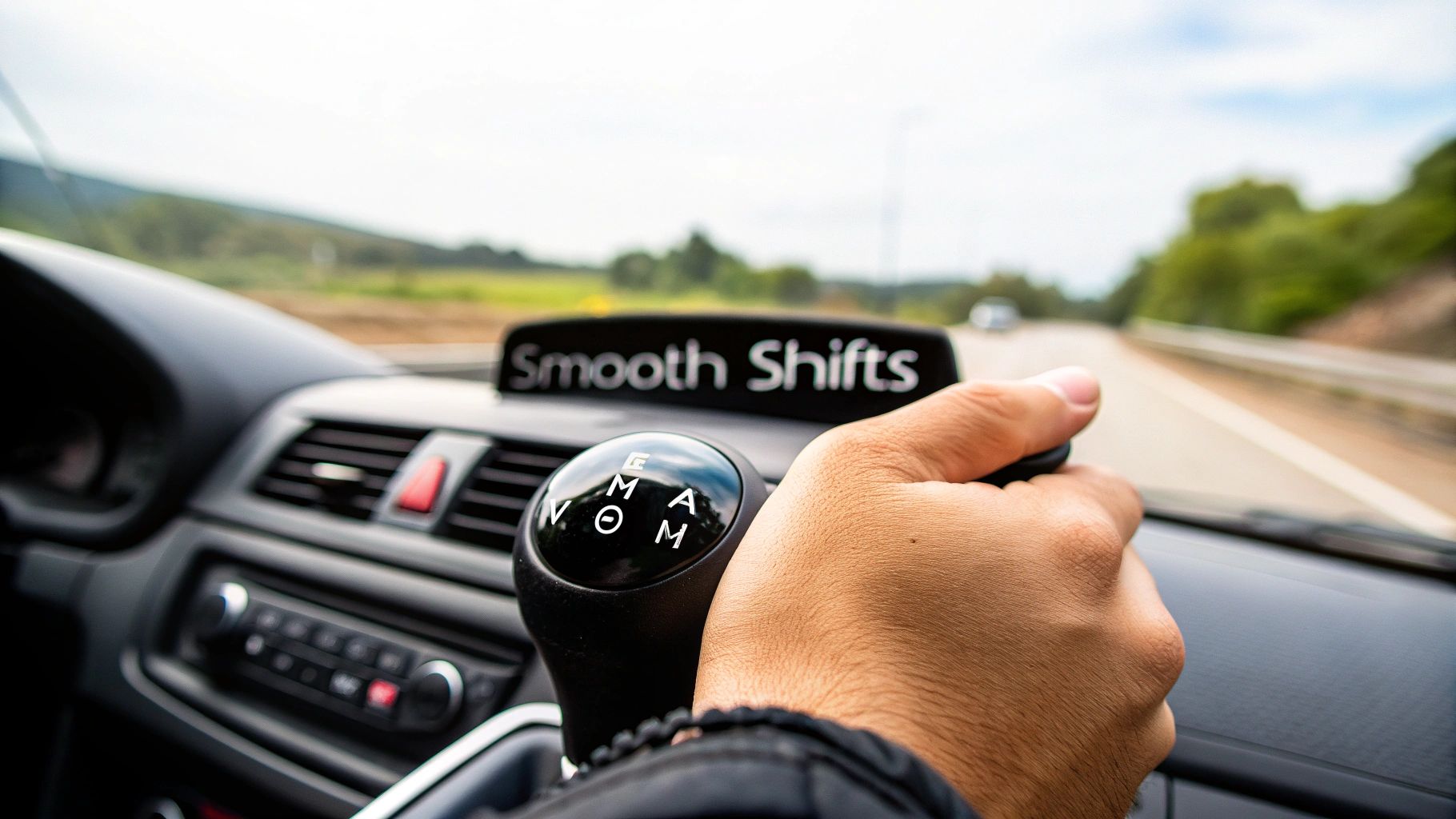
Driving a vehicle with a manual transmission is a rewarding skill that offers a deeper connection between driver, machine, and the road. While the initial learning curve can seem intimidating, mastering the art of the stick shift is entirely achievable with the right guidance and dedicated practice. This comprehensive guide breaks down essential manual transmission driving tips designed to elevate your skills from jerky starts to confident, seamless gear changes. We'll move beyond the basics, providing actionable techniques that build crucial muscle memory and enhance situational awareness for a smoother, more controlled driving experience.
This listicle is crafted to provide immediate value. You will learn the fundamentals of precise clutch control, how to prevent stalls in traffic, and the proper methods for executing a perfect hill start. We will also explore more advanced maneuvers like rev-matching for flawless downshifts and using engine braking for controlled deceleration. Whether you're a new driver just starting your journey or an experienced one looking to refine your technique, these insights will help you navigate any scenario with precision. For those considering a professional driving career, mastering these skills is a non-negotiable first step, forming the foundation for operating commercial vehicles safely and efficiently.
1. Mastering the Clutch Engagement Point
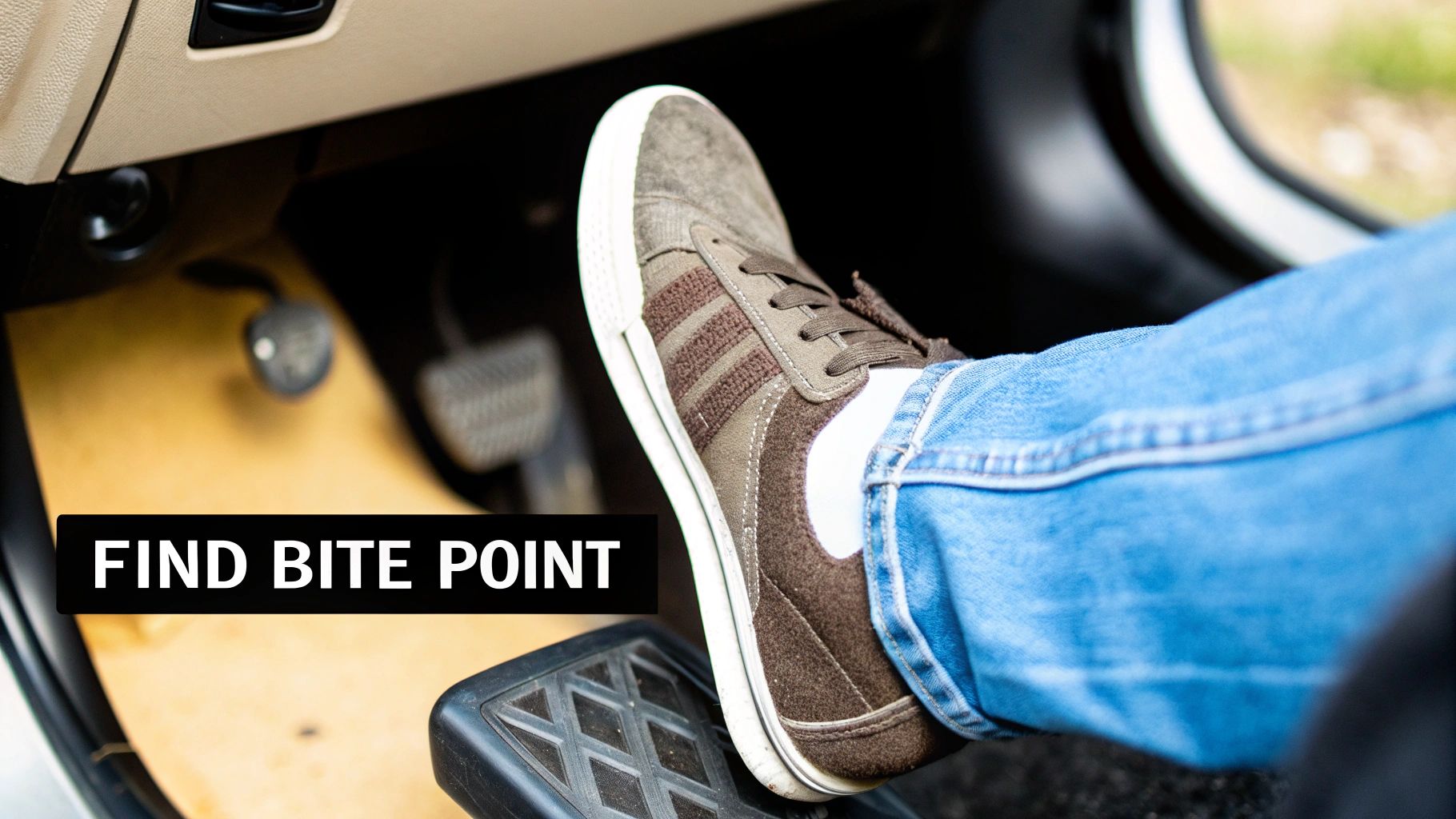
Understanding the clutch engagement point, often called the "friction zone" or "bite point," is the cornerstone of smooth manual transmission driving. This is the precise moment when the clutch plates begin to connect, transferring power from the engine to the transmission and setting the car in motion. Mastering this single skill separates a jerky, stall-prone driver from a smooth, confident one.
The goal is to develop a feel for this point so you can start from a stop effortlessly. Professional rally drivers and commercial truck drivers dedicate immense practice to this, as precise clutch control is essential for both high-speed performance and safely managing heavy loads. For aspiring commercial drivers, this foundational skill is a major focus in advanced training.
How to Find and Master the Bite Point
- Practice in a Safe Space: Find an empty, level parking lot. With the engine on and the clutch pedal fully depressed, put the car in first gear.
- Listen to the Engine: Very slowly, begin to release the clutch pedal. Do not touch the gas. Listen for a slight drop in the engine's RPMs and feel for a subtle vibration. This is the bite point.
- Use Smooth Movements: Once you find the bite point, gently apply a small amount of throttle as you continue to slowly release the clutch. The car should begin to creep forward smoothly.
- Build Muscle Memory: Repeat this process until you can find the engagement point quickly and intuitively without thinking. This muscle memory is crucial for confident driving in traffic and on hills.
2. Double Clutching for Smooth Downshifts
Double clutching is an advanced technique for achieving exceptionally smooth downshifts, particularly in older vehicles without modern synchronizers. It involves pressing the clutch twice: once to shift into neutral, and again to shift into the lower gear. This method perfectly matches the engine speed to the transmission speed, preventing wear and tear and eliminating the "jolt" often felt during a less-than-perfect downshift.
While modern synchronized transmissions have made this technique less necessary for daily driving, it remains a vital skill for professional drivers and enthusiasts. Race car drivers and commercial truck drivers master double clutching for optimal performance and control. Similarly, European long-haul truck drivers and classic car enthusiasts practice it to preserve their vehicle's drivetrain and ensure smooth operation.
How to Practice and Perfect Double Clutching
- Understand the Sequence: The process is: clutch in, shift to neutral, clutch out. Then, "blip" the throttle to raise engine RPMs, clutch back in, and shift smoothly into the lower gear.
- Match Engine Speed: The key is the throttle blip in the neutral phase. Your goal is to match the engine speed (RPMs) to what it will be in the lower gear at your current road speed.
- Start Simple: Practice by downshifting one gear at a time, for example, from third to second. Focus on getting the timing of the blip right so the shifter slides into gear with minimal effort.
- Listen and Feel: A perfect double-clutched downshift is nearly silent and feels effortless. If you have to force the shifter or hear a grind, your engine speed was not properly matched. Practice in a safe, open area to build this crucial feel.
3. Heel-Toe Downshifting Technique
Heel-toe downshifting is an advanced driving technique where you use your right foot to operate both the brake and throttle pedals simultaneously. This action allows you to brake for a corner while blipping the throttle to match the engine's RPM for a smoother, faster downshift. Mastering this skill is a hallmark of high-performance driving, ensuring the car remains stable and balanced during aggressive deceleration.
This technique is essential for track day enthusiasts and professional motorsport drivers, where maintaining chassis balance and preventing drivetrain shock is critical for fast lap times. By perfectly matching engine speed to wheel speed before re-engaging the clutch in a lower gear, you avoid the lurching and potential loss of traction that can occur during a normal downshift under braking.
How to Practice Heel-Toe Downshifting
- Start Stationary: With the car off, practice the foot movement. Place the ball of your right foot on the brake pedal and pivot your heel (or the side of your foot) to blip the accelerator.
- Practice in a Safe Area: Move to a safe, empty parking lot. Drive at a low speed in a straight line. Practice braking with the ball of your foot while simultaneously tapping the gas with your heel.
- Combine the Actions Slowly: Once comfortable with the footwork, try combining it with a downshift. Brake, depress the clutch, blip the throttle, shift to a lower gear, and smoothly release the clutch.
- Focus on Smoothness, Not Speed: The initial goal is fluid, coordinated movements. Speed will come naturally with practice. This is a key skill taught in advanced driving courses to enhance car control.
4. Proper Hill Start Technique Using Handbrake or Clutch Bite
Starting on an incline is one of the most intimidating challenges for new manual drivers, but mastering it is essential for confident and safe operation. The core challenge is to move forward without rolling backward into traffic behind you. Executing a proper hill start prevents rollback, reduces clutch wear, and ensures complete control of the vehicle in demanding situations.
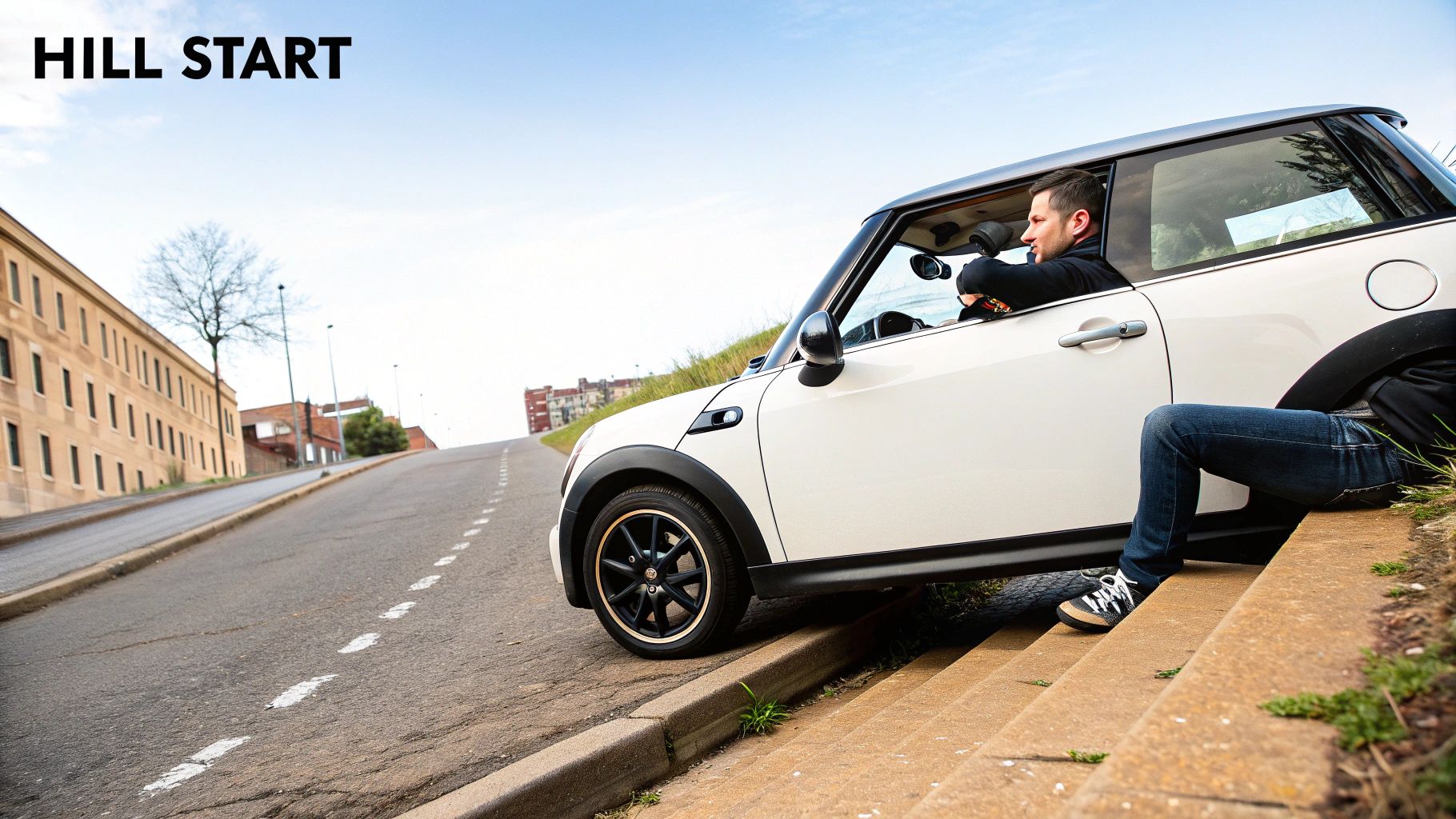
This skill is non-negotiable for anyone driving in hilly cities like San Francisco or navigating steep mountain passes. Commercial drivers rely on this technique daily, as managing a heavy, fully loaded truck on an incline requires absolute precision. Whether you are in a multi-level parking garage or a steep urban street, this is a fundamental part of manual transmission driving tips that builds confidence and safety.
How to Perform a Handbrake Hill Start
- Secure the Vehicle: With the car stopped on the hill, keep your foot on the brake and engage the handbrake (parking brake) firmly. You can now take your foot off the regular brake pedal.
- Find the Bite Point: Depress the clutch, select first gear, and slowly release the clutch until you feel the bite point. You'll notice the engine RPMs dip slightly, and the rear of the car may squat a little as it tries to pull against the brake.
- Apply Throttle and Release: While holding the clutch at the bite point, apply a steady amount of throttle. Simultaneously, slowly release the handbrake. The car should move forward smoothly without rolling back.
- Practice for Confidence: This method is the most secure and is highly recommended for beginners. It separates the steps, allowing you to focus on clutch and throttle control without worrying about the foot brake.
5. Smooth Acceleration Using Progressive Throttle Application
True mastery of a manual transmission isn't just about shifting without grinding gears; it's about seamless, fluid motion. Progressive throttle application is the technique that separates a novice from an expert, ensuring acceleration is smooth and controlled rather than sudden and jarring. This involves gradually feeding power to the engine in sync with the clutch release and vehicle speed, creating a comfortable ride for passengers and reducing stress on the drivetrain.
This skill is essential for professionals whose livelihood depends on smooth driving. Long-distance truck drivers use it to conserve fuel and manage heavy loads, while professional chauffeurs and luxury car drivers practice it to provide an impeccable passenger experience. Eco-driving competitors also rely heavily on this technique to maximize fuel efficiency by avoiding aggressive, wasteful inputs.
How to Achieve Smooth Acceleration
- Balance Throttle and Clutch: As you release the clutch through the bite point, begin to gently apply pressure to the accelerator. Think of it as a smooth handover, not a sudden switch.
- Apply Gas Gradually: Instead of stomping on the pedal, press it down slowly and steadily over 2-3 seconds. The goal is to build momentum progressively, not to launch the car forward.
- Listen to the Engine: Pay attention to the engine's sound. A steady, rising hum indicates a smooth application of power. A sudden roar or lugging sound means your throttle input is too aggressive or too timid for the gear you are in.
- Match RPMs to Gear: As you accelerate, ensure the engine's RPMs rise in a linear fashion appropriate for the selected gear. This is a core element of good manual transmission driving tips. Avoid sudden spikes in RPM, which waste fuel and create a jerky ride.
6. Selecting Appropriate Gears for Road Conditions and Speed
Choosing the correct gear for your speed and the road conditions is a critical skill in manual transmission driving that goes beyond simple acceleration. It’s about maintaining optimal engine performance, ensuring vehicle control, and enhancing safety. Selecting the right gear keeps your engine in its most efficient power band, giving you the torque you need to climb a hill or the control to navigate a slippery road.
This skill is especially vital for professional drivers who must manage vehicle dynamics under varying loads and terrains. A commercial driver, for example, must understand how to use lower gears to safely descend steep grades without overheating the brakes, a principle that is fundamental to operating heavy combination vehicles. For those looking to advance their skills, mastering gear selection for different scenarios is a key area of focus.
How to Select the Right Gear for Any Situation
- Listen to Your Engine: Your engine’s sound tells you everything. A high-pitched, screaming sound means you need to upshift. A low, bogging, or chugging sound means you need to downshift. Aim to keep the RPMs in a smooth, steady range.
- Anticipate the Road Ahead: Look ahead for hills, turns, or traffic. Downshift before you enter a steep incline or a sharp corner to ensure you have power ready to accelerate out of it. On the highway, shift into your highest gear for fuel efficiency.
- Adapt to Poor Conditions: In snow, ice, or heavy rain, using a lower gear provides better traction and engine braking. Starting in second gear (if your vehicle allows) can sometimes reduce wheel spin on very slippery surfaces.
- Use Engine Braking on Declines: When going down a steep hill, shift into a lower gear (e.g., third or second). This uses the engine's compression to help slow the vehicle, reducing wear on your brakes and giving you more control.
7. Rev Matching for Seamless Downshifts
Rev matching is an advanced technique that transforms your downshifts from functional to flawless. It involves "blipping" the throttle to increase engine RPMs to match the speed they will be at in the lower gear before you release the clutch. This synchronizes the engine and transmission speeds, resulting in an exceptionally smooth gear change that eliminates the common lurch or jolt, reducing wear on the clutch and synchronizers.
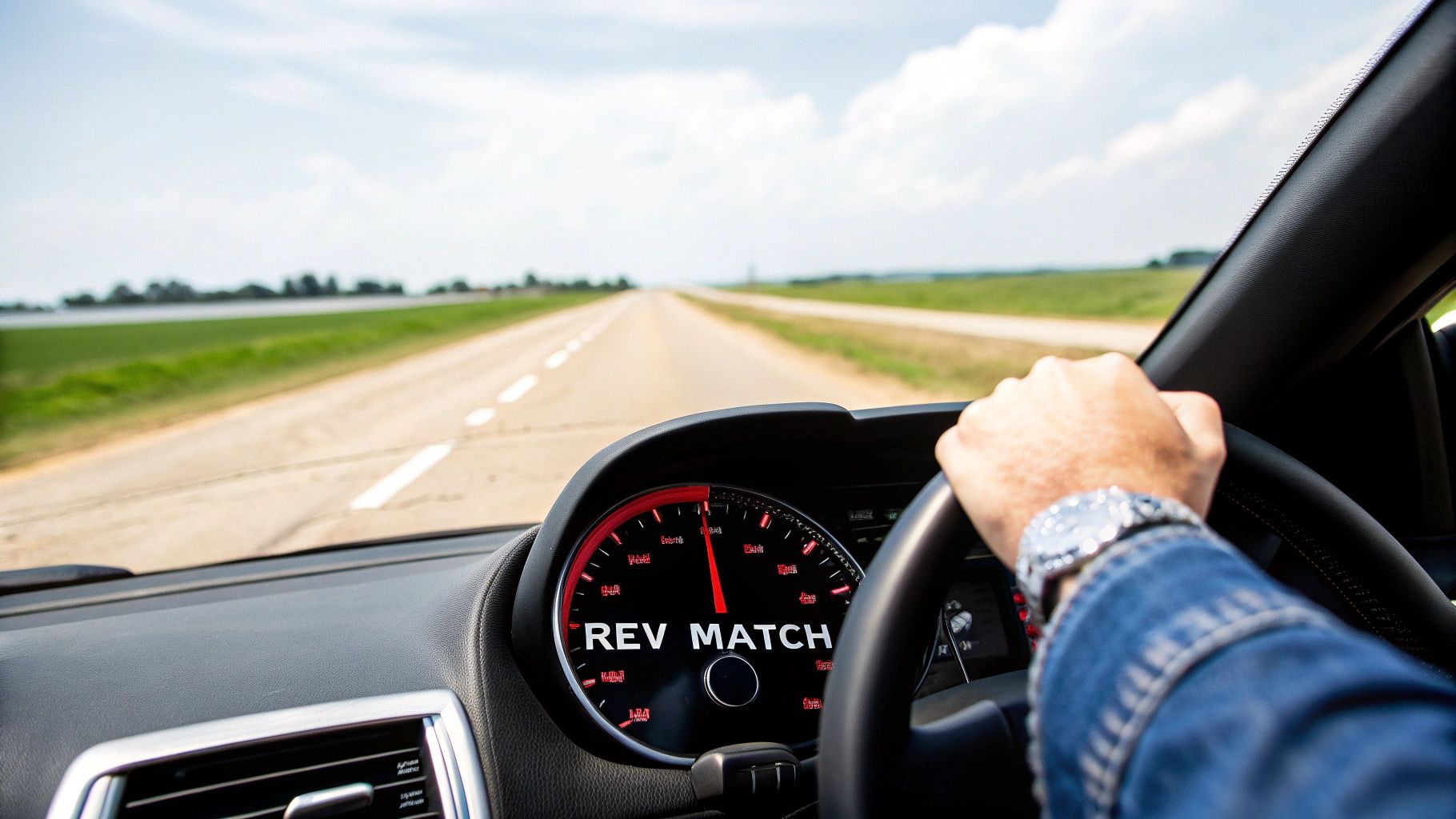
This method is a staple in motorsport and performance driving schools, where smooth power delivery and vehicle stability are critical for fast lap times. By mastering rev matching, one of the more advanced manual transmission driving tips, you gain a new level of control and connection with your vehicle, making every drive smoother and more engaging. Professional stunt drivers also rely on this for precise vehicle control during dynamic maneuvers.
How to Practice and Perfect Rev Matching
- Practice in a Low-Stakes Environment: Start by practicing on an open road without traffic. As you prepare to downshift, depress the clutch and move the shifter to neutral.
- Blip the Throttle: While in neutral, give the accelerator a quick, sharp "blip" to raise the engine RPMs. The amount of throttle needed depends on the speed and gear change.
- Engage the Lower Gear: Immediately after the blip, select the lower gear and smoothly release the clutch. If timed correctly, the engine and transmission will engage seamlessly with no jerk.
- Listen and Feel: Your ears are your best tool. Listen for the engine note to match the expected RPM for your speed in the lower gear. A correct rev match feels effortless. Start slow and build confidence.
8. Engine Braking for Controlled Deceleration
Engine braking is a technique that uses the engine's compression to slow the vehicle down, reducing reliance on the conventional friction brakes. By downshifting to a lower gear and taking your foot off the accelerator, the engine's resistance naturally decelerates the car. This method is a key part of advanced manual transmission driving tips, as it enhances control and significantly prolongs the life of your brake pads and rotors.
This technique is not just for performance drivers; it is a critical safety practice in professional driving. Commercial truck drivers navigating the steep downgrades of mountain passes rely heavily on engine braking to prevent brake fade and maintain control of heavy loads. For anyone towing a trailer or driving in hilly or icy conditions, mastering engine braking is essential for safe and controlled descents.
How to Use Engine Braking Effectively
- Anticipate and Downshift Early: Before starting a long or steep descent, downshift into a lower gear. This allows the engine to control your speed from the beginning, rather than trying to slow down once you've already gained too much momentum.
- Shift Progressively: Instead of skipping from fifth to second gear, work your way down through the gears sequentially (e.g., fifth to fourth, then fourth to third). This ensures a smoother deceleration and prevents excessive strain on the drivetrain.
- Combine with Light Braking: For steeper hills, supplement engine braking with light, intermittent pressure on the brake pedal. This combination provides maximum control without overheating the brakes.
- Listen to Your Engine: Pay attention to the engine's RPMs. If the revs climb too high after a downshift, you may need to apply the brakes gently or shift back up. The goal is to keep the engine in a high but safe RPM range for effective braking.
9. Avoiding Common Stalling Situations Through Technique Awareness
Stalling a manual transmission car is a common frustration for new drivers and can even catch experienced ones off guard. It stems from a mismatch between clutch release speed, throttle input, and gear selection. By developing an awareness of why stalls happen, you can proactively adjust your technique to maintain smooth, continuous momentum and avoid the lurch and silence of a dead engine.
This awareness is crucial for navigating unpredictable scenarios like dense stop-and-go city traffic or steep parking garage ramps where a stall could be both inconvenient and unsafe. Expert drivers, from couriers to CDL professionals, develop an almost sixth sense for the engine's state, preventing stalls before they even begin. This is a core part of the advanced manual transmission driving tips they use to ensure operational consistency and safety.
How to Prevent Common Stalls
- Release the Clutch Gradually: The most common cause of stalling is letting the clutch out too quickly from a stop. Always release it smoothly and deliberately, especially as you pass through the friction zone.
- Apply Sufficient Throttle: Give the engine enough gas to handle the load of moving the car. As you release the clutch, a gentle and steady increase in throttle will prevent the RPMs from dropping too low.
- Listen to Your Engine: An engine that is about to stall will "lug" or shudder as the RPMs plummet. If you hear or feel this, immediately press the clutch back in to disengage the engine and re-evaluate your throttle and clutch balance.
- Use the Right Gear: Being in too high of a gear for your speed is another guaranteed way to stall. If you slow down significantly, remember to downshift to an appropriate gear to keep the engine in its power band.
10. Clutch Control in Heavy Traffic and Stop-and-Go Conditions
Navigating dense, stop-and-go traffic is one of the most challenging scenarios for a manual transmission driver. Mastering this requires precise, delicate clutch control to maintain a slow crawl without stalling or causing premature wear on the clutch components. This skill is about finding a sustainable rhythm that keeps the car moving smoothly while minimizing stress on both the driver and the vehicle's drivetrain.
The key is to use the friction zone sparingly and intelligently, rather than continuously "riding" the clutch. For commercial drivers managing heavy loads, this technique is non-negotiable for safety and vehicle preservation. Excessive heat from prolonged slipping can damage the clutch, a critical component that is always checked during a comprehensive vehicle inspection. Maintaining clutch health is a core part of responsible driving.
How to Manage Stop-and-Go Traffic
- Creep and Coast: Instead of constantly slipping the clutch, use a "creep and coast" method. Fully engage the clutch to move forward a few feet, then depress the clutch again and coast in neutral. This gives the clutch a chance to cool down.
- Create Space: Leave a generous gap between you and the car ahead. This allows you to move in longer, smoother intervals rather than making constant, jerky adjustments that stress the clutch.
- Use Neutral for Longer Stops: If traffic stops for more than a few seconds, shift into neutral and release the clutch pedal completely. This removes all pressure from the clutch release bearing, extending its lifespan.
- Minimize Slipping: When you do need to move, aim to engage the clutch decisively but smoothly. Apply gentle throttle as you release the clutch to get moving, then get your foot off the clutch pedal as soon as the gear is fully engaged. This minimizes wear and heat buildup.
Manual Transmission: 10-Tip Comparison
| Technique | 🔄 Complexity | ⚡ Effort / Resources | 📊 Expected outcomes | 💡 Ideal use cases | ⭐ Key advantages |
|---|---|---|---|---|---|
| Mastering the Clutch Engagement Point | 🔄🔄 Moderate — tactile learning curve | ⚡⚡ Low equipment, moderate practice time | 📊 Smooth starts, fewer stalls, less wear | 💡 Beginner drivers, hill starts, urban driving | ⭐ Reliable starts, improved comfort |
| Double Clutching for Smooth Downshifts | 🔄🔄🔄 Advanced — precise timing | ⚡🔸 High practice & coordination | 📊 Smoother downshifts, reduced synchronizer wear | 💡 Racing, vintage transmissions, heavy trucks | ⭐ Precise shifts, extended transmission life |
| Heel‑Toe Downshifting Technique | 🔄🔄🔄🔄 Very advanced — complex pedal coordination | ⚡⚡⚡ Intensive practice; foot technique training | 📊 Maintains stability and speed through corners | 💡 Motorsport, track days, performance driving | ⭐ Optimal corner control and smoothness |
| Proper Hill Start (Handbrake or Clutch Bite) | 🔄🔄 Moderate — method choice dependent | ⚡⚡ Low equipment, targeted practice | 📊 Prevents rollback, safer incline starts | 💡 Hilly cities, mountain driving, parking ramps | ⭐ Safety and driver confidence on inclines |
| Smooth Acceleration via Progressive Throttle | 🔄🔄 Low–moderate — timing and feel | ⚡⚡ Low tools, consistent practice | 📊 Improved passenger comfort, fuel economy, less wear | 💡 Taxi, long-distance driving, daily commuting | ⭐ Smoother rides and reduced mechanical strain |
| Selecting Appropriate Gears for Conditions | 🔄🔄 Moderate — situational judgment | ⚡⚡ Moderate experience; learn vehicle RPM ranges | 📊 Better fuel efficiency, control, engine protection | 💡 Winter/mountain driving, highway cruising, city traffic | ⭐ Optimized performance and safety |
| Rev Matching for Seamless Downshifts | 🔄🔄🔄 Advanced — throttle blips timing | ⚡⚡⚡ Requires practice at varying speeds | 📊 Jarring-free downshifts, less transmission stress | 💡 Motorsport, spirited driving, performance schools | ⭐ Seamless shifts and extended drivetrain life |
| Engine Braking for Controlled Deceleration | 🔄🔄 Moderate — gear management skill | ⚡⚡ Low tools, situational technique | 📊 Reduced brake wear, controlled descents | 💡 Long downhill grades, towing, off‑road descents | ⭐ Preserves brakes and maintains stability |
| Avoiding Common Stalling Situations | 🔄🔄 Low–moderate — awareness and technique | ⚡⚡ Practice and habit formation | 📊 Fewer stalls, sustained traffic flow, confidence | 💡 New manual drivers, stop‑and‑go traffic, hills | ⭐ Reliability and reduced starter/transmission strain |
| Clutch Control in Heavy Traffic & Stop‑and‑Go | 🔄🔄🔄 Challenging — prolonged friction control | ⚡⚡⚡ High physical/attention demand; heat management | 📊 Smooth low‑speed control but increased wear risk | 💡 Urban commuting, delivery routes, event traffic | ⭐ Responsive maneuvering; avoids frequent shifting |
Putting It All Together on the Open Road
The journey from a novice manual driver to a seasoned expert is paved with practice, patience, and a deep understanding of your vehicle's mechanics. The manual transmission driving tips detailed in this guide serve as your roadmap. They transform the act of driving from a series of disjointed actions into a fluid, intuitive dance between you and the machine.
Moving beyond the basics of simply not stalling, you now have a toolkit for true mastery. By internalizing the clutch's precise engagement point, you gain control in the most delicate situations, like heavy traffic. Techniques such as rev-matching and heel-toe shifting are not just for performance enthusiasts; they are practical skills that reduce wear on your transmission and brakes, ensuring a smoother, safer ride. Each flawlessly executed hill start and every seamless gear change is a testament to your growing proficiency and a step towards making these actions second nature.
From Knowledge to Instinct
The ultimate goal is to move from conscious effort to subconscious competence. Initially, you might mentally recite the steps for a downshift or a hill start. With consistent application, however, these processes become instinct. You'll begin to feel the engine's needs through vibrations and sound, shifting gears not because the tachometer says so, but because the vehicle communicates its needs directly to you.
This is where the real value of driving a manual is unlocked. It creates a connection to the road that automatic transmissions simply cannot replicate. You are no longer a passenger with a steering wheel; you are an integral part of the driving process, making active decisions that influence performance, efficiency, and control. For anyone pursuing a career in commercial trucking, where manual transmissions remain a staple, this level of skill is not just a preference, it's a professional necessity.
Your Next Steps on the Road
Your path forward is clear: practice with purpose. Don't just drive; actively engage with the techniques we've covered. Find an empty parking lot to refine your clutch control. Take a familiar route and focus solely on achieving the smoothest possible shifts. Consciously use engine braking on downhill stretches. Each session behind the wheel is an opportunity to hone your skills. This commitment is what separates a capable driver from a truly great one and lays the foundation for a successful and rewarding career on the open road.
Ready to turn your driving skills into a professional career? The expert instructors at Patriot CDL specialize in providing the hands-on, comprehensive training needed to master commercial manual transmissions and earn your CDL. Visit Patriot CDL to learn how their structured programs can fast-track your journey to becoming a professional truck driver.