Passing your DOT physical isn't about being in perfect health. It’s about being prepared and knowing what's coming. The real secret is getting a handle on the health factors you can control—like your blood pressure—and walking in with all the right paperwork. Think of it less as a test and more as a demonstration that you're medically fit and safe to be behind the wheel of a commercial vehicle.
Your Quick Guide to Passing the DOT Physical
If you're going for your Commercial Driver's License (CDL), the Department of Transportation (DOT) physical is a mandatory stop on your journey. This isn't just bureaucratic red tape; it’s a thorough health check designed to ensure every driver's physical, mental, and emotional state meets the strict standards set by the Federal Motor Carrier Safety Administration (FMCSA). It’s a critical safety measure for you and for everyone sharing the road.
The best way to tackle the exam is to see it as a roadmap. When you know the standards and what the Certified Medical Examiner (CME) is looking for, you can walk in without any surprises. Let's break down exactly what that involves.
What the Exam Covers
The DOT physical is a comprehensive check-up, but it hones in on the functions that are most critical for safe driving. Here’s a rundown of what the examiner will be looking at.
- Vision and Hearing: Can you see and hear well enough to react to road conditions? You'll need at least 20/40 acuity in each eye—with or without glasses—and the ability to hear a "forced whisper" from five feet away.
- Blood Pressure and Pulse: This is a big one. To get a full two-year medical card, your blood pressure needs to be at or below 140/90. Higher readings don't always mean an automatic failure, but they can lead to a shorter certification period.
- Urinalysis: First thing's first: this is not a drug test. The urine sample is used to screen for underlying health issues, like diabetes, by checking for things like protein, sugar, or blood.
- Physical Examination: The CME will perform a general physical, checking your heart, lungs, spine, and reflexes to make sure there are no impairments that could interfere with your ability to operate a truck safely.
To give you a clearer picture, here’s a quick summary of what the examiner will be checking.
DOT Physical Exam at a Glance
| Exam Component | Passing Standard | Quick Tip |
|---|---|---|
| Vision | At least 20/40 acuity in each eye and a 70-degree field of vision in each eye. | Bring your glasses or contacts. If you've had vision surgery, bring documentation from your eye doctor. |
| Hearing | Able to perceive a "forced whisper" from 5 feet away or pass an audiometer test. | Make sure your ears are clean before the exam; wax buildup can affect the results. |
| Blood Pressure | 140/90 or lower for a 2-year certificate. | Avoid caffeine, nicotine, and high-sodium foods for 24 hours before your appointment. |
| Urinalysis | Screens for specific gravity, protein, blood, and sugar. | Stay hydrated, but don't overdo it right before you go in. |
| Medical History | Full disclosure of surgeries, health conditions (e.g., diabetes, heart issues, sleep apnea). | Come prepared with a list of medications (including dosage) and any relevant medical records. |
Think of this as just one piece of the puzzle. Understanding what's required for the physical is a great start, but you'll have a much smoother ride if you're familiar with the entire process.
The DOT physical is a key part of the overall commercial licensing process. Understanding all the steps is crucial, which is why reviewing comprehensive CDL requirements can give you a significant advantage.
With a little preparation, you can walk into your DOT physical feeling confident and ready to pass.
What the DOT Physical Actually Covers
Walking into the medical examiner's office blind is a recipe for anxiety. Let's pull back the curtain so you know exactly what to expect. Think of the DOT physical not as a single test, but as a series of checks, each designed to make sure you're fit and safe behind the wheel of a commercial vehicle.
A Certified Medical Examiner (CME) will systematically go through several key health areas. Knowing the benchmarks for each part of the exam is the best way to walk in feeling prepared and confident.
Vision and Hearing: Your First Line of Defense
On the road, your eyes and ears are constantly scanning for potential trouble. That’s why the DOT has very clear standards for both.
When it comes to your vision, the requirements are non-negotiable:
- You need to have at least 20/40 acuity in each eye individually, and also with both eyes together. The good news? You can wear your glasses or contacts to meet this standard.
- The examiner will also check your peripheral vision. You must have a horizontal field of vision of at least 70 degrees in each eye.
The hearing test is a bit simpler but just as critical. You’ll be asked to stand five feet away from the examiner, who will then say something in a "forced whisper." You need to be able to hear it, either with or without a hearing aid. This test confirms you can pick up on important sounds like sirens, horns, or someone yelling a warning.
Urinalysis and the Hands-On Physical Exam
The moment the urinalysis is mentioned, many drivers get a little tense. Let’s clear this up right now: this is not a drug test. The CME is simply checking your urine for signs of underlying health problems that could make driving dangerous. They’re looking for things like protein, blood, or sugar, which can point to potential kidney issues or uncontrolled diabetes.
After that, the CME will conduct a comprehensive physical examination. This is a head-to-toe evaluation covering several areas:
- General Appearance: The examiner is just looking for any obvious signs of health problems.
- Heart and Lungs: They'll listen for any heart murmurs, irregular rhythms, or breathing issues.
- Neurological Health: This involves simple tests for your reflexes, balance, and coordination.
- Muscles and Spine: The examiner will check for any physical limitations that might interfere with your ability to operate the controls or sit for extended periods.
The DOT physical is a mandatory hurdle for every commercial driver. Understanding the exam inside and out is a huge part of your preparation, a journey we fully support as you look into the right CDL training.
Each component of the exam paints a full picture of your health for the examiner. By knowing precisely what they are looking for, you can show up ready, with all your documentation in hand, and with a lot less stress.
Conquering the Blood Pressure Test
High blood pressure, or hypertension, is a silent hurdle that trips up more drivers than just about any other issue during the DOT physical. A high reading can mean getting a shorter medical certificate—or even a temporary disqualification. The good news? You have more control over your numbers than you think, and a little preparation can make all the difference.
This flowchart gives you a bird's-eye view of the entire DOT physical, showing how each component, including blood pressure, fits into the final certification decision.
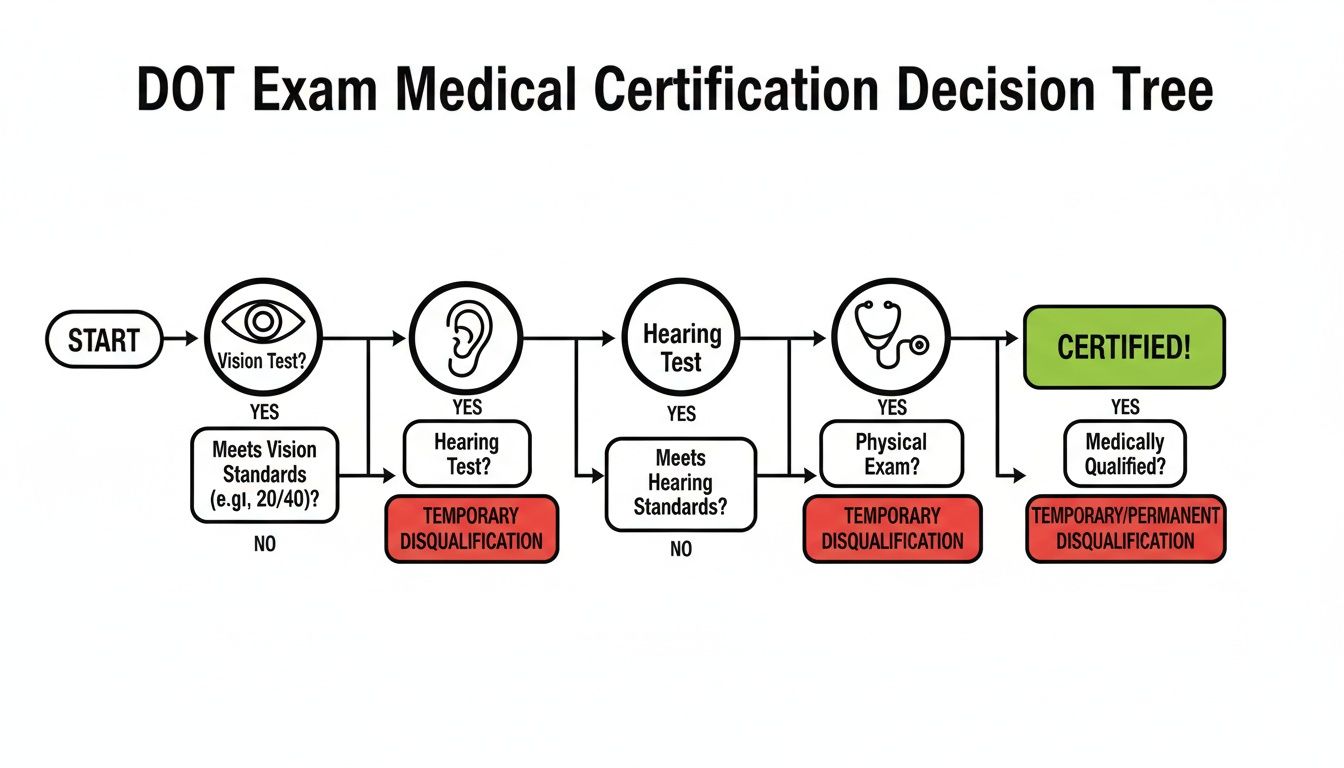
As you can see, the physical exam is one of the last major steps, and your blood pressure reading is a critical piece of that puzzle.
Understanding the FMCSA Blood Pressure Stages
The FMCSA has very specific rules for blood pressure, and knowing them helps you see exactly where you stand. Frankly, this is one of the biggest reasons drivers get sidelined or only walk away with short-term certifications.
Here’s how the numbers break down:
- Below 140/90 mmHg: You’re in the clear. This gets you a full two-year medical certificate.
- 140/90 to 159/99 mmHg: This is considered Stage 1 hypertension. You'll likely receive a one-year certificate.
- 160/100 mmHg or higher: This reading will result in a temporary disqualification. You'll need to get your blood pressure down and be re-evaluated.
In some cases, if your numbers are a bit high, the medical examiner might issue a one-time, three-month certificate. This gives you a window to work with your doctor, get your pressure down, and then come back to qualify for a longer-term certification.
Practical Steps to Manage Your Numbers
You can start taking action right now to get a better reading on exam day. It's all about simple, consistent lifestyle tweaks that give your heart a hand.
Try these simple but effective strategies:
- Ease Up on the Salt: Sodium makes your body hold onto extra water, which pushes your blood pressure up. In the weeks leading up to your physical, try cutting back on processed foods, fast food, and salty snacks. It can have a surprisingly big impact.
- Get Moving: You don't need to run a marathon. Just 20-30 minutes of brisk walking most days strengthens your heart, so it doesn't have to work as hard to pump blood.
- Avoid Stimulants on Exam Day: On the morning of your appointment, skip the coffee, energy drinks, and cigarettes. All of these cause a temporary spike in blood pressure that could easily push your reading into a higher, more problematic category.
Adopting a heart-healthy diet is one of the most powerful long-term strategies for managing blood pressure. Small changes can add up, and you can learn more about what constitutes a heart-healthy diet plan.
Pro Tip: Don't let "white coat syndrome" sabotage your test. It's incredibly common for blood pressure to shoot up just from being in a doctor's office. Get to your appointment early, sit quietly, and focus on taking some slow, deep breaths before they call your name. It can easily lower your reading by several points.
If you’re already on blood pressure medication, consistency is key. Make sure you take it exactly as prescribed, and bring a note from your doctor that details your treatment plan. This shows the examiner you have the condition under control. For those looking for resources at the state level, our guide for drivers in California can offer some localized insights.
Your Pre-Exam Preparation Checklist
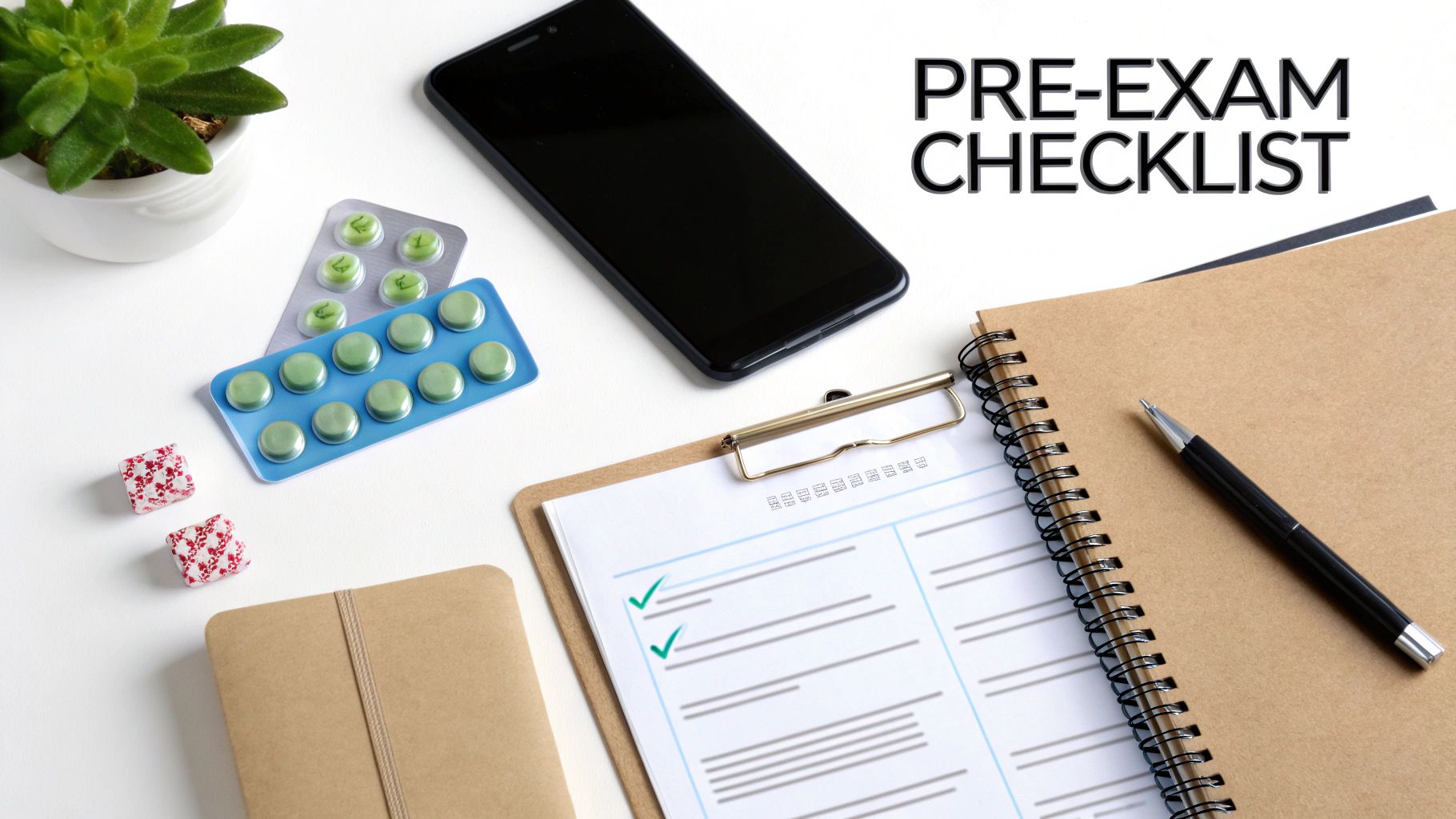
Passing your DOT physical is a lot easier when you do a little homework first. Honestly, showing up unprepared is one of the quickest ways to hit a roadblock, whether it's a simple delay or even a temporary disqualification.
Think of it as a pre-trip inspection for your own health. A few minutes spent gathering documents and being mindful of your diet can prevent a minor paperwork issue from costing you your medical card. This isn't about cheating the system; it's about giving the Certified Medical Examiner (CME) the most accurate and complete picture of your health.
Assembling Your Essential Paperwork
Walking in with the right documents is half the battle. Don't let a missing piece of paper stand between you and your certification.
Here’s what you absolutely need to have in hand:
- Your Driver’s License: This seems obvious, but it's the first thing they'll ask for to verify your identity.
- A Full List of Medications: Write down everything. I mean everything—prescriptions, over-the-counter pills, even vitamins and supplements. Include the drug name, dosage, and the name of the doctor who prescribed it.
- Recent Medical Records for Specific Conditions: If you're managing a condition like heart disease, diabetes, or sleep apnea, bring the paperwork to prove it. For a heart condition, that means a clearance letter from your cardiologist. For sleep apnea, you'll need a printout from your CPAP machine showing compliant use for at least the last 30 days.
Pro Tip: Keep all your medical paperwork in a single folder. It shows the examiner you’re organized and serious about managing your health. This simple step can make their job easier and builds confidence that you're fit to drive.
Having this documentation ready is also a key step when you're just starting out. For more details on the initial process, check out our guide on how to get your CDL permit.
The 24 Hours Before Your Exam
What you do the day before and the morning of your physical can make a real difference, especially for your blood pressure reading and urinalysis results.
The night before, make getting a solid night's sleep your top priority. Being rested helps keep your blood pressure down. Stay hydrated by drinking plenty of water, but don't chug a gallon right before you walk in the door.
On exam day, take your medications as you normally would unless a doctor has told you otherwise. And please, skip the coffee, energy drinks, and that greasy, high-salt breakfast from the truck stop. Caffeine and sodium are notorious for temporarily spiking your blood pressure, which is the last thing you want. A calm, prepared mindset is your best asset.
Navigating Health Conditions, Waivers, and Exemptions
Getting a diagnosis for a condition like diabetes or sleep apnea can feel like a major roadblock in your driving career. But it doesn't have to be a dead end. The key is proving to the Certified Medical Examiner (CME) that your condition is under control and won't affect your ability to drive safely.
If you come prepared with the right documentation, you can absolutely navigate the process. Think of it as simply showing your work. For a driver with diabetes, that means hard data proving your blood sugar is stable. For sleep apnea, it's about showing you're using your CPAP machine like you're supposed to. The FMCSA has established clear pathways for drivers with chronic health issues to stay on the road, as long as they are managed responsibly.
Proving Your Condition Is Under Control
When you walk into the exam with a known health condition, the responsibility is on you to prove it’s properly managed. Just telling the examiner you feel fine won’t cut it—you need to bring the paperwork to back it up.
Here’s what that looks like for a couple of common conditions:
- Diabetes: You'll need to bring recent lab results, specifically a Hemoglobin A1c (HbA1c) test from within the last three months. You should also have a detailed letter from your primary care doctor or endocrinologist. This letter needs to spell out your treatment plan, list your medications, and state that you have no complications that would make driving unsafe. For those dealing with pre-diabetes or diabetes, learning how to reduce insulin resistance naturally can be a big help.
- Sleep Apnea: Untreated sleep apnea is a huge red flag because the fatigue it causes can be as dangerous as drunk driving. The FMCSA takes this very seriously. You must bring a printout from your CPAP machine showing compliant use for at least the last 30 days. "Compliant" typically means using the machine for a minimum of four hours per night on at least 70% of nights.
Understanding Medical Waivers and Exemptions
Sometimes, a driver might not meet a specific physical standard but can still operate a CMV safely. This is where programs like medical waivers and Skill Performance Evaluation (SPE) certificates come into play. These aren't loopholes; they are official FMCSA programs for drivers with conditions like certain vision or limb impairments.
Getting a waiver isn't as simple as getting a doctor's note. It's a formal application process with the FMCSA that requires extensive medical reports and, often, a practical skills evaluation to prove you can handle the truck safely.
It's a common mistake to think a waiver is a one-and-done deal. The truth is, most waivers and exemptions require regular monitoring and recertification to prove your condition hasn't worsened and you're still safe behind the wheel.
Managing your health is a full-time job, and so is maintaining your medical certification. For drivers who have specific license restrictions, like being limited to an automatic transmission, it's also important to know your options. Our specialized E-Restriction Removal Course can help you expand your career opportunities.
Ultimately, the best strategy is to be proactive about your health and organized with your paperwork. That's how you pass your DOT physical and keep your career rolling.
Common Questions About the DOT Physical
Even if you've done all your homework, it’s natural to have a few lingering questions before the big day. Getting these common points of confusion cleared up can make all the difference, helping you walk into your DOT physical feeling calm and prepared.
Let’s run through some of the most frequent questions I hear from drivers. Knowing the answers about certification, drug testing, and what to do if things don't go perfectly can help eliminate that last-minute anxiety.
What Happens If I Fail My DOT Physical?
First, take a breath. Failing your DOT physical is rarely the end of the road for your driving career. Think of it more like a temporary roadblock with a clear detour. The Certified Medical Examiner (CME) won’t just send you on your way; they're required to tell you exactly why you didn't pass.
Often, it's something manageable. Maybe your blood pressure was just a bit too high on exam day. In that case, the examiner will give you specific steps to take, which usually means a visit to your primary care doctor to get the condition under control. Once you’ve followed their advice and have the right paperwork, you can go back for a re-evaluation.
Does the DOT Physical Include a Drug Test?
This is a huge point of confusion, so let's set the record straight: the standard DOT physical does not include a drug test. The urinalysis you do during the physical is a medical screening, not a drug screen. It’s checking for things like protein, blood, and sugar, which can signal underlying health problems like kidney issues or diabetes.
Now, here's the catch: many employers will require you to take a separate DOT drug test at the same time, especially for a new job or as part of a random testing pool. Just know they are two different tests for two different reasons, even if they happen back-to-back at the same clinic.
How Long Is a DOT Medical Card Good For?
If you're in good health and meet all the standards, your DOT medical certificate will be valid for a maximum of two years. That's the best-case scenario.
The final say on your card's duration rests with the Certified Medical Examiner. They have the authority to issue a shorter certificate if you have a condition that needs more frequent check-ins.
For instance, a driver with well-managed Stage 1 hypertension will likely get a one-year certificate. If you have a condition that’s a bit more borderline, the examiner might even issue a temporary three-month card. This gives you a window to get the issue sorted out with your doctor before coming back to qualify for a longer certification.
Can I Go to My Own Doctor for the Exam?
You can go to your personal doctor, but only if they are officially certified by the FMCSA and listed on the National Registry of Certified Medical Examiners (NRCME). The reality is, many family doctors aren't.
Don't make the mistake of getting your physical from a non-certified provider. That will result in an invalid medical card and could put your CDL at risk. Before you book anything, do a quick search on the official NRCME website to verify the provider is on the list. It’s a simple check that ensures your exam is legitimate and meets all federal rules.
At Patriot CDL, we make sure our students are ready for every part of their new career, and that includes acing the DOT physical. Learn more about our comprehensive CDL training programs and how we help you launch a successful life on the open road.