First things first: to get your DOT medical card, you need to pass a physical exam. But not just any doctor can give you one. The exam has to be done by a certified medical examiner who is officially listed on the Federal Motor Carrier Safety Administration's (FMCSA) National Registry.
This isn't just a suggestion—it's a hard-and-fast rule. The whole point of the National Registry is to make sure every single commercial driver is held to the same federal health and safety standards, no matter where they get their exam.
Finding Your DOT Medical Exam Location
So, where do you find these certified pros? You've got options, and your choice will probably come down to what's most convenient for your schedule and location. The good news is that these examiners are often located in places you'd expect, like occupational health clinics, urgent care centers, and even right at major truck stops.
Knowing where to start looking can feel like the first real hurdle in your trucking career. A quick search for "where can I get a DOT medical card" will give you a list, but let's break down what to expect from each type of facility.
Where to Find a Certified DOT Medical Examiner
Here’s a quick look at the most common places to get your DOT physical and what makes each a good choice.
| Location Type | Best For | What to Expect |
|---|---|---|
| Occupational Health Clinics | Drivers who want a clinic that lives and breathes DOT rules. | These places are specialists. They handle workplace physicals all day, so they know the process inside and out, which usually means a smooth, efficient visit. |
| Urgent Care Centers | Flexibility and last-minute needs. | Great for walk-ins or if you need an appointment after regular business hours. Just be sure to call ahead to confirm a certified examiner is on duty. |
| Clinics at Truck Stops | Unbeatable convenience for drivers already on the road. | Designed for truckers, these clinics understand your schedule. You can often get your exam done during a required break without going far off your route. |
| Mobile Clinics | Groups of new drivers or company-sponsored events. | Some companies bring certified examiners on-site to process multiple drivers at once. It's less common for individuals but a great option for fleets. |
No matter where you go, there's one thing you absolutely must confirm before you walk in the door.
The single most important factor is certification. The medical professional performing your exam must be listed on the FMCSA National Registry. If they aren't, your medical card is invalid, and you’ll just have to turn around and do it all over again somewhere else.
Making the Right Choice for You
For new drivers just starting out, like the students in our Patriot CDL California program, we make this step as painless as possible. We’ve already vetted trusted, certified local providers and can point you in the right direction to avoid any delays or headaches.
Getting this exam is a non-negotiable part of the process, but it doesn't have to be complicated. Once you know where to look and what to ask for, you can get it checked off your list and focus on the real goal: getting behind the wheel and starting your career.
How to Find a Certified Medical Examiner You Can Trust
First things first: you can't just walk into any doctor's office for your DOT physical. You absolutely must see a provider who is officially listed on the FMCSA's National Registry of Certified Medical Examiners (NRCME). This isn’t just red tape; it's a critical safety measure. The registry guarantees that every examiner, whether they're in rural Montana or downtown Los Angeles, is trained to the exact same federal standards for driver health.
Think of the NRCME as the only phone book that matters for your medical card. Using a certified examiner ensures your certificate is legitimate and that you've been evaluated by someone who truly understands the demands of being a commercial driver.
Using the Official NRCME Search Tool
The single best way to find a legitimate examiner is to go straight to the source: the official online search tool on the FMCSA website. It takes all the guesswork out of the process. You can search by city, state, or zip code, and it will pull up a list of every certified professional in your area.
The good news is that you’re never too far from a qualified examiner. There are over 50,000 certified examiners across the country, so finding one nearby is usually pretty simple. In major trucking states like Texas, California, and Florida, you'll likely find several options within a 10-mile radius.
Once you have a list, do a little homework. A few minutes spent checking Google reviews can tell you a lot about a clinic’s typical wait times, professionalism, and overall atmosphere.
Your goal is to find an examiner who is not only certified but also efficient, professional, and transparent about their pricing. A quick phone call to confirm their availability and cost can save you significant time and frustration.
Who Can Become a Certified Examiner
You might be surprised at the variety of healthcare professionals who can get certified to perform these exams. It’s not just medical doctors. The list of qualified providers includes:
- Doctors of Osteopathy (DO)
- Physician Assistants (PA)
- Advanced Practice Nurses (APN)
- Doctors of Chiropractic (DC)
No matter their title, every single one of these professionals has to complete specific training and pass a rigorous test on the FMCSA’s physical qualification standards. This ensures they know exactly what to look for and understand the unique health risks and physical demands of driving a commercial vehicle for a living.
By sticking to the National Registry, you can rest easy knowing the person signing off on your medical card is fully qualified to make that call. It's the most important first step to getting behind the wheel legally and safely.
Preparing for Your DOT Physical Exam
Walking into your DOT physical unprepared is one of the easiest ways to throw a wrench in your plans. A little prep work goes a long way and can be the difference between a smooth, quick sign-off and a frustrating delay that keeps you off the road.
Think of it like a pre-trip inspection, but for yourself. You want to walk in confident, knowing you have everything the medical examiner needs to get a clear and accurate picture of your health.
What You'll Need to Bring With You
Being organized here is non-negotiable. The examiner has to follow strict FMCSA guidelines, and they need certain documents to do their job properly. Forgetting just one thing can stop the whole process in its tracks.
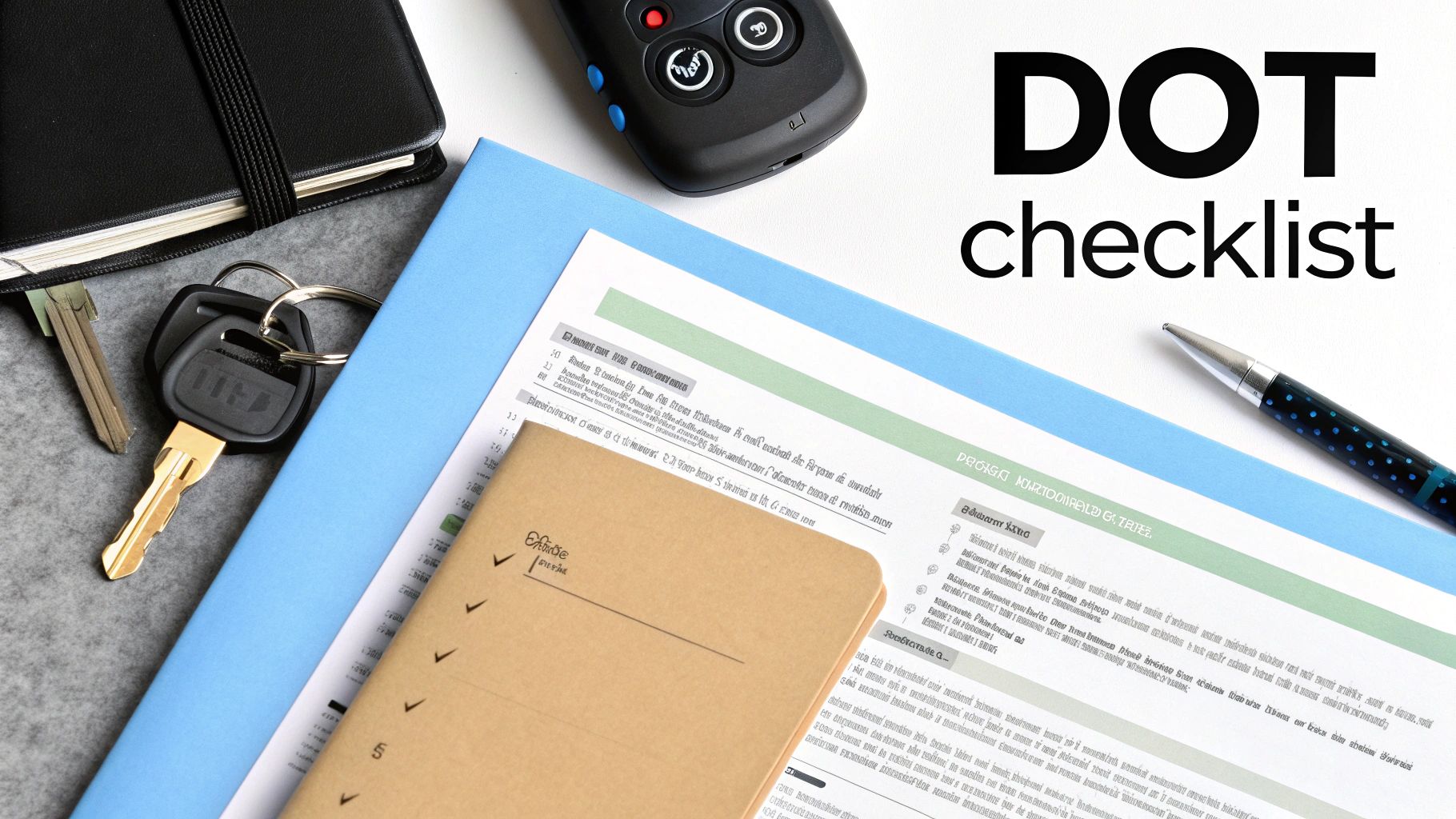
To make sure your appointment goes off without a hitch, I've put together a simple checklist of what to have ready.
Your Personal Checklist for the DOT Exam
| Item or Information | Why You Need It | A Quick Tip |
|---|---|---|
| Valid Driver’s License | This is the primary way the examiner verifies your identity. | Give it a quick look the night before to make sure it's not expired. |
| Complete Medication List | The examiner needs to know every single thing you take to check for potential conflicts or side effects. | Type it out or write it clearly. Include the drug name, dosage, and the prescribing doctor's name for each. Don't forget vitamins or over-the-counter stuff. |
| Glasses or Contacts | If you need corrective lenses to meet the 20/40 vision standard, you must have them to pass the eye test. | It’s a good idea to bring your prescription card or a backup pair, just in case. |
| Hearing Aids | Just like with vision, if you need a hearing aid to pass the test, you must have it with you and it must be working. | Check the batteries before you leave the house. It sounds simple, but it happens! |
Remember, this isn't about passing a test with trick answers. It's about ensuring you're safe to be behind the wheel of a commercial vehicle.
The medical examiner's job is to ensure you can safely operate a commercial vehicle. Providing a complete and honest list of medications and health conditions isn't just a requirement—it's a critical part of maintaining road safety for everyone.
Handling Specific Medical Conditions
If you're managing a known medical condition, you'll need to come prepared with some extra paperwork. Bringing documentation from your specialist shows the examiner that your condition is stable and under control, which is exactly what they need to see. This is a huge part of understanding the full scope of CDL requirements.
Here are a few common situations and the kind of documentation you should have on hand:
Heart Conditions: Anyone with a history of heart attack, bypass surgery, or other cardiac issues needs to bring a clearance letter from their cardiologist. This letter should detail your condition and explicitly state you're cleared for the demands of commercial driving.
Diabetes: If you have diabetes, the examiner will want to see recent blood sugar logs or an A1c result. For drivers on insulin, the requirements are more specific, so be ready to provide documentation showing your condition is well-managed.
Sleep Apnea: If you use a CPAP machine, you absolutely must bring a compliance report from the device. This report typically needs to show at least 30 days of consistent use, proving you're actively treating your sleep apnea.
Gathering these documents beforehand saves everyone time and helps the medical examiner confidently certify you without hitting any roadblocks.
Costs, Scheduling, and What to Expect on Exam Day
Alright, you've figured out where to go for your DOT physical. Now, let's talk about the practical side of things: how much it costs, how to schedule it, and what happens if there's a hiccup. A little bit of planning here can save you a whole lot of headache later.
Expect the cost of a DOT physical to land somewhere between $50 and $150. The final price really depends on the type of clinic you choose. A walk-in clinic at a truck stop might be on the cheaper end, while you'll likely pay a bit more at a specialized occupational health clinic or a private doctor's office. One key thing to remember: don't count on your health insurance to cover this. It’s almost always considered a work-related expense, meaning it's an out-of-pocket cost.
Getting It Done Right: Scheduling and Cost-Saving Tips
Before you jump in the car and head to the nearest urgent care, do yourself a favor and make one quick phone call. This is non-negotiable. You need to call ahead and confirm two critical pieces of information: the exact cost of the exam and that a certified medical examiner is actually on-site. Trust me, there’s nothing worse than wasting half a day driving to a clinic only to find out their one certified examiner is off.
While you're on the phone, ask about their typical wait times for a DOT physical. A clinic that does these all day, every day will usually get you in and out much faster than a general urgent care that's also juggling flu cases and twisted ankles.
The exam itself is pretty quick, usually taking about 30 to 60 minutes. The examiner will go through a checklist, testing your vision (you need at least 20/40 acuity), your hearing, and your blood pressure. They’ll also screen for conditions like diabetes. If all goes well, you’ll walk out with a medical card valid for up to 24 months. If you have a condition that needs watching, like high blood pressure, you might get a shorter-term card for three, six, or twelve months.
What if You Hit a Snag? Common Disqualifiers
It’s completely normal to be a little nervous about passing. But knowing the common issues that trip people up can help you get ahead of them. The point isn't to scare you, but to help you prepare so you can pass the first time.
A failed DOT physical is rarely a career-ender. Think of it more as a warning light on your dashboard—a sign that a manageable health issue needs your attention. Taking care of it with your primary doctor usually gets you back on the road to certification.
Here are the most common reasons a driver might get a temporary disqualification:
- High Blood Pressure: This is a big one. Any reading consistently over 140/90 mmHg is an immediate red flag. The examiner will likely issue a short-term certificate and tell you to get it under control with your regular doctor.
- Uncontrolled Diabetes: If you have diabetes, especially if you use insulin, you absolutely must show that it's well-managed. Come prepared with recent A1c results or your blood sugar logs.
- Vision or Hearing Problems: You have to meet the minimum standards, but you can use corrective lenses or hearing aids to get there. Just make sure you have them with you.
If you know you have one of these conditions, the best thing you can do is see your own doctor before your DOT exam. Get your numbers in a good range, gather any required paperwork, and you’ll walk into that exam with confidence.
What Happens After You Pass Your Exam
Passing your DOT physical is a great feeling, but you're not quite done yet. A few crucial things need to happen to make it official, though thankfully, the process is much simpler than it used to be.
Gone are the days of clutching a paper certificate and racing to the DMV. The whole system has gone digital, which is a huge relief for drivers. It means your certification gets recorded faster and more accurately, cutting down on the paperwork headaches that could sideline you in the past.
The certified medical examiner is now required to upload your results directly to the FMCSA’s National Registry. This is the most important step—it gets your medical status officially logged in the federal system.
The Digital Handshake: From Clinic to Your State License
Once the examiner hits "submit," the FMCSA's system automatically forwards your medical certification information to your State Driver Licensing Agency (SDLA). Your state agency then updates your Commercial Driver’s License (CDL) record to show you're medically cleared to drive.
This isn't just a convenience; it's the law. This electronic transmission means you no longer have to carry a paper copy of your medical card for your CDL or Commercial Learner's Permit (CLP). The Feds talk directly to the state, and the state posts it to your Motor Vehicle Record (MVR). It’s all handled behind the scenes.
Why This Matters for You
So, what does this digital shift actually mean for you on a practical level?
It drastically cuts down on the chance of human error. No more worrying about a lost form, a clerk who can't read the doctor's handwriting, or a data entry mistake at the DMV. This new process protects your CDL from being accidentally downgraded because of a simple paperwork fumble.
Think of it as your official, digital proof of compliance. Your electronic record on your MVR is now the single source of truth for your medical certification, easily accessible by your employer and law enforcement.
Even with this system, it's still smart to hold onto the paper copy of the Medical Examiner's Certificate the clinic gives you. Keep it in a safe place, at least until you’ve verified your status has been updated with your state's licensing agency.
For drivers managing specific qualifications, like those who have completed an E restriction removal course, making sure every part of your record is accurate is absolutely essential. This digital process helps ensure all the pieces of your license stay compliant and current.
How Patriot CDL Guides You Through the Process
Getting your DOT medical card is a huge first step, but let's be honest—it’s just one piece of the puzzle when you're building a new career in trucking. Here at Patriot CDL, we don’t just hand you a textbook and point you toward the truck. We’re with you for the entire journey, and that includes making sure the medical exam is handled right from the start.
We fold the DOT physical requirements directly into our training program. What does that mean for you? It means you get clear, straightforward advice on the medical standards long before you ever book an appointment. Our team has been through this countless times, and we'll help you get your paperwork in order and know exactly what to expect. No surprises, no last-minute scrambling.
A Complete Training Environment
Think of it this way: the medical exam, the permit test, and your hands-on driving skills are all connected. We’ve built our program around that idea, creating a complete learning environment where every requirement flows logically into the next. Our goal is to make each step feel like a natural progression, not a bureaucratic hoop to jump through.
We've seen it time and again—when our students don't have to stress about navigating the medical process alone, they can put all their focus into nailing a 90-degree alley dock or mastering a pre-trip inspection. It just makes sense.
At Patriot CDL, we don't just teach you to pass a test. We're here to prepare you for a long-term career by building a rock-solid foundation. That includes every part of being a professional driver, from health and wellness to compliance.
This all-in-one approach takes the guesswork out of the process. We ensure the path to getting your medical card is as smooth as the open road.
Ready to start your journey with a team that has your back every step of the way? You can get in touch with our admissions advisors today.
Frequently Asked Questions About the DOT Medical Card
Getting your DOT medical card sorted out can feel like a maze, especially if you're new to the industry. Let's tackle some of the most common questions drivers ask so you know exactly what to expect.
How Long Is a DOT Medical Card Good For?
Most of the time, a DOT medical card is good for 24 months. But think of that as the maximum, not the standard for everyone.
An examiner can absolutely issue a certificate for a shorter duration if you have a health condition that needs watching. For instance, if your blood pressure is on the high side, they might give you a card valid for only one year, six months, or even three months. This is their way of ensuring you're staying on top of your health and remain safe to drive.
What Happens If I Fail My DOT Physical?
Failing your DOT physical rarely means your driving career is over. It's usually a temporary setback. The examiner will tell you precisely why you didn't pass, and it's often something you can fix.
Let's say high blood pressure was the issue. Your next step is to work with your regular doctor to get it under control with medication or lifestyle changes. Once it's managed, you can go back and re-test. For certain conditions, you might also have the option to apply for a federal medical exemption from the FMCSA, though this is a more involved process.
Think of a failed physical as a yellow flag, not a red one. It's a chance to get a health issue addressed so you can get back in the driver's seat safely.
Does Health Insurance Cover the DOT Medical Exam?
This is a big one, and the answer is almost always no. Most health insurance companies consider the DOT physical an employment requirement, not a standard health check-up.
So, you'll need to budget for paying out-of-pocket. The cost can vary quite a bit, but we typically see it fall somewhere between $50 and $150. It's a good idea to ask for the exact price when you book your appointment to avoid any surprises. You can find more practical advice like this over on the Patriot CDL blog.
Patriot CDL can guide you through every requirement on your journey to becoming a professional driver. Learn more about our comprehensive CDL training programs at https://patriotcdl.com.