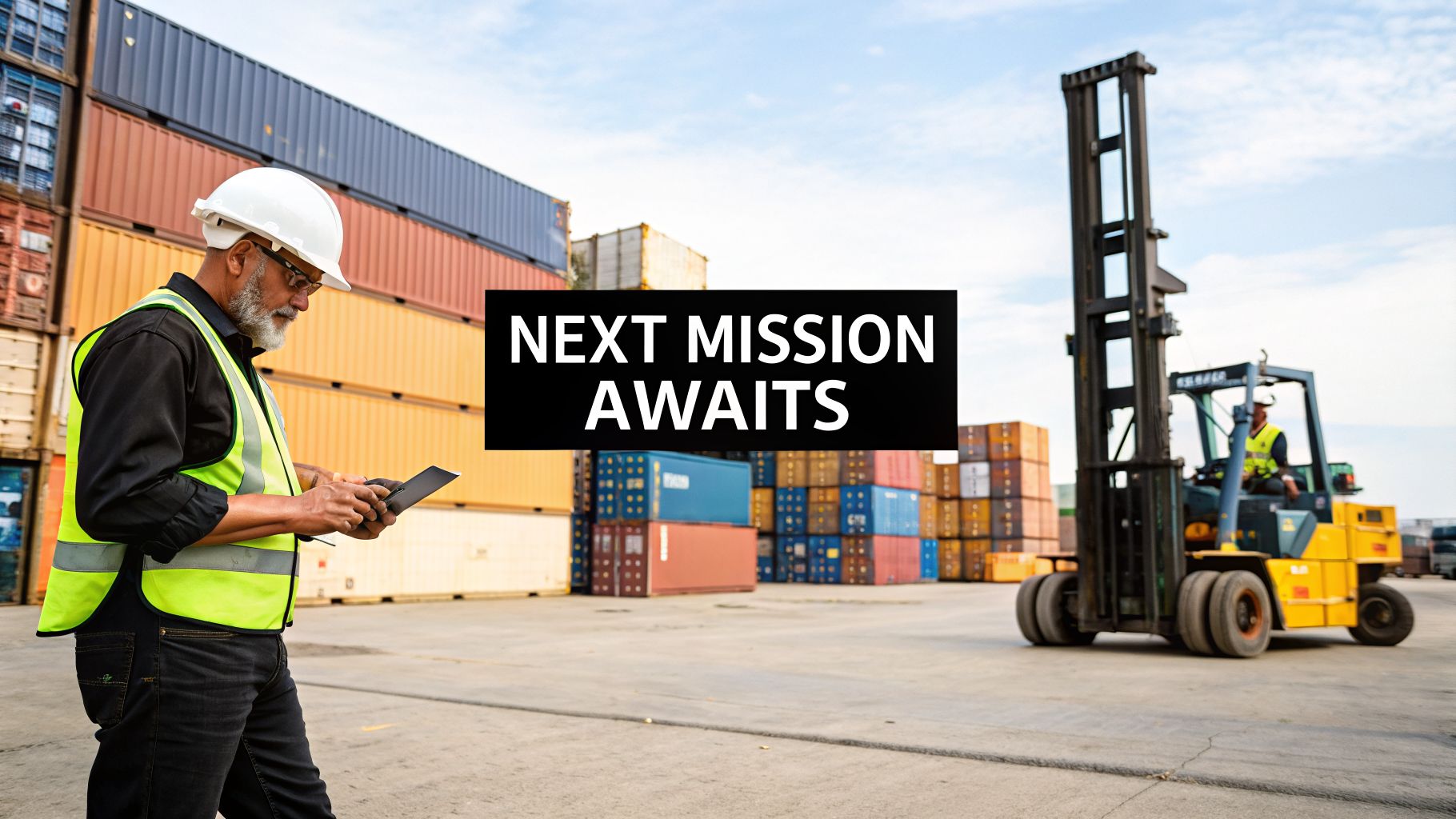
Let's get straight to it—your military experience is precisely what the civilian logistics world is looking for. Think of this less as a career change and more as a redeployment of your core skills. For veterans, logistics jobs are a natural next step, offering stable, well-paying careers where the discipline and operational expertise you lived and breathed in the service are in constant demand.
Translating Your Military Experience Into a Logistics Career
Stepping out of uniform and into the civilian workforce can feel like you're trying to learn a whole new language. The good news? You’re already fluent in the fundamentals of logistics. The mission of moving people, gear, and supplies on time and in one piece is the same, whether you're on a forward operating base or in a commercial distribution center.
The truth is, companies in the logistics sector aren't just open to hiring veterans; they actively recruit them. They know that military training builds professionals who can execute complex plans with precision, stay cool when things get chaotic, and get the job done right.
Why Your Military Skills Are a Perfect Fit
Every time you managed unit assets, coordinated transport, or ensured mission readiness, you were honing skills that are a direct match for the civilian supply chain. Employers get it. They know veterans show up with a proven work ethic and a deep-seated sense of responsibility that can't be taught in a classroom.
What makes you such a strong candidate?
- Unmatched Discipline: You know how to follow protocols, hit your deadlines, and maintain high standards without someone constantly looking over your shoulder. That’s a given.
- Leadership Under Pressure: Whether you led a fire team or managed the motor pool, you have real-world experience making critical calls when it counts.
- Rock-Solid Adaptability: Operations almost never go 100% according to plan. Your ability to think on your feet and find a way forward is a massive advantage in an industry full of unexpected delays and disruptions.
- Built-in Teamwork: You know how to operate as part of a team to hit a shared goal. That skill is vital for coordinating with drivers, warehouse crews, and managers to keep things moving.
The logistics sector is one of just six AI-resistant career fields where veterans have a distinct advantage, thanks to a background steeped in supply chain management, asset movement, and crisis coordination.
This direct overlap in skills pays off. It’s a key reason why the veteran unemployment rate often stays impressively low, proving just how much employers value what you bring to the table.
From MOS to Civilian Role
One of the biggest hurdles is figuring out how your Military Occupational Specialty (MOS), Air Force Specialty Code (AFSC), or Navy Enlisted Classification (NEC) translates into a civilian job title. You weren't just a "soldier"—you were a specialist. The trick is to draw a clear line from your military role to its corporate equivalent.
This isn't about starting over. It's about aiming your expertise at a new target. The table below helps you see exactly how your military experience lines up with high-demand logistics jobs.
Mapping Military Skills to Civilian Logistics Roles
| Military Experience / MOS | Equivalent Civilian Logistics Job | Key Transferable Skills |
|---|---|---|
| 88M Motor Transport Operator (Army) | Commercial Truck Driver (CDL-A) | Vehicle operation, safety protocols, route planning, pre-trip inspections, cargo handling |
| 92A Automated Logistical Specialist (Army) | Warehouse Manager / Logistics Coordinator | Inventory management, supply chain software, asset tracking, stock control, process improvement |
| 2T1 Vehicle Operations (Air Force) | Fleet Manager / Dispatcher | Vehicle dispatch, resource allocation, maintenance scheduling, personnel coordination |
| LS Logistics Specialist (Navy) | Supply Chain Analyst / Procurement Agent | Budget management, purchasing, vendor relations, materials sourcing, data analysis |
Seeing the connection is the first step. With the right certifications, you can move into these roles faster than you think. You can explore our CDL programs to see how quickly we can help you get on the road to your new career.
Earning Your Commercial Driver’s License as a Veteran
Alright, let's talk about the first major step in your pivot to a trucking career: getting your Commercial Driver's License (CDL). Think of this as your new mission-essential equipment. For veterans, this license isn't just a piece of plastic; it's the key that unlocks a stable, well-paying profession where your skills are in high demand.
The path might look complicated from the outside, but with the right intel, you can move from the classroom to the driver's seat efficiently.

As you can see, a successful transition isn't about luck. It's a strategic operation: take stock of what you bring to the table, find the right role that needs those skills, and then execute the move.
Funding Your CDL Training with Veteran Benefits
The cost of training shouldn't be a roadblock. As a veteran, you've earned benefits that can significantly cut down—or even completely cover—the price of CDL school.
GI Bill® Benefits: Many accredited CDL schools are approved for GI Bill® funding. This is your go-to option. It means you can get the training you need without dipping into savings or taking on debt. Before you sign anything, always double-check a school's approval status directly with the VA.
Veteran Readiness and Employment (VR&E): If you have a service-connected disability and your old job isn't a good fit anymore, the VR&E program (what we used to call Voc Rehab) is a fantastic resource. They can cover your CDL training as part of a plan to get you into a new, sustainable career.
Other Financial Aid: Don't stop there. Many schools offer their own scholarships and payment plans. Some trucking companies will even reimburse your tuition after you’ve been on the job for a few months, essentially paying you back for your investment.
Choosing the Right Training Program
Let me be blunt: not all CDL schools are the same. Your goal is to find one that offers serious, hands-on instruction that actually prepares you for the road, not just the test.
Here’s what you should be looking for in a quality program:
- Instructors with Real-World Miles: You want to learn from seasoned pros who have spent years, if not decades, behind the wheel.
- Serious Behind-the-Wheel Time: Classroom theory is one thing, but muscle memory is built on the road. Make sure the program offers plenty of driving hours.
- Modern Rigs: Training on up-to-date equipment means you won't be caught off guard when you get to your first job.
- Job Placement Support: Good schools have relationships with veteran-friendly employers. Their career services can be a direct pipeline to your first logistics role.
Here’s a powerful statistic to keep in mind: organizations that specialize in helping vets retrain for trucking report retention rates of over 90%. When veterans are placed in these jobs, they stick around. That's because the skills you learned in the military—discipline, attention to detail, and staying calm under pressure—are a perfect match for the industry.
Mastering the CDL Exam and Endorsements
Getting your license comes down to passing a written knowledge test and a hands-on skills test. A good school sets you up for success, but it’s your focus and discipline that will get you across the finish line.
Here’s where to concentrate your efforts:
- The Written Test: This exam covers general knowledge, air brakes, and combination vehicles. Your best friend here is your state’s official CDL manual. Read it, then take every practice test you can find.
- The Pre-Trip Inspection: Just like pre-flight or pre-mission checks, this is a systematic, top-to-bottom inspection of the vehicle. You'll need to memorize the components and be able to point them out, explaining what you’re checking for.
- The Skills Test: This is where the rubber meets the road. It includes basic maneuvers like backing in a straight line, parallel parking the rig, and then an on-road driving evaluation. All that time you spent in the truck during training pays off right here.
Once you’ve earned your CDL, you can open up more doors to specialized and higher-paying logistics jobs for veterans by adding endorsements. Common ones include Hazmat (H), Tanker (N), and Doubles/Triples (T). Each requires another written test, and the Hazmat endorsement also includes a federal background check.
If you want to dig deeper into the specifics, check out this full breakdown of CDL requirements.
Writing a Resume That Gets You Hired in Logistics
Your military experience is a goldmine for a logistics career, but there’s a catch. Most of it is written in a language that civilian hiring managers simply don't speak. Your next mission is to translate your service record—all those acronyms and specialized terms—into powerful, results-driven accomplishments that a corporate recruiter can immediately understand.

This isn't about inflating your experience. It's about re-framing it. In the civilian world, and especially in logistics, numbers talk. Recruiters want to see quantifiable results—the dollars, percentages, and hard numbers that prove you know how to make an impact.
Translate Military Jargon into Business Results
Let's get straight to the point. Most companies use Applicant Tracking Systems (ATS) to screen resumes before a human ever sees them. These systems are programmed to look for specific keywords from the job description. If your resume is full of terms like "NCOIC" or "Platoon Sergeant," it’s likely getting filtered out.
The trick is to describe the function you performed and the result you delivered in plain business language. Think about it: were you managing inventory, supervising people, or ensuring equipment was ready to go? That’s the language of logistics.
For instance, you can easily transform a standard military duty into a compelling resume line:
- Instead of this: "Served as Squad Leader for a 12-man infantry squad."
- Write this: "Supervised and mentored a 12-person team, overseeing daily operations, performance evaluations, and professional development to ensure 100% mission readiness."
The second version uses words like "supervised," "team," and "performance evaluations"—concepts every hiring manager understands instantly.
Put a Number on Everything
Numbers are your best friend on a resume. They give concrete, undeniable proof of your capabilities and the scope of your responsibilities. Dig through your performance reviews and jog your memory for any data points you can find.
Here’s how you can turn everyday military tasks into quantified achievements that pop.
From Equipment Accountability to Asset Management
- Military-speak: "Accountable for platoon's sensitive items and equipment."
- Civilian-friendly: "Managed and maintained accountability for 150+ pieces of mission-critical equipment valued at over $2.5 million, achieving a 100% successful audit rate during annual inspections."
From Convoy Ops to Logistics Coordination
- Military-speak: "Planned and led over 50 combat logistics patrols."
- Civilian-friendly: "Coordinated and executed more than 50 complex logistical movements in high-pressure environments, ensuring the on-time and secure delivery of personnel and supplies with zero losses."
This specific, data-first approach shows a potential employer exactly what you can do for their bottom line. For an even deeper dive, it’s worth checking out resources focused on resume writing specifically for veterans.
The biggest shift you need to make is from thinking about your duties to focusing on your impact. Don't just list what you did—show the positive result. Did you save money, reduce waste, improve safety, or make a process more efficient?
Structure Your Resume to Get Noticed
Your resume needs to be clean, easy to scan, and tailored for the logistics job you want. A great way to do this is with a professional summary right at the top. It’s your 10-second elevator pitch.
Think about structuring your summary this way:
- Who you are: "Results-driven logistics professional with 8 years of military experience…"
- What you bring: "…specializing in inventory management, supply chain optimization, and team leadership."
- What you want: "Seeking to apply proven operational planning skills to a Fleet Manager role."
This short intro gives a hiring manager a complete snapshot of your value in seconds. A sharp resume is your ticket to landing one of the many great logistics jobs for veterans. For more tips on crafting your story, head over to the Patriot CDL blog.
Finding and Connecting With Veteran-Friendly Companies
You’ve got a solid resume ready to go. Now, it's time for the next mission: finding companies that don't just say they support veterans, but actually prove it. Any business can slap a "veteran-friendly" sticker on their website, but the best ones have real programs and a culture that helps you thrive in the logistics field long-term.
It’s all about looking past the marketing and finding the organizations that are truly invested in your success. They see your military experience as more than just a box to check—they see it as the foundation for your future as a leader in their company.
Pinpointing Genuinely Veteran-Friendly Employers
So, how can you tell the difference between a company that just hires veterans and one that actively helps them succeed? The proof is in the programs and support systems they have in place.
Keep an eye out for these concrete signs:
- Veteran Employee Resource Groups (ERGs): These are a dead giveaway. An active ERG means there's an internal community of fellow vets who can offer mentorship, advice, and a real sense of belonging. It shows the company gets it.
- Structured Onboarding for Veterans: Top-tier employers know the transition from military to civilian work has its own unique hurdles. They build specific onboarding programs to help you navigate the cultural shift.
- Partnerships with Veteran Organizations: When a company works with groups like Hiring Our Heroes or participates in the DoD SkillBridge program, they're putting their resources where their mouth is. They are actively involved in the community.
I've seen it firsthand in my work with veteran support organizations. When an employer creates the right environment, retention is incredibly high—often over 90% for logistics roles. Vets don't just get a job; they build a career.
Where to Find the Best Logistics Jobs for Veterans
Don't just spray and pray with your applications. A focused search on the right platforms will connect you directly with recruiters who are specifically looking for someone with your background.
Zero in on these high-impact resources:
- Industry-Specific Job Boards: Logistics-focused sites are a goldmine. Many have dedicated sections or filters for veteran hiring, putting the most relevant jobs right in front of you.
- Veteran Career Fairs: I can't recommend these enough. Events run by organizations like RecruitMilitary give you invaluable face-time with recruiters from major companies who came specifically to hire people like you.
- Government and Non-Profit Resources: The VA and other veteran service organizations are powerful allies. They offer curated job boards and host hiring events with employers they've already vetted.
Using LinkedIn to Make Meaningful Connections
Think of LinkedIn as your digital handshake and networking tool, not just a place to park your resume. When used correctly, it can put you on the radar of the exact people you need to talk to.
First things first, get your profile squared away. Use a professional headshot and write a headline that gets straight to the point. Something like, "U.S. Army Veteran | Logistics & Operations Professional Seeking Fleet Management Opportunities" tells a recruiter everything they need to know in a single glance.
From there, it's about making smart connections:
- Follow Target Companies: Follow the logistics companies you're interested in. You'll see their updates, learn their culture, and be the first to know about new openings.
- Connect with Recruiters: Don't be shy. Search for recruiters at those companies, especially anyone with "Military Recruiter" in their title. Send a personalized connection request—a simple note mentioning your veteran status and interest in their company goes a long way.
- Engage with Their Content: Liking, commenting, and sharing posts about logistics or veteran hiring shows you're engaged and passionate about the industry. It keeps your name visible.
- Join Veteran Groups: There are tons of LinkedIn groups for veterans in logistics. These are fantastic places to network, find job leads, and get real-world advice from people who've already made the jump.
You’ve done the legwork, your resume hit the mark, and now you’ve got the interview. This is it. This is your chance to connect your military background directly to what a logistics company needs, proving you’re not just a good fit, but the right one.
This is where you show them how your experience running convoys or managing supply chains in the field translates directly into solving their business problems.

Tell Your Story with the STAR Method
Hiring managers in logistics want to know how you think on your feet. They'll ask behavioral questions like, "Tell me about a time you had to solve an unexpected supply issue." Don't just give them a vague answer. Use the STAR method to frame your experience. It stands for Situation, Task, Action, Result.
Think of it as turning a war story into a business case study.
- Situation: Set the scene, but keep it brief. "During a training exercise, my unit faced a tight resupply schedule with visibility dropping fast."
- Task: State your objective clearly. "I was tasked with getting critical repair parts to three separate locations before sunrise."
- Action: This is where you detail what you did. "I immediately pulled up convoy routes and cross-referenced them with real-time weather data. I saw a problem and redirected one convoy to a safer alternate route, then kept constant comms with my team leaders to account for a 30-minute delay."
- Result: End with a measurable, positive outcome. "Because of that call, all parts arrived securely 15 minutes ahead of our new schedule. We had zero equipment loss, and the mission continued without a hitch."
See how that works? You just turned a field problem into a real-world example of proactive risk management and communication—exactly what every logistics manager is desperate to find. For more on navigating the Q&A portion of your meeting, check out some successful interviewing tips.
Speak Their Language: Highlighting Key Skills
The skills that made you successful in the military are in high demand, but you need to translate them into civilian terms. Leadership and discipline are great, but get specific.
During your interview, be ready to discuss these areas:
- Asset Management: Talk about tracking high-value equipment or managing inventory. Remember doing a thorough pre-trip inspection before every mission? That’s asset management. It’s the same discipline you'll use in the civilian world. Our pre-trip inspection guide breaks down just how relevant this is.
- Tactical Coordination: This is just mission planning. Explain how you synchronized moving parts, managed tight timelines, and coordinated between different teams to hit an objective.
- Crisis Management: Every veteran has a story about a plan going sideways. Share one. How did you adapt under pressure? This shows you can stay level-headed and make smart decisions when things get chaotic, which happens all the time in logistics.
Employers are catching on. The unemployment rate for post-9/11 veterans has been falling, dropping from 5.9% in January 2026 to 4.8% in February 2026. They know that when they hire a vet, they’re getting someone who understands accountability.
From the Job Offer to Your First 90 Days
When that job offer comes through—and it will—don't be afraid to negotiate. Do your homework on what the role pays in your area. Be ready to explain why your experience managing multi-million dollar assets or leading teams in high-stakes environments makes you worth the number you're asking for.
Once you’ve accepted and you're officially on board, your mission changes.
Remember, the first 90 days are about learning and adapting, not proving you know everything. Your primary mission is to listen, ask intelligent questions, and build relationships with your new team.
Think of your onboarding as a new mission plan. First, identify your key personnel—the veteran driver who knows all the routes, the sharp warehouse supervisor, the lead dispatcher. These are your subject matter experts. Learn from them.
Next, focus on mastering the company’s specific processes. Every outfit has its own software, safety protocols, and way of communicating. Your job is to learn their system inside and out.
Finally, ask for feedback. Don't wait for your 90-day review. Proactively ask your manager and your new colleagues how you're doing. It demonstrates humility and a real drive to become a valuable part of the team.
By handling the interview with confidence and approaching your first few months with a clear plan, you won't just land one of the many great logistics jobs for veterans. You'll be setting yourself up for a long, successful career on the other side.
Common Questions from Vets About a Career in Logistics
As you map out your next move after the military, you're bound to have questions. It’s completely normal. We hear from veterans every day who are looking at logistics and trying to figure out if it’s the right fit. Let’s get you some straight answers to the most common questions we get.
Can I Really Use My GI Bill for Truck Driving School?
Yes, absolutely. Your GI Bill® benefits are one of the most valuable resources you have for this transition, and many reputable CDL schools are set up to accept them.
This can be a game-changer, often covering most—if not all—of your tuition. Before you commit to any program, the first thing you should do is check the VA's official WEAMS Institution Search tool. This will let you confirm that the specific school and training program you're interested in is approved.
What’s the Career Path Beyond Just Driving?
Getting your CDL is the fastest way to get your foot in the door, but it’s just the beginning. Think of that first driving job as your on-the-ground training. You'll learn the industry from the inside out, which makes you a prime candidate for leadership roles down the line.
Your military experience, especially in leadership, is a huge asset here. After a few years behind the wheel, you'll be well-positioned for roles like:
- Fleet Manager: You'd be in charge of a team of drivers and their trucks, handling schedules, maintenance, and overall operational readiness.
- Dispatcher: This is the command center. You’ll be the critical link coordinating routes, solving problems in real-time, and keeping the entire operation moving.
- Logistics Coordinator: A bigger-picture role where you’ll help manage the flow of goods across the supply chain, from the warehouse to the customer.
- Supply Chain Analyst: If you're more data-driven, this is where you’ll analyze performance, spot inefficiencies, and find ways to make the whole system run better.
Your time in service taught you how to lead, make decisions under pressure, and own the outcome. That’s exactly what companies are looking for when they promote from within their driving force.
How Physically Demanding Are These Jobs?
The physical side of logistics jobs for veterans really runs the gamut, so there's a fit for almost any physical ability. An over-the-road (OTR) trucking job means a lot of sitting, but it can also involve physical work like strapping down a flatbed load or helping with unloading.
On the other hand, plenty of crucial logistics jobs are office-based and far less physically intensive. Roles like dispatcher, safety manager, or load planner depend more on your mind and organizational skills than your muscle. You can find a role that matches what you’re looking for.
How Do I Find Companies That Actually Support Veterans?
You need to look for proof, not just promises. A "We Hire Vets" banner is easy to put on a website. The companies that are truly invested will have programs in place to back it up.
When you're researching potential employers, look for tangible evidence like:
- Active Veteran Employee Resource Groups (ERGs): These are internal groups that offer mentorship, support, and a community for veterans within the company.
- Dedicated Veteran Onboarding Programs: These programs are designed specifically to help you navigate the shift from military culture to a corporate environment.
- Partnerships with Veteran Service Organizations (VSOs): When a company works with groups like Hiring Our Heroes or the DoD SkillBridge program, it shows a serious commitment.
And if your current CDL has limitations, don't forget you can take steps to expand your qualifications. Learning how an E-Restriction removal course can qualify you to operate manual transmission trucks will open up a much wider range of job opportunities.
At Patriot CDL, our entire focus is on helping veterans like you launch a stable and rewarding career in logistics. Our accelerated training gets you licensed and ready for the road fast. Learn more about how we can help at https://patriotcdl.com.