

Knowing how to properly downshift a semi-truck is all about proactively managing your speed and RPMs. The technique itself boils down to a smooth sequence: slow down, clutch into neutral, rev the engine to match the lower gear’s speed, and clutch again to engage it. Done right, it keeps your rig stable and you firmly in control.
Why Mastering Downshifting Is a Non-Negotiable Skill
Learning to downshift a big rig isn't just about the mechanics; it's one of those fundamental skills that separates the pros from the rookies. This is about being proactive, not reactive. Downshifting is your primary tool for keeping an 80,000-pound vehicle under control, which is essential for safety and preserving the expensive parts of your truck.
Think of it less as simply slowing down and more as setting your truck up for what’s coming next. That could be a steep downgrade, a sharp turn, or navigating stop-and-go city traffic.
Anticipating when you'll need a lower gear is everything. A perfectly timed downshift saves your brakes from dangerous overheating—a condition we call brake fade—which can lead to total brake failure on a long hill. It also keeps you from putting unnecessary stress on the transmission, saving you a fortune in repairs down the road. This isn't just a friendly tip; it's a core competency for a safe and successful career on the road.
The Proactive Mindset of a Professional Driver
The best drivers are always thinking a few steps ahead. They see a hill and are already downshifting before the climb or descent even starts. They spot a tight curve and select the right gear before entering the turn.
This proactive approach ensures the truck is always in its optimal power band, ready to respond smoothly to whatever the road throws at you. It’s about controlling the vehicle with the engine, not just riding the brakes.
This skill is absolutely central to meeting the high standards expected of commercial drivers. In fact, demonstrating this level of control is a key part of fulfilling the necessary CDL requirements just to get your license. You can learn more about these CDL requirements in our detailed guide.
Safety and Control in Critical Scenarios
When you're behind the wheel of a semi, mastering the art of downshifting is non-negotiable for safety and efficiency. Heavy truck crashes have devastating consequences, so precise vehicle control is paramount.
To put it in perspective, NHTSA data from 2004 showed 4,542 fatal crashes involving large trucks in the U.S. In those crashes, a staggering 79% of the fatalities were the occupants of other vehicles. That number alone highlights the immense responsibility we have to maintain absolute control, especially when slowing down.
The Rhythm of the Double-Clutch Downshift
Getting a feel for downshifting a manual semi is less about memorizing steps and more about finding a rhythm. It’s a dance between your feet and the shifter. When you get it right, it feels effortless. This isn’t about forcing the truck into gear; it's about finessing it with the double-clutch technique until it becomes pure muscle memory.
The whole sequence starts the moment you know you need to slow down. Maybe you're approaching an off-ramp or coming up on slower traffic. Start by gently applying the service brake to ease your speed and bring the engine RPMs down into the right range.
You’re watching that tachometer, waiting for the needle to drop to around 1000 RPM. That’s your cue. This is the perfect spot to start the downshift without fighting the transmission.
Once you hit that mark, the dance begins. A quick, light tap on the clutch—just enough to break the torque—lets you slide the shifter smoothly out of gear and into neutral. Don't stomp on it; a shallow press is all it takes.
Mastering the Rev-Match
With the transmission in neutral, you let off the clutch. This next part is where the magic happens: the rev-match. You need to spin the engine up so its speed matches what the transmission will be doing in the lower gear.
Give the throttle a quick "blip" to bring the engine speed up. Your target is that sweet spot between 1400-1500 RPM. This is what separates a buttery-smooth shift from a gut-wrenching gear grind. You’re essentially tuning the engine to the transmission before they reconnect.
When you nail the revs, the shifter will practically fall into the next gear on its own. You'll give the clutch its second quick tap and guide the lever home. If you feel it fighting you or hear that awful grinding, your RPMs were off—either too high or too low.
To help visualize this sequence, here is a simple breakdown of the rhythm in action.
The Double-Clutch Downshifting Rhythm
| Action | Target RPM / Speed | Purpose |
|---|---|---|
| 1. Brake and Slow Down | Bring RPMs to ~1000 RPM | Get the engine into the ideal range to begin the downshift. |
| 2. Clutch In (1st Tap) | Quick, shallow press | Disengage the gear. |
| 3. Shift to Neutral | N/A | Separate the engine from the transmission. |
| 4. Clutch Out | N/A | Re-engage the clutch to spin up the transmission input shaft. |
| 5. "Blip" the Throttle | Bring RPMs up to ~1400-1500 RPM | Match engine speed to the road speed for the next lower gear. |
| 6. Clutch In (2nd Tap) | Quick, shallow press | Prepare to engage the new, lower gear. |
| 7. Shift into Lower Gear | N/A | Select the gear that matches your current road speed. |
| 8. Clutch Out and Accelerate | N/A | Smoothly re-engage the driveline and continue on. |
Getting this timing right is what makes a professional driver. It's a fluid motion that protects your equipment and keeps you in complete control.
This flow chart really drives home how mastering this skill connects directly to your performance on the road.
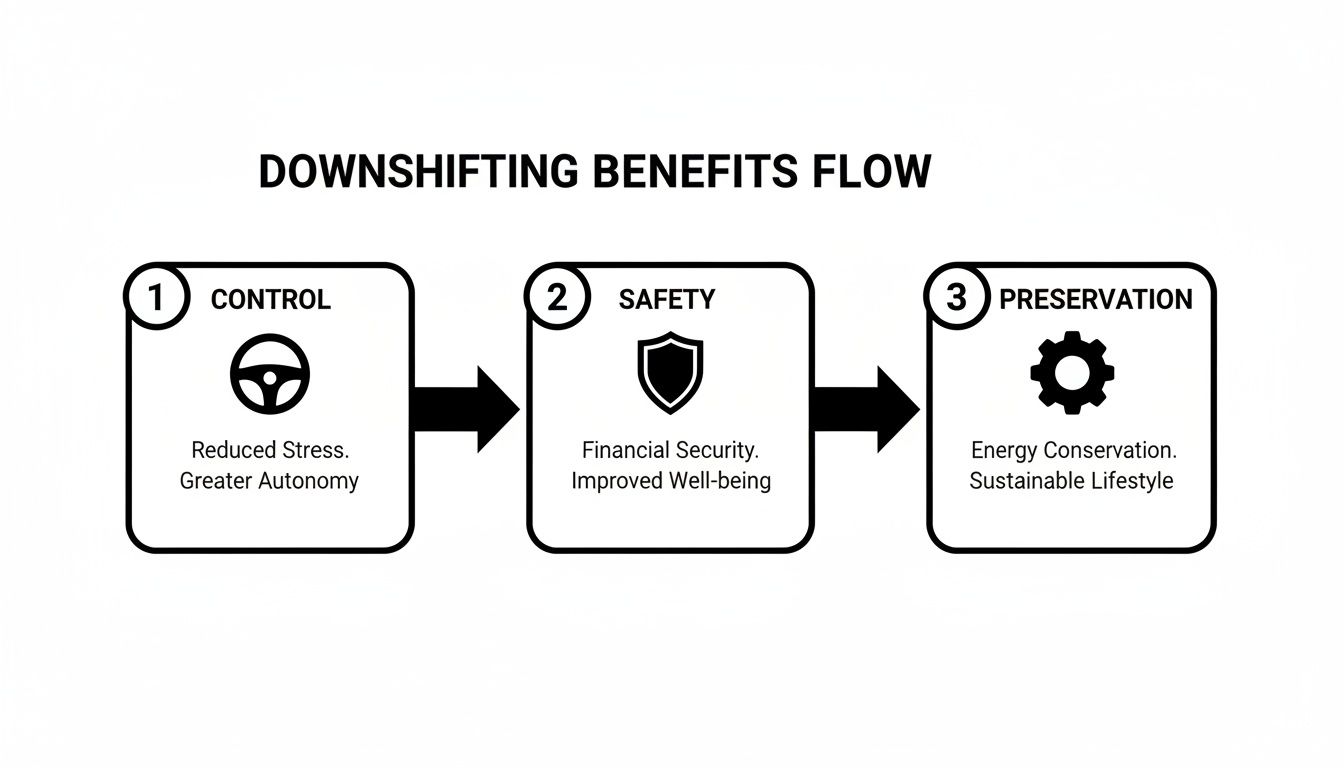
From better control comes greater safety, and both lead to preserving the truck for the long haul. It's not just a mechanical process; it’s the cornerstone of being a pro.
Why Matching Engine Speed Is So Crucial
Getting your RPMs right does more than just make for a smooth shift. It's about protecting the expensive machinery you're operating.
- No More Gear Grind: When the engine and transmission speeds are in sync, the gear teeth slide together perfectly. A mismatch makes them clash, which is that horrible grinding noise you want to avoid.
- Saves the Driveline: A jerky, forced downshift sends a violent shock through the entire driveline. A clean rev-match makes the transition so smooth that it prevents that shock, reducing wear and tear on everything from the U-joints to the axles.
- Protects Your Clutch: It might sound counterintuitive since you're using it twice, but the two light taps in a double-clutch shift cause far less wear than trying to force an unsynchronized gear into place.
A lot of new drivers treat the clutch like a light switch—it's either on or off. In a big rig, think of it more like a dimmer. You only need to press it enough to break the connection, just for a split second, to let the magic happen.
This is a fundamental skill, and if you’re looking to drive professionally, you need to have it down cold. For anyone who needs to sharpen these skills, checking out an E restriction removal course provides the dedicated, hands-on training to get you shifting confidently in any manual truck you climb into.
Taming the Beast: Controlling Your Descent on Hills and Steep Grades
Driving downhill in a big rig is the ultimate test of your downshifting skill. This isn't just about changing gears; it's about using the engine to master gravity and keep tens of thousands of pounds under complete control. Get it right, and you're a pro. Get it wrong, and things can go south in a hurry.
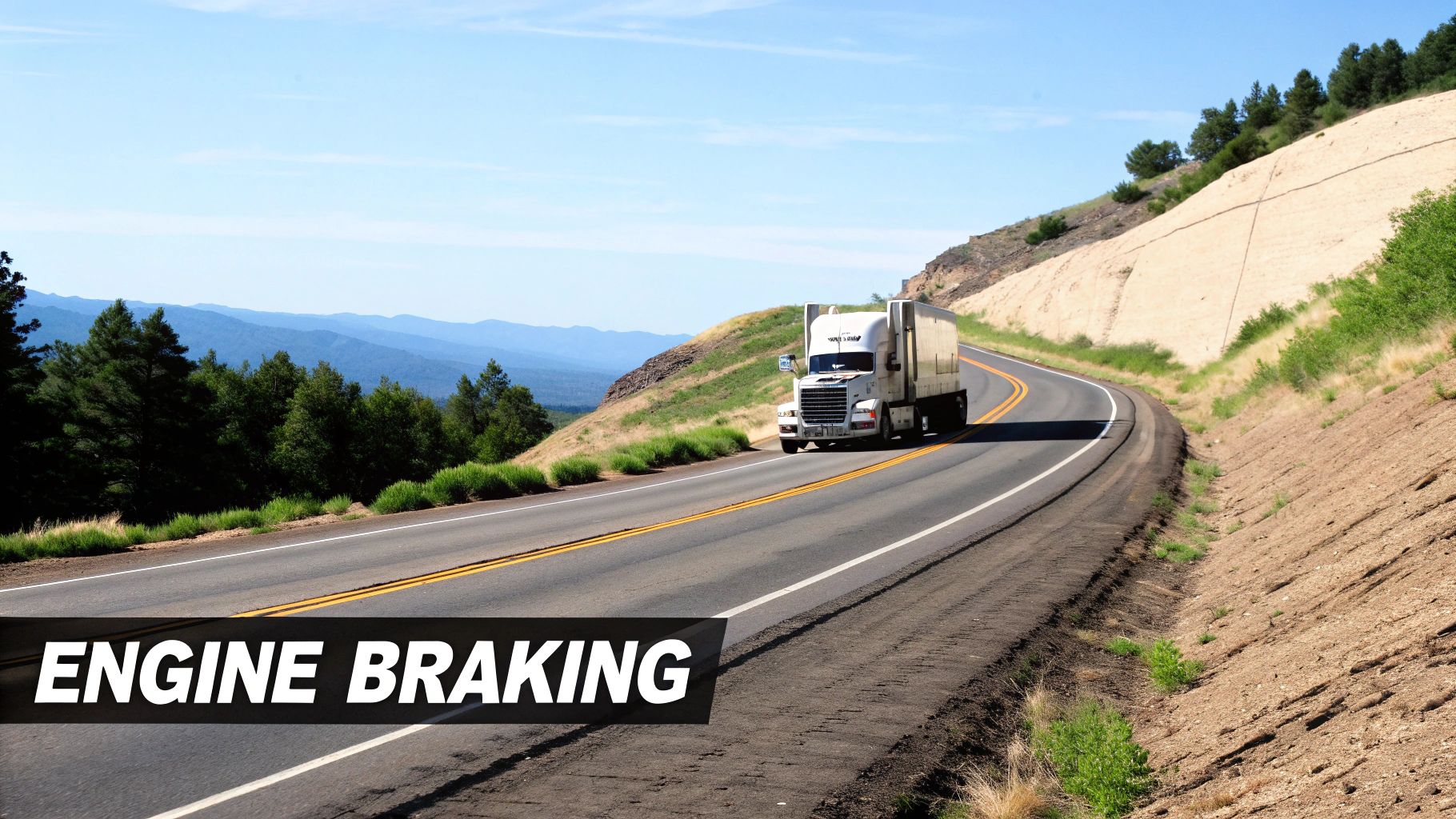
The single most important moment happens before you even start going down. Your gear for the descent needs to be selected while you're still on level ground or finishing the climb. If you wait until you're already picking up speed, you've waited too long. It's a rookie mistake that can put you in a very dangerous spot.
The Golden Rule of Trucking
There's a piece of wisdom passed down from one generation of drivers to the next, and you should treat it like gospel: select the same gear to go down a hill that you would need to climb it.
This isn't just an old saying; it's physics. That gear provides the right amount of engine resistance to counteract the truck's momentum. So, if you had to muscle your way up a long, steep grade in 5th gear, you need to be back in 5th gear before your nose points down the other side. Think of it as setting your speed control before the hill even starts.
Making Your Engine Brake Work For You
Your engine brake (often called a "Jake brake") is your number one tool on a downgrade. It transforms your engine into a powerful air compressor that slows you down without you ever touching the service brake pedal. But here's the catch: it's only as good as the gear you're in.
Engine brakes are most effective in the higher RPM range. If you're in a gear that's too high, your RPMs will be too low, and the Jake brake won't have enough bite to hold you back. You'll just keep gaining speed.
By downshifting into a lower gear, you bring the RPMs up into that sweet spot, unleashing the full holding power of your engine.
Whatever you do, never ride your service brakes to control your speed down a long grade. This is how brakes overheat and fail. When they get too hot, they lose their ability to stop you—a terrifying situation known as brake fade. Your service brakes are for stopping, not for controlling speed on a mountain.
Reading the Road and Your Load
As you approach a steep grade, keep an eye out for the yellow warning signs. A sign showing a 6% grade means the road drops six feet for every 100 feet you travel forward. The bigger that percentage, the steeper the hill and the lower the gear you'll need to choose.
But the sign only tells half the story. The other crucial factor is the weight in your trailer.
- Heavy Load: A fully loaded 80,000 lb rig will want to fly down a hill. You'll need to select a much lower gear to hold it back compared to running light.
- Light or Empty Load: While you won't need to go quite as low, you still have to downshift. Gravity is always a factor, and your goal is always to keep your service brakes cool.
Knowing exactly how your braking systems work is non-negotiable. For a refresher, our guide on the air brakes test provides valuable insights into the components you're trusting your life with. By combining smart gear selection with proper engine brake use, you can handle any grade safely and professionally, arriving at the bottom with cool brakes and total confidence.
Common Downshifting Mistakes and How to Fix Them
Look, every new driver grinds a gear or misses a shift. It's practically a rite of passage. The difference between a rookie and a pro is learning from those crunchy, frustrating moments. Think of this as your troubleshooting guide for the common hiccups you'll face when learning to downshift that big rig.
One of the first things I see new drivers do is stomp the clutch pedal to the floor like they’re in a Honda Civic. In a semi, that’s just not how it works. You only need a quick, shallow tap—just enough to break the torque and get out of gear.
A heavy foot on the clutch will kill the rhythm and timing of your shift. It’s a quick "tap," not a full "press." That light touch is the secret to a smooth, fast gear change.
Another major hurdle is getting the rev-match right. You’ll either blip the throttle too hard and over-rev it, or you won't give it enough gas at all. Either way, the transmission will let you know with a loud, grinding protest.
Pinpointing and Correcting Your Technique
Let's break down the most common pitfalls and, more importantly, how to fix them. I've seen these same issues pop up with students time and time again.
-
The Mistake: Stomping the Clutch. Like we talked about, a heavy foot is your worst enemy.
- The Fix: You’ve got to practice that "tap-blip-tap" motion. The clutch pedal should only travel a short distance. It's all about quick, light footwork.
-
The Mistake: Missing the Revs. Revving too high or too low means your engine and road speeds aren't in sync.
- The Fix: Aim for 1400-1500 RPM when you blip the throttle. Don't just stare at the tachometer; use your ears, too. After a while, you’ll learn the sound of the engine when it’s at that perfect sweet spot for a downshift.
-
The Mistake: Forgetting to Brake First. Trying to downshift when you're still going too fast for the lower gear is a recipe for disaster.
- The Fix: Always use your service brakes to slow the truck down until you’re at about 1000 RPM. Do this before you even think about touching the clutch. This sets you up for a successful shift.
Developing the Right Rhythm
Hesitating in neutral is another classic mistake. The whole double-clutching sequence needs to be a single, fluid motion. If you pause after shifting to neutral, the engine RPMs will drop too far, and you'll have to start the whole process over again. The "tap-vroom-tap" should feel like one connected action, not three separate steps.
It's like a musician learning a new song—it takes a ton of repetition to get the timing just right. When you’re starting out, focus on being consistent, not fast. Speed will come with time and muscle memory.
This idea of building consistent habits applies to everything you do out here, especially safety checks. Developing a solid routine is what separates the professionals from the amateurs. For instance, our guide on the pre-trip inspection can help you build another one of those crucial skills that will serve you your entire career.
Practice Drills to Build Muscle Memory
Confidence behind the wheel isn't earned on a busy interstate; it's built in a big, empty parking lot where you can focus on one thing and one thing only: your technique. Getting the hang of downshifting is all about building muscle memory, and that’s what these drills are designed for. They break the process down so you can turn clunky, conscious steps into one smooth, natural motion.
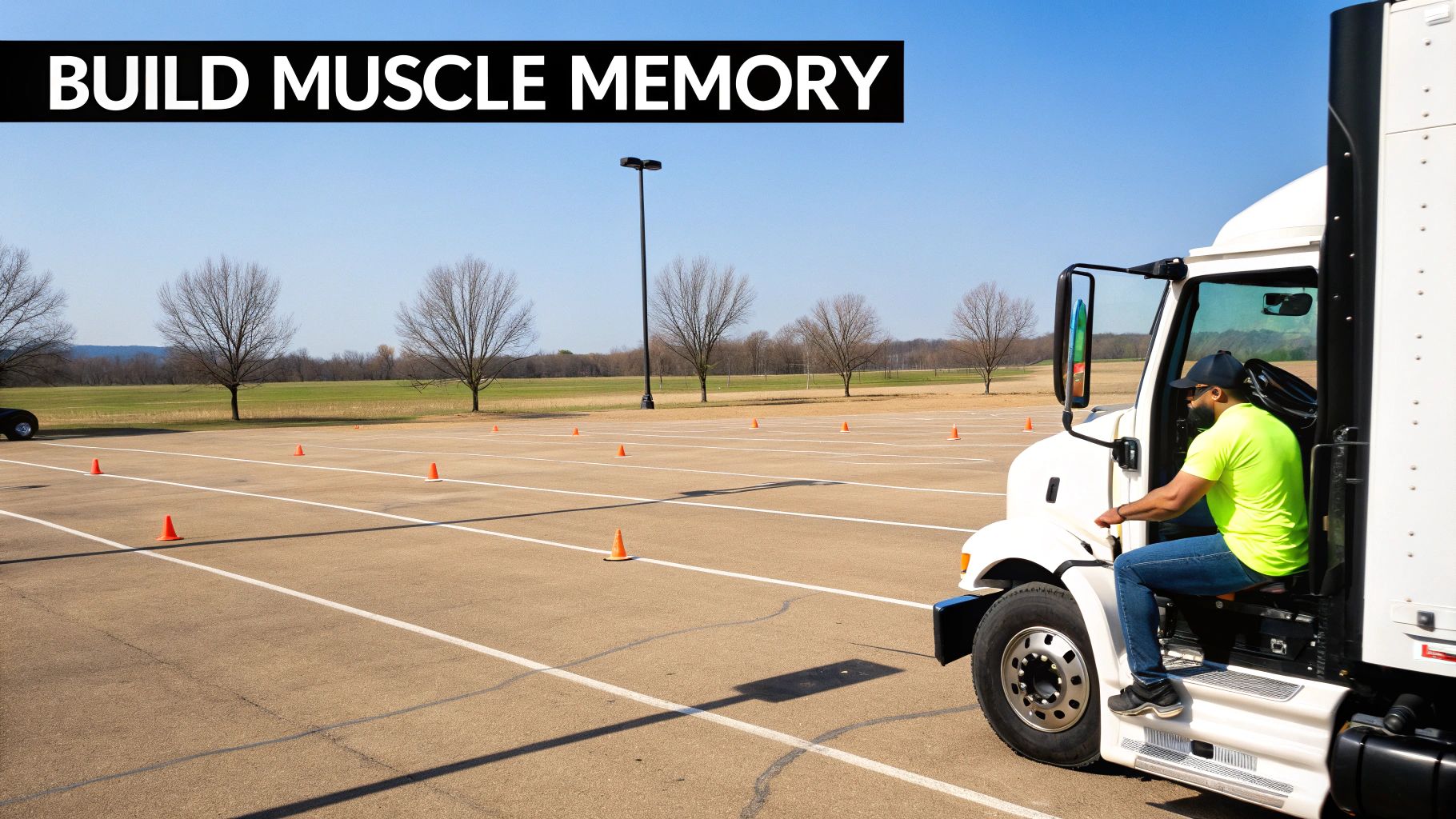
First things first: start with the truck parked, engine running, and both brakes set. This is a no-stress drill purely for your feet. Forget the shifter, forget the road. Just practice the clutch-throttle-clutch sequence. Do it over and over until that little dance feels automatic.
From a Standstill to a Slow Roll
Once your feet have the rhythm down, it's time to add a little motion. Find a huge, empty lot or a deserted industrial park where you won’t have to worry about traffic. We're not trying to get anywhere—we're just focused on being smooth.
-
Low-Gear Loops: Get the truck moving slowly, maybe in 3rd or 4th gear. Your only job is to practice downshifting into the next lowest gear. Concentrate on that throttle blip, aiming to hit that sweet spot around 1400-1500 RPM. Just go back and forth between a couple of low gears.
-
Shift by Ear, Not by Sight: This is a big one. As you get more comfortable, try to shift without staring at your tachometer. An old-timer trick is to learn the sound of the engine at the right RPM. A good driver watches the road; a great driver listens to their truck.
You'll know you're getting it right when the whole thing feels like one fluid movement. The shifter will almost feel like it's getting sucked into the right gear all by itself. That’s the feeling you’re chasing.
Laying the Groundwork
These drills are the bedrock for handling the tough stuff later on. They're especially critical because shifting techniques can feel a little different depending on the kind of combination vehicles you're pulling. For a deeper dive, you can learn more about combination vehicles in our guide.
Keep at it, and soon enough, you won’t even be thinking about the mechanical steps. Your brain will automatically connect the sound of the engine and your road speed with the right footwork and hand movements. That’s the muscle memory that will keep you safe and in total control when you’re staring down a steep mountain pass or navigating a tight city turn.
Answering Your Questions About Downshifting
Even once you get the hang of it, you’ll still have questions. Downshifting a big rig isn't just one skill; it's a whole set of them that you adapt to what the road throws at you. Let's tackle some of the most common things new drivers ask.
Can I Skip Gears When I Downshift?
For anyone just starting out, the answer is simple: no. Go down one gear at a time, every time. This is the surest way to keep your deceleration smooth and maintain total control over your rig's momentum. It makes the whole process predictable, which is exactly what you want when you're learning.
Now, you might ride along with an old-timer who skips a gear coming off an exit ramp with a light load. That’s a move that comes from years of experience and having a sixth sense for the truck. But here’s the critical part: never skip gears on a steep downgrade. It’s just plain dangerous. Doing so guts the effectiveness of your engine brake right when you need it most.
What's This "Floating Gears" I Hear About?
Floating gears means shifting without touching the clutch pedal. It's all about matching your engine RPMs perfectly to your road speed so the shifter just slides right into the next gear. A lot of seasoned drivers do it because it saves a little wear and tear on their left leg, but it is absolutely not a technique for beginners.
Get the timing wrong, and you can do some serious, expensive damage to your transmission. Right now, your one and only focus should be on mastering the double-clutch. It's the proper way, it's what you'll be tested on for your CDL, and it’s the safest foundation for learning how to manage that gearbox.
Floating gears is a feel you develop over thousands of miles. Stick with the fundamentals until double-clutching is as natural as breathing.
What Happens If I Miss a Gear?
First thing's first: stay calm. Whatever you do, never try to jam the shifter into gear. That's how you break expensive parts. If you find yourself in "no man's land" between gears, the recovery is straightforward.
- Push the clutch back in.
- Put the shifter in neutral and let the clutch out.
- Glance at your speedometer and use your service brakes to stay in control.
- Figure out which gear you should be in for your current speed.
- Then, just start the double-clutch downshift process all over again.
The worst thing you can do is panic. Just take a breath, be methodical, and you'll get back in sync and maintain full control of your truck.
At Patriot CDL, we provide the hands-on training you need to master every aspect of driving a commercial vehicle with confidence. Our expert instructors guide you through the fundamentals and prepare you for a successful career on the open road. Learn more about our CDL programs and get started today!