You're probably looking at CDL schools in MD with one main question in mind: which program gets you licensed without wasting your time or money. That's the right question. In Maryland, a school isn't just teaching shifting, backing, and road habits. It's helping you move through a regulated process that starts with permit prep, requires Entry-Level Driver Training from an FMCSA-listed provider for many first-time applicants, and includes a Commercial Learner's Permit holding period before you can test, along with medical certification requirements under federal and Maryland rules through the Maryland MVA CDL process.
That matters because the best program for one student can be the wrong one for another. Some schools are built for speed. Some are better for working adults who need evening or weekend options. Others stand out because they publish costs clearly, support workforce funding, or offer a stronger college support system if you want advising and help navigating paperwork.
Maryland also sits inside a sizable training market, not a niche corner of education. IBISWorld projects the U.S. truck driving schools industry at about $509.8 million in 2026 and notes 395 businesses in 2024 in its truck driving schools industry report. For students, that means choice. It also means you need a filter.
My filter is simple. Confirm ELDT compliance, check the schedule against your real life, and make sure the school's pace matches how you learn behind the wheel. Fast isn't always better. Slow isn't always safer. The right fit is the one you can finish cleanly and confidently.
1. Community College of Baltimore County (CCBC) Commercial Vehicle Operator Class A

A lot of new drivers start with one simple question. Can I see exactly what I'm buying before I hand over tuition? CCBC answers that better than many schools in Maryland.
Its Commercial Vehicle Operator Class A certificate is laid out as a three-course sequence, and the full program runs 280 hours on the CCBC program page. For a buyer comparing CDL schools in MD, that matters. You are not guessing at whether “training” means a short permit-prep class or a full path that gets you ready for the road test and entry-level work.
CCBC fits students who want structure, published details, and a college setting instead of a private-school sales pitch. I usually point career changers toward programs like this when they want fewer surprises on scheduling, curriculum, and what each phase is supposed to cover.
Best fit for students who want a clearly defined training path
The biggest selling point is visibility. CCBC shows the training sequence up front, which makes side-by-side comparison easier if you are weighing hours, support services, and total commitment. That is the kind of detail serious applicants should look for before enrolling anywhere.
A few points stand out:
- Defined program length: The school publishes the total training hours, which gives you a real benchmark for comparison.
- Three-course structure: You can see how the training is organized instead of sorting through one vague registration page.
- Community college support: Advising and administrative help can make a difference for students dealing with funding forms, enrollment steps, or a career change.
That last point gets overlooked. A private CDL school may move faster. A community college often gives you more support around the training, and that trade-off matters if you have been out of school for a while or need help keeping paperwork straight.
CCBC is less attractive for someone who needs a highly flexible evening-only option or wants the shortest possible path to testing. It makes more sense for students who do better with a set sequence and a more traditional training environment. If you are still deciding whether this route matches your goals, this overview of a CDL Class A license will help you pin down what the job and license involve before you commit.
2. Cecil College Transportation Training

Cecil College makes a strong case for students who want a traditional training setup with multiple schedule options. Its transportation training page presents Class A and Class B pathways, and it's one of the cleaner choices for students who want more than one attendance format instead of a single rigid cohort.
The schedule flexibility is the first thing I'd highlight. Programs are offered in full-time and evening or weekend formats, which matters if you're trying to keep working while training. The school also promotes on-site Maryland MVA skills testing, which can simplify the handoff from training to examination for some students.
Best fit for working adults
Cecil separates itself from many listings that sound good until you compare calendars. A shorter full-time option may fit someone who can step away from work briefly. The evening and weekend path gives another route to the same goal for people who can't.
Here's the practical upside:
- Multiple attendance formats: The Cecil College CDL programs page is useful because it doesn't force one schedule model on everybody.
- Funding visibility: It also provides guidance around tuition and support options, which is important if you're comparing grants, benefits, or out-of-pocket payment.
- Testing convenience: On-site skills testing can reduce extra logistical headaches.
The trade-off is simple. If you choose the evening or weekend route, you're usually choosing a longer calendar path. That's not bad. It's just the cost of making training fit around a job and family obligations.
If tuition planning is your biggest concern, it helps to compare schools with a rough framework before you call anyone. This breakdown on how much truck driving school costs is a useful reality check.
3. Hagerstown Community College Commercial Vehicle Transportation

A Western Maryland student usually faces a practical problem before class even starts. If the school is too far away or the schedule clashes with work, the plan falls apart fast. Hagerstown Community College makes this easier to evaluate because its HCC CVT program page clearly points to weekday and weekend training formats.
That matters in a buyer's-guide comparison. One schedule can help a student finish sooner. The other can protect a paycheck while training. Neither option is automatically better. The right pick depends on what you can sustain for several weeks.
A practical choice for Western Maryland
HCC is strongest for students who want a local option without defaulting to the Baltimore or D.C. side of the state. I tell new drivers to judge a school on more than distance, though. Check the calendar, ask how the training flow works, and confirm what support you get after the permit stage and before testing. If you are still sorting out the basics, this guide on what a commercial driver's license is and how it works helps frame the right questions.
What stands out here is the school's employment focus. HCC talks about recruiter access and pathways into local, regional, and over-the-road work. That is useful for new drivers because your first job target should shape how you think about training, commute, and scheduling.
A few points make HCC worth comparing closely:
- Weekday and weekend formats: Useful for students choosing between speed and income stability.
- Career-facing program design: Recruiter contact and job-pathway guidance can shorten the gap between graduation and interviews.
- Western Maryland convenience: A manageable commute often matters more than a glossy program page.
Pick the school you can attend consistently, not the one that only looks good on paper.
The trade-off is straightforward. HCC's main program page gives a solid overview, but it does not put tuition details front and center, so you may need to call and get current pricing, start dates, and testing logistics yourself. That extra step is not a dealbreaker. It just means this school scores better on accessibility and schedule flexibility than on quick, side-by-side price comparison.
4. College of Southern Maryland Center for Transportation Training

You live in Southern Maryland, work a regular job, and need CDL training that does not turn every class day into a long haul before actual driving even starts. That is where CSM has a practical advantage. Its dedicated La Plata site gives Charles, St. Mary's, and Calvert County students a local training option through the CSM Center for Transportation Training page.
For a buyer's-guide comparison, this school stands out on geography and program focus. A dedicated transportation center usually means the equipment, range time, and staffing are tied to CDL training instead of being folded into a broader workforce catalog. That does not guarantee the best fit for every student, but it often makes the training process easier to understand and easier to attend consistently.
Best fit for Southern Maryland commuters
CSM makes the most sense for students who want to stay close to home and train with a community college program. That can matter more than people expect. Missed drive time and long commutes are two of the fastest ways to drag out CDL training.
Here is what to compare closely:
- Dedicated La Plata training site: Useful if you want to avoid crossing the region several times a week just to get behind the wheel.
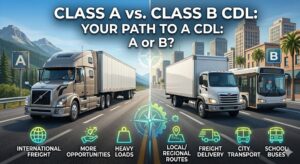
- Class A and Class B options: Good if you are still deciding between tractor-trailer work and route-based jobs such as bus, delivery, or other local commercial roles.
- Community college support structure: Helpful for students who need clearer enrollment steps, funding guidance, or help coordinating paperwork before class starts.
There is a trade-off. CSM is easier to like than to fully price from the overview page alone. You will need to call and ask direct buyer's-guide questions: total program hours, current tuition, what is included in the quoted cost, whether third-party testing is available on site, and how far out the next start date is. If your goal is local or regional work after graduation, review the current mix of truck driving jobs in Maryland before choosing Class A or Class B. I have seen new students save themselves time and money just by matching the license class to the job market they want.
Before enrolling, confirm one more point. Ask how the school handles permit-ready students versus true beginners. That answer tells you a lot about pacing, instructor attention, and whether the program fits your starting point.
5. Wor-Wic Community College Commercial Truck Driver Training

You are trying to line up training, permit work, medical paperwork, and a job plan without wasting a month on vague answers. Wor-Wic stands out because it gives buyers more to work with up front. Its Commercial Truck Driver Training flyer lays out schedules, requirements, and cost items in one place, which is more useful than the thin overview pages many schools publish.
That matters if you are comparing Maryland CDL programs the right way. Before you pick a school, check whether it clearly shows class options, entry requirements, training format, and the fees you will be responsible for. Wor-Wic makes that first-screening process easier than many programs on this list.
Good for students who want clear program options before they call
Wor-Wic is not only a first-time Class A school. It also offers Class B training, B-to-A upgrades, and refresher paths. That wider menu changes the buying decision. A true beginner can start here, but an experienced driver who needs to get back into the field or move into a higher license class also has a reason to look closely.
Here is how it stacks up in a buyer's-guide review:
- Published planning details: The flyer gives you a practical view of schedules, entry steps, and cost components before you ever speak with admissions.
- More than one training track: Class A, Class B, upgrades, and refresher training make this a better fit for mixed student needs than a single-program school.
- Easier pre-enrollment screening: Clearer requirement notes help you ask sharper questions about permit timing, DOT physicals, and outside costs.
I tell new drivers to pay attention to this kind of administrative clarity. Schools that explain the process well on the front end usually create fewer surprises once class starts.
The trade-off is schedule flexibility. Wor-Wic makes sense for students who can attend daytime training and want a school that shows its cards early. It is a tougher fit if you need night-heavy scheduling around a full daytime job. If you plan to stay on the Eastern Shore after training, review the current mix of Maryland truck driving jobs by route type and license path before choosing between Class A, Class B, or an upgrade track.
6. All-State Career Baltimore

All-State Career is the private-school option on this list that most clearly appeals to students who want speed. Its Baltimore campus presents an accelerated Class A Preparatory program with multiple schedule formats through the All-State Career Baltimore CDL page. For some students, that's the whole selling point.
Speed can be a major advantage if you're ready to train now and want to get into the job market quickly. But this is also where honesty matters. Fast programs reward students who show up prepared, stay sharp, and absorb skills under pressure. They're less forgiving if you need a longer practice runway.
Best for students who want a fast lane
All-State Career also aligns with a key Maryland requirement. Harford Community College notes that All-State Career's Baltimore campus is approved as an Entry Level Driver Training provider by FMCSA and is positioned for over-the-road, short-haul, and local-delivery pathways through the Harford Community College CDL program page. That matters because ELDT compliance is not optional for many first-time CDL applicants and endorsement seekers.
Reasons to consider it:
- Accelerated training pace: It's built for students who don't want a longer college-style calendar.
- Multiple attendance formats: That helps if you need evening or weekend access.
- Private-school urgency: Start dates and a direct career focus can be appealing if you want momentum.
The obvious trade-off is cost sensitivity and pace. Private programs can be harder on the budget, and compressed training doesn't suit every learner. If you struggle with backing or pre-trip memorization, a longer program may be the better bargain because it gives you more time to lock in the fundamentals.
7. Prince George's Community College Transportation Pathway

A lot of new drivers start with one goal, get the CDL, get hired, get rolling. Then real life steps in. Some realize they want local work instead of long-haul. Some find out Class B fits their situation better. Some want a transportation job that is adjacent to driving, not only behind the wheel. Prince George's Community College stands out because it is built around that kind of flexibility through the PGCC Transportation Pathway page.
That matters in a buyer's guide sense. If you are comparing Maryland CDL schools, one of the first questions is whether the program trains you for a single lane or gives you room to adjust without starting over. PGCC fits the second category.
Best for students who want options around the CDL
PGCC presents transportation training as part of a broader career track, not just a license-prep product. That can be a real advantage for students who are still sorting out whether they want Class A, Class B, or a related transportation role. Community college settings also tend to work well for students who want help with enrollment, advising, and a more structured onboarding process.
Here is where PGCC earns a closer look:
- Broader pathway model: The program is set up for students who want transportation training tied to a wider employability plan.
- CDL A and CDL B visibility: That gives prospective students more than one entry point, depending on the kind of work they want.
- Accessible location for central Maryland commuters: Largo can make sense for residents of Prince George's County and nearby areas who do not want a long training commute.
The trade-off is straightforward. PGCC is not the easiest school in this roundup for side-by-side shopping because key buyer information is less visible online. If you are the kind of applicant who wants to compare published tuition, program hours, testing details, and start dates in one sitting, you will probably need to call or email the school to fill in the blanks.
That does not make it a weak option. It just changes the buying process. For a student who values flexibility and a community-college framework, that extra outreach may be worth it. For a student who wants every hard detail posted before making a short list, other schools are easier to evaluate faster.
Maryland CDL Schools: 7-Point Comparison
| Program | Complexity 🔄 | Resources ⚡ | Expected outcomes 📊⭐ | Ideal use cases 💡 | Key advantages ⭐ |
|---|---|---|---|---|---|
| Community College of Baltimore County (CCBC) – Commercial Vehicle Operator Class A | Moderate, three-step 280‑hr sequence aligned to MVA; fixed daytime cohorts | Moderate, 280 hours (class/range/road); itemized costs; college support services | High, MVA-mapped curriculum, clear readiness for skills test | Students wanting transparent pricing, multiple starts, and college supports | Clear curriculum and published pricing; workforce connections |
| Cecil College – Transportation Training (PTDI‑certified) | Moderate–High, PTDI curriculum with simulator; full‑time or evening/weekend formats | High, ~300 hrs, simulator, on-site MVA testing; published tuition and funding options | High, reported strong pass rates; permit cost included | Working adults or VA/grant-funded students needing flexible schedules | PTDI certification, simulator training, on-site testing |
| Hagerstown Community College (HCC) – Commercial Vehicle Transportation (CVT) | Moderate, weekday (7.5w) or weekend (15w) cohorts; small class sizes | Moderate, small truck:student ratios, recruiter visits, seasonal cohorts; pricing by inquiry | Good, strong regional employer ties and job-pathway guidance | Western MD students or those needing weekend availability | Employer outreach and consistent seasonal scheduling |
| College of Southern Maryland (CSM) – Center for Transportation Training | Low–Moderate, centralized training center; schedules/costs by contact | Moderate, purpose-built La Plata facility; workforce training portal and staffed support | Good, industry-standard facilities and staffed program support | Southern MD residents, military/veterans seeking local center | Dedicated training center with workforce portal and staff support |
| Wor‑Wic Community College – Commercial Truck Driver Training | Low–Moderate, 8‑week Class A; rolling enrollments for some options | Moderate, term flyer with transparent tuition/fees and funding guidance | Good, clear planning info simplifies enrollment and funding | Eastern Shore residents needing clear costs and funding options | Detailed term flyers, transparent fees, rolling enrollment options |
| All‑State Career – Baltimore (Private CDL School) | High, accelerated ~4‑week (172 hrs) intensive prep; multiple formats | High, on-site 4.5‑acre range, multiple start dates; published tuition (private pricing) | Mixed‑High, faster time-to-license; published outcomes but intensive pace | Students who prioritize fastest completion and multiple schedule choices | Accelerated timeline and published program outcomes |
| Prince George's Community College (PGCC) – Transportation Pathway (CDL A & B) | Moderate, short-term CDL plus stacked credential pathway; department-managed info | Moderate, pathway model with forklift/OSHA credentials and college services; contact for costs | Good, stacking credentials improves employability and job options | County residents wanting multiple transport credentials and advising | Credential stacking within a large college with advising support |
Your Road to a New Career Starts Now
The best CDL schools in MD don't all win in the same way. Some win on transparency. Some win on speed. Some win because they make scheduling possible for working adults. That's why the right choice starts with your own constraints first, not with a generic “best school” label.
If you want the most structured college-style environment, schools like CCBC, Cecil College, Hagerstown Community College, CSM, Wor-Wic, and PGCC each offer a different version of that experience. The differences come down to location, schedule design, how much information they publish upfront, and whether they support your exact training goal. If you want a faster private-school route, All-State Career makes the most sense for students who are ready for a compressed pace and want to move quickly.
My advice is simple. Don't judge a school only by its website headline. Call the program. Ask whether it's ELDT-listed if that applies to your path. Ask how scheduling really works in practice. Ask what happens if you need more backing time, have to miss a day, or need help moving from permit stage to test readiness. Those answers tell you more than polished marketing copy ever will.
Pay close attention to your life outside school. A slightly longer program close to home can be a better choice than a faster one with a punishing commute. A school with clear funding guidance can be better than a school that sounds cheaper but leaves you to sort everything out alone. And if you're trying to compare total training expenses with life on the road afterward, resources like Smart Receipts for managing driver expenses can help you think beyond the classroom.
The next move is practical. Pick your top two or three schools, verify the current schedule, confirm what's included, and make sure the program matches the kind of driver you want to become. The road is open, but your first smart decision happens before you ever turn the key.
If you want a faster path into trucking with practical hands-on training, Patriot CDL is worth a serious look. Patriot CDL focuses on getting students ready for real CDL testing and real entry-level driving work, with accelerated Class A and Class B training, flexible scheduling, permit guidance, DOT medical prep, and direct skills practice that covers pre-trip inspections, backing maneuvers, and road driving. For students who want a school built around getting licensed efficiently without losing sight of fundamentals, Patriot CDL is a strong option.