

The best way to lock in your permit is to build a smart, structured study plan. It’s not about cramming the night before; it's about combining the official DMV handbook with a steady diet of practice tests. This way, you don't just memorize rules—you actually understand how they play out on the road.
Aim for short, frequent study sessions spread out over one or two weeks. You’ll be surprised how much more you retain.
Your Smart Strategy for Permit Test Success
Getting your learner's permit is a huge milestone, but staring at that thick DMV manual can feel pretty intimidating. The good news? You don't need to study endlessly. It's all about having the right strategy.
A solid plan breaks down that mountain of information into small, daily goals, building your confidence one step at a time. The whole idea is to study smarter not harder.
Your first and most important resource is the official driver's handbook from your state's DMV. Seriously, don't skip this. Every single question on your test comes directly from this book. It's basically the ultimate cheat sheet.
Build a Realistic Study Schedule
Consistency beats cramming every single time. Try to set aside 30-45 minutes each day for about two weeks before your test date. This approach, known as spaced repetition, is scientifically proven to help your brain lock in information for the long haul, way better than one frantic, all-night study session.
Here’s a simple schedule that works for a lot of people:
- Week 1: Tackle one or two chapters of the handbook each day. Start with the fundamentals—traffic signs, speed limits, and right-of-way rules.
- Week 2: Go back and review the trickier topics, like how to handle emergencies or the serious consequences of driving under the influence. Now’s the time to start hitting the practice tests daily to see where you stand.
The goal is to make studying a habit, not a chore. When you break it down into manageable chunks, you avoid burnout and the information actually sticks. This doesn't just help you pass the test; it makes you a safer driver.
This method turns a daunting task into a series of small wins. As you work through the material, remember that knowing the rules is only half the battle—you also need to be ready for the test format itself.
For more guidance on the first steps, our page on getting your permit has some great info to round out your study plan. Stick to a structured approach like this, and you’ll walk into that exam room feeling cool, calm, and ready to ace it.
Choosing the Right Study Tools for You
Let's be honest, nobody gets excited about cracking open a dusty, old DMV manual. While that handbook is still the source of truth for all the test questions, relying on it alone is a recipe for boredom and forgotten facts. The real key to acing your permit test is pairing that official guide with modern, interactive tools that actually make learning stick.
Think about it—today, you've got a ton of options at your fingertips. High-quality study apps and websites offer more than just digital flashcards. They turn studying into a game with quizzes, provide incredibly realistic test simulations, and even have video breakdowns of tricky concepts. This is how you transform passive reading into active learning, which is exactly what builds the confidence you need on test day.
The Move to Digital Learning
The numbers don't lie—the way people study has changed. A recent survey found that 58% of students now use mobile apps and websites for test prep, a huge jump compared to the 29% who still prefer traditional books. Even more telling, a whopping 78.5% of student drivers said they’d pay more for a program that guarantees they'll pass on the first try, all thanks to interactive study aids. It’s clear that today's learners want tools that provide instant feedback and keep them engaged.
This simple decision tree lays out a smart way to pick your study tools, starting with the official handbook.
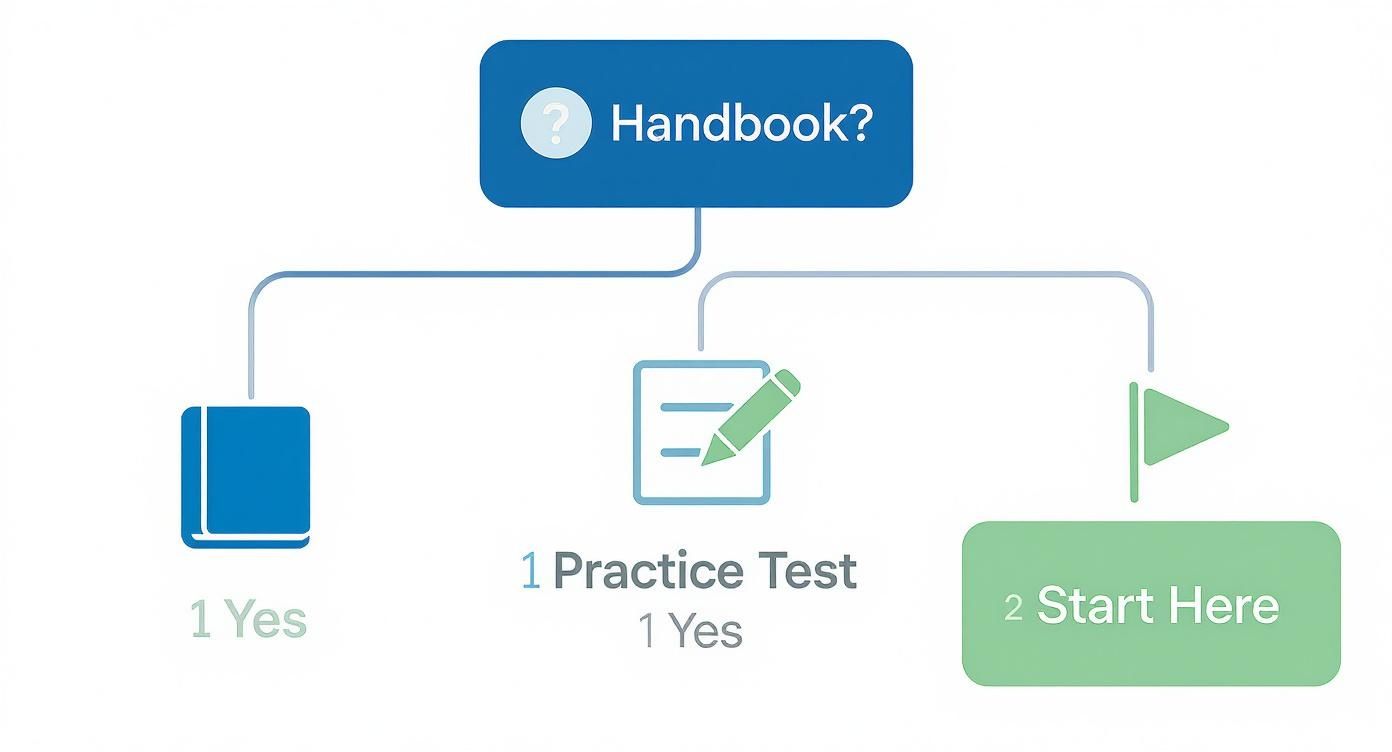
No matter which path you take, you can see that practice tests are the one thing you absolutely can't skip.
Finding Quality Resources
When you're looking for a good digital study tool, you want something that mimics the real test experience. A great platform won't just mark an answer as wrong; it will immediately show you why it's wrong with a clear explanation of the rule. This is crucial—that instant feedback is what helps you fix your mistakes and lock in the right information for good.
The most important thing is to find a tool that clicks with how you learn. If you're a hands-on person, find an app loaded with hundreds of practice questions. If you're a visual learner, look for one that uses animated videos to explain complex situations, like navigating a four-way stop or merging onto a busy highway.
The best approach depends entirely on your learning style. To help you figure out what might work for you, here’s a quick comparison of the most common study methods.
Comparing Permit Test Study Methods
| Study Method | Best For | Potential Drawbacks |
|---|---|---|
| Official DMV Manual | Building a complete, foundational knowledge base. It's the source material for the test. | Can be dry, dense, and difficult to retain information from without other tools. |
| Mobile Study Apps | On-the-go learning, quick quizzes, and gamified practice sessions. | Quality varies greatly; some apps have outdated questions or lack good explanations. |
| Online Practice Tests | Simulating the real test environment and identifying weak areas. | May not provide comprehensive learning; best used as a review tool, not a primary study method. |
| CDL Training Program | Learners who want a structured, all-in-one approach with expert guidance and proven tools. | Requires a bigger time and financial commitment upfront. |
Ultimately, choosing the right method is about being honest with yourself about how you learn best.
Many aspiring drivers discover that a structured course, like the one offered in a dedicated CDL training program, gives them the perfect blend of theory and hands-on practice. These programs often integrate the best digital study tools right into their curriculum, combining expert instruction with modern tech. It's a proven path to not only passing your test but becoming the kind of safe, confident driver everyone wants to be.
Using Practice Tests to Master the Material
Knowing the rules of the road is one thing. Being able to recall them instantly when a tricky question pops up on the screen? That’s a whole different ball game. This is exactly where practice tests become your secret weapon for getting that permit.
Simply reading the driver’s manual cover-to-cover won't cut it. The real exam loves to throw curveballs with confusing wording and "best choice" answers. Practice tests are the bridge between just knowing the material and actually being ready for the test itself.
Pinpoint Your Weak Spots
Think of your first few practice tests as a diagnostic tool. Every question you miss shines a bright light on a topic that needs more of your attention.
It's about studying smarter, not harder. Let's say you keep getting tripped up on questions about air brake systems or hazardous materials placards. Now you know exactly which chapters in the handbook to hit again, instead of wasting time rereading sections you've already mastered.
Don’t just glance at the right answer and click "next." Really dig into why you got it wrong. Understanding the logic behind the correct answer is what makes the information stick. That's how a mistake becomes a genuine learning experience.
This approach makes every minute of your study time count.
Get Used to the Real Thing
To truly benefit from practice exams, you've got to treat them like the official test at the DMV. That means setting the stage and getting your head in the game.
- Race the Clock: The real permit test is timed. Set a timer on your phone to match the official time limit. This builds the muscle memory you need to pace yourself and avoid a last-minute panic.
- Create a "No-Distraction Zone": Find a quiet spot, put your phone on silent (and out of sight), and turn off the TV. You need to get used to concentrating without interruptions.
- No Cheating: It’s tempting, but don’t you dare peek at the manual or Google an answer. The whole point is to get an honest assessment of what you actually know, right now.
Prepping this way does more than just drill the facts into your head; it helps you build mental stamina and shake off those test-day jitters. Once you feel solid on the basics, you can dive deeper with resources like our guide to the general knowledge test, which breaks down all the core topics you'll encounter.
When Driver's Ed Gives You a Real Edge
Sure, you can go it alone with the handbook and a bunch of practice tests—plenty of people do. But a formal driver's education course gives you a structured advantage that’s tough to beat. It’s the difference between reading a cookbook and having a chef walk you through the recipe, step-by-step.
A good instructor doesn't just read the rulebook to you. They bring it to life with real-world stories and examples, clarifying those tricky situations you'll actually face, like navigating a chaotic four-way stop or merging into fast-moving traffic. That hands-on guidance is often what makes the theory click.
It's More Than Just Passing the Test
The real value of a structured course goes way beyond getting a passing score. These programs are built to instill a deep-seated understanding of road safety that sticks with you for your entire driving career. And the numbers back this up.
One major study followed over 150,000 new teen drivers and the findings were pretty stark. Drivers who went through a formal education program were 75% less likely to get slapped with a traffic ticket.
Even more telling, the study showed they were 24% less likely to be involved in a crash that caused an injury or fatality. That's a powerful testament to how professional training builds safer habits right from the start.
It's that mix of classroom theory and supervised time behind the wheel that truly builds both your confidence and your competence.
A Clearer Path to Getting Your License
Choosing driver's ed isn't just a safety play; it's also a smart move for efficiency. These courses are designed to walk you through everything you need to know for the permit test in a logical order, so you can be sure no crucial details are missed.
This kind of structured learning is especially valuable if you're going for a Commercial Driver's License (CDL), where the regulations get a lot more complex. You'll need to master specific endorsements and restrictions, which require specialized knowledge. To get a better handle on these, check out our guide for the e-restriction removal course.
At the end of the day, a formal program provides a proven roadmap, helping you get on the road safely and with the confidence you need to succeed.
Your Game Plan for Test Day Success
All that hard work and studying comes down to this one day. The final push isn’t about some frantic, last-minute cram session. It’s about having a smart game plan so you can walk into that DMV feeling calm, confident, and ready to ace the test.
The night before, your most important job is to rest. Seriously, put the books and practice tests away. Your brain needs that downtime to lock in everything you've learned. Trust me, a good night's sleep is worth way more than another hour of stressed-out studying.
The Morning of the Test
Give yourself plenty of time on test day. Wake up early enough to have a decent breakfast and avoid the stress of rushing out the door. A quick, final scan of your notes on the tricky stuff—like specific fines or those confusing right-of-way rules—can be a great confidence booster. You're not trying to learn anything new at this point; you're just waking up your memory.
This final review is the culmination of all your prep. It’s not about relearning material, but about activating what you already know so the correct answers come to you easily, even under pressure.
Once the test starts, be smart with your time. If a question completely stumps you, flag it and move on. You can always circle back to it later. The last thing you want is to waste precious minutes on one tough question and run out of time for the easier ones.
Common Mistakes to Avoid
Plenty of people fail this test not because they don't know the material, but because they fall into simple traps under pressure. Watch out for these common blunders:
- Second-Guessing Yourself: Your gut instinct is usually right. Don't go back and change your answers unless you're 100% certain you misread something.
- Misreading the Question: The DMV loves tricky wording. Read every single question twice to make sure you understand exactly what it's asking.
- Poor Time Management: Don't get bogged down. Keep a casual eye on the clock and maintain a steady pace so you can answer every question.
By keeping these tips in mind, you're putting yourself in the best possible position to pass. For our readers in California looking for more state-specific resources, check out our dedicated CDL program information.
Got Questions About the Permit Test?
Even after you've hit the books, a few questions are bound to pop up. Don't worry, that's completely normal. Getting straight answers is a huge part of feeling ready for test day, as it clears up any lingering doubts and lets you walk in with your head held high. Let's run through some of the most common questions I hear from new drivers.
How Much Time Should I Actually Spend Studying?
There's no single magic number, but a good rule of thumb is to aim for 15-20 hours of focused study over a week or two. What's more important than the total time, though, is how you spread it out.
Cramming for a few hours the night before is a recipe for disaster. You're much better off studying for 45-60 minutes every day. This approach, known as spaced repetition, helps lock the information into your long-term memory. It's the difference between just memorizing and truly knowing the material.
Do Online Practice Tests Really Help?
Absolutely, as long as you're using a good one. High-quality practice tests are designed to mimic the real DMV exam right down to the format and types of questions. They pull from the exact same source: your state's CDL handbook.
The best practice tests do more than just grade you. They give you detailed explanations for every single question, showing you why an answer is right or wrong. This is where the real learning happens. Every mistake becomes a lesson, making these tests one of the most powerful tools in your study arsenal.
What Topics Should I Focus On Most?
Every state has a slightly different test, but they all hammer down on a few core safety topics. If you want to get the most bang for your buck with your study time, make these areas your top priority.
- Traffic Signs: You need to know these by shape and color, instantly. No hesitation.
- Right-of-Way Rules: Intersections, four-way stops, merging—knowing who has the right-of-way is non-negotiable.
- Speed Limits: Be certain you know the default limits for different zones (school, business, residential, etc.).
- Impaired Driving: The rules and consequences are serious. Expect questions on this.
What Happens If I Don't Pass the First Time?
First off, don't sweat it. Failing the permit test happens more often than you'd think, so you're not alone. The most important thing is to avoid getting discouraged. Most states will make you wait a few days or a week before you can give it another shot.
See that waiting period as an opportunity. Your DMV might give you a score report showing which areas you struggled with. That's your new study guide! It tells you exactly where to focus your attention.
Instead of just grinding through the same practice tests, go back to the CDL manual. Reread the chapters on the topics you missed. This targeted approach is the fastest way to shore up your weak spots and ace it on your next attempt.
At Patriot CDL, we provide the expert guidance and structured training you need to pass your permit test with confidence and launch your career on the open road. Learn more about our CDL programs.