So, how much do truck drivers actually make? Let's get straight to the point. Most new drivers can expect to make a competitive salary, often starting between $50,000 and $65,000 in their very first year. And that's just the beginning. With some experience and a few specializations under your belt, many drivers see their income grow significantly, making trucking a seriously rewarding career path that doesn't bury you in student loan debt.
Your Earning Potential in the Driver's Seat

When you choose a career in professional trucking, you're not just getting a job; you're taking control of your financial future. Think about it: while many other fields require years of expensive schooling before you see a single paycheck, a career behind the wheel offers a direct route to a great income. This guide is your roadmap to understanding all the different factors that go into a truck driver's pay.
We'll start with the big picture—what the average salaries look like and what’s realistically possible—before diving into the specific choices you can make to boost your earnings. With the right training, like the fast-track programs here at Patriot CDL, a stable, high-paying career is much closer than you might think.
A Look at the Numbers
It's one thing to talk about good pay, but let's look at the actual figures. Imagine hitting the open road with a fresh Class A CDL, already out-earning many people in office jobs. The U.S. Bureau of Labor Statistics puts the median annual wage for heavy and tractor-trailer truck drivers at $57,440 as of May, which works out to about $27.62 per hour.
But that's not the whole story. Other industry sources show even more promising numbers. For example, a recent study from the American Trucking Associations found the median pay for truckload drivers was $76,420. That’s a 10% jump from 2021, which clearly shows that the high demand for skilled drivers is pushing wages higher and higher.
Your Career Starting Point
For anyone just finishing a CDL program, the first question is always about that initial salary. The great news is that most entry-level driving jobs offer a solid starting wage, giving you financial stability right from day one. This immediate return on your training investment is one of the most attractive parts of becoming a trucker.
Here’s what new drivers should keep in mind:
- Solid Entry-Level Pay: You start earning a real, competitive wage the moment you're hired. No long, unpaid internships here.
- Rapid Growth Potential: Your salary isn't stuck in one place. As you get more miles under your belt and show you’re a reliable professional, your income can grow quickly.
- Foundation for the Future: That first year is all about building the skills and, just as importantly, a clean safety record. This is what unlocks the top-tier, higher-paying jobs later on.
You can learn more about building a successful career by exploring our blog.
The trucking industry offers a clear and direct path to a middle-class lifestyle and beyond. It’s a career that rewards hard work, dedication, and a commitment to safety with real, tangible financial benefits.
To help put all this into perspective, here’s a quick summary of what different drivers can expect to earn. This table gives you a snapshot of the salary ranges out there, from your first year on the road to the more specialized roles you can aim for.
Truck Driver Earning Potential At a Glance
| Driver Type | Typical Annual Salary Range | Key Factors |
|---|---|---|
| Entry-Level Driver (Year 1) | $50,000 – $65,000+ | Carrier choice, route type, performance |
| Experienced Company Driver | $65,000 – $85,000+ | 2+ years experience, clean safety record |
| Specialized Driver (Hazmat/Tanker) | $75,000 – $95,000+ | Endorsements, technical skill, risk level |
| Owner-Operator | $100,000 – $200,000+ (Gross) | Business management, load selection |
As you can see, your starting salary is just a launchpad. The road ahead is full of opportunities to increase your income as you build your career.
How Do Truck Drivers Actually Get Paid? Let's Break It Down
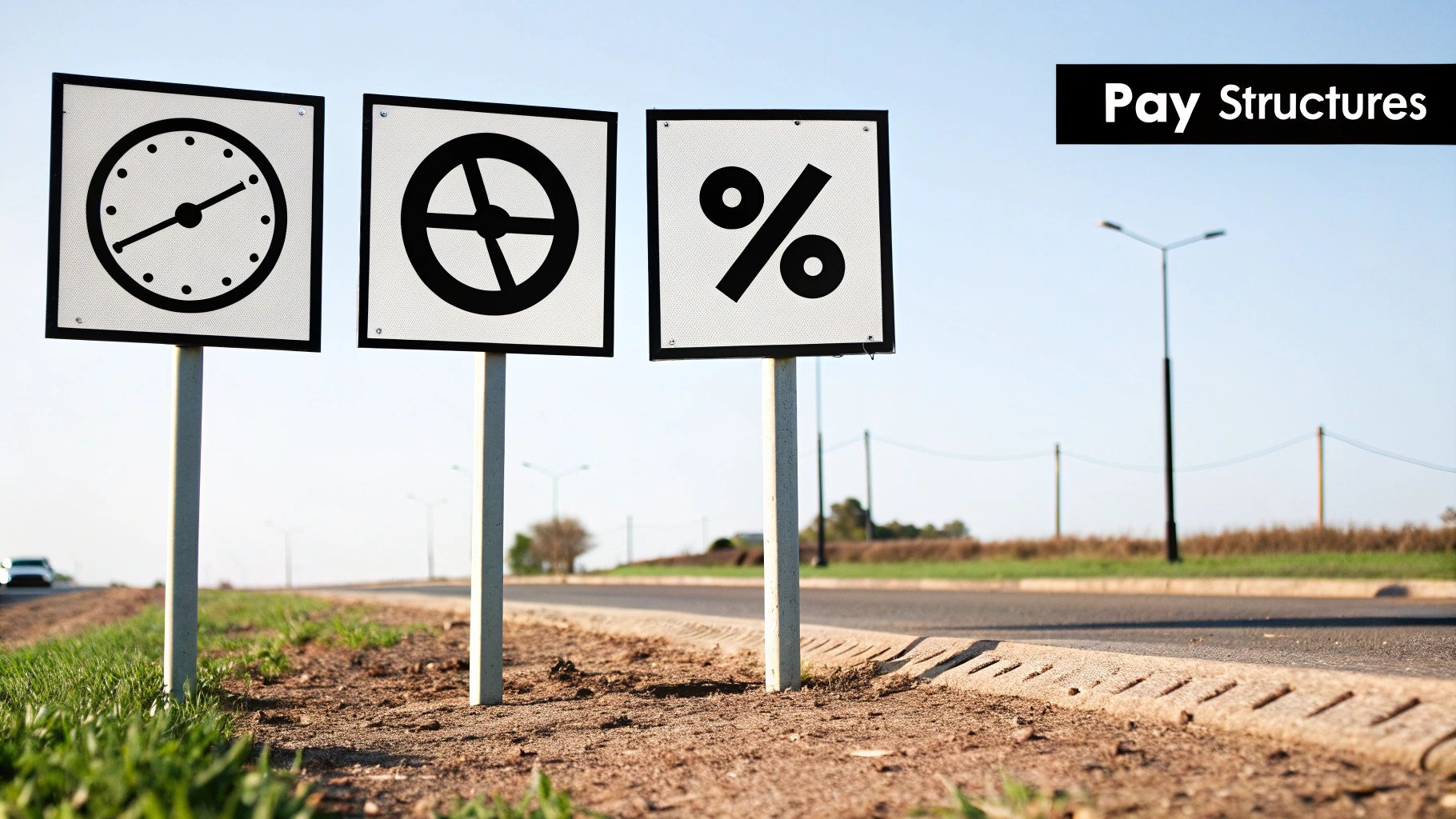
When you start digging into truck driver pay, you’ll quickly realize it’s not as simple as an annual salary. The industry runs on a few different pay models, and the one you're on can completely change your earning potential and lifestyle. Think of it this way: some salespeople get a salary plus commission, while a contractor might bill by the hour. Trucking works in a similar way.
Getting a handle on these pay structures is the first real step to finding a driving job that actually fits your life and financial goals. Whether you’re looking to maximize your income on the open road or prefer the stability of a local route, there’s a pay model built for it.
Let's dive into the three most common ways drivers earn their keep.
Pay Per Mile: The Long-Haul Standard
For most over-the-road (OTR) drivers, getting paid by cents per mile (CPM) is the name of the game. It’s exactly what it sounds like: you earn a set rate for every single mile your wheels are turning. For example, if your rate is a solid $0.60 per mile and you cover 2,500 miles in a week, you’ve just grossed $1,500. Simple as that.
This model is all about rewarding drivers who can consistently log miles. The more you drive, the more you make. But there are some details you need to be aware of.
- Loaded vs. Empty Miles: Does the company pay for all miles you drive, or only the ones where you're hauling a full trailer? This is a huge distinction.
- Detention Pay: What happens when you're stuck waiting for hours at a shipper or receiver? Some companies offer "detention pay" to compensate you for that lost time, but many don't.
At the end of the day, CPM is perfect for drivers who want to be out on the open road, keeping America’s supply chain moving and getting paid for every mile of it.
Hourly Pay: The Local Driver's Bread and Butter
While CPM rules the long-haul world, hourly pay is the go-to for most local and regional gigs. If you’re driving a delivery truck around a city or a dump truck at a construction site, you'll almost certainly be paid by the hour. This is a huge plus because it means you’re compensated for all your time—whether you're driving, stuck in traffic, or supervising the loading dock.
Hourly wages can run anywhere from $22 to over $30 per hour, depending on your location and what the job demands. The big advantage here is predictability. A bad traffic jam or a delay at a warehouse won't sink your paycheck.
For drivers who want a consistent schedule and get paid for every single minute they're on the clock, an hourly job is tough to beat. It brings a level of financial stability that’s a huge relief, especially if you have a family waiting at home.
This pay structure is common for jobs that involve more than just straight driving. If you’re making frequent stops, dealing with customers, or doing any physical unloading, hourly pay makes sure you're properly paid for all that extra work. You can find out more about the different qualifications needed by looking into the CDL requirements.
Percentage of Load: The Owner-Operator's Choice
Finally, there’s the percentage of the load model. You’ll see this most often with owner-operators or drivers at smaller carriers. Here, your pay is a direct cut of the revenue generated by the freight you're hauling. So, if a load pays the company $3,000 and your split is 25%, you’ll pocket $750 for that one trip.
This model directly connects your paycheck to the value of what you’re hauling. It has the highest earning potential of the three, because a high-value or urgent shipment can mean a massive payday. You're basically a business partner on every run.
The flip side, of course, is a lack of predictability. A week of cheap freight can lead to a seriously disappointing check. This model really shines for experienced, business-savvy drivers who know how to navigate the freight market and hunt down the most profitable loads.
Company Driver vs. Owner-Operator: Choosing Your Path
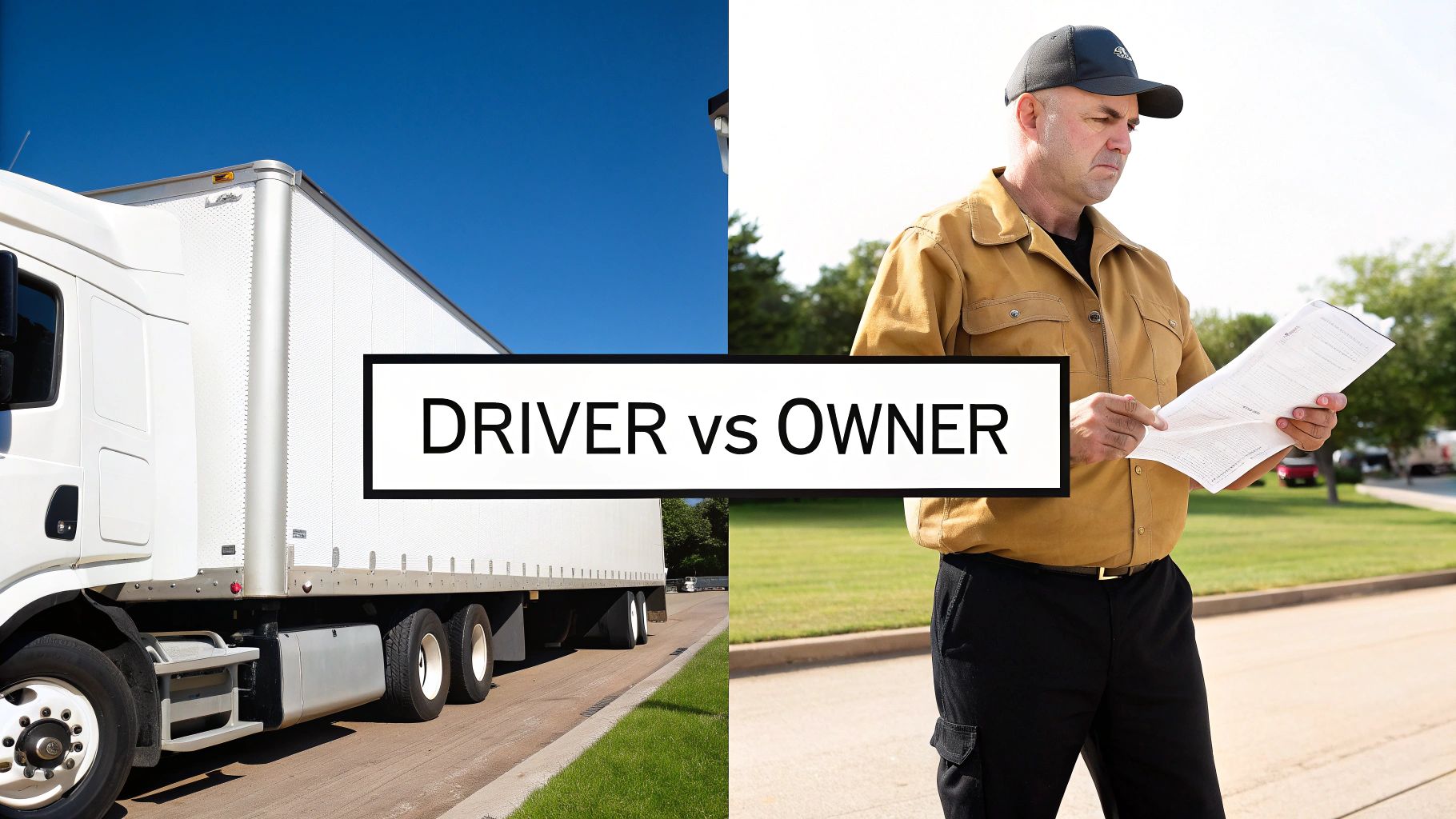
In the trucking world, you'll eventually face a major fork in the road that defines your career, your responsibilities, and your earning potential. It’s the classic choice: do you want to be an employee or run your own business?
Each path comes with a completely different set of pros and cons. The right choice for you really boils down to what you want out of your life and career.
For most people fresh out of CDL school, the journey starts as a company driver. It’s the most common and direct way to get your wheels rolling in the industry.
The Stability of a Company Driver
As a company driver, you’re an employee. Simple as that. The carrier provides the truck, the routes, and the freight. Your job is to drive safely and make the delivery on time.
The biggest draw here is the stability and predictability. The company shoulders all the major headaches—they own the rig, pay for fuel, cover maintenance, and handle the insurance. This setup lets you focus purely on the road without the stress and financial risk that comes with owning a business.
On top of that, company drivers get a real benefits package, which usually includes things like:
- Health Insurance: Medical, dental, and vision for you and your family.
- Retirement Plans: Access to a 401(k), often with the company chipping in.
- Paid Time Off: Vacation days, sick leave, and holidays.
- Predictable Paychecks: You get a regular, reliable paycheck, whether you’re paid by the mile or by the hour.
This stability is perfect for new drivers still learning the ropes or for seasoned pros who just want a steady, low-risk career without the extra baggage.
The Freedom of an Owner-Operator
On the other side of the highway is the owner-operator—the true entrepreneur of the trucking world. This path offers the highest potential income and ultimate freedom, but it comes with all the responsibilities of running your own show.
An owner-operator either owns their truck or leases one, acting as an independent contractor. Instead of a set salary, you earn a huge chunk of the revenue from every load you haul. That direct link between your work and your earnings is why the income ceiling is so much higher.
Owner-operators really represent the peak of trucking independence. Indeed ranks it as one of the best gigs in the U.S., with a median annual pay hovering around $160,000 and job postings up 34% year-over-year. That kind of money easily dwarfs what company drivers make, where even top-tier Class A jobs often max out under $90,000.
Becoming an owner-operator means you are your own boss. You pick your loads, you set your schedule, and you decide when and where you want to run. For many drivers, this level of control is the ultimate career goal.
Of course, all that freedom comes with a price. As the business owner, you're on the hook for every single expense:
- Fuel costs
- Truck payments and insurance
- Routine maintenance and surprise repairs
- Tires, permits, and licensing fees
- Self-employment taxes
To make it as an owner-operator, you have to be smart about your money and understand every available deduction. For example, learning the ins and outs of Section 179 tax savings can make a massive difference to your bottom line. Managing these costs is what separates a high gross income from a great take-home pay. It’s a path that demands serious business skills, but for those who get it right, the rewards are unmatched.
How Specializations Boost Your Paycheck
Think of your standard Class A license as your entry ticket to the trucking world. It gets you in the door, but it's really just the starting line. If you want to go from earning a good salary to a great one, the secret is in specialization.
It’s the same in any other field, right? A general family doctor makes a solid living, but a specialized heart surgeon earns significantly more. Trucking works the exact same way.
When you add endorsements to your CDL or decide to haul specific types of freight, you immediately become a more valuable and in-demand professional. This isn't just about learning something new; it's a direct strategy for boosting your income. These specialized jobs often require extra training, a higher level of responsibility, and sometimes more risk—and companies are more than willing to pay a premium for drivers who can handle them.
Unlocking Higher Pay with Endorsements
Endorsements are basically certifications that you add to your Commercial Driver's License. Each one unlocks a new type of freight you can legally haul, and almost every time, that new freight comes with a bigger paycheck. It’s a clear signal to employers that you have the skills to handle loads that are more complex or demanding.
A few of the most lucrative endorsements you can get are:
- Hazmat (H): This is your ticket to transport hazardous materials, everything from industrial chemicals to gasoline. Because of the extra regulations and safety protocols, Hazmat-certified drivers can earn up to 15%-35% more than a driver hauling standard dry van freight.
- Tanker (N): Hauling liquids—whether it's milk, fuel, or chemicals—is a whole different ballgame. You have to know how to manage the "slosh" and shifting weight inside the tank. That added complexity is rewarded with higher per-mile rates and better overall pay.
- Doubles/Triples (T): The ability to pull two or three trailers at once makes a carrier far more efficient, and they’re happy to share a piece of that extra profit with the driver. Learning to master these combination vehicles often leads to some of the highest paychecks in the entire industry. You can get a feel for what’s involved by checking out our practice materials for combination vehicles.
These aren't just letters on your license. They are keys that open doors to specialized, higher-paying jobs that a huge portion of the driver pool simply isn't qualified for.
Profitable Trucking Niches
Beyond the endorsements on your license, the actual type of trucking you do plays a massive role in your salary. Certain niches are known for being more physically demanding or requiring an incredible amount of attention to detail, and that translates directly into better pay.
Choosing a specialized trucking role is one of the most effective ways to take control of your career trajectory. It allows you to move beyond general freight and into sectors where your specific skills command top dollar.
Some of the most profitable specializations to get into include:
- Flatbed Trucking: Hauling oversized or strangely shaped loads like giant machinery or construction materials requires real skill in securing and tarping your cargo. It's hands-on work, and it pays a lot better than simple drop-and-hook freight.
- Refrigerated (Reefer) Hauling: Transporting perishable goods like produce or pharmaceuticals means you're responsible for managing a temperature-controlled trailer. The pressure of protecting a high-value, sensitive load comes with a serious pay bump.
- LTL (Less-Than-Truckload): LTL drivers are constantly on the move, making multiple stops to pick up and drop off smaller shipments. It's more involved than a single cross-country haul, and top LTL carriers like FedEx Freight and Old Dominion are famous for offering some of the best pay and benefits packages in the business.
By strategically going after these endorsements and niches, you’re not just driving—you're actively building a career path that leads to bigger paychecks and more job security. You go from being just another driver to a highly-paid logistics professional.
Why Location And Carrier Type Matter Most
Once you've got your endorsements and picked a specialty, the next two levers you can pull to seriously boost your income are where you drive and who you drive for. It's a mistake to think all trucking jobs are the same. A gig in a high-demand area with a top-tier company is a completely different financial world than one in a slow freight lane.
Think of it this way: a coffee shop on a busy street corner in Manhattan is going to do far more business than the same shop on a quiet country road. Trucking is no different. States with bustling ports, massive warehouses, and non-stop manufacturing are always hungry for drivers, and that high demand naturally drives wages up.
Regional Pay and High-Value Hotspots
Your home base has a huge impact on your paycheck. Drivers who live and work in states with a higher cost of living or, more importantly, a ton of freight moving through them, consistently earn more.
For example, a driver based in Mississippi might earn an average of $51,330 a year. Meanwhile, a driver in a high-demand, higher-cost state like New Jersey could see an average of $64,270.
That difference isn't an accident—it's pure economics. If you want to see what pay looks like in a major freight hub, you can check out our guide on getting a CDL in California. These regional pay gaps show why it pays to be strategic about your job hunt right from the start.
Finding The Right Carrier Makes All The Difference
Just as critical as where you drive is who you're driving for. The trucking world is filled with different kinds of employers, and each one has its own way of doing things, especially when it comes to pay and benefits. Knowing the difference is how you find the best paychecks.
- For-Hire Carriers: These are the names everyone knows, the big fleets like Schneider or Swift. They're hired by other companies to move their freight. Most new drivers get their start here.
- LTL Carriers: "Less-Than-Truckload" carriers like FedEx Freight or Old Dominion are the pros at moving smaller shipments from many different customers all on one truck. These jobs often mean more hands-on work, but they're famous for having some of the best pay and benefits in the entire industry.
- Private Fleets: These are the hidden gems of the trucking world. Think of companies like Walmart or Pepsi. They aren't trucking companies first; they're retailers or food producers who run their own fleets to move their own stuff.
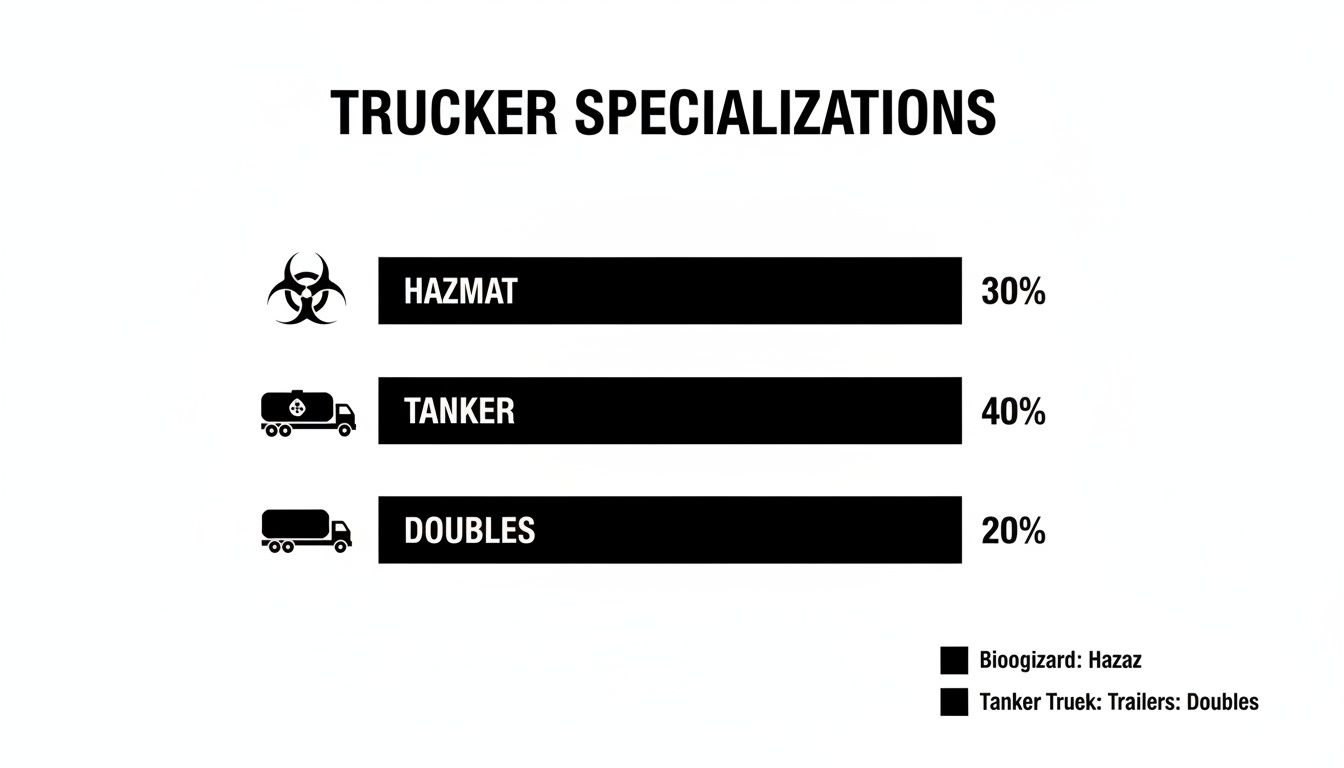
As you can see, getting endorsements for specialized freight like Hazmat or Tankers is your direct ticket to qualifying for these premium jobs.
For a private fleet, trucking isn't a service they're selling to make money. It's a vital part of their own business that has to run like clockwork. Because of this, they're often willing to pay top dollar for the absolute best, safest, and most professional drivers to keep their supply chain moving without a hitch.
Earning Comparison By Carrier Type
Choosing the right carrier is about more than just the paycheck; it’s about finding the right fit for your lifestyle and career goals. This table breaks down what you can generally expect from the major types of carriers.
| Carrier Type | Average Annual Pay | Common Benefits | Typical Lifestyle |
|---|---|---|---|
| For-Hire (OTR) | $60,000 – $85,000 | Basic health, 401(k) | Long-haul, weeks on the road |
| LTL Carrier | $85,000 – $110,000+ | Excellent health, pension | Regional/local, home often |
| Private Fleet | $90,000 – $120,000+ | Top-tier benefits, bonuses | Predictable routes, home daily/weekly |
As you can see, the path you choose can lead to very different financial and personal outcomes. While for-hire carriers are a great starting point, aiming for LTL or private fleets is where you'll find the highest earning potential and often a better work-life balance.
This is exactly why jobs with private fleets are so sought after. When you combine a high-paying region with a top-tier carrier, your earning potential explodes. It’s no surprise that Walmart's first-year Class A drivers can earn $110,000, and drivers for LTL powerhouse Old Dominion average over $100,000. These numbers prove that making smart, strategic choices can launch your income far above the national average.
Your Realistic Earnings Timeline After CDL School
Getting your Commercial Driver's License isn't the finish line—it's the starting line for a career with some serious financial momentum. Your first-year pay is solid, no doubt. But the real story is how fast your income can climb once you get some experience under your belt.
This isn't just about punching a clock. It’s about proving you're a safe, reliable professional who knows their way around the rig and the road. Let’s walk through what you can realistically expect your pay to look like as you build your career, one mile at a time.
Year One: The Foundation
Your first year is all about learning the ropes and getting your feet wet. You'll be focused on mastering the real-world skills that matter—nailing your backing maneuvers in tight spaces, getting a handle on Hours of Service rules, and building a perfectly clean safety record.
During this time, you can expect to earn a good entry-level salary, usually somewhere in the $50,000 to $65,000 range. Think of this as your professional foundation. Carriers are watching, and every on-time, safe delivery is another brick in that foundation, setting you up for a nice pay bump down the road.
Years Two to Four: The Growth Phase
Once you hit your second year, you're not the new kid anymore. You've proven you can handle the job, and companies start rewarding that reliability. This is when the better opportunities start popping up. We're talking more desirable routes, higher per-mile rates, or even a jump to a company that pays more.
In this phase, most drivers see their income climb into the $65,000 to $85,000 bracket. Your experience has made you a valuable asset, and your paycheck will finally start to show it.
Think of your first few years as an investment that pays dividends. The skills and clean driving record you establish directly unlock the door to six-figure earning potential down the road.
Five Years and Beyond: Top-Earner Status
After five years in the seat, you’re a seasoned pro. You have the experience and the safety record to command top-tier pay. This is where many drivers make smart, strategic moves to really maximize their income and see what their earning potential truly is.
At this stage, your career options are wide open, and your earnings can soar:
- Pursue Lucrative Specializations: With a proven track record, you can slide into high-paying niches like hauling Hazmat, tanker freight, or oversized loads. These jobs can easily push your salary well over $90,000.
- Target Elite Carriers: You’re now a prime candidate for private fleets or top-paying LTL companies, where salaries often break the $100,000 mark and come with fantastic benefits.
- Become an Owner-Operator: Your years of experience give you the industry know-how to launch your own trucking business, putting you in direct control of a much higher potential income.
The investment you make in your initial training pays off big time throughout your career. To see how quickly you can get on the road, check out our accelerated CDL training program. The path to a rewarding, high-paying career is clear, and it all starts the day you earn that CDL.
Frequently Asked Questions About Truck Driver Salaries
Jumping into a new career always brings up a lot of questions, especially when it comes to your paycheck. To help clear things up, we've put together answers to the questions we hear most often from folks just starting out in trucking.
Can I Really Make Six Figures as a Truck Driver?
Yes, you absolutely can. Hitting the six-figure mark isn't going to happen in your first year, but it's a realistic goal for drivers who are smart about their career path. It’s not about luck—it's about making the right moves.
So, how do drivers get there? Many add valuable endorsements like Hazmat or Tanker to their license, which opens the door to hauling specialized, higher-paying freight. Others land jobs with top-tier private or LTL fleets where the pay scales are much higher.
And of course, there's the owner-operator route. If you run your own truck successfully, you have direct control over your income, and many gross well over $100,000 a year. Team driving is another fast track; some top-tier teams pull in over $200,000 combined.
How Quickly Can I Earn Good Money After Getting My CDL?
You'll start earning a good living almost right away. Most brand-new drivers can expect to make between $50,000 and $65,000 in their first year. That’s a solid financial start, and it's one of the biggest draws of a trucking career—you get a great return on your training investment immediately.
Your pay really starts to climb after you have one or two years of experience under your belt. Once you've proven you're a safe, reliable driver, you become a much more valuable hire. That experience unlocks opportunities for better routes, specialized hauls, and jobs with higher-paying companies.
Is It Better to Be Paid Per Mile or Hourly?
That’s a great question, and the answer really comes down to the kind of driving you’re doing. One isn't automatically better than the other; they just fit different types of jobs.
Per-mile pay is the standard for over-the-road (OTR) drivers. If your job involves covering long distances on the open highway, it makes sense because your earnings are tied directly to how many miles you run. Hourly pay is much better for local and regional drivers who deal with city traffic, frequent stops, and waiting at docks. An hourly wage makes sure you get paid for all your on-duty time, not just when the wheels are turning.
At Patriot CDL, we give you the hands-on training and expert guidance needed to build a successful, high-paying career in trucking. Our programs are built to get you on the road and earning a great paycheck, fast.
Start your journey today by exploring our CDL programs.