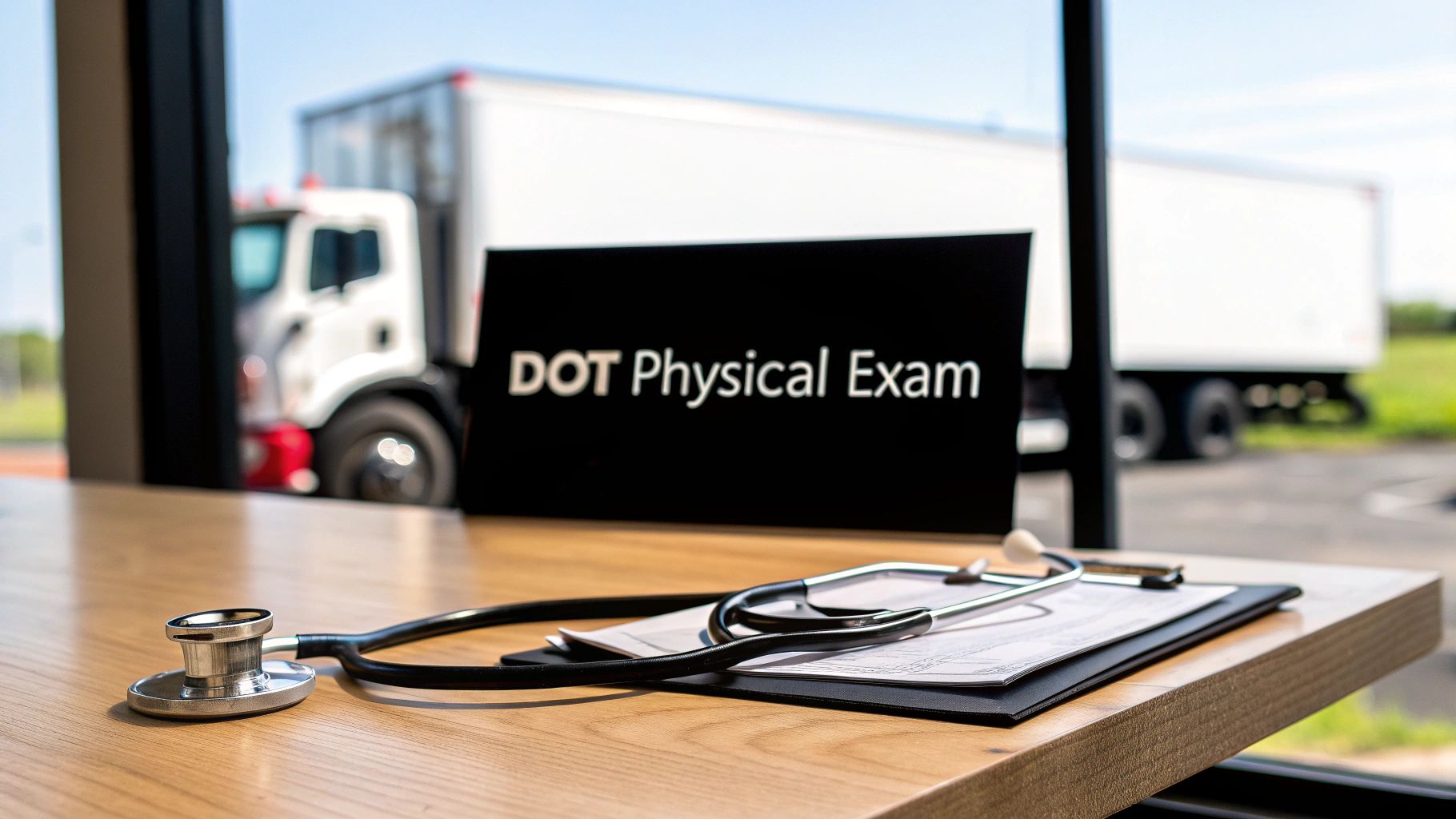
Think of the DOT physical exam as a pre-flight check, but for the most important piece of equipment on the road: the driver. It's a mandatory health screening required by federal law, designed to make sure every commercial driver is fit and safe to be behind the wheel of a large vehicle.
The Purpose Behind the DOT Physical
At its heart, the Department of Transportation (DOT) physical is all about safety. The Federal Motor Carrier Safety Administration (FMCSA) put this exam in place to ensure that commercial drivers are physically, mentally, and emotionally up to the task of operating massive vehicles over long distances.
It’s a critical safety net for everyone. By catching potential health issues early—things like dangerously high blood pressure, poor eyesight, or even undiagnosed sleep apnea—the exam helps prevent medical emergencies from happening on the highway. This protects the driver, their cargo, and every other person on the road. It's a foundational step, which is why understanding the full scope of CDL requirements is so important for anyone looking to start a career in trucking.
Who Is Required to Get This Exam?
So, who exactly needs to get one? The rules are pretty clear-cut and cover more than just long-haul truckers. If your job involves driving certain types of commercial vehicles, a DOT physical isn't just a good idea—it's the law.
The infographic below breaks down the main categories of drivers who must pass a DOT physical.
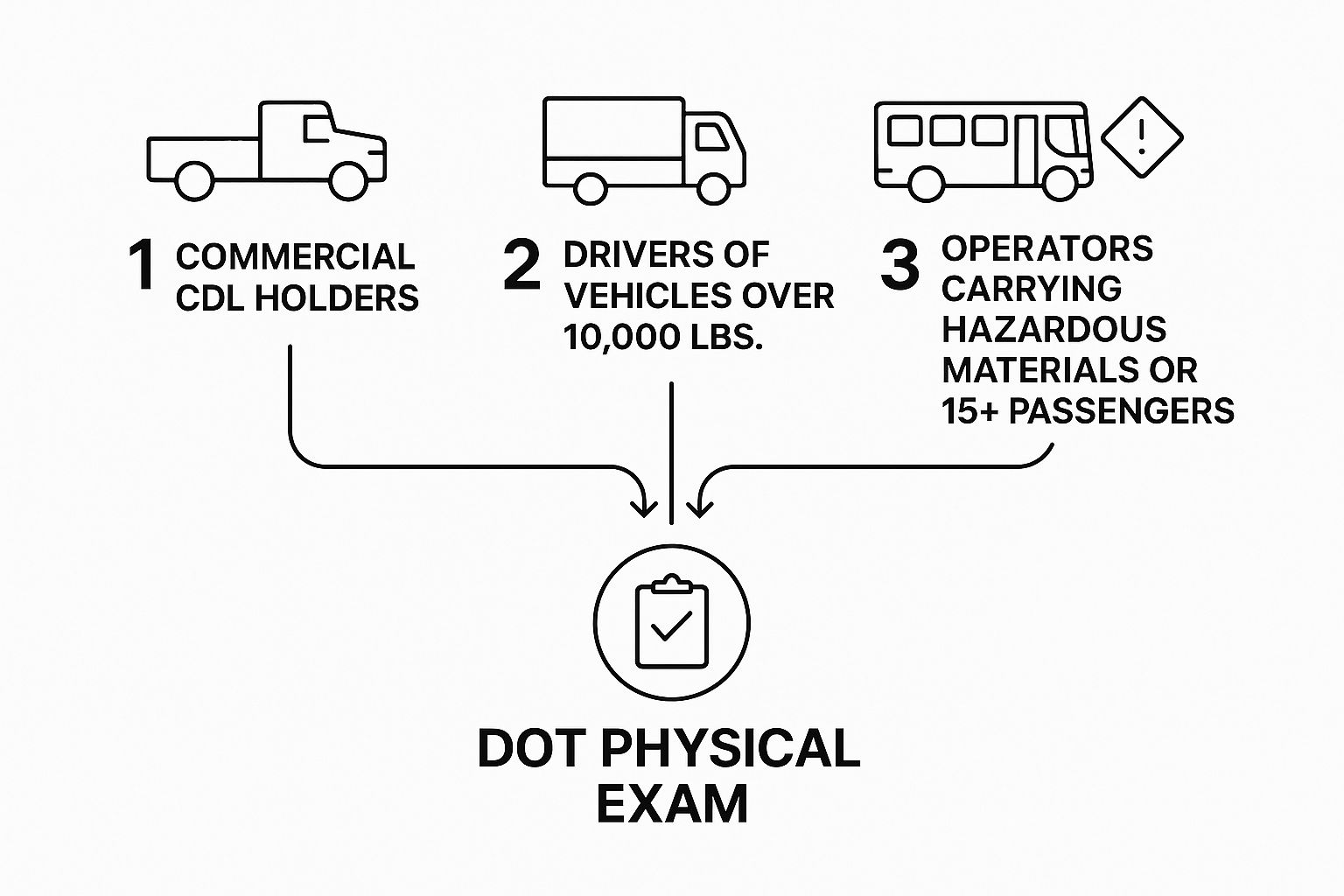
As you can see, the net is cast wide to ensure road safety across different types of commercial transport. For a quick reference, this table summarizes who needs the exam.
Who Needs a DOT Physical Exam at a Glance
| Driver Category | Vehicle or Cargo Type | DOT Physical Required? |
|---|---|---|
| Heavy Vehicle Operators | A vehicle with a gross weight/combination weight of 10,001 pounds or more. | Yes |
| Passenger Carriers | A vehicle designed to transport more than 15 passengers (including the driver). | Yes |
| Compensated Passenger Carriers | A vehicle designed to transport 9 to 15 passengers for compensation. | Yes |
| Hazardous Materials Haulers | Any size vehicle that transports hazardous materials requiring a placard. | Yes |
Basically, if you're driving a big rig, a bus, or anything that's hauling hazardous materials, you're going to need to pass this exam.
These FMCSA rules create a single, consistent safety standard for the entire industry. It ensures that every qualified commercial driver, no matter what state they're in or what company they work for, meets the same essential health criteria to operate safely.
What to Expect During the Examination
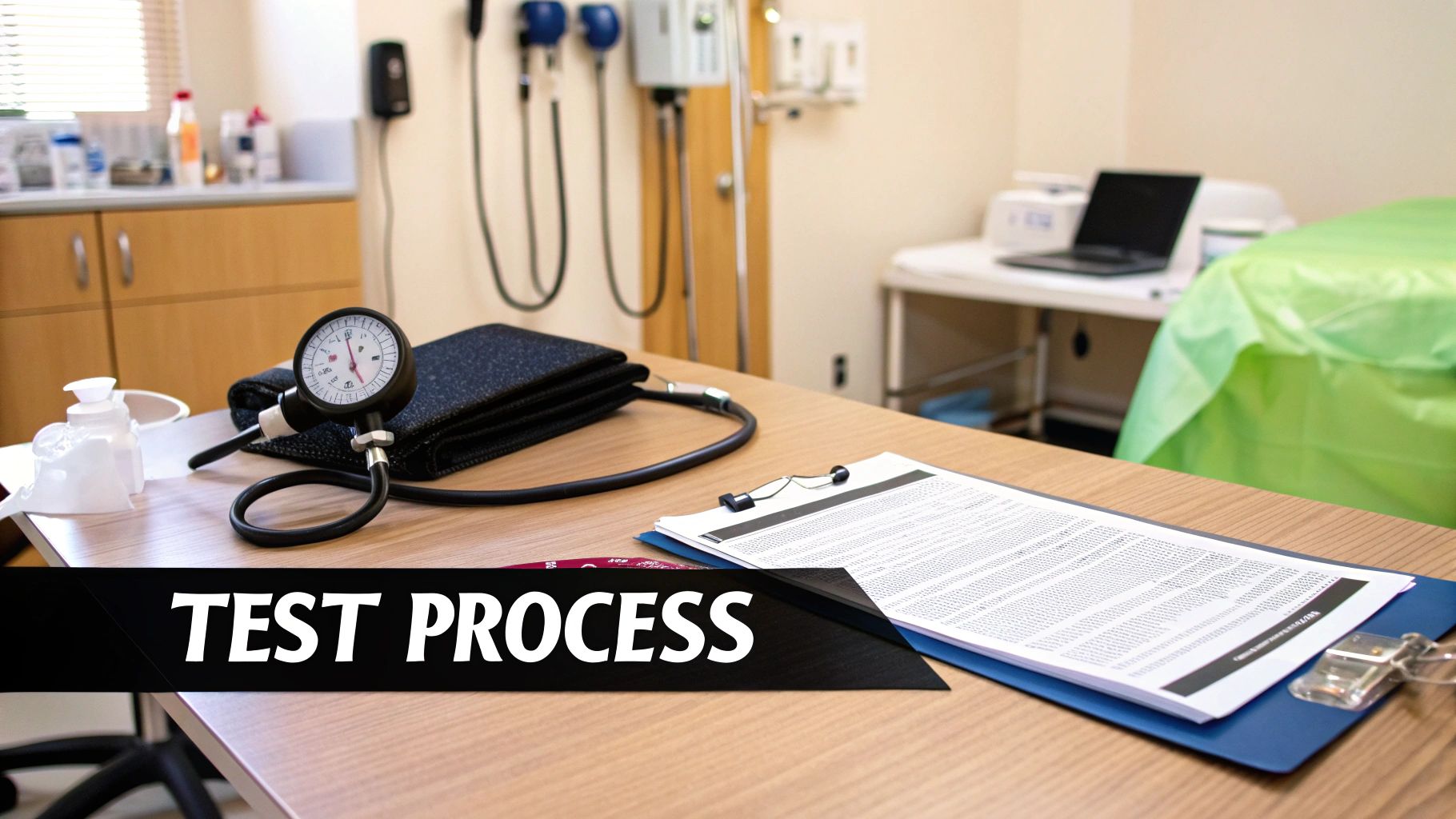
Walking into the exam room can feel a bit nerve-wracking, but knowing exactly what's coming helps take the mystery out of the DOT physical. It’s best to think of it as a systematic safety inspection for your body, where every single step is there for a reason. The whole process is designed to be direct and efficient, all to confirm you're physically up to the task of safely operating a commercial vehicle.
It all starts with your health history. You'll be handed a form to fill out that asks about past illnesses, surgeries, any medications you take, and chronic conditions. This is where honesty is non-negotiable. That paperwork gives the medical examiner a complete picture of your health before they even start the hands-on portion of the exam.
The Core Components of the Exam
Once the examiner has gone over your medical history, they'll dive into the physical tests. The DOT exam is a specific battery of assessments that evaluate your overall fitness for duty, looking at everything from your heart and lungs to your neurological and musculoskeletal condition.
Every exam includes mandatory vision and hearing tests—you have to be able to see and hear potential hazards on the road. You’ll also provide a urine sample, which screens for underlying medical issues like diabetes. This is a key point, so let's clear something up.
A common point of confusion is the urinalysis. This is not a drug test. The sample is used purely as a medical screening tool to check for signs of potential health issues like kidney problems or diabetes. The DOT-required drug test is a separate process entirely.
Knowing what each part of the exam is for can really help ease any stress you might be feeling. From checking that you can read road signs clearly to making sure your heart can handle the long hours, every test has a direct link to on-the-job safety.
A Step-by-Step Breakdown of the Tests
To give you a clearer roadmap, here’s what the hands-on part of the exam typically involves.
Vision Test: You need to have at least 20/40 acuity in each eye and both eyes together. This can be with or without glasses or contacts. The examiner will also check your peripheral vision and your ability to tell colors apart, which is crucial for recognizing traffic signals.
Hearing Test: Can you hear a "forced whisper" from five feet away? That’s the standard. You can pass with or without a hearing aid, but you must be able to perceive this sound to ensure you can hear horns, sirens, or other critical noises in your environment.
Blood Pressure and Pulse: The examiner will check your blood pressure and heart rate for any signs of hypertension or other cardiovascular problems. To pass without needing any extra evaluations or a shorter-term medical card, your blood pressure needs to be below 140/90.
Physical Examination: This is the head-to-toe check. The examiner will listen to your heart and lungs, test your reflexes, and look at your overall mobility. They'll also check your spine and abdomen to make sure there are no underlying issues that could get in the way of you safely controlling a large vehicle.
Meeting the Medical Standards to Pass Your Physical
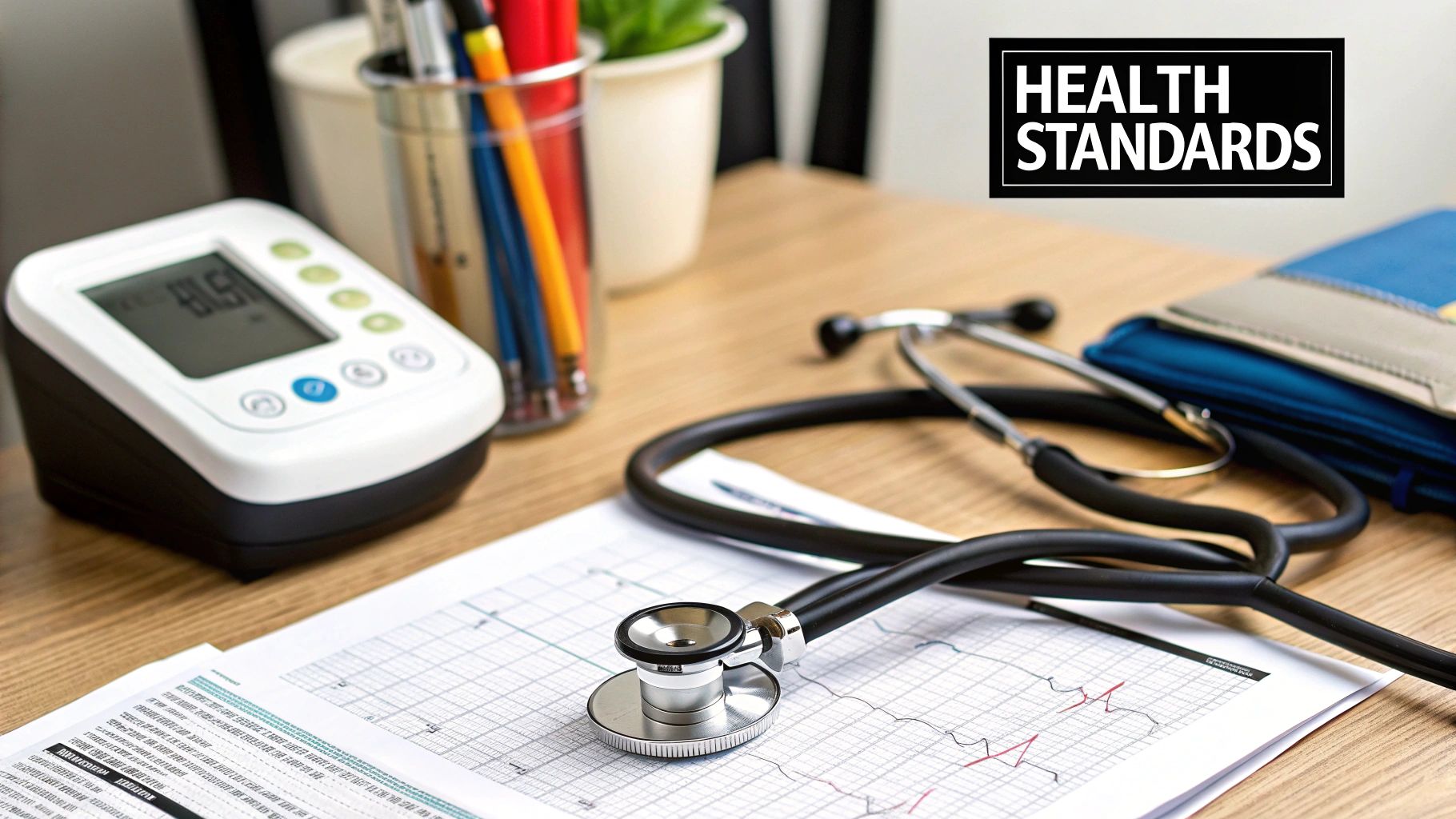
Passing your DOT physical isn’t a matter of opinion—it's about meeting specific, non-negotiable health standards set by the Federal Motor Carrier Safety Administration (FMCSA). These benchmarks are in place for one simple reason: to make sure every driver is medically fit to be behind the wheel of a big rig.
Think of it like this: a truck has to meet minimum standards for its brakes and tires to be road-legal. In the same way, the driver has to meet minimum health standards. Knowing exactly what those standards are ahead of time is your best strategy for success, letting you tackle any potential red flags before they become a problem on exam day.
Vision and Hearing Requirements
When you’re operating an 80,000-pound vehicle, your senses have to be sharp. For vision, the FMCSA requires at least 20/40 acuity in each eye and both eyes together. It doesn’t matter if you need glasses or contacts to get there, as long as you meet the standard. You’ll also need a peripheral vision of at least 70 degrees and the ability to tell the difference between red, green, and amber—the basic colors of a traffic light.
Hearing is just as critical. The test is surprisingly simple: you need to be able to hear a "forced whisper" from five feet away. You can use a hearing aid if needed. This standard ensures you can pick up on essential sounds like another truck’s horn, an emergency siren, or someone shouting a warning.
Blood Pressure and Cardiovascular Health
Your heart and circulatory system get a lot of attention during the physical, and for good reason. High blood pressure can lead to a stroke or heart attack, a worst-case scenario when you’re on the road.
The FMCSA's rules on blood pressure are clear-cut. A reading under 140/90 will get you a standard two-year medical card. If your numbers are higher, you might get a shorter certification—like one year or even three months—while you work with your doctor to get it under control.
The medical examiner will also be on the lookout for serious heart conditions like congestive heart failure or arrhythmias that could make driving unsafe. It’s also important to remember that physical abilities play a role. For instance, some drivers have restrictions on their license requiring them to operate vehicles with automatic transmissions. If you're looking to broaden your career options, you can learn more by checking out information on an E-restriction removal course.
To make these standards crystal clear, here’s a quick breakdown of the key pass-fail metrics.
DOT Physical Pass-Fail Health Metrics
| Medical Test | Requirement to Pass | Potential for Exemption or Waiver |
|---|---|---|
| Vision | At least 20/40 acuity in each eye (with or without correction). 70-degree peripheral vision. Must distinguish traffic light colors. | Yes, a federal vision exemption is possible for certain drivers who don't meet the standard but can prove they can drive safely. |
| Hearing | Perceive a "forced whisper" from 5 feet away (with or without a hearing aid). | Yes, a federal hearing exemption may be granted if the driver can demonstrate safe operation. |
| Blood Pressure | 139/89 or lower for a 2-year certificate. Higher readings result in shorter-term certifications or require medication. | No direct exemption, but drivers can pass by managing their condition with medication. Consistently high readings are disqualifying. |
| Diabetes | If insulin-treated, must provide documentation of stable blood sugar control from a treating clinician. | Yes, the Insulin-Treated Diabetes Mellitus (ITDM) assessment process allows qualified individuals to be certified. |
This table covers the most common areas of concern, but remember that the medical examiner will perform a comprehensive review of your overall health.
Managing Chronic Conditions and Disqualifications
Having a chronic condition like diabetes doesn't automatically mean your driving career is over. Many drivers manage it successfully. If you use insulin, you'll just need to go through an evaluation with your doctor to show the FMCSA that your blood sugar is stable and well-controlled.
On the other hand, a few conditions are considered absolute disqualifiers because the risk is simply too high. These include:
- Uncontrolled Epilepsy: A history of seizures poses an unacceptable risk of loss of consciousness.
- Narcolepsy: This sleep disorder creates an obvious and severe danger on the road.
- Serious Inner Ear Disorders: Conditions causing severe vertigo or dizziness are disqualifying because they directly impact your balance and control.
If you have a condition that falls into a gray area but is well-managed, you might be able to apply for a federal exemption from the FMCSA. It’s a rigorous process that involves a deep dive into your medical records, but it provides a pathway for drivers who can prove they are safe to operate a commercial vehicle.
How to Prepare for a Successful Exam
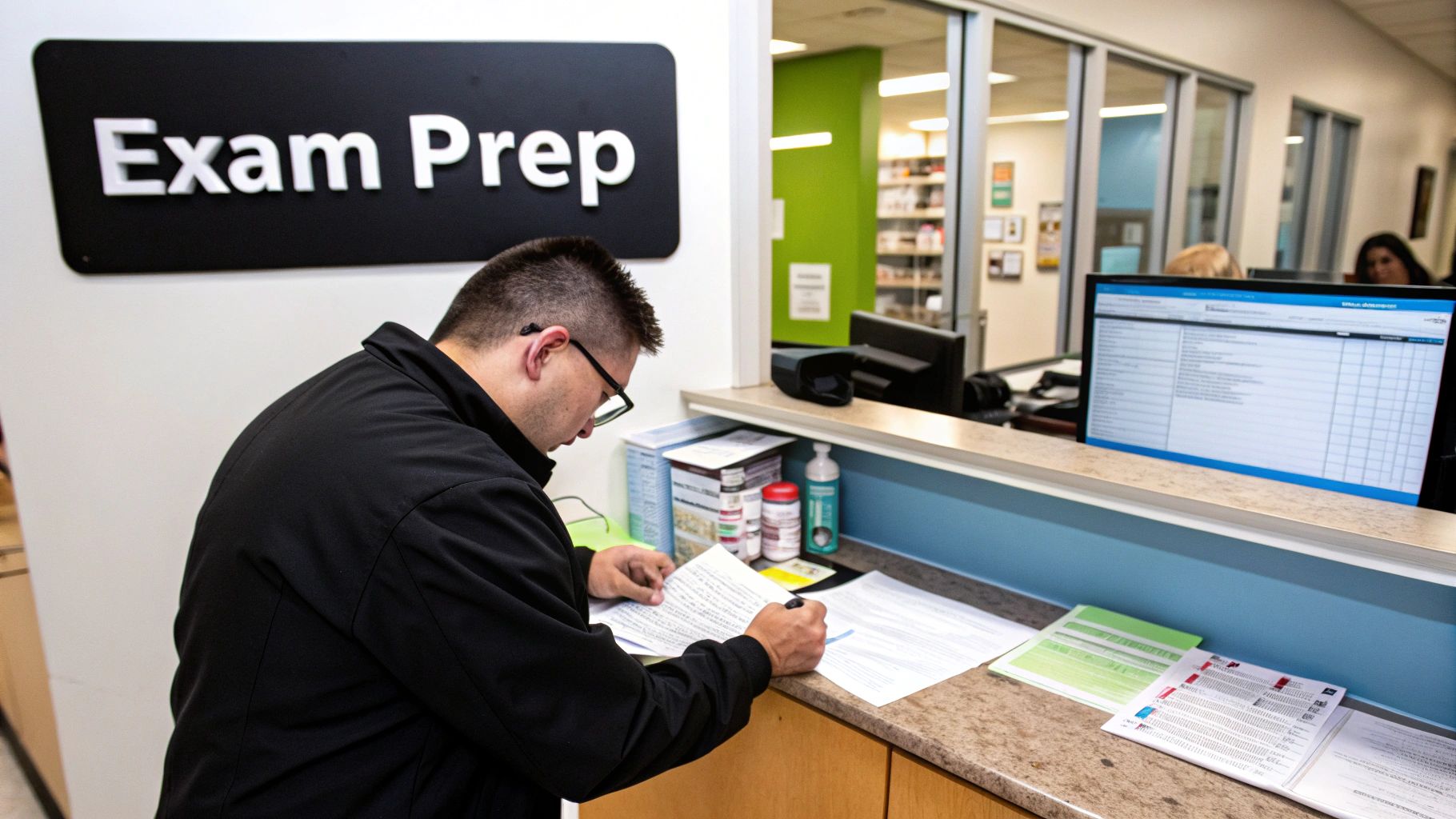
Passing your DOT physical starts long before you ever walk into the exam room. Think of it like a pre-trip inspection for your own body. A little bit of prep work can mean the difference between a smooth, quick process and a frustrating headache of delays and follow-ups.
Taking a few straightforward steps beforehand helps you give the examiner the most accurate snapshot of your health. It’s all about being proactive to keep yourself on the road without any unnecessary downtime.
Gather Your Essential Documents and Information
The fastest way to complicate your appointment is to show up empty-handed. Before you head out the door, take a few minutes to get your paperwork in order. This gives the medical examiner a clear picture of your health right from the get-go.
Essentially, you're building a mini driver qualification file for your own health history. You want it organized, complete, and ready for review.
Key Takeaway: The goal is to present a complete and honest health profile. Having your documents and a full list of medications ready prevents last-minute scrambling and helps the examiner make a confident, informed decision.
Here’s a quick checklist of what to bring to your appointment:
- A Complete List of Medications: Write down everything you take—prescriptions, over-the-counter meds, and even supplements. Be sure to include the dosage for each one.
- Medical Records for Chronic Conditions: If you’re managing something like diabetes, sleep apnea, or a heart condition, bring recent notes from your doctor. For sleep apnea, that means bringing your CPAP machine's compliance report.
- Corrective Lenses and Hearing Aids: This one’s easy to forget! If you wear glasses, contacts, or hearing aids, you need to have them with you. You'll be tested while using them to prove you can meet the standards.
- Valid Photo Identification: A driver's license or another government-issued ID is mandatory to confirm it's really you.
Lifestyle Adjustments the Day Before Your Exam
Believe it or not, what you do in the 24 hours leading up to your physical can have a real impact on your results—especially your blood pressure. A few simple tweaks can help you avoid an artificially high reading.
Steer clear of things that can temporarily spike your numbers. For instance, chugging a large coffee and grabbing a salty breakfast on your way to the clinic could push a perfectly normal blood pressure reading into a range that raises red flags.
For the most accurate results, try these simple tips:
- Avoid Caffeine: On the day of the exam, skip the coffee, tea, and energy drinks.
- Limit Salty Foods: A high-sodium meal can make your blood pressure creep up temporarily.
- Stay Hydrated with Water: Guzzling water makes providing a urine sample much easier and is just plain good for you.
- Get a Good Night’s Sleep: Showing up well-rested can lower your stress levels and help keep your blood pressure down.
These small steps can make a huge difference. For anyone just starting out in the trucking world, preparing for the DOT physical is a critical first step—just as important as getting your initial paperwork done when you sign up for CDL training.
What Happens After You Pass the DOT Physical?
Getting that thumbs-up from the medical examiner is a huge relief, but your work isn't quite done yet. That exam is the gateway to getting your official Medical Examiner's Certificate (MEC), which is the document that proves you're physically qualified to be behind the wheel.
Once the examiner gives you the all-clear, they'll hand you that certificate. The expiration date on it, however, isn't one-size-fits-all—it’s based entirely on your individual health profile. For a driver with a clean bill of health, a standard two-year certificate is the norm.
Understanding the Different Certificate Durations
Not everyone walks out with a two-year card. If you have a health condition that needs to be kept in check, like well-managed high blood pressure, the examiner might issue a certificate for a shorter period. This is perfectly normal and is a safety measure to ensure you remain fit to drive.
Here’s how the certifications usually break down:
- One-Year Certificate: This is common for drivers who are successfully managing chronic conditions like stable hypertension or diabetes. It just means the FMSCA wants an annual check-in.
- Three-Month Certificate: Think of this as a temporary pass. An examiner might issue one if, for example, your blood pressure is a bit high, giving you time to see your doctor and get it under control before coming back for a longer certification.
Considering there are an estimated 5.5 million commercial drivers in the U.S., these check-ups are a big deal. The good news? Roughly 90% of drivers pass on their first try. The other 10% typically just need a follow-up or are issued one of these shorter-term certificates to manage a specific health issue.
Your Next Steps: Keeping Everything Official
With your new medical certificate in hand, you have a couple of quick but critical tasks to take care of. It's on you to make sure your records are current with both your employer and your state's licensing agency.
First, give a copy of the MEC to your employer so they can update your driver qualification file.
Next, and this is crucial, you must submit it to your State Driver Licensing Agency (SDLA). This step officially ties your medical clearance to your CDL. If you skip it, you risk having your CDL downgraded or even suspended. Staying compliant is just as important as knowing the rules of the road, like the information covered in the CDL general knowledge test.
Your Questions About the DOT Physical, Answered
Even when you know the basics of the DOT physical, some specific questions always seem to pop up. Let's clear the air and tackle some of the most common things drivers ask, so you can walk into your appointment with confidence.
How Much Does a DOT Physical Cost?
You can expect the cost to land somewhere between $85 and $150. The exact price tag really depends on where you live and the clinic you choose.
One thing to keep in mind is that your personal health insurance almost never covers this. Why? Because it's considered a work requirement, not a standard medical check-up.
The good news is that many trucking companies will cover the cost for their drivers. It's always a smart move to ask about your company's policy before you book anything. If you're an owner-operator, this one's on you, so be sure to budget for it.
What Happens If I Fail My DOT Physical?
Failing the exam means you won't get your medical certificate, and you can't legally drive a commercial vehicle. But don't panic—this often isn't the end of the road.
First, the examiner will tell you exactly why you didn't pass. If it's something manageable like high blood pressure, you can work with your regular doctor to get it under control. Once you have documentation showing the issue is resolved, you can go back for another evaluation. For more serious conditions that are normally disqualifying, you might be able to apply for a federal waiver or exemption from the FMCSA.
Important Note: Think of a failed exam not as a dead end, but as a crucial heads-up about your health. Taking care of the issue is the surest way to get back behind the wheel safely and legally.
Is There a Drug Test During the Physical?
This is probably the biggest point of confusion out there. The standard DOT physical does include a urinalysis, but it's not a drug test. The sample is used to screen for medical issues, like checking for sugar or protein that could indicate a problem like diabetes.
So where does the confusion come from? The DOT also requires a completely separate drug test for pre-employment, random checks, or post-accident situations. To make things efficient, many clinics will perform both the physical and the drug screen in the same visit. They are two different tests for two different reasons, just done at the same time for convenience.
Can I Go to My Own Doctor?
Probably not, unless your personal doctor has gone through some specific training. To get a valid DOT physical, you have to see a medical professional who is on the FMCSA's National Registry of Certified Medical Examiners.
While it's possible your doctor is on the list, most family physicians aren't. It's on you to check. You can search the National Registry online to find a certified examiner near you. This system ensures the person evaluating you understands the unique health demands of professional driving. Just like you need to master every detail of a proper pre-trip inspection, your examiner needs to be an expert on DOT health rules.
At Patriot CDL, we're here to walk you through every part of the process, from passing your written exams to getting ready for your medical evaluation. Your journey to a rewarding career on the open road starts right here.