You're probably looking at truck driving jobs in Philadelphia for one of two reasons. Either you're sick of dead-end work and want a trade that pays like real work should, or you've been watching trucks roll past on I-95, the Schuylkill, or the Boulevard and thinking that driver might have a better setup than you do.
That instinct isn't wrong.
Philadelphia is a freight city. It moves food, retail, building materials, port freight, parcel volume, and local delivery all day. The hiring base is broad enough that this isn't some long-shot career move. It's a practical one. Local sources show between 600 and 1,523 open CDL driver jobs in Philadelphia, and one dedicated listing in the area advertises $80,080 average yearly earnings plus a $2,000 sign-on bonus, while also welcoming recent graduates through training and onboarding support in the local market (Philadelphia-area driving job snapshot).
The problem is that a common approach involves searching for jobs first and training second. That's backward. If you want to get hired fast, you need to understand the gatekeepers before you start firing off applications. Carriers don't care that you're motivated if you don't have the license, the paperwork, the medical clearance, and a realistic plan.
Your Guide to a Trucking Career in Philadelphia
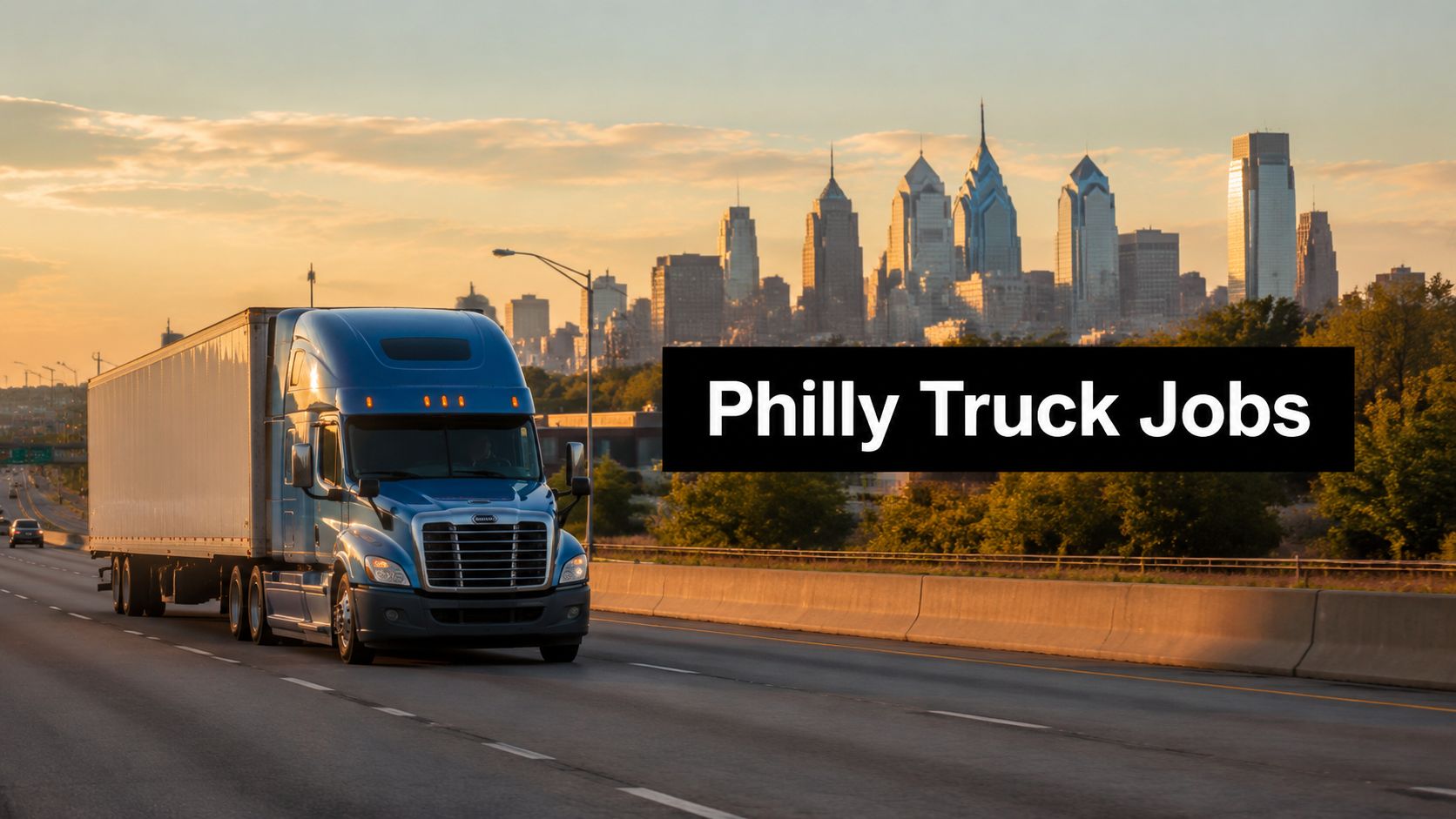
It's 5:00 a.m. on I-95. Trucks are already lined up for port freight, food loads, store deliveries, and warehouse runs across South Jersey, Delco, and the city. This is a primary attraction in Philadelphia. There is enough freight moving through this market that a new driver can get from zero experience to a first job faster here than in plenty of smaller cities.

Here's the part beginners miss. Your first job search does not start on Indeed. It starts with the license, the medical card, the training record, and knowing which carriers in this area take fresh CDL holders. If you skip that order, you waste weeks applying for jobs you were never qualified to get.
Philadelphia is a strong market for entry-level drivers because the work is varied. You've got local delivery, port and container work, foodservice, retail freight, building materials, parcel, and regional runs that get you home more often than true over-the-road jobs. That variety matters. It gives new drivers more than one lane into the industry instead of forcing everyone into the same starter job.
What beginners in Philly get wrong
A new driver in this city usually makes one of two mistakes. They either wait too long to start training because they assume the process is complicated, or they rush into applications without checking whether a company wants six months to two years of experience.
You need to screen employers before you apply. Check whether they hire recent graduates, whether they train on automatic or manual equipment, what their insurance rules look like, and whether the job is local or just advertised that way. “Philadelphia” jobs often mean all-day runs into Jersey, Baltimore, Allentown, or New York boroughs. That changes the job fast.
If you want a better sense of how daily operations work once you're hired, this article about dispatcher and driver sync is worth your time. A sloppy dispatch office can wreck a decent driving job. A well-run one makes your first year much easier.
Start with the qualification path
Get clear on the process before you chase the paycheck. Pennsylvania drivers who want a practical breakdown should read this guide on how to get a CDL in PA. It lays out the steps that turn you from “interested” into someone a carrier can onboard.
That's the essential first step in Philadelphia. Get qualified first. Then target the companies that hire new drivers. That is how you go from zero to hired without wasting time.
The First Turn Your CDL and Endorsements
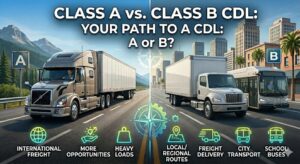
If you're serious about trucking, Class A CDL is the ticket. Not because Class B is useless. It isn't. But Class A opens far more doors in the Philadelphia market, especially if you want tractor-trailer work, better lane options, and a higher long-term ceiling.
Class B can still make sense for straight trucks, dump trucks, some local delivery work, and certain municipal or construction-heavy jobs. But if you want flexibility, get Class A first unless you have a specific reason not to.

The sequence matters
Beginners often waste time. They think they can “figure it out as they go.” You can't. For a Class A CDL, federal rules require Entry-Level Driver Training, and the process from permit to road test typically takes 3 to 8 weeks, with tuition commonly ranging from $3,000 to $7,000 in the broader market (Class A CDL training process and cost range).
That means your path usually looks like this:
Get the CLP
Study for the written exams tied to the license you want. For Class A, that often means general knowledge, air brakes, and combination vehicles.Complete ELDT
This isn't optional. If you're new to Class A, you need the training before the skills test.Take the skills test
You'll be judged on pre-trip inspection, basic control maneuvers, and the road test.Apply with a complete file
Once the CDL is in hand, you become a real candidate.
A lot of people stall out because they treat these as loose suggestions instead of a chain. Miss one link, and the process stops.
Endorsements change your options
Endorsements matter because they widen the kind of freight you can legally haul. In a metro region like Philadelphia, that can mean more access to specialized work.
Common ones to look at:
Tanker
Useful if you want liquid loads or work tied to fuel, chemical, or bulk liquid operations.HazMat
More paperwork and screening, but it can open specialized freight opportunities.Doubles and Triples
Not every driver needs it, but it can matter for linehaul or terminal-based operations.
If you're comparing which add-ons are worth your time, this breakdown of CDL Class A endorsements helps clarify what each one does.
Here's a useful video if you're still trying to understand the licensing path and what training looks like in practice.
Don't overcomplicate Step Zero
You do not need to map out your whole ten-year career right now. You need a legal, employable foundation. That means the right CDL class, the required training, and any endorsements that fit the lanes you want to chase.
The driver who gets hired first usually isn't the most “passionate.” It's the one who shows up with the right license, clean paperwork, and no surprises.
Finding the Right Training Pathway in Philly
Training schools aren't all the same, and this choice affects how fast you get hired. Some programs move quickly and focus on road-ready skills. Others move slower, cost differently, or tie your training to a work commitment after graduation.
The three common paths
Here's the honest breakdown.
| Training path | What it's like | Good fit for |
|---|---|---|
| Private CDL school | Faster pace, focused on permit prep, yard work, road skills, and test readiness | Career changers who want speed and flexibility |
| Community college program | More structured, sometimes slower, often tied to broader workforce programming | Students who want a traditional classroom feel |
| Carrier-sponsored training | Lower upfront cost in some cases, but you usually owe a work commitment | People who need a direct employer path and accept less flexibility |
Private schools make the most sense if your goal is simple: get licensed and get to work. Community college can work if you want a slower runway. Carrier-sponsored training can be fine, but read the agreement carefully. If you quit early or hate the route, you may not have much room to move.
What to look for in a real school
A decent website and a truck in the parking lot don't mean much. Ask harder questions.
Hands-on driving time
You need seat time, not just classroom time.Maneuver training
Make sure they teach backing, alley dock work, pre-trip inspection, and city driving.Permit and medical guidance
A school should help you understand the written test path and what to expect from the DOT physical.Scheduling that matches your life
If you're working while training, that matters.
One local option is Patriot CDL's truck driving school program, which focuses on CDL training and preparation for permit, skills testing, and common driving maneuvers. It's one route among several, and the right choice depends on your budget, timeline, and whether you want independence after training.
My advice on choosing
Pick the school that gets you competent, not the one that just gets you enrolled. If they can't explain how they prepare students for pre-trip, backing, road test nerves, and employer expectations, keep looking.
A weak school creates expensive problems later. You'll pay for it in failed tests, shaky interviews, and jobs you can't hold onto.
What Philadelphia Trucking Jobs Actually Pay
You finish CDL training, pass the road test, and start looking at job ads around Philly. One post makes the money look easy. Another sounds low. A third promises big weekly pay but keeps the details vague. That is normal. Trucking pay in this market depends on the run, the schedule, and whether the company is hiring rookies or proven drivers.
One Philadelphia wage snapshot lists 798 employers hiring truck drivers, with pay ranging from $22.93 to $39.40 per hour and a $28.72 per hour median for the city (Philadelphia truck driver wage snapshot). That median comes out to about $59,738 per year at full-time hours. For a new driver, that is a realistic starting reference point, not a guarantee.
Local, regional, and OTR are different jobs
A local beverage route in Northeast Philly is not the same job as a regional dry van run out of South Jersey. They should not pay the same, and they do not ask the same from your body or your schedule.
Philadelphia Trucking Route Types Pay vs. Home Time
| Route Type | Typical Pay Range (Annual) | Average Home Time |
|---|---|---|
| Local | Often tied to hourly or route-based pay. Some roles can land near the local median, while specialized or dedicated work may run higher | Usually home daily |
| Regional | Often stronger than basic local starter jobs if miles stay consistent | Often home weekly or on a set schedule |
| OTR | Can offer a higher ceiling for some drivers, especially once experience builds | Extended time away from home |
That table stays conservative on purpose. Freight swings. So do schedules, detention, stop pay, night work, weekend work, and unloading.
What moves your pay up
Three things matter fast in Philly:
Experience
Your first year is proof. Companies want to see safe driving, clean inspections, and steady work history.License class and endorsements
More endorsements give you more lanes to work in and more ways to qualify for better freight.Freight type and schedule
Dedicated accounts, tougher shifts, and specialized freight usually pay more because fewer drivers want them or can handle them.
CPC Logistics cites Indeed salary data showing Philadelphia truck drivers averaging $79,821 per year locally. That is useful context, but new drivers should not build a budget around an average that includes seasoned drivers and stronger accounts.
If you want a wider look at how pay compares across transportation roles, Peak Transport's 2026 pay guide gives helpful context.
What I'd target first
Your first job should buy you experience. That is the goal.
Take the job with solid training, decent equipment, steady dispatch, and a company that will answer the phone when you have a problem at 3 a.m. Chasing the highest advertised number is how new drivers end up in bad lease deals, ugly turnover shops, or jobs with miles that disappear after week two.
For a plain-English breakdown of cents per mile, hourly work, route pay, and the factors that change your income, read this truck driver earnings guide.
Your Job Search Strategy for the Philly Market
The biggest mistake new drivers make is applying like everyone else. That puts you in a pile with experienced drivers, career hoppers, and people who clicked “easy apply” without reading the posting. You need a smarter approach.
The local market has opportunity, but it also has a filter. Many Philadelphia-area postings still ask for 6 months to 2 years of recent, verifiable experience, which is why beginners need to search specifically for roles with “paid training” or “will train” language when scanning local listings (Philadelphia local truck driver listings and experience gap).

Read the ad like a dispatcher would
A rookie sees “hiring now” and gets excited. A dispatcher or recruiter looks for disqualifiers.
When you read truck driving jobs in Philadelphia, check for these first:
Experience language
If it says recent verifiable experience, believe it.License class
Don't apply to a Class A job with a Class B license and hope they'll bend.Route type
Local, regional, dedicated, linehaul, and OTR all mean different lifestyles.Physical demands
Some “driving” jobs are really driver-plus-unloader jobs.
Use a three-lane search strategy
Don't rely on one channel. Use all three.
Job boards
Search every day, but filter hard. Use terms like “recent graduate,” “paid training,” and “will train.”Direct carrier applications
Go straight to company websites. Some carriers prefer direct applications or move faster with them.Staffing and recruiting firms
In a market like Philly, specialized transportation recruiters can help match you to employers that hire new drivers.
Build a resume for trucking, not for office work
If you're entry-level, your resume should lead with what makes you employable now.
Include:
CDL class
Put it near the top.Endorsements
If you have them, make them obvious.Training completion
Name the school and completion status.Driving-related strengths
Safe record, punctuality, route discipline, equipment awareness, customer-facing experience.
Your warehouse job, military background, construction work, delivery work, or service experience can all help if framed correctly. Companies want signs that you show up, follow rules, and won't create a safety headache.
Field advice: Don't describe yourself as “no experience.” Say you're a new CDL holder ready for entry-level routes and structured onboarding. Same reality. Better framing.
Follow up like a pro
Most applicants don't follow up. That's dumb.
Call. Confirm they received the application. Ask whether they hire recent graduates. Ask what the next hiring step is. If the recruiter sounds rushed, be brief and professional. That alone puts you ahead of a lot of applicants.
If you want a running list of openings and hiring signals, this roundup of truck driving jobs hiring now can help you spot the kinds of roles worth pursuing.
Nailing the Interview and Starting Your Career
In trucking, the interview usually isn't just an interview. It's a screening process with paperwork, compliance checks, and often some kind of driving evaluation. That's why people who look fine on paper still get delayed or dropped.
One Philadelphia-area onboarding flow lays it out clearly. Hiring often follows eligibility screening, CDL verification, DOT physical and drug testing, then orientation and a road test, and applicants with complete documentation plus a clean personal driving record usually move faster through the process (driver hiring flow and screening requirements).
Show up with your file complete
Bring every document you might need. Not some of it. All of it.
- Your CDL
- Medical card if required for the role
- License history and personal information
- Work history details
- Any endorsement documentation
- Anything the recruiter asked for in advance
If your paperwork is sloppy, the company assumes your driving might be sloppy too.
Be honest about your record
If you've had a ticket, say so. If your work history has gaps, explain them clearly. Recruiters and safety departments care more about surprises than imperfections. They've seen everything already. What they don't like is getting a different story from the report than they got from you.
Ask questions that prove you understand the job
Don't end the conversation with “So, when do I start?” Ask smart questions.
Try these:
- What equipment will I be assigned?
- Is this slip-seat or assigned truck?
- What does orientation look like?
- How does dispatch communicate with drivers?
- What are the usual start times?
- Is the work touch freight, no-touch, or mixed?
- What does a successful first month look like here?
Those questions tell a company you're thinking like a professional, not just chasing the first paycheck.
If a company can't explain the route, the schedule, the equipment, and the onboarding process clearly, don't expect the job itself to be organized.
Putting It All Together on the Road to Success
Truck driving jobs in Philadelphia are real, accessible, and worth pursuing if you handle the process in the right order. First get the license path straight. Then choose training that prepares you for the road test and real employer expectations. After that, target jobs that match your actual qualifications, not the fantasy version of your resume.
The drivers who break in fastest don't waste energy pretending the barriers aren't there. They deal with them. They get the CDL, clean up the paperwork, search for entry-level-friendly carriers, and show up ready for screening, orientation, and road testing.
Once you're hired, think long term. Safe habits, clean records, and disciplined communication matter. If you want a practical look at how fleets use tools to reduce risk and improve accountability, this guide on improving driver safety with GPS is a useful read.
The road into trucking isn't mysterious. It's just structured. Handle the steps in order, and Philadelphia gives you a real shot.
If you're ready to stop guessing and start training, Patriot CDL offers CDL instruction built for people who want a direct path into trucking. If you need help getting permit-ready, preparing for the skills test, and building the foundation employers look for, it's a practical place to start.