


Air-brake checks are difficult to remember when they are learned as a disconnected list of pedal movements and numbers. A better memory routine links each step to the question it answers: is pressure being supplied, is stored air being retained, do warnings and protective devices respond, and does the vehicle stop as required? That understanding does not authorize experimentation with brake controls. Every demonstration must follow the current Pennsylvania testing guidance, the actual vehicle configuration, and the instructor’s secured setup. This guide explains how to study the sequence accurately without publishing a shortcut that could be misapplied to different equipment.
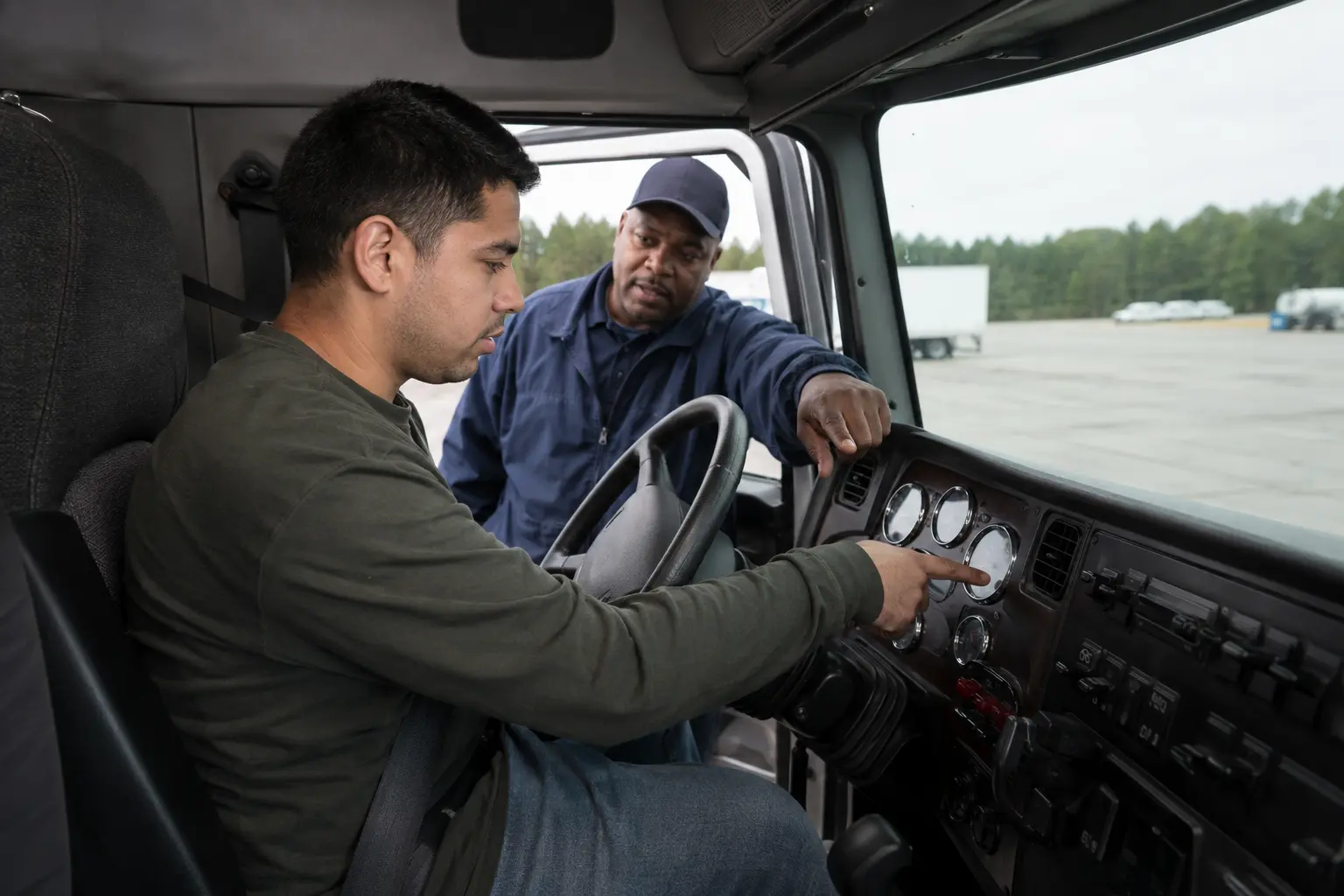
Begin with the purpose of each check
Separate the system into learning questions before memorizing the test sequence. Supply concerns how usable pressure is established. Leakage concerns whether the system retains air under specified conditions. Warning and protection checks concern the response as pressure changes. Brake-function checks concern the response when the vehicle is appropriately tested. These ideas help organize memory, but they are not interchangeable procedures. A learner must know which condition is being established, which observation matters, and which result requires stopping. Study the official sequence beside the instructor’s explanation so the mental model supports the required method.
A situation to discuss
A student remembers pressing the pedal repeatedly but cannot explain why. Connecting that action to the authorized low-pressure and protective-device check makes the sequence meaningful and reduces the temptation to repeat actions without observing the result.
Practice with a clear purpose
Create a card with the official check name on one side and the safety question on the other. Keep pressure criteria and procedural steps on a separate verified sheet so an informal memory aid never replaces the authoritative sequence.
Ask yourself: What safety question is this step intended to answer?
Make the secured setup part of the memory
The setup is not a preliminary detail to rush through. Engine state, key position, transmission, parking-brake position, wheel chocks, and surroundings affect what can be checked safely. Follow the instructor’s exact vehicle-specific procedure and the testing authority’s guidance. Do not release a brake because an online example did so on a different truck. Before each stage, explain the required condition and confirm the vehicle remains stable. If you lose track of the setup, stop and ask. Reestablishing a safe starting condition is more important than preserving the rhythm of a recitation.
A situation to discuss
A learner moves from one check to the next while remembering only the next number. They fail to notice that the engine or brake setup differs from the required condition. A deliberate setup statement would reveal the mismatch before the result is interpreted incorrectly.
Practice with a clear purpose
Rehearse the setup verbally with the instructor before touching a control. Point to the verified procedure and explain what each setup item prevents. Practice pausing after an interruption rather than continuing from an uncertain position in memory.
Ask yourself: Is the vehicle in the correct and safe condition for this particular check?
Learn pressure criteria from the current official procedure
Air-brake study contains several pressure values, rates, and timing requirements. They apply to different observations and sometimes different vehicle configurations. Copy them from the current Pennsylvania manual and testing instructions with instructor review. Do not transfer a single-vehicle leakage criterion to a combination merely because the surrounding words sound similar. Keep units and time periods attached to every value. A number without its conditions is incomplete knowledge. If study sources conflict, resolve the conflict before practicing. The goal is a precise match among setup, measurement, and acceptance criterion.
A situation to discuss
The learner can remember a leakage number but not whether it belongs to a released-brake or applied-brake observation. Rather than guessing on the truck, they return to the verified reference and label the exact condition and timing.
Practice with a clear purpose
Build a study table with check, configuration, setup, observation period, criterion, and stop decision. Have the instructor review it. Cover one column at a time and explain how the remaining details determine the missing information.
Ask yourself: Which vehicle configuration and test condition does this value actually describe?
Observe the system instead of racing the spoken script
A correct explanation must remain connected to what the gauges and equipment actually do. Students sometimes recite a passing result before the observation period is complete or continue speaking over an abnormal response. Slow the rehearsal enough to make observation visible. State what you are checking, perform only the authorized action, allow the required observation, and report the actual result. Do not invent a satisfactory result to keep the sequence moving. If the reading is uncertain or unexpected, pause and involve the instructor rather than repeating the step until a preferred result appears.
A situation to discuss
A gauge behaves differently from what the student expected, but the memorized sentence says the system passed. The instructor stops the recitation and asks what was actually observed. That distinction is central to a real safety check.
Practice with a clear purpose
During a supervised stationary rehearsal, have the instructor ask what you are waiting to observe at each stage. Answer before stating a result. Practice saying that the observation is incomplete when the required conditions have not been met.
Ask yourself: Am I reporting the equipment’s behavior or merely repeating the expected answer?
Use small retrieval drills between supervised sessions
Study in short, focused blocks. First retrieve the purpose and setup of one check. Then compare with the verified source. Later retrieve the complete sequence without touching the vehicle. A mistake log is useful when it records the type of confusion: wrong setup, misplaced pressure criterion, missed timing, or unclear stop decision. That is more informative than writing bad at air brakes. Avoid practicing physical control movements on equipment without authorization. Mental rehearsal can improve recall, while the instructor must direct actual vehicle checks and confirm that the learning matches the truck.
A situation to discuss
The student repeatedly swaps two observations. A large flashcard containing the whole procedure hides the confusion. Two smaller cards, each asking for the setup and purpose of one observation, reveal the difference more clearly.
Practice with a clear purpose
Use a blank page to reconstruct the sequence from memory. Mark uncertain steps before checking the reference. Study the specific uncertainty and repeat later, rather than immediately reading the answer until it feels familiar.
Ask yourself: Can I retrieve the correct condition after a delay, without looking at the page?
Know what an interruption or abnormal result requires
A distraction can break the link between the current setup and the next action. Ask the instructor how to pause and resume safely; do not improvise a restart while controls remain in an uncertain state. An abnormal result must be reported and evaluated by appropriate personnel. Repetition is not a repair, and a successful second attempt does not automatically explain the first failure. The memory routine should include a clear stopping point whenever the expected safe conditions are absent. This makes the routine more useful than a script designed only to reach the final sentence.
A situation to discuss
Another person speaks to the learner halfway through a pressure observation. The student is unsure whether enough time has elapsed. The proper response is to acknowledge the uncertainty and follow the instructor’s safe reset direction instead of estimating a passing result.
Practice with a clear purpose
Discuss three pause scenarios: uncertain timing, an unexpected gauge response, and a change in the secured setup. For each, state whom you notify and what you must confirm before any further authorized action.
Ask yourself: What information is missing, and who must help resolve it before I continue?
Connect test preparation with everyday brake awareness
Passing a skills-test segment does not end the need to understand the braking system. A driver must continue appropriate inspections, recognize warnings, communicate defects, and avoid operating equipment that is not safe. The study routine should therefore explain consequences rather than train a student to perform only when watched. Review related inspection vocabulary and the wider vehicle inspection process. Ask the instructor how normal operating observations differ from the controlled test sequence. Keeping those contexts separate helps prevent a student from attempting a test action in an unsuitable location or while driving.
A situation to discuss
A graduate who knows only the examination wording may struggle to explain a warning to maintenance. A learner who understands the purpose of the system can describe the indication, when it occurred, and the safe action taken without pretending to diagnose the repair.
Practice with a clear purpose
Write a sample defect report in plain language that identifies the actual observation and the time or conditions. Keep speculation separate from facts. Review how this differs from stating an examiner-facing result during a prescribed test.
Ask yourself: Can I describe an air-brake concern clearly without guessing at its mechanical cause?
Decision worksheet
| Focus | Why it matters | Practical action |
|---|---|---|
| Purpose | What the check establishes | Learn before memorizing actions |
| Setup | Safe state of vehicle and controls | Verify before every stage |
| Criterion | Correct units, time, configuration | Copy from the current official procedure |
| Result | Actual observed behavior | Pause and report abnormal or uncertain findings |
Preparation checklist
- Use the current Pennsylvania manual and testing guidance.
- Review all setup details with the instructor.
- Attach units and conditions to every pressure criterion.
- Keep single and combination vehicle criteria distinct.
- Observe before reporting a result.
- Stop when setup, timing, or equipment behavior is uncertain.
Workshop: rebuild a confused air-brake explanation
Suppose a student has memorized several pressure values but repeatedly attaches one to the wrong check. Begin the repair of the study method on paper, not by repeatedly manipulating the truck. Write the name of the check, its purpose, the required setup, and the observation being made. Add the verified criterion only after those items are correct. This order helps the number belong to a meaningful condition instead of floating among several similar facts.
Next, change one detail in the question, such as the vehicle configuration or whether the authorized observation is made with a particular brake condition. Ask whether the same criterion still applies. The student should consult the current verified procedure when uncertain rather than force the first remembered value into the new setting. An ability to recognize missing information is part of accurate study, not a failure to memorize quickly enough.
Then rehearse the spoken explanation without touching equipment. Pause between setup, action, observation, and result. The instructor can interrupt to ask what the student is waiting to see. If the answer becomes a passing statement before the observation is complete, return to the purpose of that stage. Real equipment behavior must control the result; the memorized script cannot decide that the system passed in advance.
Finally, plan the next supervised rehearsal. Agree on the safe setup and the stop response to uncertain timing, an unexpected reading, or an interruption. Do not create a deliberate equipment fault as a memory game. Use discussion or instructor-approved examples to explore abnormal results. The successful outcome is a student who can describe the purpose, follow the verified sequence, observe honestly, and pause when conditions are unclear. That pattern supports both examination preparation and later communication about actual brake concerns.
Protect the distinction between study and equipment testing
Keep paper retrieval exercises clearly separate from authorized physical checks. A student can reconstruct a sequence, explain a criterion, and discuss an abnormal result in a classroom without manipulating brakes. Actual equipment work requires the instructor’s direction, the correct secured setup, and the current approved procedure. Moving from one setting to the other should be an explicit decision, not an automatic continuation of a flashcard drill.
When reviewing a video or another student’s notes, ask what is missing. The camera may not show the wheel chocks, surroundings, engine state, timing, or vehicle configuration. An unseen detail can be essential to interpreting the action. Use the material to form questions, then resolve them through the verified reference and instructor. The best memory routine includes the discipline to stop when the source is incomplete. It does not reward a student for copying an attractive demonstration before understanding the conditions that make it appropriate.
Frequently asked questions
Can this article replace the official air-brake test procedure?
No. Use the current Pennsylvania manual, testing instructions, and your instructor’s vehicle-specific procedure. This article explains a study method rather than providing an operational test script.
Why should I learn the purpose of each step?
Purpose connects the action with the safety condition being evaluated. It helps prevent memorized actions from becoming disconnected from the actual setup, observation, and result.
Should I repeat a check until the result looks right?
Report an abnormal or uncertain result to the instructor. Repetition does not repair a defect or explain an earlier failure, and the safe setup must be confirmed before any further authorized check.
What belongs on an air-brake memory card?
Include the check name, purpose, verified setup, applicable configuration, units, timing, and stop decision. Have the instructor review the card against current official guidance.
Official references and further reading
- : consult the current sections relevant to your vehicle and test.
- : an official starting point for road-safety topics.
- : check the categories covered by federal entry-level training requirements.
Reviewed October 19, 2026. Educational preparation supports, and does not replace, current official requirements and supervised vehicle-specific instruction.