


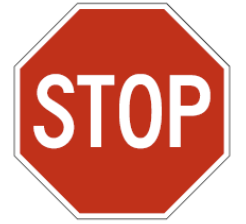
STOP
Stop
Meaning: A complete stop is required at the stop line, before the crosswalk, or before entering the intersection.
Safe action: Stop fully, yield as required, and proceed only when safe.
Learn the English words, MUTCD sign codes, meaning, and safe action behind the signs most important to commercial drivers and the FMCSA English-language proficiency assessment.
If a driver completes the English interview step sufficiently, the inspector may evaluate understanding of U.S. highway signs, including English-language and electronic changeable-message signs. FMCSA's April 2026 FAQ says an inspector should not continue to the sign step when the driver does not complete Step 1 sufficiently.
Do not memorize appearance alone. Connect each message to the safe response: stop, yield, reduce speed, merge, change lanes, avoid a restricted route, observe clearance or weight limits, or prepare for a temporary hazard.
Scope: The national MUTCD contains hundreds of signs, plaques, state variations, and specialized applications. This driver-focused catalog covers the nationally standardized sign families and messages a CDL driver is most likely to encounter or be asked to explain. Always obey the sign actually posted and consult the current state manual and FHWA Standard Highway Signs catalog for specialized designs.
Search by words, abbreviation, sign code, meaning, or safe action.
Showing 116 of 116 sign messages
Meaning: A complete stop is required at the stop line, before the crosswalk, or before entering the intersection.
Safe action: Stop fully, yield as required, and proceed only when safe.
Meaning: Give the right-of-way to traffic or pedestrians already in or approaching the conflict area.
Safe action: Slow down, be ready to stop, and enter only when there is a safe gap.
Meaning: A plaque below STOP means every approach is stop-controlled.
Safe action: Stop, identify arrival order, and yield to traffic with priority.
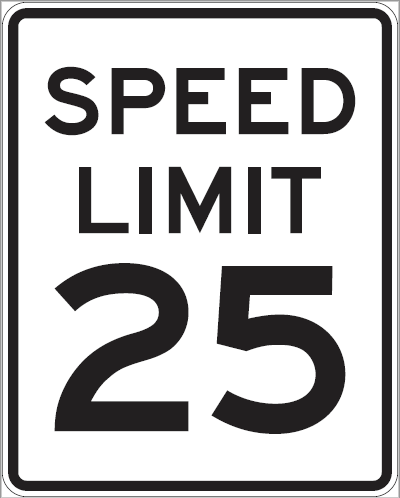
Meaning: The maximum legal speed under normal conditions; the displayed number is in miles per hour.
Safe action: Do not exceed the number and reduce speed further for weather, traffic, curves, or work zones.
Meaning: Traffic must not travel below the posted minimum unless conditions require it.
Safe action: Maintain at least the posted speed when safe; use another route if the vehicle cannot.
Meaning: A stated rule applies except where another sign gives a different instruction.
Safe action: Watch for the next controlling sign and follow the more specific posted rule.
Meaning: Right turns are prohibited at the location or during the times shown.
Safe action: Continue straight or use a permitted route; do not begin the turn.
Meaning: Left turns are prohibited at the location or during the times shown.
Safe action: Continue straight or follow an alternate legal route.
Meaning: Reversing direction with a U-turn is prohibited.
Safe action: Continue and use a legal turnaround location.
Meaning: Traffic in the identified lane must move in the direction shown.
Safe action: Complete the required movement or change lanes safely before reaching the solid lane line.
Meaning: The named lane is reserved for the displayed movement.
Safe action: Turn as directed or move to an appropriate lane early and safely.
Meaning: Arrows show which movements each approach lane permits.
Safe action: Select the correct lane before the intersection and follow its arrow.
Meaning: Passing another vehicle is prohibited through the signed section.
Safe action: Remain in lane and wait until passing is legally permitted.
Meaning: The no-passing restriction has ended, but passing is allowed only when safe and legal.
Safe action: Check sight distance, traffic, pavement markings, and the truck's acceleration space.
Meaning: Slower vehicles should use the right lane except when passing or preparing for a permitted movement.
Safe action: Move right when safe and avoid blocking faster traffic.
Meaning: Trucks must use the right lane in the signed section.
Safe action: Move into the right lane safely before the restriction begins.
Meaning: Traffic must pass to the right of an island, obstruction, or median.
Safe action: Position the vehicle to the right early; check trailer off-tracking and clearance.
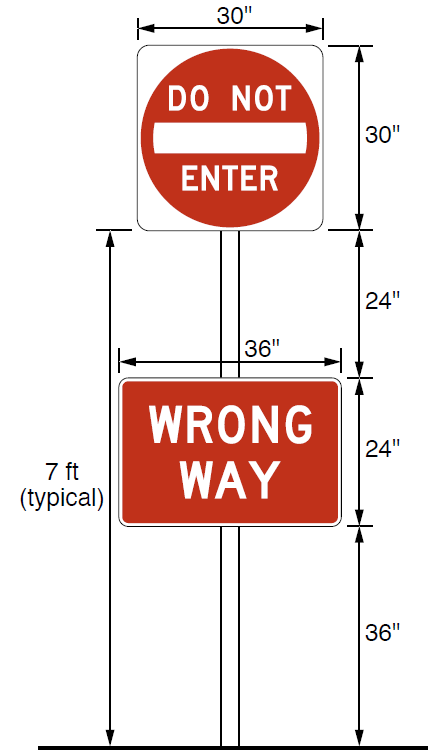
Meaning: Entry from this direction is prohibited, commonly at a one-way road or ramp.
Safe action: Do not enter; stop safely and choose a legal route.
Meaning: The vehicle is traveling or about to travel against the legal direction of traffic.
Safe action: Stop safely, avoid continuing, and correct direction only when it can be done legally and safely.
Meaning: Truck traffic is prohibited beyond the sign unless an exception is posted.
Safe action: Do not enter; follow the approved truck route.
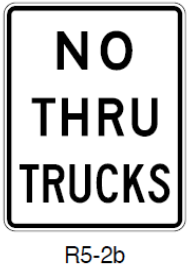
Meaning: Trucks may not use the road as a through route; local access may depend on posted law.
Safe action: Use the designated truck route and confirm whether a local-delivery exception applies.
Meaning: Motor vehicles are prohibited from entering the facility or road.
Safe action: Do not enter with the CMV.
Meaning: Traffic travels only in the arrow's direction.
Safe action: Enter and travel only in the direction shown.
Meaning: A central divider separates opposing traffic; the arrow shows the permitted side.
Safe action: Keep on the correct side of the divider and do not turn into opposing lanes.
Meaning: Parking is prohibited under the conditions or times shown; stopping briefly may still be regulated separately.
Safe action: Read arrows, times, vehicle exceptions, and curb rules before stopping.
Meaning: Vehicles must not stop within the railroad crossing.
Safe action: Do not enter unless there is enough space to clear every track completely.
Meaning: The arrow identifies the required stopping point for a red signal.
Safe action: Stop at the marked line or location, not inside the intersection or crosswalk.
Meaning: The indicated turn is prohibited while the signal is red.
Safe action: Wait for a permitted signal indication before turning.
Meaning: A green circular signal permits the left turn only after yielding to conflicting traffic and pedestrians.
Safe action: Wait for a safe gap; do not treat the green circle as a protected arrow.
Meaning: The roadway is closed to traffic beyond the barricade or sign.
Safe action: Do not proceed; follow the posted detour.
Meaning: The road is closed farther ahead; only traffic with a local destination should enter.
Safe action: Through traffic must detour now; confirm local access before entering.
Meaning: Vehicles above the displayed gross or class-specific weight are prohibited.
Safe action: Know the vehicle's actual weight and take an approved alternate route if over the limit.
Meaning: The maximum weight allowed on one axle or axle group is posted.
Safe action: Check axle weights, not only gross weight; reroute or adjust the load legally.
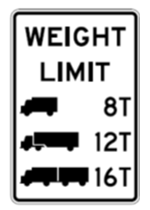
Meaning: Different maximum weights apply to different vehicle combinations.
Safe action: Match the CMV configuration to the correct symbol and limit.
Meaning: A weight restriction begins at the distance or turn shown.
Safe action: Choose the alternate truck route before reaching the restricted structure.
Meaning: The arrow identifies a designated route for truck traffic.
Safe action: Follow the arrow and remain on the approved truck route.
Meaning: The route is designated for vehicles carrying regulated hazardous materials.
Safe action: Follow the designated route and all permit or routing requirements.
Meaning: Specified hazardous-material vehicles may not use the route.
Safe action: Do not enter with the covered load; follow the authorized HM route.
Meaning: Headlights are required when rain or the posted condition exists.
Safe action: Turn on required lights and increase following distance.
Meaning: Headlights are required through the upcoming section.
Safe action: Switch on headlights before entering the section.
Meaning: Tire chains or approved traction devices are required under the posted conditions.
Safe action: Install approved devices in a safe chain-up area before proceeding.
Meaning: A significant change in road direction is ahead at a lower advisory speed.
Safe action: Brake before the turn, select a safe speed, and track the trailer through the curve.
Meaning: A gradual change in alignment is ahead.
Safe action: Reduce speed before entering and avoid braking hard in the curve.
Meaning: Three or more turns or curves occur in succession.
Safe action: Use a conservative speed and expect repeated steering changes.
Meaning: Chevron boards outline a sharp change in road direction.
Safe action: Follow the arrow direction and keep speed below the safe curve speed.
Meaning: Another road crosses the roadway ahead.
Safe action: Scan both sides and prepare for entering or crossing traffic.
Meaning: A road enters from the side shown by the symbol.
Safe action: Watch for vehicles entering, turning, or stopping ahead.
Meaning: The current road ends at another road.
Safe action: Slow, choose a legal direction, and prepare to stop or yield.
Meaning: The road divides into two directions ahead.
Safe action: Choose the correct branch early and avoid a last-second lane change.
Meaning: A roundabout or traffic circle is ahead.
Safe action: Select the proper lane, slow, yield to circulating traffic, and protect trailer off-tracking.
Meaning: A stop-controlled location is ahead and may not yet be visible.
Safe action: Begin a smooth slowdown and prepare for a complete stop.
Meaning: A yield-controlled location is ahead.
Safe action: Reduce speed, scan for conflicts, and be ready to stop.
Meaning: A traffic signal is ahead, possibly beyond limited sight distance.
Safe action: Cover the brake, monitor traffic queues, and prepare for the signal to change.
Meaning: A lower regulatory speed zone begins ahead.
Safe action: Reduce speed smoothly before reaching the new speed-limit sign.
Meaning: Another traffic stream joins the roadway and lanes combine.
Safe action: Adjust speed and space to allow a safe merge; do not force another vehicle off the road.
Meaning: The indicated lane ends ahead and traffic must merge.
Safe action: Plan the merge early, signal, check mirrors and blind spots, and enter a safe gap.
Meaning: Entering traffic receives a new lane and does not immediately merge.
Safe action: Maintain lane discipline and watch for later lane changes.
Meaning: The roadway becomes narrower ahead.
Safe action: Center the CMV carefully and increase clearance from nearby traffic and objects.
Meaning: The bridge width is less than the approach roadway.
Safe action: Check opposing traffic and maintain precise lane position.
Meaning: Only one direction can use the bridge at a time.
Safe action: Yield as required and enter only when the full bridge is clear.
Meaning: Opposing traffic will be separated by a median or barrier.
Safe action: Keep right of the divider and watch the transition alignment.
Meaning: Separated roadways join into a two-way roadway.
Safe action: Prepare for opposing traffic and remain to the right of the center line.
Meaning: Traffic will travel in both directions on the roadway ahead.
Safe action: Stay right, avoid crossing the center line, and use passing rules carefully.
Meaning: A significant downhill grade is ahead; a percentage plaque may show steepness.
Safe action: Select a safe gear before descent, control speed, and avoid overheating service brakes.
Meaning: An emergency escape ramp is available for vehicles that cannot control downhill speed.
Safe action: Use only for an actual loss of speed control; never stop or park there routinely.
Meaning: A sharp rise in the road surface is ahead.
Safe action: Reduce speed and protect cargo, suspension, and vehicle control.
Meaning: A low point in the road surface is ahead and may collect water.
Safe action: Reduce speed and avoid sudden braking or steering.
Meaning: Pavement friction may be reduced during rain or moisture.
Safe action: Slow down, increase following distance, and make gentle control inputs.
Meaning: The shoulder is lower than the travel lane and can pull wheels off line.
Safe action: Avoid dropping wheels; if it occurs, slow gradually before returning to the lane.
Meaning: The named lane terminates ahead.
Safe action: Merge safely before the lane ends and protect space around the trailer.
Meaning: The symbol identifies people, animals, vehicles, or equipment that may cross.
Safe action: Reduce speed, scan both shoulders, and be prepared to stop.
Meaning: Traffic may pass on either side of an island or obstruction.
Safe action: Choose the safer permitted side early and maintain clearance.
Meaning: Vertical clearance ahead is limited to the posted height.
Safe action: Know the vehicle's actual height; stop and reroute if clearance is insufficient.
Meaning: The yellow plaque shows a recommended safe speed for the condition, not the general regulatory limit.
Safe action: Reach the advisory speed before the curve, ramp, or hazard.
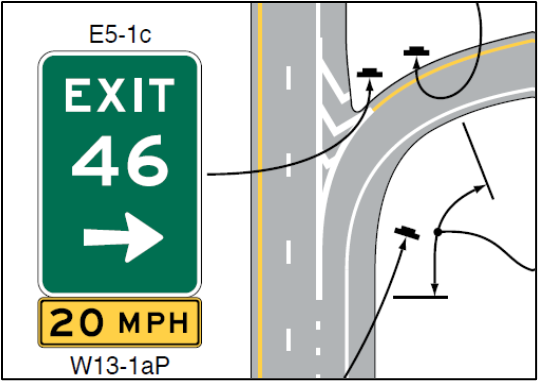
Meaning: The exit ramp has a recommended safe speed lower than the main roadway.
Safe action: Brake before the ramp and enter at or below a safe speed for the CMV.
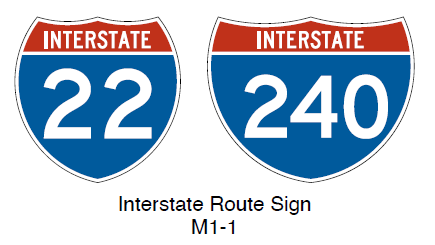
Meaning: The red-white-blue shield identifies an Interstate Highway route number.
Safe action: Match the route number and cardinal direction to the trip plan.
Meaning: The black-and-white shield identifies a numbered U.S. Highway.
Safe action: Confirm the number and direction; check truck restrictions before leaving the approved route.
Meaning: The state-specific shield identifies a numbered state highway.
Safe action: Follow the correct state route and direction.
Meaning: JCT is short for junction and means the named route intersects ahead.
Safe action: Prepare for the turn or interchange if the trip uses that route.
Meaning: The plaque states the signed direction of a route.
Safe action: Verify the route direction before entering or continuing.
Meaning: The auxiliary plaque identifies a special branch of a numbered route.
Safe action: Use the branch required by the trip plan; trucks should follow a posted truck branch when required.
Meaning: The tab identifies the interchange or exit number.
Safe action: Confirm the exit and move to the proper lane early.
Meaning: A yellow panel means the lane below the sign leaves the main roadway.
Safe action: Leave that lane safely if continuing through; remain if taking the exit.
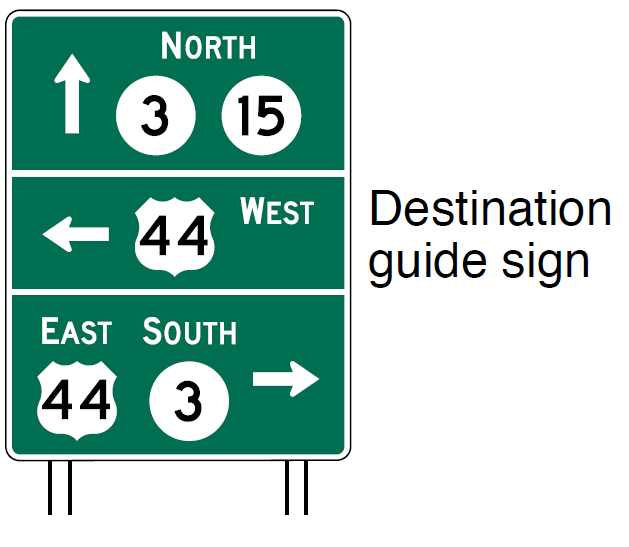
Meaning: Green guide signs show destinations, directions, exits, or distances in miles.
Safe action: Read route, destination, arrow, and lane position as one instruction.
Meaning: Arrows show which exit from the circle leads to each route or destination.
Safe action: Choose the correct approach lane and count the exit before entering.
Meaning: Blue signs identify traveler services available near an exit or route.
Safe action: Confirm the exit and that the service can safely accommodate the CMV.
Meaning: A public rest facility is ahead or available at the shown exit.
Safe action: Plan the lane change early; do not assume truck parking is available unless indicated.
Meaning: The facility or exit provides parking intended for trucks.
Safe action: Follow site signs, check available space, and park only in designated areas.
Meaning: Commercial vehicles may be directed into a scale or inspection facility.
Safe action: Obey OPEN/CLOSED indications, lane controls, and bypass-device instructions.
Meaning: The arrow or route marker identifies a temporary alternate route around a closure or restriction.
Safe action: Follow every detour marker until an END DETOUR or return route is shown.
Meaning: Construction, maintenance, or utility work affects the roadway ahead.
Safe action: Reduce speed, increase following distance, and watch for changing lanes and workers.
Meaning: The normal route is closed or redirected ahead.
Safe action: Prepare to follow orange detour signs; confirm the route is suitable for the CMV.
Meaning: The roadway will be closed farther ahead.
Safe action: Take the posted detour before reaching the closure.
Meaning: Two directions will share one open lane under controlled movement.
Safe action: Slow, stop when directed, and wait for the flagger, signal, or pilot car.
Meaning: A worker will control traffic with a STOP/SLOW paddle, hand signals, or flag.
Safe action: Slow early and obey the flagger exactly; never pass the control point without permission.
Meaning: Traffic may be stopped by a queue, flagger, signal, or work operation.
Safe action: Cover the brake, watch well ahead, and leave extra stopping distance.
Meaning: The named lane is closed and traffic must merge before the taper.
Safe action: Merge cooperatively when safe and do not drive beyond channelizing devices.
Meaning: Road workers may be on or close to the travel path.
Safe action: Slow down, move over when directed, and watch for equipment or people entering the lane.
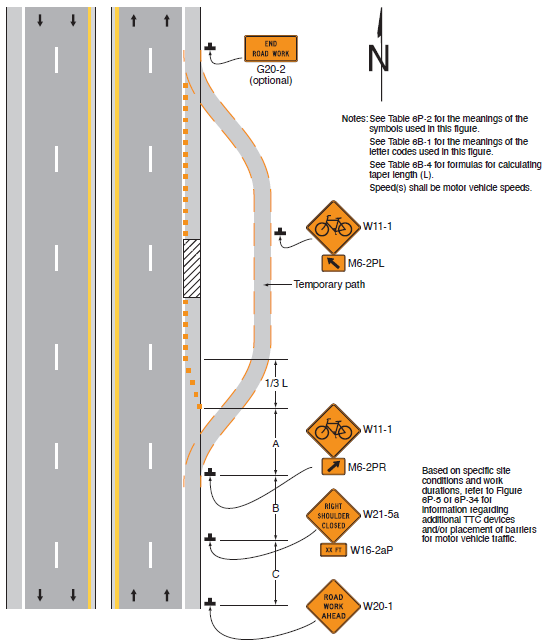
Meaning: Work activity or equipment occupies the shoulder.
Safe action: Maintain lane position, reduce speed, and move over if required and safe.
Meaning: Utility crews or equipment are working near or within the road.
Safe action: Expect lane shifts, flaggers, and vehicles entering the roadway.
Meaning: The temporary traffic-control zone ends.
Safe action: Return gradually to normal operation and obey any remaining regulatory signs.
Meaning: A school area or school crossing is ahead; a plaque identifies the exact application.
Safe action: Reduce speed, scan for children, and obey the posted school-zone times or flashing beacons.
Meaning: The displayed lower speed applies under the stated condition or time.
Safe action: Reduce to the posted school speed before entering the zone.
Meaning: Drivers must yield at the marked point for pedestrians in the crossing.
Safe action: Stop if necessary before the line and keep the crosswalk clear.
Meaning: A highway-rail grade crossing is ahead.
Safe action: Slow, look and listen, check clearance, and prepare to stop. CDL-required vehicles must follow applicable stopping rules.
Meaning: The crossbuck marks the grade crossing and functions as a yield sign unless additional control applies.
Safe action: Yield to trains and enter only when every track can be cleared completely.
Meaning: The plaque states how many tracks are present at the crossing.
Safe action: Check every track in both directions before proceeding.
Meaning: Stopping within the crossing is prohibited.
Safe action: Wait before the tracks unless there is room beyond them for the entire combination.
Meaning: A changeable message sign warns that a travel lane is closed ahead.
Safe action: Signal and merge safely before the closure; watch for a developing queue.
Meaning: A collision affects traffic or blocks lanes ahead.
Safe action: Slow smoothly, increase following distance, and expect sudden stops or lane changes.
Meaning: A queue or near-zero traffic speed is ahead.
Safe action: Begin slowing early, activate hazard warning devices if appropriate, and protect stopping distance.
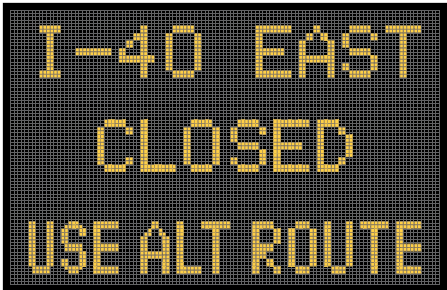
Meaning: A highway segment or exit is unavailable and an alternate route is required.
Safe action: Do not continue toward the closure; follow the posted alternate route.
Meaning: Emergency, service, or maintenance vehicles are stopped ahead.
Safe action: Change lanes away when safe; otherwise slow as required by law and conditions.
Meaning: Weather creates a specific hazard affecting visibility, traction, or vehicle stability.
Safe action: Reduce speed, increase space, use proper lights, and stop at a safe location if operation becomes unsafe.
Meaning: Traction-device requirements are active ahead.
Safe action: Use the designated chain-up area and install approved devices before continuing.
Meaning: A temporary lane-use or routing instruction applies specifically to trucks.
Safe action: Follow the displayed truck instruction promptly and safely.
Say the full meaning aloud. During an inspection, explain what the abbreviation tells you to do or where it directs you.
This educational guide uses the current federal sign classifications and official examples. Sign placement, state supplements, temporary conditions, and local restrictions vary.
Training aid only. It is not a substitute for the current MUTCD, a state driver's manual, carrier policy, route planning, permits, or the instruction displayed by an authorized traffic-control device.