

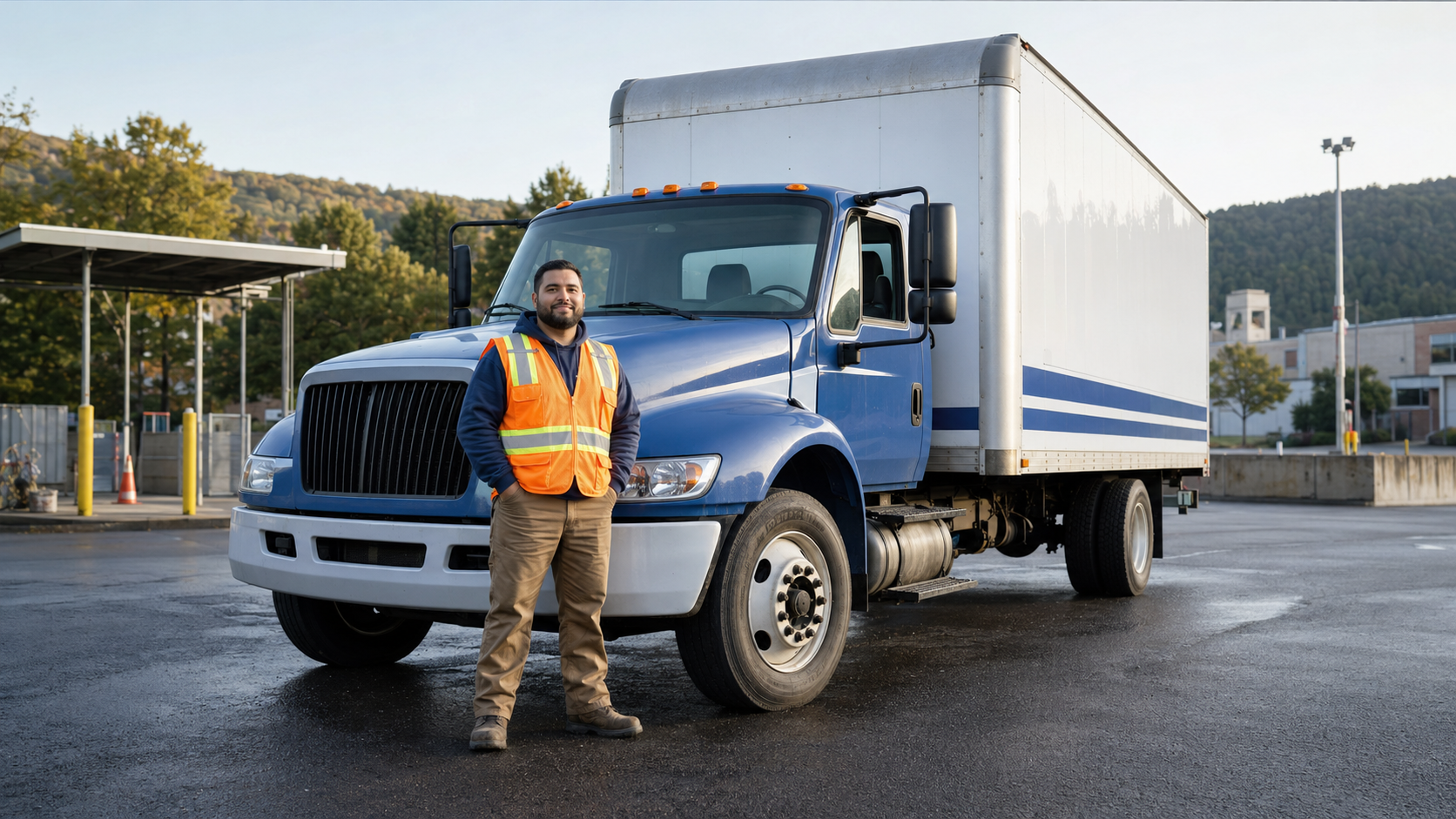
A Class B CDL can lead to more than one kind of driving job. In Pennsylvania, new drivers may find opportunities in local delivery, construction, waste collection, public transportation, school transportation, and specialized service work—often without the multi-week road schedules associated with long-haul trucking.
The best first job depends on the vehicle you want to operate, the schedule you can maintain, the endorsements you are willing to earn, and the physical demands you are comfortable handling. This guide compares the strongest Class B career paths without promising a particular opening or starting wage. Licensing and labor-market facts were reviewed against current PennDOT, FMCSA, and U.S. Bureau of Labor Statistics information on July 26, 2026.
Best CDL Class B Jobs in Pennsylvania: Quick Comparison
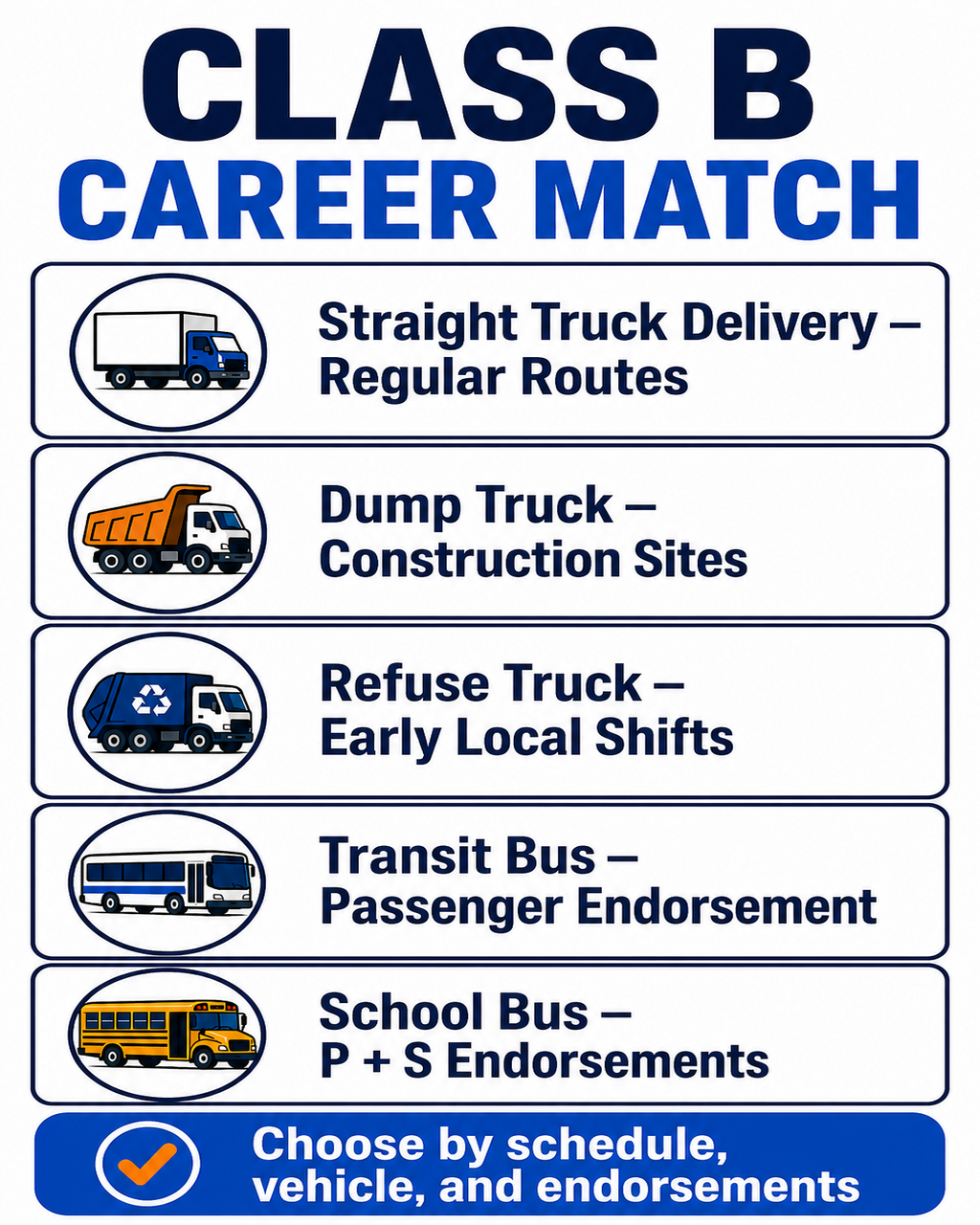
For many beginners, the most practical Class B paths are straight-truck delivery, dump-truck work, refuse and recycling collection, transit driving, and school-bus driving. Each path rewards a different strength. Delivery favors route organization and customer service. Construction work demands jobsite awareness. Bus driving adds passenger responsibility. Refuse collection can involve early starts and repeated stops.
| Career path | Typical work pattern | Extra credential commonly needed | Good fit for |
|---|---|---|---|
| Straight-truck delivery | Local or regional routes; frequent stops | Usually none beyond the correct CDL and medical qualification | Drivers who like structured routes and customer contact |
| Dump truck | Construction schedules; jobsite-to-yard movement | Employer safety training; air-brake qualification where applicable | Drivers comfortable around active jobsites |
| Refuse or recycling truck | Early local shifts; repeated stops | Employer equipment and safety training | Drivers who value local work and physical routine |
| Transit bus | Scheduled routes; public-facing service | Passenger (P) endorsement | Calm communicators who can manage traffic and passengers |
| School bus | Split shifts; school-calendar rhythm | Passenger (P) and School Bus (S) endorsements plus Pennsylvania requirements | Safety-focused drivers who enjoy community work |
| Concrete mixer | Construction deliveries; variable site conditions | Employer equipment training; air-brake qualification where applicable | Drivers with strong low-speed control |
| Utility or service truck | Local service calls and project work | Employer-specific technical or safety credentials | Drivers with a trade, mechanical, or field-service interest |
If you are deciding whether this license matches your goals, compare the vehicle training, schedule, and tuition on Patriot CDL’s Class B CDL program page.
What a Class B CDL Covers
Under the federal CDL framework, a Class B license generally covers a single vehicle with a gross vehicle weight rating of 26,001 pounds or more, or such a vehicle towing another vehicle rated at 10,000 pounds or less. Common examples include heavy straight trucks and large buses. The exact vehicle you may lawfully operate also depends on endorsements and restrictions printed on your license.
FMCSA explains that first-time Class B applicants are generally subject to Entry-Level Driver Training (ELDT). First-time passenger and school-bus endorsements are also covered by ELDT unless an exception applies. Review the current before planning a credential path.
PennDOT’s current CDL FAQ lists a 50-question Class B knowledge test and a required skills test. Applicants must also complete any tests associated with the vehicle’s brake system and the endorsements they want. Start with a complete view of the CDL requirements and licensing steps, then confirm your personal situation with PennDOT.
Important: Not every box truck, delivery vehicle, or shuttle requires a Class B CDL. The manufacturer’s weight rating, passenger capacity, use, cargo, and applicable state or federal rules determine the credential—not the vehicle’s appearance or job title.
Seven Beginner-Friendly Class B Career Paths
1. Straight-Truck and Box-Truck Delivery
Heavy straight trucks move food, beverages, furniture, building supplies, equipment, and general freight. Routes may stay within one city, cover several counties, or return to the terminal each day. The driver may be responsible for a pre-trip inspection, loading checks, delivery paperwork, liftgate operation, customer communication, and safe backing at tight receiving areas.
This can be a strong first job because it develops route planning, urban driving, backing, and professional communication. Read the posting carefully: some roles are driver-only, while others include unloading, hand-truck use, or product placement.
2. Dump-Truck Driver
Dump trucks move soil, stone, asphalt, demolition material, and other construction loads. The driving distance may be short, but the operating environment can be demanding. New drivers must learn jobsite traffic patterns, overhead-clearance awareness, safe positioning, load security, and the stability risks associated with raising a dump body.
This path may fit someone who prefers local work, early starts, and construction activity. Seasonal demand, weather, and project schedules can affect hours. Ask whether the employer provides paid equipment orientation and supervised jobsite training.
3. Refuse and Recycling Driver
Municipal and private waste fleets use rear-load, side-load, front-load, roll-off, and recycling trucks. The job often starts early and involves frequent stops, pedestrians, narrow streets, parked vehicles, and workers near the truck. Safety depends on disciplined mirror use, low-speed control, clear communication, and strict procedures around moving equipment.
For a new driver who wants local routes and a repeatable service area, refuse work can be attractive. However, responsibilities vary: some drivers remain primarily in the cab, while others also handle containers or assist with collection. Confirm the physical expectations before accepting an offer.
4. Transit or Intercity Bus Driver
Transit drivers operate on published routes and must balance schedule awareness with defensive driving and passenger safety. The work can include nights, weekends, holidays, accessibility procedures, fare systems, and challenging traffic. A calm temperament and clear communication are as important as vehicle control.
A first-time Passenger (P) endorsement generally requires applicable ELDT and a skills test in the appropriate passenger vehicle. Testing in a smaller vehicle can create a passenger-vehicle restriction, so confirm the class and capacity of the training and test bus before scheduling.
5. School-Bus Driver
School transportation can offer a predictable community-based route and a schedule aligned with the school year, but it comes with specialized responsibilities. Pennsylvania says a school-bus driver must hold a CDL with both Passenger (P) and School Bus (S) endorsements. The state’s current process includes a school-bus physical, applicable knowledge and road testing, at least 20 hours of school-bus-specific instruction—14 classroom and 6 in-bus—and criminal-history and child-abuse checks.
Requirements for maintaining the endorsement also differ from an ordinary Class B job. Review PennDOT’s official and ask a prospective employer which training, testing, and background-check costs it covers.
6. Concrete-Mixer Driver
Mixer drivers deliver ready-mix concrete from a plant to construction sites. They must manage a high center of gravity, changing load characteristics, narrow access points, washout procedures, and communication with contractors. The role can involve early mornings, weather exposure, and variable end times when pours run long.
New drivers should look for employers with structured ride-alongs, site-safety training, and clear procedures for slopes, soft ground, power lines, and backing. Precision and patience matter more than speed.
7. Utility, Vacuum, Tow, or Specialized Service Trucks
Class B vehicles also support utilities, environmental services, towing, tree work, road maintenance, and field-service operations. These jobs may combine driving with a second skill, such as equipment operation, mechanical work, traffic control, or site inspection.
The CDL may get you considered, but employers can require additional training or licenses for the actual service work. Ask which credentials are mandatory on day one and which can be earned after hire.
What Current Pennsylvania-Area Wage Data Can—and Cannot—Tell You
Salary claims on job sites often mix experienced and entry-level drivers, overtime, bonuses, and multiple vehicle classes. A more reliable benchmark is the U.S. Bureau of Labor Statistics Occupational Employment and Wage Statistics program. Even then, the figures are occupation-wide mean wages, not guaranteed starting offers.
The latest BLS metro releases available when this article was reviewed report May 2025 estimates. They illustrate how pay can vary across Pennsylvania regions:
| Occupation | Allentown-Bethlehem-Easton mean | Harrisburg-Carlisle mean | Scranton-Wilkes-Barre mean |
|---|---|---|---|
| School-bus driver | $25.01/hour | $23.16/hour | $21.25/hour |
| Transit/intercity bus driver | $28.44/hour | $25.74/hour | $24.07/hour |
| Refuse/recycling collector | $24.42/hour | $26.97/hour | Estimate not highlighted in the release |
Sources: July 2026 BLS releases for , , and . These estimates include workers at different experience levels and may include non-CDL positions within an occupational category.
When comparing actual offers, calculate the complete package: base hourly or salary rate, guaranteed hours, overtime rules, paid training, benefits, pension or union terms, seasonal layoffs, split shifts, physical duties, commute time, and advancement opportunities.
Endorsements and Restrictions That Affect Job Options
| Credential or restriction | Why it matters | Career impact |
|---|---|---|
| Passenger (P) | Required for covered passenger vehicles | Opens transit, motorcoach, and certain shuttle opportunities |
| School Bus (S) | Required with P when transporting school students in covered school-bus service | Opens school transportation work after federal and Pennsylvania requirements |
| Hazardous Materials (H) | Required for placarded hazardous-material transport | Relevant to some fuel, utility, and specialized service roles; additional federal security steps apply |
| Air-brake restriction | Can prevent operation of vehicles with full air brakes | May eliminate many bus, dump, refuse, and heavy straight-truck jobs |
| Passenger-vehicle class restriction | Can result from testing in a smaller passenger vehicle | May limit the size/class of bus you can operate |
| Automatic-transmission restriction | May apply based on the test vehicle | Usually less limiting in Class B fleets than in some Class A fleets, but employer equipment varies |
Do not collect endorsements simply because they sound valuable. Choose them from real target jobs. A school-bus applicant needs a different training and testing plan than a dump-truck applicant. Compare all Patriot CDL training programs before selecting a license path.
How to Choose Your First Class B Job
- Choose the schedule first. Decide whether you can handle early mornings, split shifts, nights, weekends, seasonal work, or variable construction hours.
- Check the physical duties. Ask about unloading, tarping, climbing, container handling, passenger assistance, and outdoor work.
- Verify the exact vehicle. Confirm GVWR, brakes, transmission, passenger capacity, and any mounted equipment.
- Compare paid training. A good employer explains orientation, ride-alongs, route training, equipment qualification, and the evaluation process.
- Read the safety record and policies. Ask about preventable-accident reviews, backing rules, mobile-phone policy, maintenance reporting, and pressure to operate unsafe equipment.
- Calculate realistic compensation. Separate guaranteed pay from overtime, bonuses, seasonal peaks, and estimated tips or incentives.
- Look one step ahead. Ask how drivers move into lead, trainer, dispatcher, equipment-operator, or Class A roles.
New Class B Driver Application Checklist
- □ CDL class matches the posted vehicle
- □ Required endorsements are active
- □ License restrictions are acceptable to the employer
- □ Medical certification is current when required
- □ Motor vehicle record is ready for review
- □ Resume lists training vehicle, brakes, transmission, and core skills
- □ Work schedule and physical duties are understood
- □ Pay structure, guaranteed hours, and overtime are in writing
- □ Paid orientation and equipment training are confirmed
- □ No job offer depends on hiding a violation or falsifying experience
Frequently Asked Questions
Can a new Class B driver find local work in Pennsylvania?
Yes. Many Class B career paths are local or regional, including straight-truck delivery, construction, refuse collection, transit, school transportation, and specialized service work. Hiring standards vary, so look specifically for employers with new-driver orientation and equipment training.
Which Pennsylvania Class B job is best for regular home time?
School-bus, transit, refuse, municipal, delivery, and construction roles commonly return drivers home after the shift. “Local” does not always mean a predictable schedule, so confirm start times, split shifts, weekends, overtime, and seasonal changes.
Do I need endorsements for a Class B job?
Not for every job. Passenger work generally requires a P endorsement, and covered school-bus work requires both P and S. Some specialized vehicles or cargo may require other credentials. Air-brake and passenger-vehicle restrictions can also limit your options.
How long is Patriot CDL’s Class B program?
The current Patriot CDL Class B program is structured as three weeks and 100 total hours: 40 hours of ELDT theory plus 60 hours of hands-on range and road training.
Educational content only. Job requirements, wages, schedules, benefits, licensing rules, and endorsements vary. Confirm current licensing details with PennDOT and FMCSA and verify every employment term directly with the employer. Official information reviewed July 26, 2026.