


Inspection vocabulary becomes easier to learn when each term is connected to a location, a function, and an observable condition. Memorizing a paragraph without those connections can produce a fluent explanation that does not match the component in front of you. CDL students need clear English explanations as well as accurate technical names, because the goal is to communicate what is being checked and why it matters. This guide shows how to build a practical vocabulary system for supervised vehicle inspection study without substituting a generic word list for Pennsylvania’s current testing instructions or the actual truck’s procedures.
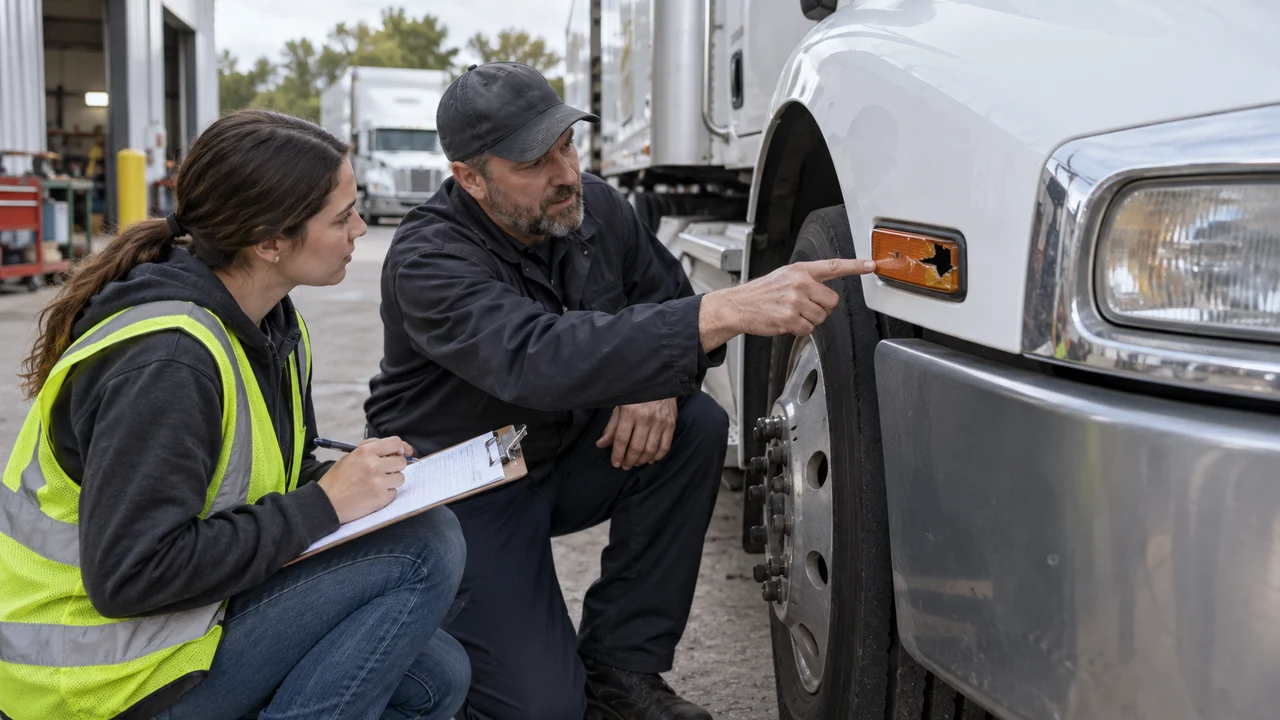
Organize words by system and relationship
Group terms under steering, suspension, braking, tires and wheels, lighting, coupling, and the other systems relevant to your equipment. Within a system, connect parts to one another rather than learning them alphabetically. A word becomes more memorable when you understand what connects to it and what the assembly does. Start with a manageable group and expand after the relationships are clear. A photograph or diagram can support recognition, but confirm the actual layout during an instructor-led walkthrough. Differences between vehicles are a reason to update the location notes, not abandon the underlying concept.
A situation to discuss
A learner knows several component names but assigns them to the wrong systems during a walkthrough. Grouping the names around functions reveals the confusion and gives the instructor a more precise starting point for correction.
Practice with a clear purpose
Create a page for one system with a simple diagram. Add the official term, a plain-language purpose, and one relationship to another component. Ask the instructor to review the map before making flashcards from it.
Ask yourself: Can I place this word in a system rather than recall it as an isolated sound?
Separate identification from condition words
A component name identifies what you are discussing. Condition words describe a relevant observation. Phrases such as damaged, loose, leaking, worn, or insecure must be attached to the correct item and inspection method. Do not use a broad phrase as though it proves every possible condition has been checked. Some features are visible, some require the prescribed functional check, and some are not within a student’s assessment. Clear language states the actual observation and its limits. The instructor should help distinguish correct inspection wording from an overconfident mechanical diagnosis.
A situation to discuss
A student says the whole brake system is fine after pointing to one visible component. The phrase exceeds what the observation established. A better explanation identifies the component and the particular condition being checked through the approved method.
Practice with a clear purpose
Use two colors in notes: one for names and one for conditions. Draw a line between each condition and the feature it actually describes. If no clear connection exists, ask the instructor before memorizing the phrase.
Ask yourself: What exactly am I identifying, and what exactly am I observing about it?
Use plain English before polishing the technical sentence
Explain the meaning simply before memorizing the formal expression. If you cannot describe a part’s purpose in ordinary words, a longer technical sentence may hide confusion. Then add the official vocabulary accurately and practice a concise explanation. Students studying in more than one language can use a glossary for learning, but should connect the English term directly with the component and meaning. Avoid translating every word mentally during a fast recitation. Clear communication and comprehension matter beyond an inspection exercise, including directions, signs, warnings, and workplace discussions.
A situation to discuss
A learner can repeat a technical phrase but cannot answer a short follow-up question about its meaning. Returning to a simple explanation exposes the missing concept and makes later English practice more reliable.
Practice with a clear purpose
For each new term, write a simple definition, the technical name, and one short inspection sentence. Read the simple definition first, then point to the approved picture or component and explain without reading the sentence.
Ask yourself: Do I understand this explanation well enough to say it another accurate way?
Make flashcards test meaning and location
A useful card should ask more than what word appears on the reverse. Include a clear permitted image or sketch, the system, the function, and the inspection question taught for the component. Use several card types so recognition, recall, and explanation are practiced separately. A learner who recognizes a labeled picture may still struggle to name an unlabeled component or explain a condition. Keep the card set aligned with the current manual and actual vehicle. Remove unclear images or inaccurate notes rather than rehearsing them repeatedly until the error feels familiar.
A situation to discuss
A student always answers a card correctly because the label appears in the photograph. Cropping the card appropriately or using an unlabeled instructor-approved image reveals whether the component is actually recognized. The study method should test the intended skill.
Practice with a clear purpose
Make three cards for one term: identify it from an image, explain its function from the name, and connect a condition phrase to the inspection purpose. Review the answers with the instructor before expanding the set.
Ask yourself: Is this card testing understanding, or giving away the answer through its layout?
Practice connected explanations without a memorized performance
Once the words are accurate, explain a short sequence in the order taught for the current vehicle and test. Connect each statement to what you can properly identify or observe. Speak clearly enough to be understood without racing. If you lose your place, pause and follow the instructor’s guidance rather than inventing a claim. A changed question should still be answerable if the underlying concept is understood. Keep physical actions within the authorized procedure; vocabulary practice is not permission to operate controls, enter a hazardous area, or conduct an improvised equipment check.
A situation to discuss
The instructor interrupts a rehearsed explanation and asks why a connection matters. The student who understands the system can answer and return to the discussion. The student relying only on sentence order may need more concept study before additional recitation.
Practice with a clear purpose
Ask for an identification question, a function question, and a condition question about the same component. Answer each separately, then combine them into a concise explanation that matches the permitted observation method.
Ask yourself: Can I respond accurately when the question is different from the flashcard?
Keep an error log that identifies the learning problem
Not every vocabulary mistake needs the same correction. A pronunciation issue, a confused component, an incorrect function, and an overbroad condition statement are different problems. Record the exact error and the corrected concept after the lesson. Avoid copying an entire inspection paragraph as punishment for one unclear word. Targeted review saves attention for what is actually missing. Revisit corrections after a delay to test whether they can be retrieved. When a mistake appears on more than one vehicle, ask whether the underlying relationship needs review rather than assuming the problem is simply a weak memory.
A situation to discuss
A learner repeatedly uses the right word for the wrong part. Practicing pronunciation will not fix that issue. A supervised location comparison and a clearer image are more appropriate than repeating the same sentence louder.
Practice with a clear purpose
Use four headings in the error log: name, location, function, and condition. Mark the category that caused the mistake and write one focused correction. Review that correction on another day without looking at the answer first.
Ask yourself: What kind of misunderstanding produced this error?
Use inspection language to communicate real concerns
The long-term purpose of vocabulary is reliable communication. A driver reporting a defect should identify the affected area, state what was observed, and describe when it occurred without pretending to know the repair. A student’s practice can build that habit early. Separate facts from guesses and avoid calling equipment safe merely because a memorized phrase sounds complete. If you cannot identify a component confidently, ask for help while keeping the observation accurate. Learning continues when the truck changes, because new configurations require new location knowledge and sometimes different procedures.
A situation to discuss
A learner notices fluid near a component but cannot identify the source. A factual report describes the location and observation. Guessing that a particular part has failed could mislead the discussion, while saying everything is fine would conceal useful information.
Practice with a clear purpose
Write a sample report with three lines: where, what I observed, and when or under what authorized conditions. Ask the instructor to remove any diagnosis that is not supported. Practice asking a clear follow-up question.
Ask yourself: Can another person understand my observation without relying on my guess about the cause?
Decision worksheet
| Focus | Why it matters | Practical action |
|---|---|---|
| Name | Identifies the component | Connect word with approved image |
| Location | Places it on this vehicle | Confirm through a supervised walkthrough |
| Function | Explains what it does | Use a plain-English description |
| Condition | States the relevant observation | Match wording to the permitted check |
Preparation checklist
- Group terms by vehicle system.
- Connect names with locations and functions.
- Attach condition words to specific features.
- Use plain English to verify understanding.
- Test recognition, recall, and explanation separately.
- Keep a categorized error log and report observations factually.
Workshop: turn five unfamiliar terms into usable language
Select five terms from one system in the current manual. Do not choose words scattered across the entire vehicle. For each, write the name, a simple explanation of its purpose, and a question about its location or relevant condition. Keep the explanation short enough that you can say it without reading. The first objective is understanding, not an impressive vocabulary list.
During an authorized walkthrough, ask the instructor to connect the terms with the actual equipment. Correct the notes where the arrangement differs from the diagram. If a component cannot be observed safely from the permitted position, record that limit rather than seeking a hazardous view. A clear statement of what you have not observed is more accurate than inventing a description to complete the page.
Back in the study setting, create several forms of retrieval. Look at an unlabeled approved image and identify the component. Read the name and explain the function. Read a relevant condition phrase and explain what feature it describes. Changing the question reveals whether the word has meaning or merely belongs to a memorized order. Ask for pronunciation help when needed, but separate speech practice from a misunderstanding about the part.
After a delay, repeat the exercise without first reading the notes. Record the exact category of any error and study that gap. A correct name with a wrong function needs concept review; an accurate explanation with unclear pronunciation needs a different kind of practice. Finally, write a factual observation report using one of the terms. Keep the report free of unsupported diagnosis. This final step connects study with a driver’s real communication task: helping another person understand what was observed, where it was observed, and why further attention may be needed.
Review vocabulary after a vehicle change
When training moves to another truck, treat familiar names as a starting point rather than proof that every location and check is identical. Ask which systems are arranged differently and which procedure details require renewed instruction. Update the location notes without discarding the function you already understand. A clear vocabulary system supports this transfer because the word is connected to a purpose, not just to one photograph.
Then test a short explanation on the new arrangement. Identify what is visible, describe the relevant condition through the approved method, and state what remains uncertain. If the wording no longer fits, revise it with the instructor instead of forcing the equipment into the old script. This is a practical measure of learning: the student can preserve an accurate principle while adapting a vehicle-specific detail. It also encourages a useful professional habit of asking about unfamiliar equipment before operating or inspecting it, rather than pretending familiarity because the component name sounds familiar.
Frequently asked questions
Should I memorize the whole inspection paragraph first?
Start by understanding manageable groups of components, their functions, and relevant conditions. Build connected explanations after the words have clear meaning.
Can I use another language to help study?
A bilingual glossary can support learning, but connect English terms directly with components and meanings. Accurate comprehension and clear communication remain essential.
What makes an inspection flashcard useful?
It tests a specific skill such as identification, location, function, or condition. Use clear instructor-reviewed material and avoid images that unintentionally reveal the answer.
What if I see a concern but do not know the component name?
Report the location and actual observation accurately, then ask for help identifying the part. Do not hide the concern or invent a diagnosis to make the explanation sound more technical.
Official references and further reading
- : consult the current sections relevant to your vehicle and test.
- : an official starting point for road-safety topics.
- : check the categories covered by federal entry-level training requirements.
Reviewed October 19, 2026. Educational preparation supports, and does not replace, current official requirements and supervised vehicle-specific instruction.
Archive entry for 2026-10-16; added October 19, 2026.