

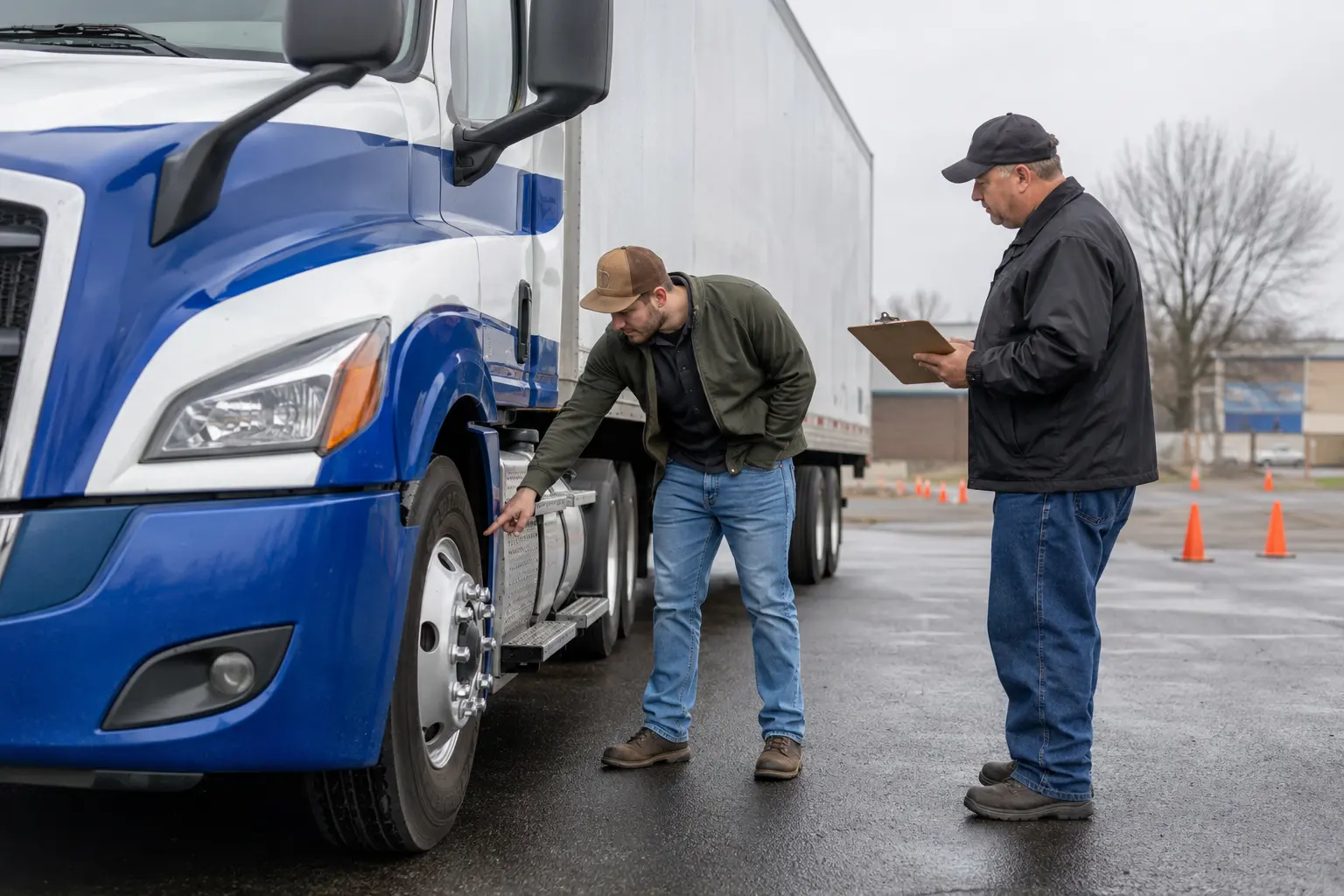
The CDL vehicle inspection is easier to master when it becomes a physical route instead of a disconnected list of parts. A consistent routine helps a student see every component, explain its condition, and avoid losing the sequence under test-day pressure.
Examiners need evidence that the applicant understands whether a commercial vehicle is safe to operate. Naming a part is only the beginning; the driver must connect secure mounting, damage, leaks, wear, adjustment, and operation to the real safety purpose of that component.
Why Pre-Trip Inspection Matters
Examiners need evidence that the applicant understands whether a commercial vehicle is safe to operate. Naming a part is only the beginning; the driver must connect secure mounting, damage, leaks, wear, adjustment, and operation to the real safety purpose of that component. A student should connect every rule or technique to a real operating decision. That approach improves recall during testing and supports better judgment after licensing.
Requirements, vehicle configurations, and employer procedures can differ. Use the current Pennsylvania CDL manual, FMCSA materials, and direct instruction for the exact situation rather than relying on a shortcut or isolated online answer.
A Practical Action Plan
- Step 1: Divide the vehicle into fixed zones: cab, engine compartment, steering axle, side and rear, coupling system, trailer, and in-cab checks.
- Step 2: Practice one zone at a time while physically pointing to each component and speaking in complete sentences.
- Step 3: Use the same direction around the vehicle on every attempt so the route itself becomes a memory aid.
- Step 4: Finish with timed full inspections, then review only the components that were missed or described vaguely.
Progress should be measured by repeatability. Perform the procedure correctly, explain why it is safe, and then repeat it under realistic time and attention demands. When performance breaks down, return to the first step that became inconsistent instead of practicing the error faster.
Common Mistakes to Avoid
- Reciting memorized phrases without identifying the actual component.
- Jumping between vehicle zones and accidentally skipping an entire system.
- Saying only that a part looks good instead of explaining the safety condition.
- Rushing the air-brake checks without following the correct vehicle-specific sequence.
Qualified feedback matters because a student cannot always see a developing habit from the driver’s seat. Ask the instructor for one specific correction, practice it deliberately, and confirm that the change works across several attempts.
Student Readiness Checklist
- □ I can follow one inspection route without prompts
- □ I point to every component I describe
- □ I explain mounting, damage, leaks, wear, and operation
- □ I know the in-cab and brake-check sequence
- □ I practice on the same type of vehicle I expect to test in
Frequently Asked Questions
Should I memorize the CDL pre-trip inspection word for word?
Learn a consistent structure and accurate safety language, but understand each component well enough to explain it naturally and answer a follow-up question.
How often should I practice pre-trip inspection?
Short daily repetitions are usually more effective than one long weekly session. Combine zone practice with periodic full inspections.
Educational information only. Rules, forms, testing procedures, fees, and employer requirements can change. Verify current requirements with PennDOT, FMCSA, the testing provider, and your employer as applicable.