

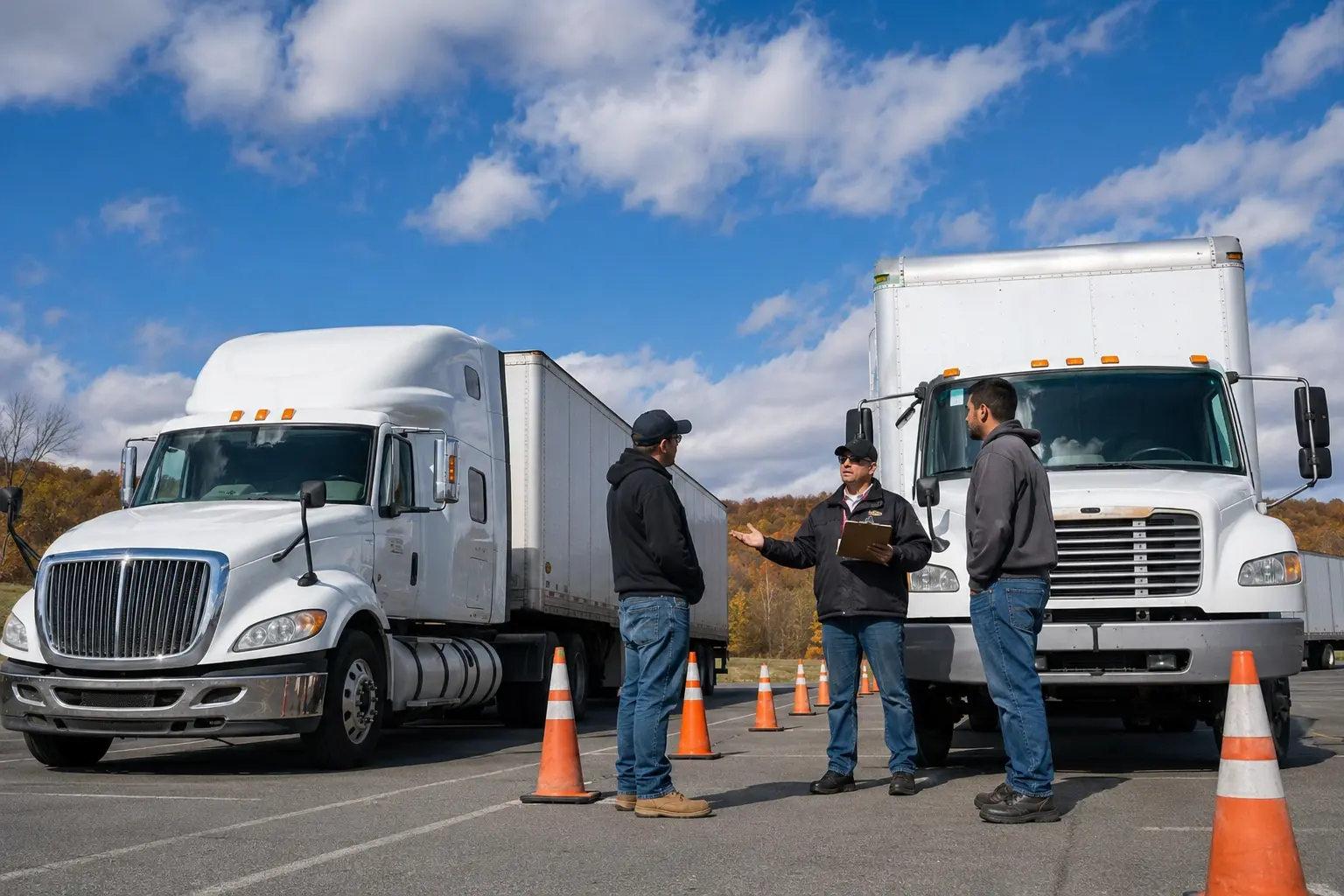
Choosing between Class A and Class B training should begin with the vehicle and work a student wants to perform. Both licenses can support professional careers, but they prepare drivers for different vehicle configurations and job markets.
The training vehicle used for the skills test can affect the class, endorsements, and restrictions printed on the final license. Selecting a program only by price or speed can leave a graduate without the equipment qualifications an employer expects.
Why CDL Programs Matters
The training vehicle used for the skills test can affect the class, endorsements, and restrictions printed on the final license. Selecting a program only by price or speed can leave a graduate without the equipment qualifications an employer expects. A student should connect every rule or technique to a real operating decision. That approach improves recall during testing and supports better judgment after licensing.
Requirements, vehicle configurations, and employer procedures can differ. Use the current Pennsylvania CDL manual, FMCSA materials, and direct instruction for the exact situation rather than relying on a shortcut or isolated online answer.
A Practical Action Plan
- Step 1: List the vehicles used in the jobs you are considering, including whether they are combination or single-unit vehicles.
- Step 2: Compare the permit knowledge tests, ELDT requirements, and behind-the-wheel skills associated with each path.
- Step 3: Ask what transmission, braking system, and vehicle configuration the school uses for training and testing.
- Step 4: Evaluate schedule, hands-on time, instructor access, and the steps needed after graduation—not just the advertised course length.
Progress should be measured by repeatability. Perform the procedure correctly, explain why it is safe, and then repeat it under realistic time and attention demands. When performance breaks down, return to the first step that became inconsistent instead of practicing the error faster.
Common Mistakes to Avoid
- Assuming Class A is automatically necessary for every commercial driving job.
- Choosing Class B without checking whether future goals require combination vehicles.
- Ignoring automatic-transmission or air-brake restrictions that can narrow job choices.
- Confusing an endorsement with the underlying CDL class.
Qualified feedback matters because a student cannot always see a developing habit from the driver’s seat. Ask the instructor for one specific correction, practice it deliberately, and confirm that the change works across several attempts.
Student Readiness Checklist
- □ I know the vehicle class used in my target job
- □ I understand the permit and ELDT path
- □ I checked the school’s training equipment
- □ I reviewed possible license restrictions
- □ I compared local and regional career options
Frequently Asked Questions
Can a Class B driver later upgrade to Class A?
Yes, but the driver must satisfy the applicable permit, ELDT, and skills-testing requirements for the upgrade.
Does a Class B CDL allow a driver to operate a tractor-trailer?
Generally no when the combination meets the Class A definition. Always match the license class to the vehicle’s ratings and configuration.
Educational information only. Rules, forms, testing procedures, fees, and employer requirements can change. Verify current requirements with PennDOT, FMCSA, the testing provider, and your employer as applicable.