Most advice on truck driving jobs training provided starts with the same bad pitch: find a company that will “pay for your CDL” and you're set.
That's only half true.
Company-sponsored training can get you into trucking without paying tuition upfront, and for some people that's the only workable path. But “paid training” usually means the carrier pays first, then collects through low trainee pay, a service contract, restricted job choice, or all three. If you treat it like free money, you're the one taking the hit.
That matters because trucking is still worth entering. There's real demand, real income potential, and a clear path for people who want a practical career instead of a four-year degree. The key is choosing your entry point carefully, because your first training decision can either give you options or tie you down before you've even run your first load.
The Real Deal on Company-Paid CDL Training
“Free CDL training” is mostly a marketing phrase. In practice, somebody always pays. Sometimes it's you upfront. Sometimes it's the carrier later through a work commitment that limits where you can go and what you can earn.
That doesn't make company-paid training automatically bad. It does mean you need to stop thinking like a student getting a gift and start thinking like a worker signing a business deal.

Trucking remains a strong trade to enter if you do it with your eyes open. The U.S. Bureau of Labor Statistics projects around 237,600 openings for heavy and tractor-trailer truck drivers each year this decade, and the median annual wage was $57,440 in May 2024. Drivers who move into specialized endorsements can earn over $100,000, according to the BLS truck driver outlook.
What “paid” usually means
A carrier-sponsored path usually works like this:
- The company covers training first. You don't hand over tuition at the beginning.
- You agree to stay. That commitment may be based on time, miles, or both.
- Your early pay is controlled. The carrier decides what you earn while training and often what lane you start on after.
- Leaving early gets expensive. If the contract includes repayment terms, you can owe money when you quit.
Practical rule: If a recruiter says the training is free, ask what happens if you leave before the commitment is done.
That one question tells you more than the sales pitch ever will.
Why people still choose it
For a lot of rookies, company-paid training solves one immediate problem. They need a path into trucking now, and they don't have cash on hand. That's a valid reason to consider it. The problem starts when they don't compare it against independent training options like free Class CDL training paths and alternatives that explain where “free” really comes from.
The smart move is simple. Treat truck driving jobs training provided as one financing model, not as a gift. Once you frame it that way, the trade-offs become easier to judge.
Decoding the Types of Paid Training Programs
Not every training offer works the same way. Carriers and schools package entry-level CDL access in a few different forms, and the differences matter more than most applicants realize.
The first thing to know is that the federal floor applies no matter who pays. As of February 7, 2020, the FMCSA's Entry-Level Driver Training rule requires all new drivers to complete a standardized curriculum, including theory and a minimum of 160 hours of behind-the-wheel instruction for a Class A license, according to the FMCSA ELDT overview.
The three models you'll see most
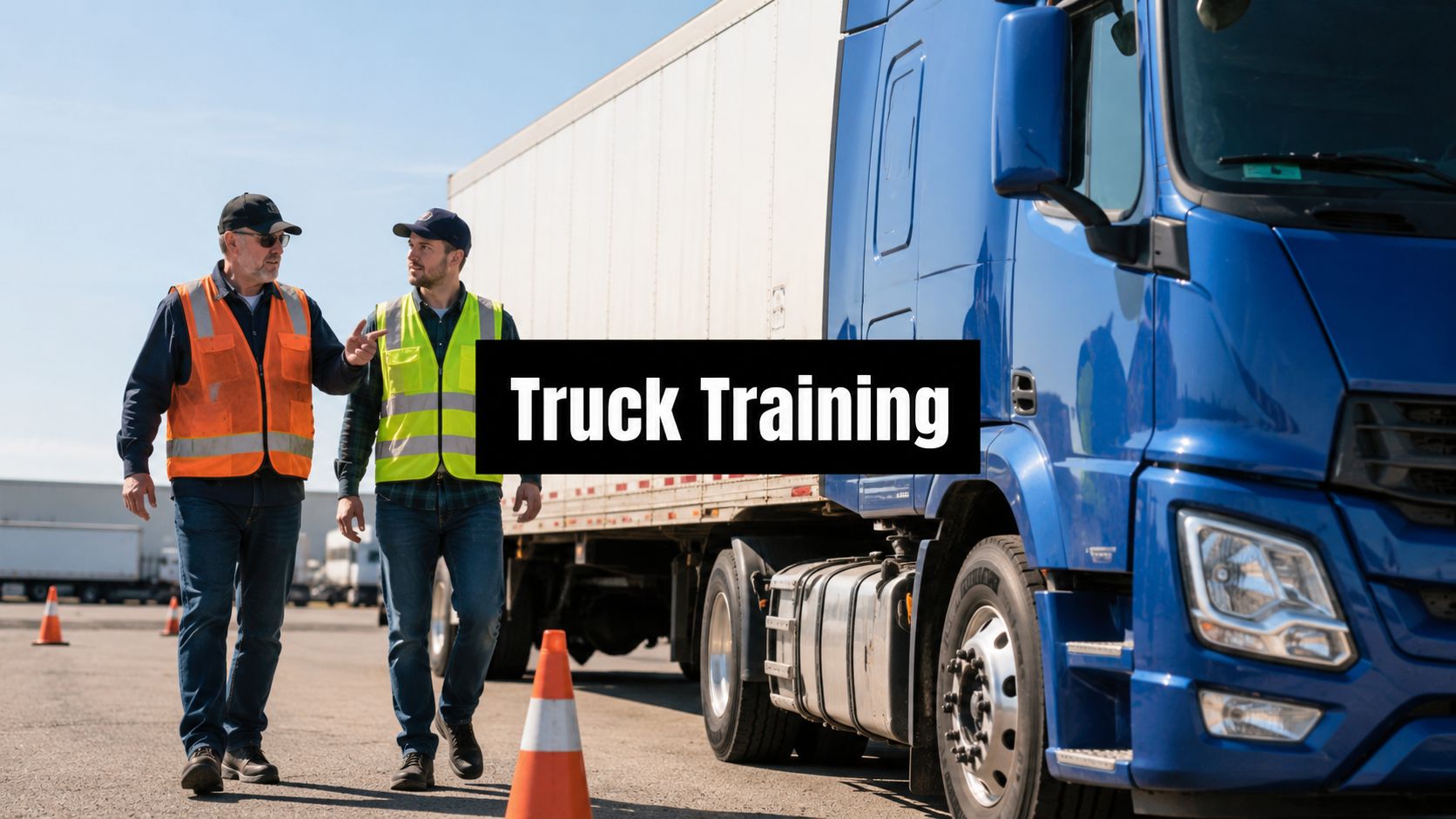
Some carriers run their own schools. Some hire from outside schools and reimburse later. Others structure the first phase more like an apprenticeship. Those are not minor wording differences. They shape your cash flow, your commitment, and your freedom to change employers.
Company Training Models at a Glance
| Training Model | Upfront Cost | Company Commitment | Best For |
|---|---|---|---|
| Company-sponsored training | Low or none upfront | Usually immediate and restrictive | People who need a direct path without paying tuition first |
| Tuition reimbursement | You pay first | Usually more flexible because the CDL is already yours | Drivers with savings, financing, or outside funding |
| Formal apprenticeship | Usually low upfront, tied to employment | Structured work-and-learn relationship | People who want staged onboarding with supervised miles |
Company-sponsored training
This is the model commonly understood when searching for truck driving jobs training provided. The carrier pays for school or delivers the training in-house, then hires you under a training agreement.
The upside is obvious. You can start without saving several thousand dollars first. The downside is just as obvious once you read the paperwork. Your first employer often controls your lane options, your trainer assignment, and your exit terms.
This model fits applicants who need a fast way in and are willing to trade flexibility for access.
Tuition reimbursement
This route flips the order. You get trained first through an independent school, then join a carrier that repays part or all of your schooling over time based on continued employment.
You still have an employment relationship to manage, but you're not usually trying to “earn back” the CDL itself under the same kind of tight training contract. You already hold the license before you sign on.
For people who can fund school through savings, benefits, financing, or outside assistance, this is often the cleaner structure. It's also easier to compare different truck driving training programs when the school and the employer are not bundled into one deal.
A CDL in your pocket gives you leverage. A CDL controlled by your first carrier doesn't.
Formal apprenticeships
Apprenticeship-style setups are usually more structured after licensing. You train under supervision, then move into solo work under a defined progression. In a good version, that structure helps new drivers build habits gradually instead of getting pushed out too fast.
The catch is that “apprenticeship” can still carry contract obligations. Don't assume the label means better terms. Read the agreement the same way you would read any company-sponsored offer.
What actually separates them
If you're comparing offers, focus on four points:
- Who owns the training relationship: Is the school independent, or is it the carrier?
- When the obligation starts: Before licensing, after licensing, or during a probationary period.
- How much freedom you keep: Can you leave for another carrier without triggering repayment?
- How your first months are paid: Flat trainee pay feels very different from regular mileage or hourly work.
Most bad decisions happen because applicants lump these programs together. They shouldn't.
How to Find and Vet Quality Training Carriers
A flashy recruiting page doesn't tell you whether a carrier trains rookies well. It tells you the marketing department knows how to write copy. You need better filters than that.
One hard truth should shape how you vet every program. A critical report found that only 31% of new heavy truck drivers receive “adequate” formal training, which is why curriculum depth and real road time matter so much, according to this FMCSA training report.

Start with carriers, not slogans
Search job boards, carrier career pages, and school placement pages. If you want a broad look at openings before talking to recruiters, use a tool that lets you search for jobs by category and location, then narrow your list to carriers that openly describe their training path instead of hiding it behind a lead form.
Once you have a shortlist, stop looking at generic promises and start asking operational questions.
Questions that expose weak programs
Ask these directly. If the recruiter gets slippery, that tells you something.
- How much time is behind the wheel? Observation, ride-alongs, and simulator time have value, but you need to know how much time you're physically operating the truck.
- What skills get focused on? Ask specifically about backing, alley dock work, shifting if manuals are used, pre-trip inspection, and city driving.
- What equipment do trainees use? Training on neglected equipment or gear that doesn't match the job can make the transition rough.
- Who teaches the class? A strong program can explain who the instructors are and what they teach.
- How is the post-license phase handled? A lot of weak programs rush students through the CDL, then rely on a trainer truck to fix the gaps.
Green flags and red flags
A decent carrier won't be perfect, but it should be clear.
| Green flags | Red flags |
|---|---|
| Written explanation of training phases | Vague “we'll teach you everything” language |
| Straight answer on contract terms | Recruiter dodges repayment questions |
| Real focus on backing and road work | Most training described as observation |
| Clear equipment details | No answer on what trucks you'll train in |
| Graduates move into stable fleet roles | Constant churn and “we hire anybody” messaging |
Ask one former trainee what they wish they had known before signing. That answer is usually more useful than the whole recruiting brochure.
Don't ignore beginner fit
A carrier can be large, busy, and still be a terrible beginner company. The right fit depends on whether the company has patience for rookies, enough trainer capacity, and realistic freight for a new driver.
If you're comparing starter fleets, it helps to review lists of trucking companies for beginners and then verify the details yourself. Use lists as a starting point, not as proof.
The Truth About Paid Training Contracts and Pay
People often get trapped here.
A company-paid CDL deal can be a workable entry point, but the contract is the whole story. If you don't read it carefully, you can spend months digging out from a decision that sounded easy on day one.

Data shows trainees often earn only $400 to $616 weekly, then get locked into a contract requiring up to 40,000 solo miles, or about 5 to 6 months, to repay the training commitment. The same data says 78% of entry-level drivers sign these contracts without fully understanding the mileage requirement or penalties for leaving early, according to this paid training job market analysis.
Why the word free causes trouble
The carrier's version of “free” usually means debt-free at the front end, not obligation-free. That's a huge difference.
If you leave early because the miles are bad, the home time isn't what you were told, the trainer situation goes sideways, or the fleet just isn't a fit, the repayment clause can follow you. That's the piece too many rookies hear about only after orientation.
What to look for in the contract
Read the agreement with a pen in your hand. Don't skim it on a phone in a hotel room.
Look for these items:
- The exact service requirement: Is it based on months, miles, or both?
- Repayment language: What happens if you resign, get terminated, or fail out?
- Payroll details: Is training pay flat-rate, per diem-based, mileage-based later, or some combination?
- Restrictions after licensing: Are you assigned only over-the-road work, team driving, or a trainer period with no option to decline?
- Default clauses: Some contracts are written broadly enough that almost any separation triggers repayment.
Contract test: If you can't explain the exit terms in one sentence, you don't understand the deal yet.
Low pay matters more than people think
A rookie driver can tolerate a short-term sacrifice if the long-term setup is strong. The problem is that some contracts combine low trainee pay with limited bargaining power after training. You're not just underpaid for a few weeks. You're also stuck in the fleet that set those terms.
That's why I tell new drivers to separate three things in their head: school cost, trainee pay, and post-upgrade earning power. Recruiters often blend them together so the offer sounds better than it is.
For context on what earning paths can look like after you're licensed, compare the broader range in a breakdown of Class A truck driver salary. Then ask whether the contract in front of you gives you a realistic shot at that path or delays it.
A short explainer helps if you want to hear how drivers talk through these agreements in plain language.
When a contract can still be worth it
There are cases where signing makes sense.
- You have no workable upfront funding
- The carrier has a decent reputation for training
- The obligation is clear and manageable
- The first assignment fits your life well enough to finish the term
That's the key. Sign because the math works for you, not because “paid training” sounds comforting.
Nailing the Application Interview and Road Test
Once you've found a program worth considering, the hiring process gets practical fast. Carriers want to know whether you can follow rules, show up on time, and handle the stress of being new without getting reckless.
Most applicants talk too much about wanting freedom on the road and not enough about reliability. A recruiter hears “freedom” and wonders whether you'll disappear after orientation.
What you need ready before you apply
Get your paperwork straight before you hit submit. A messy application signals a messy driver.
Bring order to these basics:
- License and identification: Make sure your driver's license information matches your application.
- Work history: Have dates, employers, and job titles lined up. Gaps need a clear explanation.
- Medical and screening readiness: You need to be prepared for the DOT physical and drug screen process without scrambling.
- Driving record awareness: Know what's on your MVR before the recruiter does.
If you're coming from another field and aren't sure how to present transferable experience, a guide on how to apply for jobs without experience can help you frame attendance, safety, customer service, and shift discipline in language recruiters understand.
What carriers are listening for in interviews
They're testing mindset more than personality. You don't need to sound slick. You need to sound dependable.
Strong answers usually show these traits:
- Safety first: You don't rush, guess, or fake confidence.
- Commitment: You understand the lifestyle and have thought through time away, schedule changes, and early-career grind.
- Coachability: You can take correction from trainers without getting defensive.
- Stability: You've made plans for transportation, sleep, family responsibilities, and finances during training.
Tell the truth about what you know and what you don't. A rookie who admits he needs to learn is easier to train than one who acts experienced.
The pre-hire road test
If the carrier includes a road evaluation, don't overcomplicate it. They're watching whether you stay calm, listen, and handle basics safely.
Focus on:
- Pre-trip discipline: Don't rush the inspection.
- Backing composure: Slow is fine. Wild corrections aren't.
- Turns and space management: Watch your trailer and setup.
- Following instructions: If the tester says reset and try again, do exactly that.
A clean, steady performance beats a flashy one every time. New drivers get in trouble when they try to look advanced instead of looking safe.
When to Choose a Private School Like Patriot CDL
There's a point where paying upfront becomes the cheaper decision.
If the company route locks you into months of low pay, narrows your job options, and limits your ability to leave, then independent training stops looking expensive and starts looking efficient. You're buying mobility.

Industry data for 2026 shows that full Class A CDL programs with 160 hours of training typically cost $4,000 to $6,000, and that upfront investment can give drivers freedom to choose their employer and avoid restrictive contracts, according to this review of Class A CDL training costs.
What you gain by paying for school yourself
The biggest benefit isn't just the license. It's control.
With independent training, you can:
- Choose your first employer instead of taking whoever funded you
- Compare lanes, equipment, and home time before committing
- Leave a bad fit without a training debt hanging over you
- Pursue tuition reimbursement offers after graduation if available
That flexibility matters more than rookies think. Your first carrier shapes your habits, your references, and often your confidence. Keeping options open can save you from forcing a bad match.
When a private school makes the most sense
A private school is usually the stronger move if you can cover tuition, qualify for outside funding, or don't want your first employer controlling your CDL path. It also makes sense if you care about how the training is delivered, not just whether it gets you legal enough to test.
Look closely at schools that emphasize real driving reps, backing practice, permit support, and instruction from experienced trainers. If hands-on quality is a priority, this overview of hands-on CDL training with experienced instructors is the right lens to use.
Patriot CDL is one example of an independent training provider built around accelerated CDL instruction, practical road skills, and permit-to-test preparation. For drivers who want the license first and employer choice second, that model is straightforward.
The best training deal is the one that leaves you qualified and free to make your next move.
If you want a CDL path that puts the license in your hands before any carrier tries to lock up your options, take a serious look at Patriot CDL. An independent school route can cost more upfront, but it gives you room to choose your first job on your terms instead of spending your first months trying to work off a contract you didn't fully understand.