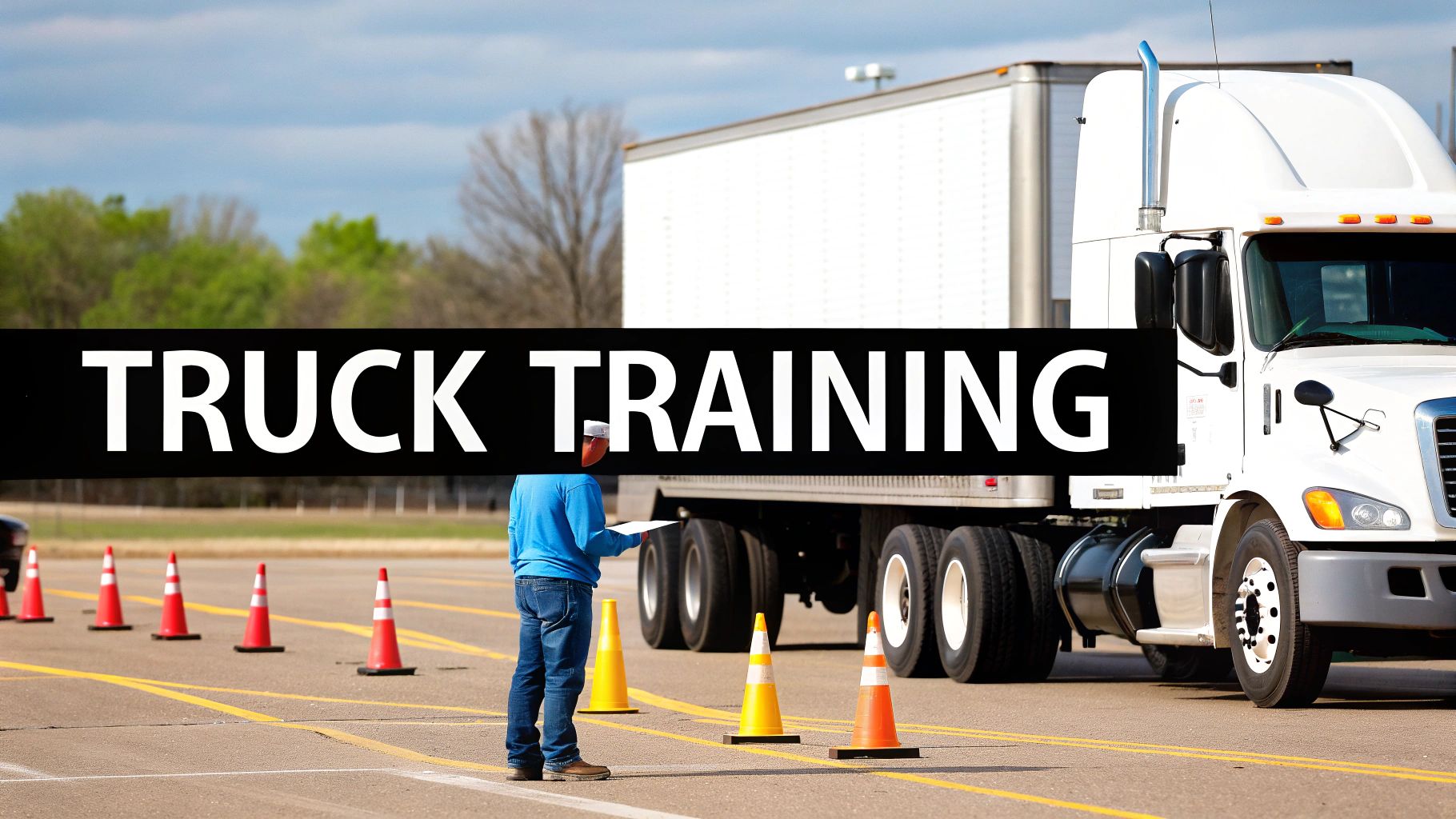
Your journey to becoming a professional truck driver starts with a single, crucial choice: the right truck driving training program. This isn't just about passing a test to get your Commercial Driver's License (CDL); it's about laying the groundwork for a safe, successful, and long-lasting career on the open road.
Why the Right Training is Your First Step to a Trucking Career
Let's face it, skilled truck drivers are the lifeblood of our economy. They're the ones who make sure goods get from a factory floor to your local store, safely and on time. This vital role means qualified drivers are always in demand, making trucking one of the most stable and dependable career paths you can choose.
Right now, the United States is staring down a massive driver shortage, with estimates putting the gap as high as 78,000 drivers. This is happening because experienced drivers are retiring just as the demand for shipping goods is increasing. When you consider that the trucking industry moves a staggering 72.6% of all freight in the U.S., you can see why the need for new, properly trained drivers is more critical than ever. This is exactly why investing in a quality training program is such a smart move.
Building Your Foundation for Success
Think of your CDL training like the foundation of a house. You wouldn't build on shaky ground, and you shouldn't launch your driving career with subpar training. A good school does more than just teach you the answers for the CDL exam; it instills the real-world skills and safety-first mindset you'll rely on every single day.
This guide is your roadmap to making that smart choice. We'll walk you through everything you need to know, covering:
- Different Program Types: We'll break down the options, from Class A and Class B licenses to specialized endorsements that can boost your career.
- Costs and Scheduling: You'll learn how to navigate the financial side of things and find a program that works with your life.
- School Selection Criteria: We'll give you the inside scoop on what to look for in a top-notch school so you get the best education possible.
A proper education is your first major step toward professional independence and a prosperous future behind the wheel. The skills you learn now will directly impact your safety, confidence, and earning potential for years to come.
Ultimately, choosing a truck driving training program is the most important investment you can make in yourself and your new career. You can learn more about our specific course offerings and how we prepare you for the road ahead.
Decoding the Different Types of Trucking Programs
Trying to make sense of all the truck driving training programs out there can feel like learning a new language. You'll hear terms like "Class A," "HazMat," and "company-sponsored" thrown around, and it's easy to get lost in the jargon. But figuring out these options is the first, most crucial step in launching your career on the right foot.
Think of it like a mechanic's toolbox. A basic set of wrenches gets you started on simple jobs, but a more advanced kit with specialized tools opens the door to more complex—and better-paying—work. The same idea applies to your Commercial Driver's License (CDL); the license and endorsements you earn will dictate the kind of truck you can operate and the freight you can legally haul.
This diagram breaks down how a training program connects your career goals to the actual license you'll hold in your hand.
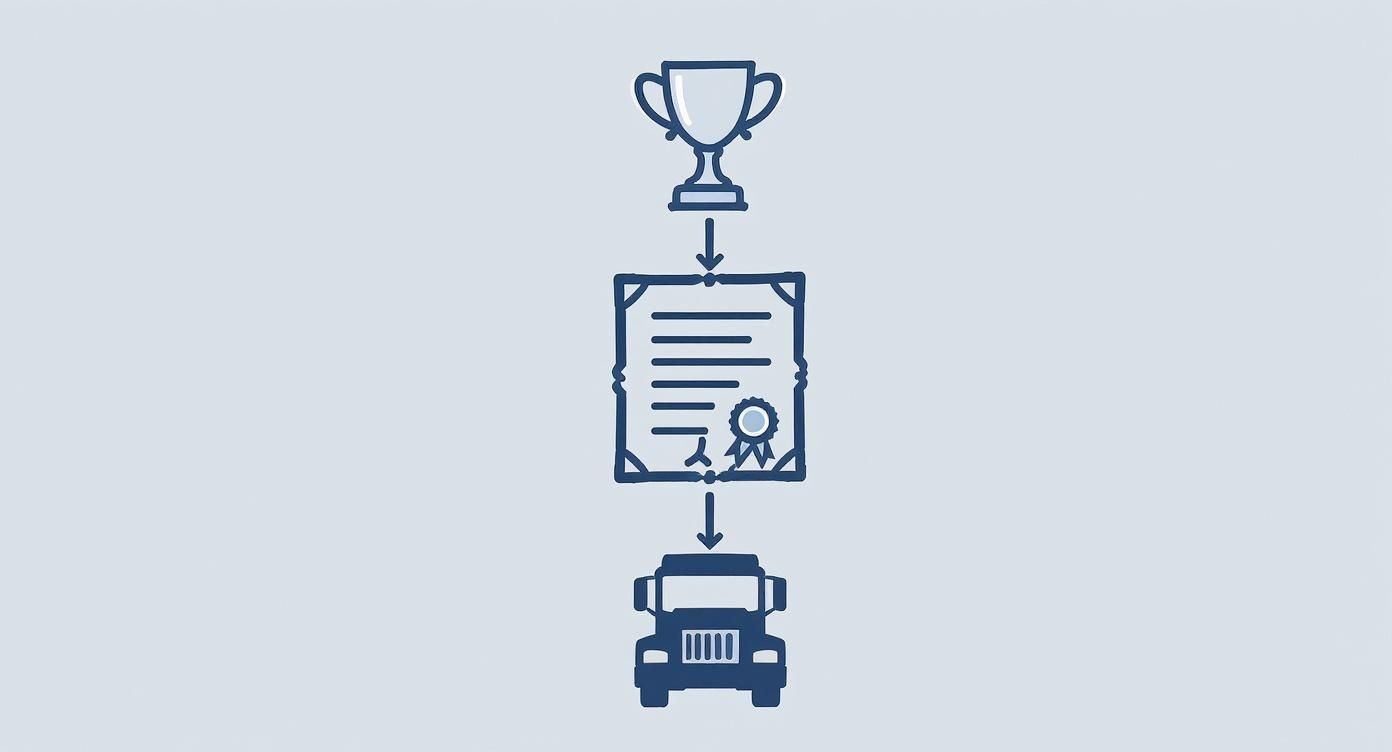
As you can see, the training program isn't just a hoop to jump through—it's the essential bridge between your ambition and your certification.
The Core CDL Classes Explained
The very first decision you’ll make is which license class to go for. Each one is a ticket to a different corner of the trucking world.
CDL Class A: This is the big one. It’s the most versatile license you can get, letting you operate massive combination vehicles like a tractor-trailer. Holding a Class A license swings the most doors open for job opportunities, from long-haul coast-to-coast routes to local delivery gigs.
CDL Class B: This license is for single, heavy vehicles like dump trucks, straight trucks, and city buses. It's a fantastic option if you're looking for work that keeps you closer to home, with local or regional routes that have you in your own bed most nights.
Beyond the basic license, you can add endorsements that act like special certifications for specific types of freight. These include things like a tanker endorsement for hauling liquids, HazMat for hazardous materials, or doubles/triples for pulling multiple trailers. And if you're looking to broaden your options, you might even need to upgrade an existing license. For drivers who want to operate trucks with manual transmissions, for example, there's the E-restriction removal course that expands your driving capabilities.
Where Can You Get Your Training
Once you’ve settled on the type of license you need, the next question is: where do you learn to drive the rig? You’ve got three main paths to choose from, and each has its own set of pros and cons.
Choosing your training provider is just as important as choosing your license. This decision impacts your timeline, initial investment, and even your first job opportunity.
Comparing CDL Training Program Providers
Picking the right place to get your CDL is a big deal. To help you weigh your options, here’s a look at how private schools, community colleges, and company-sponsored programs stack up against each other.
| Provider Type | Typical Duration | Average Cost | Key Advantage | Best For |
|---|---|---|---|---|
| Private Trucking Schools | 3-8 weeks | $3,000 – $7,000 | Speed and job placement | Students who want their CDL fast and have funding ready. |
| Community Colleges | 8-16 weeks | $3,000 – $8,000 | In-depth education, financial aid | Students who prefer a structured, academic pace and want to use financial aid. |
| Company-Sponsored Training | 3-6 weeks | $0 upfront (with work contract) | No out-of-pocket tuition | Individuals with limited funds who are ready to commit to a specific company. |
Ultimately, the best choice depends entirely on your personal situation—your budget, your timeline, and how you want to start your career.
A Closer Look at Your Options
1. Private Trucking Schools
These schools live and breathe one thing: getting you licensed and on the road, fast. Their programs are usually accelerated, sometimes cramming everything you need into just a few weeks. You'll get focused, hands-on instruction and benefit from their strong connections with trucking companies looking to hire new drivers.
2. Community Colleges
CDL programs at community colleges are typically a bit longer and sometimes part of a larger degree in logistics or supply chain management. While it takes more time to complete the program, the costs can be lower, and they often provide more in-depth classroom instruction alongside the behind-the-wheel training.
3. Company-Sponsored Training
Often called "paid CDL training," this is where a trucking company foots the bill for your school. In return, you sign a contract agreeing to work for them for a set period, usually one to two years. This is an amazing option if you don't have the cash upfront, but it's a serious commitment. If you break that contract, you'll likely be on the hook to repay the full tuition.
A Look Inside Truck Driving School
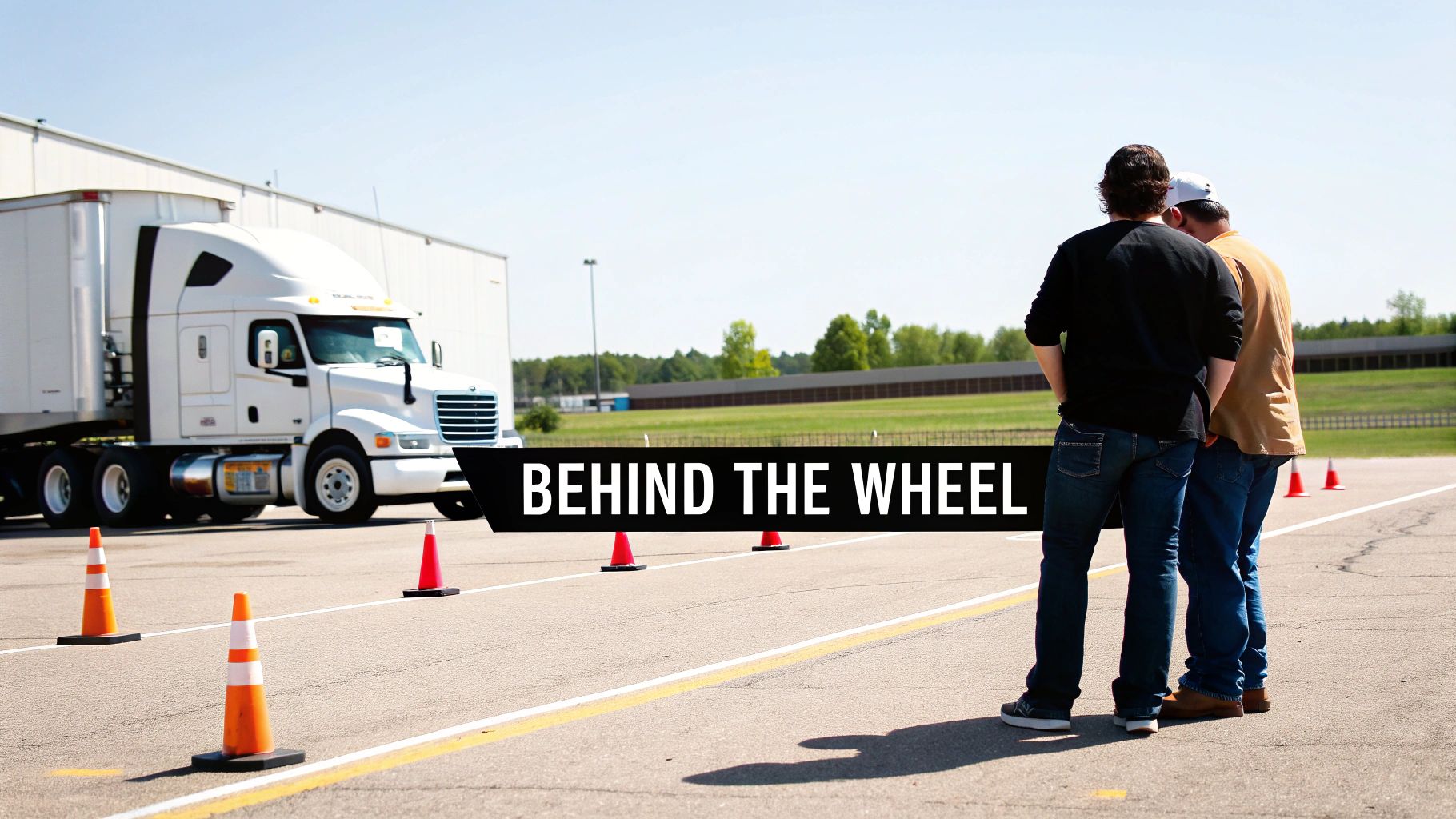
Signing up for a truck driving training program can feel like a bit of a black box. You know you come out the other side with a CDL, but what actually happens in between? Let's pull back the curtain. The whole process is designed to take someone who's never sat in a big rig and turn them into a safe, confident professional.
It really breaks down into two distinct learning environments: the classroom and the driving yard. Both are equally important.
Think of it like becoming a pilot. You wouldn't just jump into the cockpit and take off. First, you have to learn the principles of flight, navigation, and FAA rules. For a truck driver, the classroom is your ground school. It’s where you learn the "rules of the road" before you even turn the key.
This first phase is all about building the mental toolkit you'll rely on for every single mile of your career.
Mastering the Rules of the Road
Your time in the classroom is spent getting a handle on the complex world of commercial trucking. Experienced instructors will walk you through all the critical regulations and procedures that keep the industry moving safely.
Here’s a quick look at what that involves:
- Federal Regulations: You’ll get familiar with the Hours of Service (HOS) rules, which are non-negotiable laws about how long you can be on duty. You'll also cover key safety protocols from the Federal Motor Carrier Safety Administration (FMCSA).
- Logbook Management: This is a huge one. You'll learn how to meticulously and legally document your driving hours and rest periods in a logbook.
- Trip Planning and Navigation: This goes way beyond just plugging an address into a GPS. You'll learn to plan routes that are safe for a commercial vehicle, accounting for things like low bridges, weight limits, and truck-restricted roads.
One of the most important things you'll learn in the classroom is the pre-trip inspection. Before you roll out, you're legally required to conduct a detailed check of your truck and trailer. To get a real sense of what this entails, check out our guide on the pre-trip inspection—it’s a non-negotiable part of a driver's daily routine.
From the Classroom to the Cab
Once you have that solid foundation of knowledge, it’s time to head out to the driving yard. This is where theory gets real. The transition is handled carefully to build your confidence one step at a time, starting with the absolute basics of handling an 80,000-pound machine.
You won't be hitting the interstate on your first day. Far from it. You’ll start by just getting comfortable with the truck itself—learning the controls, getting a feel for its sheer size, and practicing simple forward and reverse movements in a wide-open, safe space.
The driving yard is your laboratory. It's a safe place to make mistakes, ask a million questions, and practice maneuvers over and over again until they become muscle memory, all with an experienced instructor right there beside you.
From those basics, you’ll move on to the more complex skills you'll need for your CDL test and your future job. You’ll spend hours mastering the fundamentals: backing in a straight line, parallel parking the rig, and tackling the dreaded alley dock maneuver.
Finally, you’ll take your newfound skills out onto actual roads. With an instructor in the passenger seat, you’ll navigate city streets, merge onto busy highways, and maneuver through tight industrial areas. This is where it all comes together, giving you the real-world experience needed to pass your CDL exam and start your career with confidence.
Navigating the Costs of Your Trucking Education
Deciding to invest in your education is a huge step, and getting a clear handle on the full financial picture is the best way to make a smart choice. When you're looking at different truck driving training programs, that main tuition price is really just the starting point. To plan properly and avoid any nasty surprises later on, you need to see the whole map of expenses.
The price tag on a CDL program can swing pretty wildly, usually landing somewhere between $3,000 and $8,000. What you'll pay depends on the school, how long the course is, and which license class you’re aiming for. It's a big business for a reason—the market for truck driving schools in the U.S. is valued at around $509.8 million, which shows you just how much demand there is for skilled, professional drivers.
Looking Beyond the Tuition Fee
Tuition is the big one, but it's definitely not the only cost you'll run into. You'll need to set aside some money for a few other essentials before you're fully licensed and ready to hit the road.
- Licensing and Endorsement Fees: Every state has its own set of fees for issuing your Commercial Learner's Permit (CLP), the final CDL, and any extra endorsements you decide to get.
- DOT Medical Exam: Before you can even get your permit, you have to pass a Department of Transportation (DOT) physical. This is an out-of-pocket cost to prove you're medically cleared to handle a commercial vehicle.
- Drug Screening: A drug test is another mandatory hurdle you have to clear right at the beginning.
- Living Expenses: This one's easy to forget. If you’re in a full-time program, you still have bills to pay. You'll need a plan for your regular living costs, especially if you have to cut back on work hours while you train.
Juggling all these pieces is key. For a complete breakdown of where each cost fits in, check out our detailed guide on CDL requirements.
How to Fund Your Trucking Education
The good news? You’ve got options. You don't necessarily have to write a huge check upfront. Most people find a way to combine a few different strategies to make their new career happen.
Financial planning is just as important as learning to back up a trailer. Securing your funding early allows you to focus completely on your training without added stress.
Here are the most common ways people pay for school:
- Financial Aid: Some schools, especially those at community colleges, are eligible for federal student aid. This could mean Pell Grants or federal loans.
- Veterans' Benefits: If you're a veteran, your GI Bill® benefits can be an incredible resource for covering the cost of CDL training.
- Company-Sponsored Training: Like we touched on earlier, some trucking companies will foot the bill for your school. The catch? You commit to working for them for a set period, but it often means no upfront cost for you.
- Tuition Reimbursement: This is another very popular route. You pay for your training, and once you’re hired, your new employer pays you back over time. It gives you the freedom to pick your own school while still getting that financial boost from your future boss.
By looking into all these different avenues, you can piece together a financial plan that works for your budget and gets you on the road to your new career.
How to Choose the Right Training Program
The choice you make right now will set the course for your entire career on the road. With so many truck driving training programs out there, it's easy to get lost in the sales pitches. The key is to look beyond the shiny brochures and focus on what really builds a successful driver.
Think of it like buying your first car. You wouldn't just pick the cheapest one on the lot. You'd check under the hood, look at the mileage, and make sure it’s a machine you can rely on. Your CDL training is no different—it’s the engine that will power your future.
What to Look for in a Top-Notch School
To really size up a program, you need to know what questions to ask. Digging into these details will help you separate the serious schools from the "CDL mills" that just want to get you in and out.
Here are the non-negotiables to investigate:
- Accreditation and Licensing: First things first, is the school legit? Make sure it's fully licensed by the state. Proper accreditation is a huge green flag, showing that the program meets industry-wide quality standards.
- Instructor Experience: Who’s teaching you? You want instructors who have actually lived the life. The best teachers are seasoned drivers with years of real-world, over-the-road experience, not just someone who can teach you to pass a test.
- Student-to-Truck Ratio: This one is a game-changer. A low student-to-truck ratio means you get more quality time behind the wheel with an instructor watching over your shoulder. That hands-on practice is where you build real skill and confidence.
- Quality of Equipment: Take a good, long look at the trucks. Are they modern and well-maintained? Learning on the same kind of equipment that companies are using today gives you a massive head start.
A school's job placement rate tells you everything you need to know about its reputation. When trucking companies line up to hire graduates from a particular school, it’s a clear sign that the program delivers well-trained, road-ready drivers.
Don't Underestimate Job Placement Assistance
A good school doesn’t just hand you a diploma and wish you luck. The best programs are invested in your success long-term and offer serious job placement assistance. Some schools even have a 100% job placement rate for graduates, which points to powerful connections within the industry.
When you talk to an admissions rep, ask them the tough questions. Do they help you build a professional resume? Do they host hiring events with major carriers? Ask for a list of companies that regularly hire their grads. This is the same kind of due diligence you'd perform when looking into other vocational certification programs.
Nothing beats seeing it for yourself. If you can, visit the campus. It gives you a feel for the place you just can't get online. You can kick the tires on the training trucks, meet the people who will be teaching you, and maybe even watch a class in session. Finding the right truck driving training program comes down to doing your homework and choosing a school that’s as invested in your career as you are.
The Future of Truck Driver Training
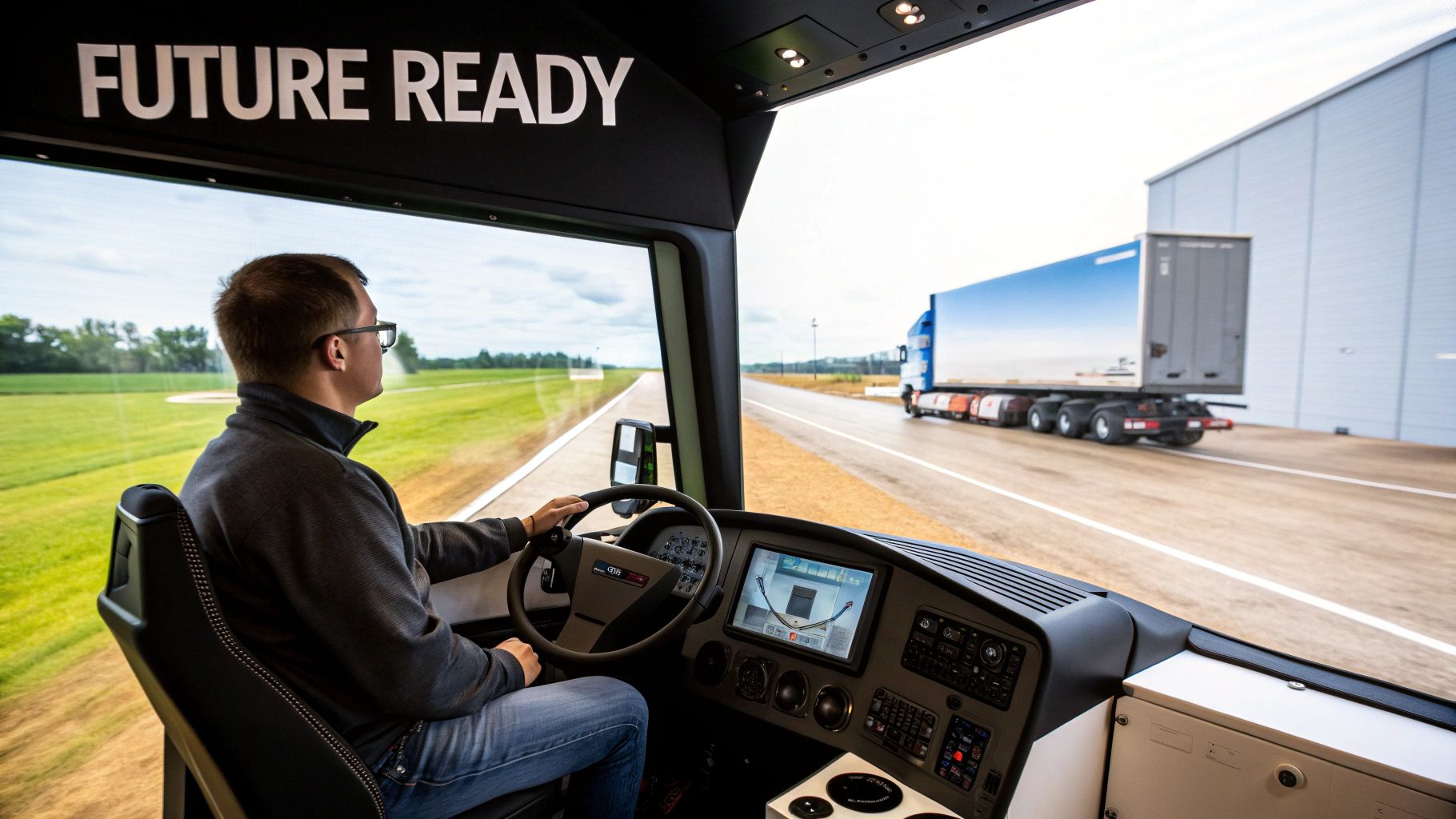
The trucking industry is always on the move, and so are the skills you need to succeed behind the wheel. The truck driving training programs of tomorrow are quickly adapting to get a new generation of drivers ready for a more tech-heavy world on the road.
This isn't just a local trend; it's happening everywhere. The global market for driver training is growing fast, thanks to stricter licensing rules and the new technology being built right into the trucks. As a result, schools are investing in fresh training methods, including simulators and AI-driven feedback, to better prepare students for what's ahead.
Embracing Technology in the Classroom
One of the biggest game-changers is the use of advanced driving simulators. If you can imagine a hyper-realistic video game built for professional training, you're on the right track. These simulators let student drivers practice reacting to intense situations—like a sudden tire blowout or navigating a slick, icy patch—all from the safety of a classroom.
This approach offers a massive advantage. It helps drivers build muscle memory for emergencies without ever being in real danger. This makes them safer and more confident from their very first day on the job.
As training moves forward, getting a handle on these new methods is key. These aren't just gadgets; they're tools that are completely changing how skills are taught and learned, moving far beyond traditional lectures and parking lot drills. This type of training is known as immersive learning.
Preparing for Tomorrow’s Trucks
Modern training also has to get drivers ready for the trucks they'll be operating in the very near future. That means adding new topics to the curriculum that cover the latest vehicle systems.
- Advanced Driver-Assistance Systems (ADAS): Today’s trucks come loaded with features like lane-keeping assist and automatic emergency braking. Training now covers how to work with these systems, not against them.
- Electric and Alternative Fuels: As the industry pushes for more sustainable options, drivers need a solid understanding of how electric vehicles (EVs) operate, from charging protocols to maximizing range on a long haul.
This forward-thinking approach ensures your training isn't just about passing the CDL exam—it's about setting you up for a long and successful career. The Federal Motor Carrier Safety Administration’s Entry-Level Driver Training (ELDT) standards provide the foundation for this modern instruction. The future of trucking is dynamic and full of opportunity, proving it's a tech-forward career with staying power.
Got Questions About Trucking School? We've Got Answers.
Jumping into a new career always comes with a lot of questions. If you're thinking about becoming a truck driver, you're probably wondering what school is really like. Let's clear up some of the most common things people ask before they get started.
Think of this as your personal roadmap to understanding the training process, so you can move forward feeling confident about your decision.
How Long Does Truck Driving School Take?
This is a big one, and the answer really depends on you and the program you choose. If you can go full-time, you're looking at a pretty quick turnaround. Most full-time Class A CDL programs are intense and fast-paced, getting you road-ready in just three to seven weeks.
But what if you can't commit to a full-time schedule? No problem. Many schools get that life is busy, so they offer part-time or weekend-only classes. Naturally, this stretches out the timeline a bit, and you might be looking at a couple of months to complete the program.
Do I Need Any Driving Experience to Get Started?
Nope. Not a bit. In fact, most people walk in on day one having never sat behind the wheel of a big rig.
That's the whole point of trucking school! The curriculum is designed to take you from square one. You'll start with the fundamentals—like how to inspect your truck and basic safety rules—and build your skills from there, eventually getting you comfortable and confident behind the wheel.
A good training program is built for the complete beginner. Its entire purpose is to mold a novice into a safe, skilled, and hireable professional driver.
What Happens if I Fail My CDL Exam?
First off, don't panic. It happens more often than you'd think, and it's definitely not the end of the road. Any good school has a plan for this.
Most reputable programs will give you extra practice time and instruction to help you iron out the rough spots before you take the test again. The exact policy can vary from school to school, so it's a smart question to ask when you're first signing up. States usually just require a brief waiting period before you can give it another shot.
Will the School Help Me Find a Job After I Graduate?
Absolutely. This is one of the biggest perks of going to a top-notch school. The best ones aren't just in the business of training drivers; they're in the business of launching careers. They have solid connections with trucking companies—both local and nationwide—that are hungry for new talent.
They'll often help you out with:
- Polishing up your resume
- Prepping you for interviews
- Hosting job fairs right on campus where you can meet recruiters
When you're checking out different schools, make sure to ask about their job placement rate and which specific companies hire their graduates. A high placement rate, with some schools boasting 100%, is a great sign that the industry trusts the quality of their training.
Ready to take the wheel of your new career? At Patriot CDL, we provide the expert training and hands-on experience you need to launch a successful life on the open road. Find out more about our programs.