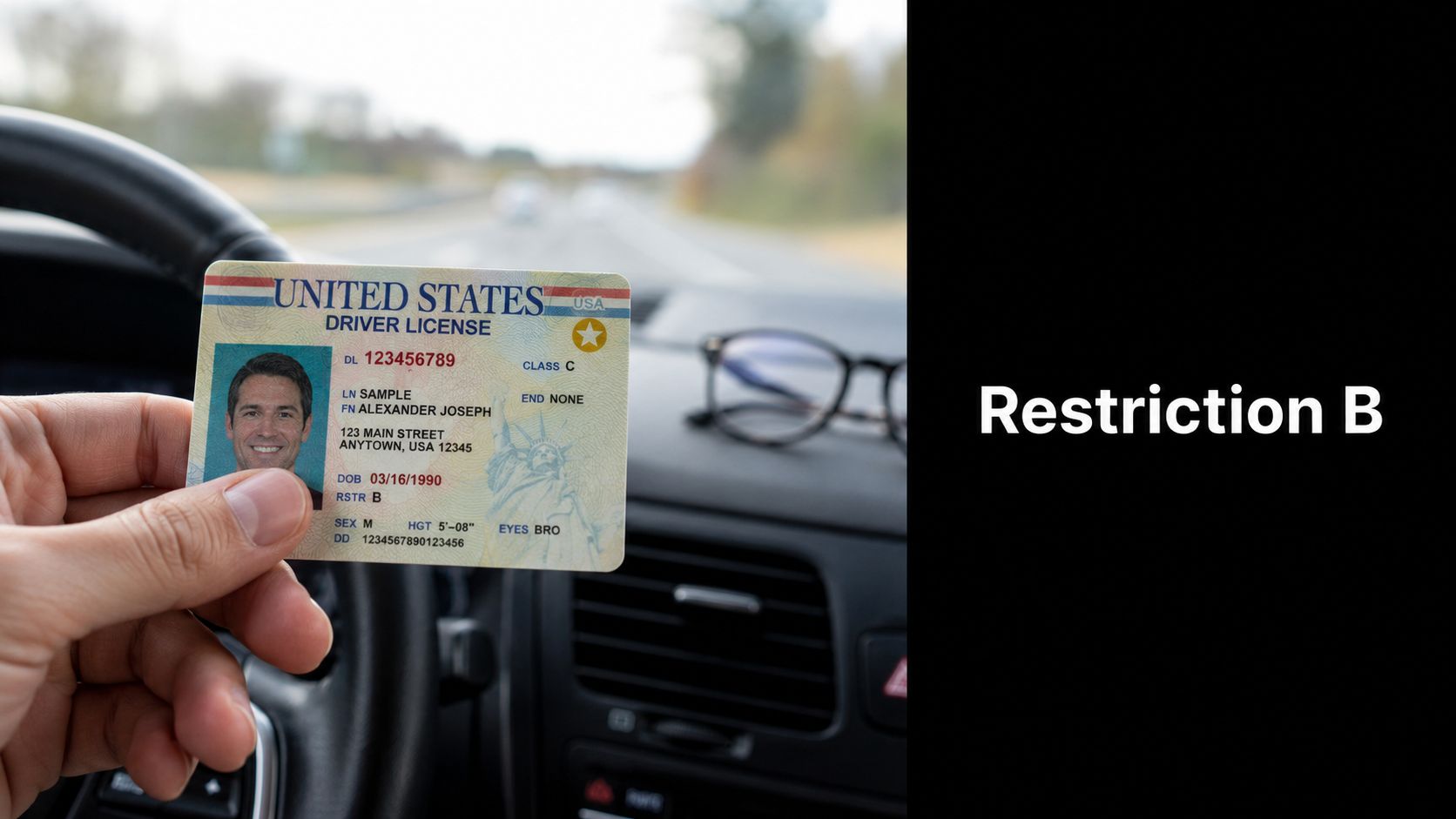
Restriction B on a driver's license most commonly means you must wear corrective lenses while driving. But the meaning of Restriction B can vary a lot by state, so if you're asking what does Restrictions B mean on driver's license records, the right answer starts with your own DMV.
If you're getting ready for CDL training, this small letter matters more than commonly understood. A restriction can affect how you train, what you need to bring to testing, and what conditions you must follow once you're behind the wheel. I've seen plenty of students focus on permit prep, backing maneuvers, and air brakes, then get surprised by something printed right on their license.
That's why it helps to slow down and read the code correctly before you start your path into trucking. For many future drivers, Restriction B is a routine issue. For others, especially people moving between states or changing license class, it can be a source of confusion that needs to be cleared up early.
What Is Restriction B on a Driver's License
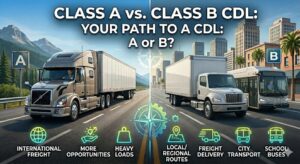
You might notice a B on your license and assume it has something to do with a Class B CDL. That's a common mix-up. A restriction code and a license class are not the same thing.
In most states, Restriction B is tied to a condition placed on your driving privileges. It usually doesn't describe what vehicle you can drive. It describes how you're allowed to drive, or what condition you must meet while driving.
Why drivers get confused
A lot of confusion comes from the fact that states don't use every letter the same way. One state may use B to mean vision correction, while another may use B for a supervised driving condition. That means you can't rely on a generic answer from a friend, a forum, or a random social post.
For new truck drivers, that matters because CDL training already has enough moving parts. You're dealing with permit study, scheduling, medical paperwork, and road skills. Adding a misunderstood restriction can create a problem you didn't need.
Practical rule: If a code appears on your license, treat it like a legal condition, not a suggestion.
Why it matters before CDL school
If you're planning to enter trucking, you want your license record to be clear before class starts. If your restriction involves vision, supervision, or another condition, your school and testing process may depend on you following it exactly.
If you want a broader look at how license limits can affect commercial driving, this overview of a restricted CDL license helps show how restrictions and CDL privileges can overlap.
The Corrective Lenses Requirement Explained
The most common answer to what does Restrictions B mean on driver's license records is simple. It means the driver must wear glasses or contact lenses while driving.
Indiana and Georgia both show this clearly. Indiana defines code B as requiring glasses or contact lenses, and Georgia's restriction table uses B for corrective lenses as well, which shows how widely this meaning is used in practice through DMV systems and roadside enforcement. You can review that standard meaning in Indiana's driver license endorsements and restrictions guide.

What corrective lenses means in real life
This part is straightforward. If your license says you need corrective lenses, you must have them on when you drive. That can mean:
- Prescription glasses that let you meet the required vision standard
- Contact lenses if those are what you normally use
- A backup plan in case you lose or damage your usual pair before driving
This isn't about convenience. It's about whether you legally meet the state's vision requirement while operating a vehicle.
Why DMVs enforce it
Vision is one of the clearest safety thresholds in licensing. A DMV can separate two issues at once. First, whether you qualify to hold a license. Second, whether you qualify only under certain conditions.
That's why a person may still be fully eligible to drive, but only while using the correction that allows them to see properly. If an officer stops you and you're not wearing the required lenses, you can be cited for violating a license condition.
For readers who want a broader look at vision standards in professional driving, this HGV driving eye tests resource gives useful context on why eyesight rules are taken seriously in commercial vehicle work.
If your license says lenses are required, put them in the same mental category as your seat belt. You don't negotiate with the rule.
If you're heading toward a CDL, it also helps to understand how medical screening fits into the process. Patriot CDL has a useful breakdown of what a DOT physical exam is, and vision is one of the practical areas drivers need to be ready for.
State by State Differences in Restriction Codes
Here's where people get tripped up. Restriction B is not universal.
Texas uses Restriction B differently on a non-commercial driver license. There, it means a licensed driver who is 21 years of age or older must be in the front seat, which is a supervised-driving condition rather than a vision rule. Texas also notes that restriction codes can be placed on driver licenses or CDLs and can be removed by visiting a driver license office. You can verify that in the Texas driver license endorsements and restrictions page.
Restriction codes are not the same as CDL classes
Another confusion point is the phrase Class B. In Pennsylvania's licensing framework, Class B commercial licensing applies to single vehicles over 26,001 pounds gross vehicle weight rating, which is about vehicle size and type. That is separate from a restriction code, which adds conditions to how a person may drive.
So if you see “B” on your license, don't assume it means Class B truck authority. It may have nothing to do with commercial vehicle class at all.
Restriction B meaning in different states
| State | Restriction B Meaning |
|---|---|
| Georgia | Corrective lenses required |
| Indiana | Glasses or contact lenses required |
| Texas | A licensed driver age 21 or older must be in the front seat |
That kind of variation is exactly why checking your own record matters. If you're trying to understand how state systems track license status and commercial records, this guide to the Commercial Driver License Information System can help connect the dots.
Restriction B and Your CDL Training
If your Restriction B is the corrective-lenses version, it usually does not block you from pursuing a trucking career. For many drivers, it's a condition they must follow consistently.

A good way to think about it is this. The DMV and the medical examiner aren't asking whether you have perfect natural vision. They're asking whether you can meet the required standard when driving legally.
How it affects training days
During CDL training, instructors need you to show up ready to drive safely and legally. If your restriction requires glasses or contacts, bring them every day. Don't leave them in another vehicle. Don't assume you can “get by” for one lesson.
That applies during:
- Classroom-to-range transitions when you move quickly into behind-the-wheel work
- Permit practice and road sessions where instructors are watching safe operation
- State testing appointments where you need to appear exactly as your license conditions require
One training provider students may consider is Patriot CDL training requirements, which outlines what applicants need before getting into the skills pipeline.
How it connects to the medical side
Your CDL path usually includes a DOT medical exam. Vision is part of that process. If your sight is corrected with lenses and you meet the required standard with that correction, the restriction becomes a compliance issue, not an automatic barrier.
This video gives a practical look at the commercial licensing process from a training perspective.
Most drivers with a corrective-lenses restriction don't need a new career plan. They need consistency, documentation, and the right eyewear on test day.
If your state uses Restriction B differently, such as supervised driving, then the answer changes. In that case, clear it up with your DMV before you invest time in scheduling lessons or a road test.
Steps to Update or Remove License Restrictions
Some drivers don't just want to know what Restriction B means. They want to know if they can change it. That's a smart question, because public guidance often stops at “wear glasses or contacts” and doesn't explain the next move very well. A concise discussion of that gap appears in this license restriction code guide.

A simple checklist to follow
- Read your license carefully. Confirm the exact code and whether it appears on your standard license, permit, or CDL.
- Check your state DMV's meaning. Don't assume the code matches what another state uses.
- Ask what removal requires. Some states may want a new vision screening, updated paperwork, or an in-person visit.
- Get medical or vision documentation if needed. An eye care professional may need to confirm that your current vision meets the state standard.
- Retest if the DMV requires it. If you're seeking removal of a vision restriction, be prepared for a DMV vision check.
- Request an updated license. Don't assume the restriction disappears automatically after an exam or medical improvement.
When this matters for your record
This step is especially important if your vision changed after surgery or treatment, or if you moved and need to understand how a new state will interpret your prior license status.
If your driving record involves a separate legal issue, that's a different lane entirely. For readers dealing with alcohol-related license concerns, this guide to DWI license protection covers a different type of license problem than a routine restriction code.
If you're already managing renewal timing, this guide on how to renew my license can help you line up DMV paperwork with your next update.
Driving Forward with a Clear Understanding
A single letter on a license can carry a lot of weight. In many states, Restriction B means corrective lenses are required. In others, it means something very different, including supervised driving conditions.
For future truck drivers, the important part is staying accurate and legal before training begins. Don't guess. Check your state's DMV wording, follow the restriction exactly, and clear up any questions before your permit, medical exam, or road training date.
If you're sorting through license status questions more broadly, this 2026 guide to driver's licenses offers general background on checking and understanding license issues.
A restriction usually isn't the end of the road. It's just one detail to handle correctly so you can focus on becoming a safe, employable professional driver.
Restriction B Frequently Asked Questions
What's the difference between a restriction and an endorsement
A restriction limits how you may drive. An endorsement adds permission for a certain type of vehicle or cargo. That basic split is why license systems developed letter codes in the first place. Georgia's restriction framework reflects the broader historical pattern of DMVs using simple codes to identify medical or operating limits for quick enforcement, as shown in its license restriction codes reference.
What happens if I move to a new state with Restriction B
Your new state will usually review your license status under its own rules. Don't assume the letter means the same thing after you move. Verify the code with the new DMV, especially before applying for a CDL, transferring a license class, or scheduling any test.
Will Restriction B change my insurance rate
This article can't make a universal insurance claim because insurers set their own rules and policy decisions. In practice, a routine corrective-lenses restriction is often treated as a licensing compliance issue, while other driving-history issues may matter more. The safest move is to ask your insurer directly how they read the restriction on your record.
If you're working through permit questions, restriction codes, or the first steps toward a commercial license, Patriot CDL provides CDL training information that helps new drivers understand the process and prepare for the road ahead.