

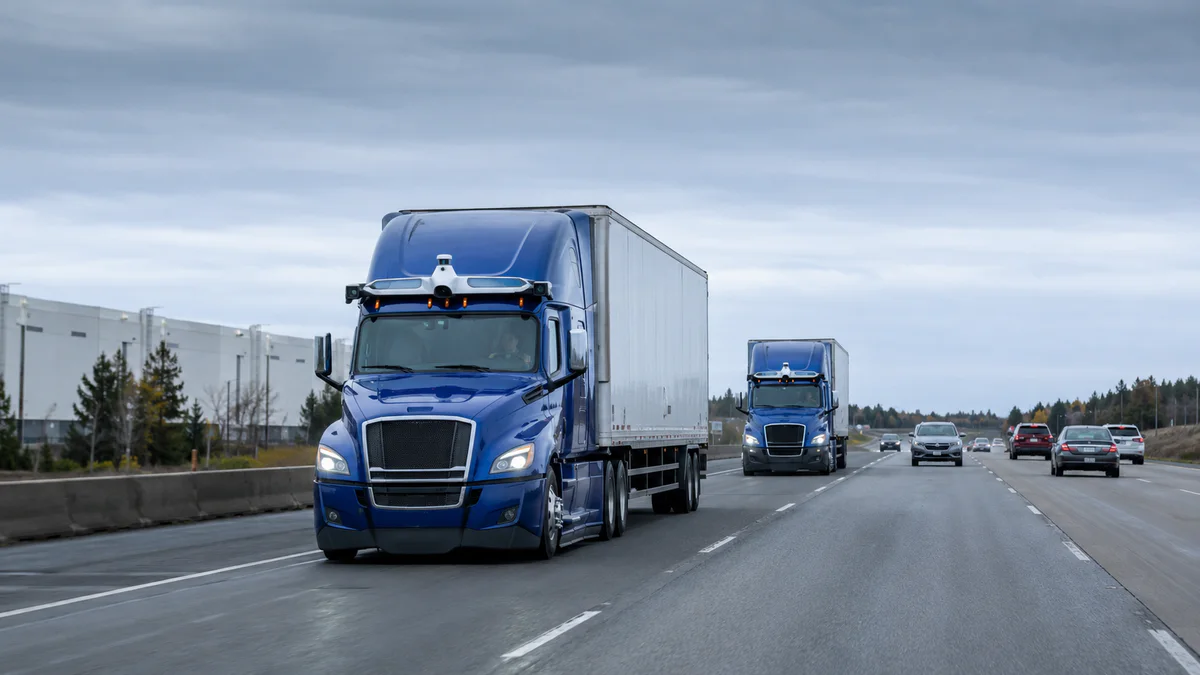
Aurora Innovation has put clearer numbers around its two commercial models for autonomous trucking. FreightWaves reported August 1 that Aurora’s transportation-as-a-service offering carries a revenue outlook above $2 per mile, while its future driver-as-a-service subscription targets more than 85 cents per mile. The company plans to begin moving customers toward the subscription model in 2027.
The distinction matters. Under the full-service model, Aurora controls the truck, holds operating authority, provides insurance and charges the customer for transportation. Under the subscription model, a carrier would acquire, manage and maintain the equipment while paying for the Aurora Driver and related services. That leaves major expenses—including fuel, tractors, maintenance, insurance, tires and tolls—with the fleet.
Aurora reported a $270 million second-quarter net loss on $2 million in revenue. It also said more than 200 driverless trucks are allocated for year-end, representing an estimated $80 million annualized revenue run rate. Those are forward-looking operating targets, not proof that every lane or carrier can achieve the same utilization or savings.
For fleets, the practical comparison should include total cost per mile, terminal support, insurance, maintenance responsibility and the amount of loaded utilization needed to justify the technology. For professional drivers, the near-term signal is changing job content rather than an overnight disappearance of work: long-haul networks will still require people for local moves, inspections, maintenance, customer service, exception handling and safety oversight.
Build Your CDL Career With Patriot CDL
Explore professional Class A, Class B and restriction-removal training in Levittown, Pennsylvania.
Talk With Admissions