

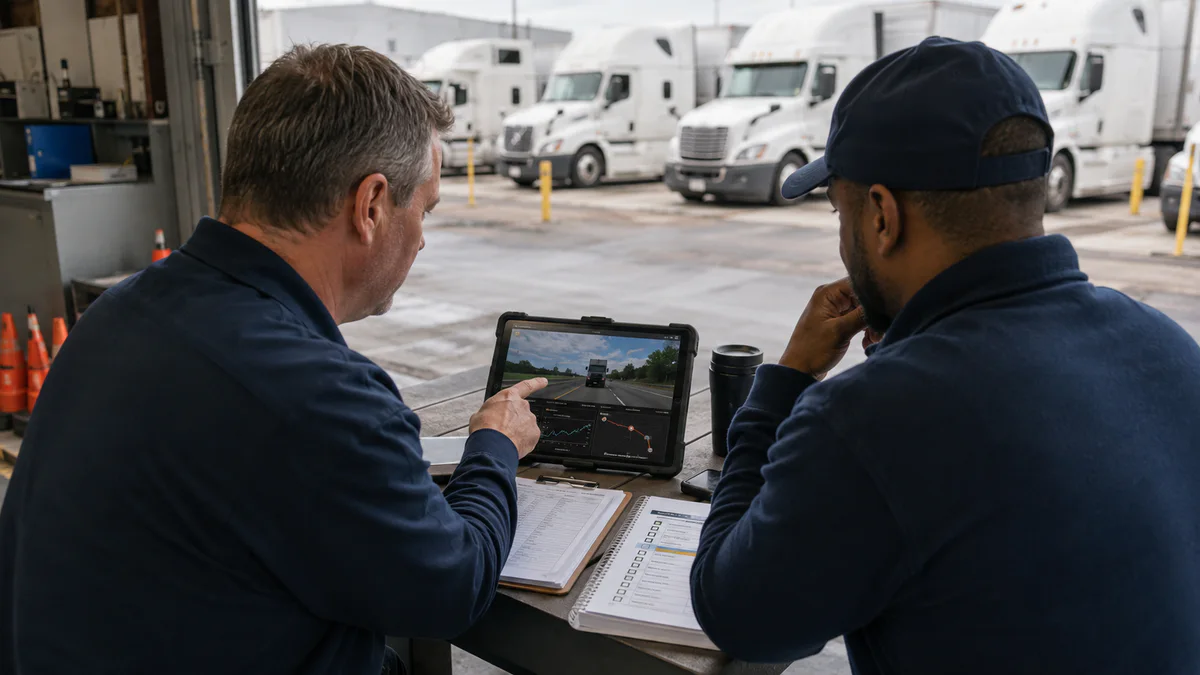
Video, inspection and telematics data are more useful when coaching focuses on observable behavior and a clear improvement plan. Patriot CDL reviewed the FleetOwner reporting and the wider fleet safety issue to identify what it means for commercial drivers, students, carriers and owner-operators. The headline matters because a small operational decision can affect safety, compliance, earnings and vehicle uptime across an entire trip.
The practical lesson behind “Driver Coaching Works Best When It Uses Specific Events” is to verify the facts that apply to the exact vehicle, route and assignment. Drivers should use current official instructions, their carrier’s written procedures and complete documentation instead of relying on assumptions or social-media summaries. A developing market trend is not automatically a new federal rule, and a general safety recommendation does not replace company policy.
Fleets can respond by reviewing the records and daily processes most closely connected to this fleet safety topic. That may include qualification files, maintenance reports, dispatch plans, rate confirmations, training records, inspection checklists or driver communication. Assigning a responsible person and documenting corrective action makes the response measurable instead of reactive.
For CDL students and newer drivers, the best question is how this issue changes the job in the cab, at the yard or at a customer location. Ask an instructor or employer to demonstrate the correct procedure, explain the applicable rule and show how the result is documented. That connection between knowledge and repeatable action is what turns “Driver Coaching Works Best When It Uses Specific Events” into safer professional practice.
Build Your CDL Career With Patriot CDL
Explore professional Class A, Class B and restriction-removal training in Levittown, Pennsylvania.
Talk With Admissions