

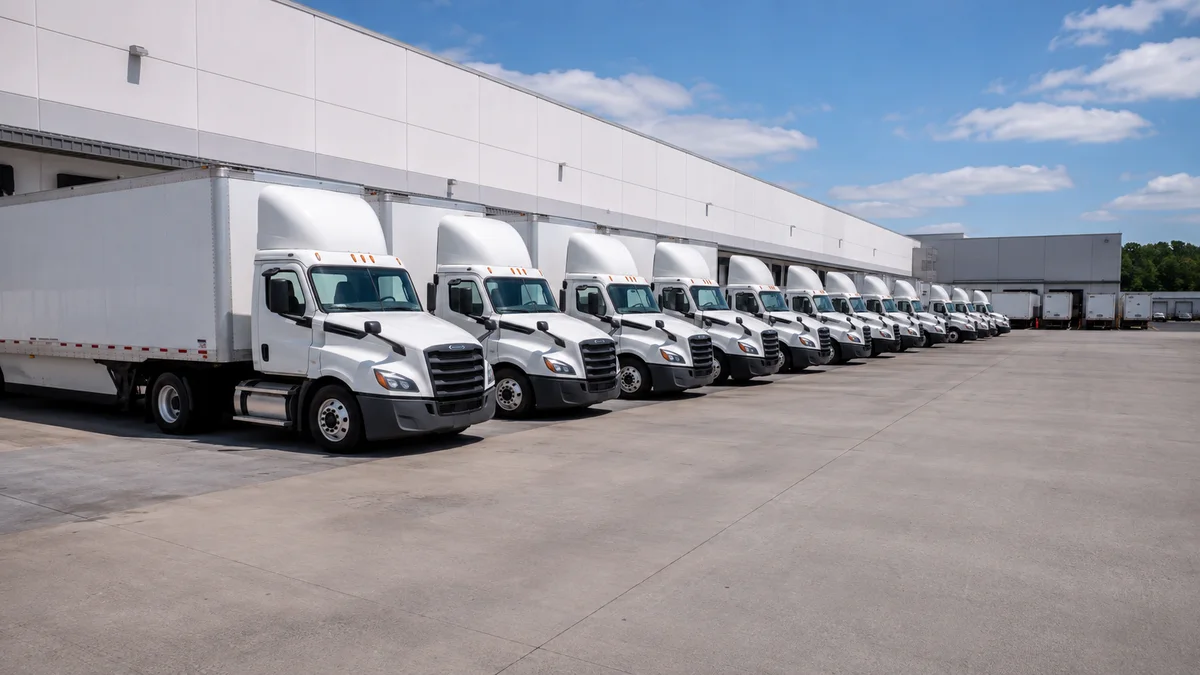
Old Dominion Freight Line improved second-quarter profitability even as its freight volumes declined from a year earlier. Trucking Dive reported that operating income increased 30% to $465.3 million and the less-than-truckload carrier’s operating ratio improved to 70.1%, compared with 74.6% in the prior-year quarter. In trucking, a lower operating ratio generally indicates that less revenue is being consumed by operating expenses.
The improvement came while LTL tonnage fell 4.1%, shipments declined 5.7% and intercity miles dropped 4.8%. Old Dominion credited disciplined operations and service performance, including 99% on-time delivery and a 0.1% claims ratio. The carrier also made about 1,000 lane adjustments intended to improve standard transit times, showing how network design can support margins even without strong volume growth.
Management increased the company’s 2026 capital-expenditure plan by more than $115 million. Approximately $60 million of the increase is allocated to tractors and trailers, while $55 million is planned for real estate and service-center projects, bringing expected annual spending to roughly $380 million.
For drivers and fleet managers, the results highlight the value of reliability, claims prevention and equipment readiness. Higher investment may support capacity and service growth, but one carrier’s performance does not guarantee an industrywide freight surge. Drivers considering LTL work should compare terminal schedules, linehaul and pickup-and-delivery duties, pay structure, equipment and home-time expectations. Smaller fleets can apply the same lesson by tracking utilization and service quality before expanding assets.
Build Your CDL Career With Patriot CDL
Explore professional Class A, Class B and restriction-removal training in Levittown, Pennsylvania.
Talk With Admissions