

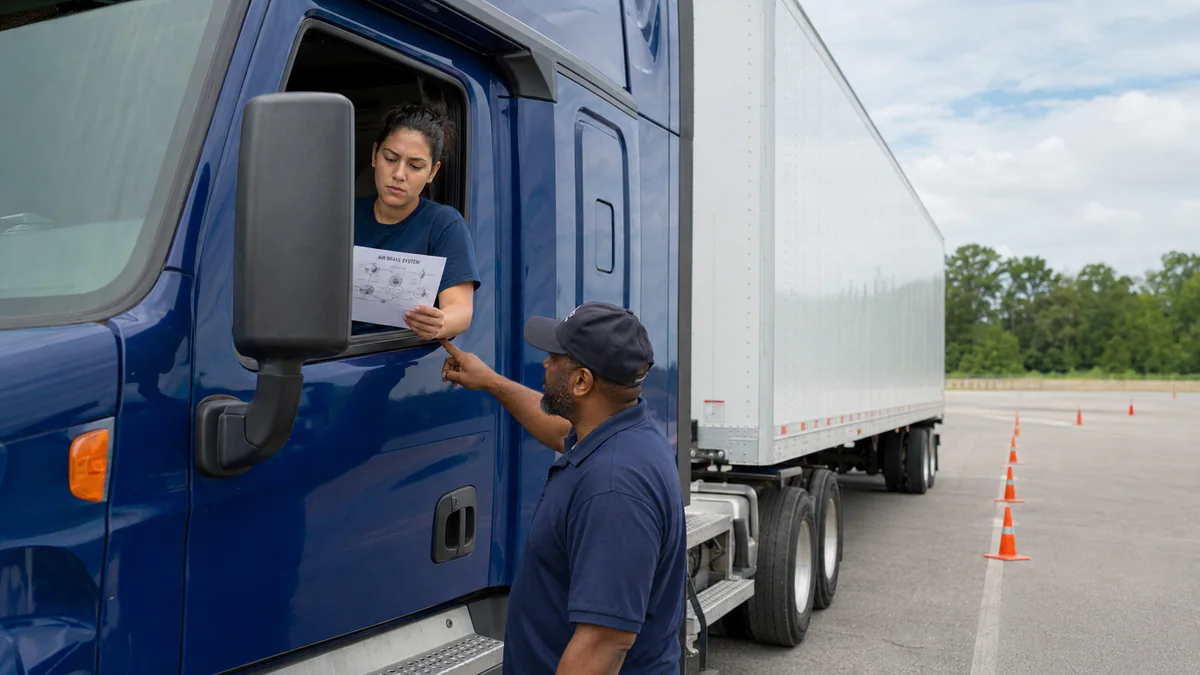
Students are linking written concepts with inspections, controls and real vehicle behavior rather than memorizing isolated answers. The topic fits the broader cdl education conversation because it affects daily decisions by drivers, fleets and owner-operators. Patriot CDL reviewed CDLLife reporting for its April trucking-news archive and focused on practical, present-day operating consequences.
For readers considering “Permit Study and Vehicle Practice Work Best Together,” the important first step is to distinguish an industry trend from a binding rule. A report can identify a developing risk or operational pattern without changing federal law, state licensing requirements or a carrier’s written procedures. Drivers should confirm current requirements through official sources whenever compliance is involved.
Fleets can respond by reviewing the part of their operation most directly connected to this issue, including dispatch plans, maintenance records, training documentation, customer instructions, insurance files or driver communication. A short written checklist tied to the actual task is more useful than a broad reaction without ownership or follow-up.
The practical takeaway is to verify details before making a safety, career or financial decision. Compare reputable trucking coverage, use official federal or state guidance for regulatory questions and document any operational change. CDL students and newer drivers should ask how the issue affects their vehicle, route, schedule, pay structure and daily responsibilities.
Build Your CDL Career With Patriot CDL
Explore professional Class A, Class B and restriction-removal training in Levittown, Pennsylvania.
Talk With Admissions