

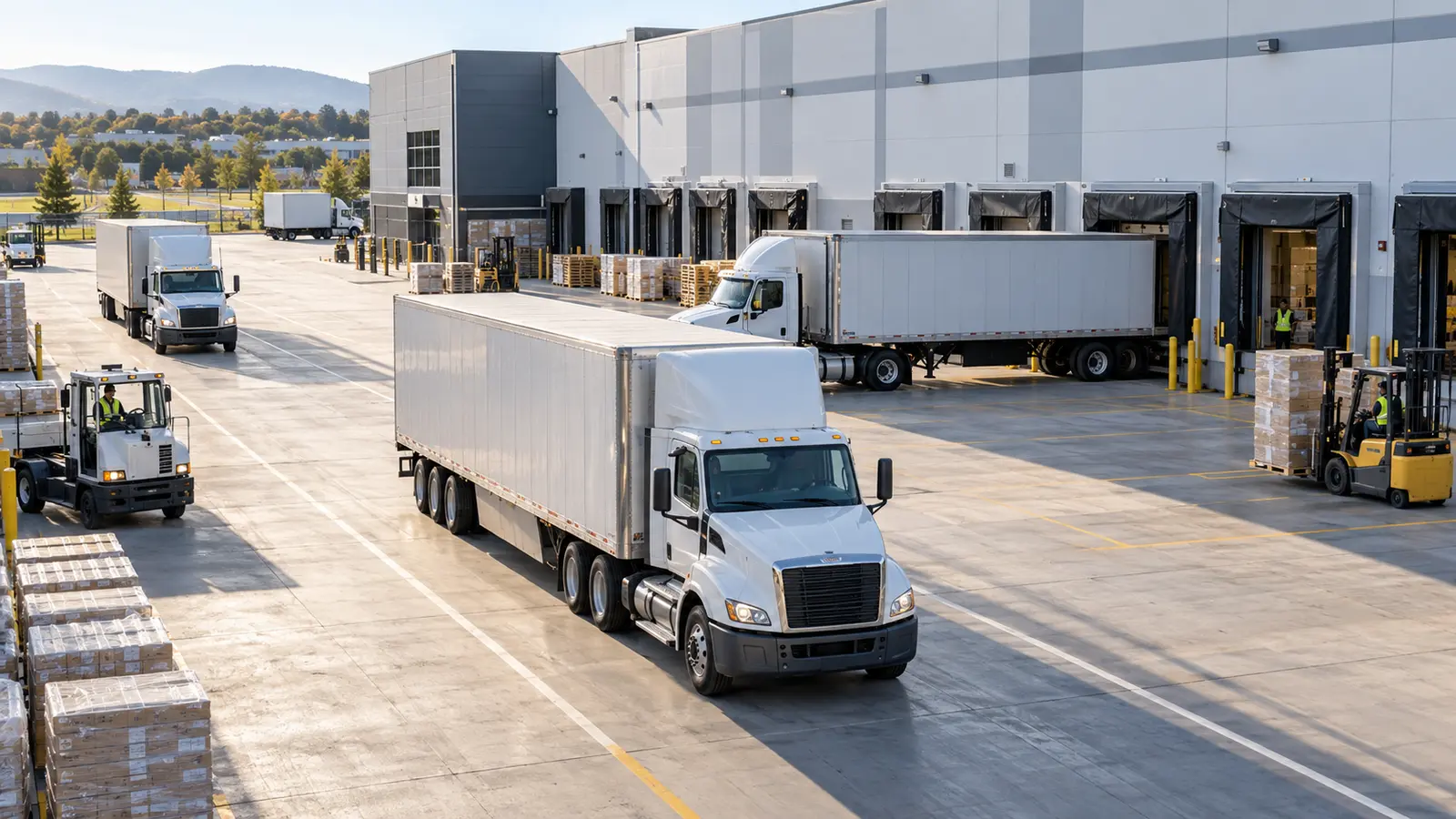
Private fleets are taking a larger role in company freight networks as shippers prioritize service control, cost visibility and dependable capacity. Heavy Duty Trucking reported September 17 that participants in the National Private Truck Council's 2026 benchmarking survey handled 72% of their outbound freight with private-fleet equipment. The survey reflects 2025 operations from 89 fleets.
Inbound freight is changing as well. Respondents' own private fleets handled 42% of inbound movements, while vendors' private fleets handled another 22%. For-hire carriers accounted for 25%, matching a recent low. The shift is not simply about selecting easy freight. Fleet leaders said they increasingly assign their own trucks to challenging customers, expensive lanes and loads where missed service would carry greater business risk.
The operating model is also becoming more regional. Seventy-one percent of respondents expect to add equipment or move more company freight during the next five years. Average annual mileage per truck fell to 80,750 as networks added locations closer to customers. Among Class 8 purchases, 69% were day cabs and 31% were sleepers, consistent with shorter routes and stronger demand for regular schedules and home time.
For-hire carriers can still compete, but available capacity alone may not be enough. Shippers increasingly expect reliable appointments, shipment visibility and service tailored to difficult facilities or customers. CDL drivers may see more regional private-fleet opportunities, especially where safe backing, customer service and schedule consistency matter as much as long-haul mileage. Job seekers should compare pay, route design, benefits, home time and equipment rather than assuming every private-fleet role offers the same package.
Build Your CDL Career With Patriot CDL
Explore professional Class A, Class B and restriction-removal training in Levittown, Pennsylvania.
Talk With Admissions