


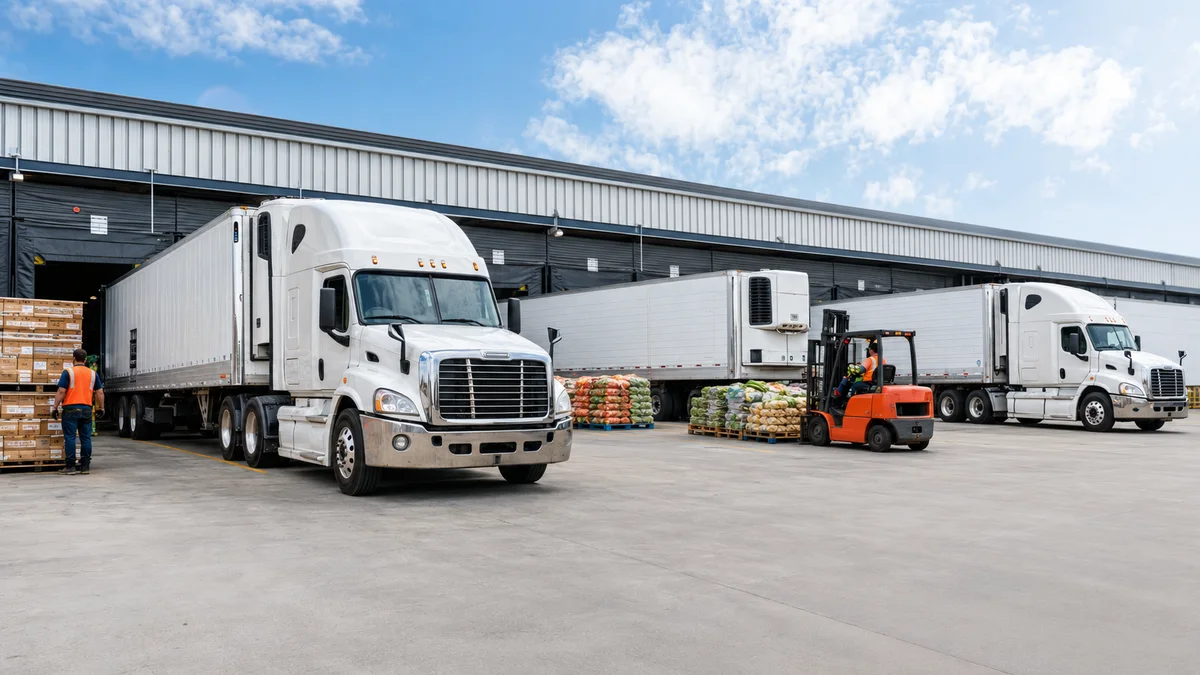
Refrigerated trucking capacity tightened sharply during the second quarter as produce seasons shifted demand across several major U.S. freight corridors. FleetOwner reported that a new TA Services market analysis identified pressure from Florida into the Southeast and from the Mexican border region toward California. South Texas emerged as the tightest market as seasonal produce volumes accelerated.
The report described the change as more than a short-lived seasonal spike. Carrier exits, slower equipment replacement and a smaller qualified carrier pool have reduced the excess capacity that previously absorbed unexpected demand. Reefer spot rates remained elevated from a year earlier even after easing from winter-weather peaks. Contract routing guides also became less reliable in high-pressure regions, increasing the likelihood that shippers would need last-minute spot coverage.
For refrigerated carriers, the opportunity comes with demanding execution requirements. Drivers must protect temperature settings, confirm continuous-fuel and reefer-unit readiness, monitor seals and shipment instructions, and document exceptions immediately. A higher rate can be erased by excessive waiting, rejected product, an equipment failure or an empty repositioning move, so dispatchers should evaluate the entire round trip rather than the loaded rate alone.
Shippers and brokers can reduce disruption by tendering freight earlier, maintaining dependable carrier relationships and setting cost expectations from current market conditions. Drivers considering reefer work should ask how detention, washouts, lumper fees and rejected loads are handled. The market signal is not that every refrigerated lane is equally strong; it is that seasonal regions now require earlier planning and more operational flexibility when qualified trucks become scarce.
Build Your CDL Career With Patriot CDL
Explore professional Class A, Class B and restriction-removal training in Levittown, Pennsylvania.
Talk With Admissions