

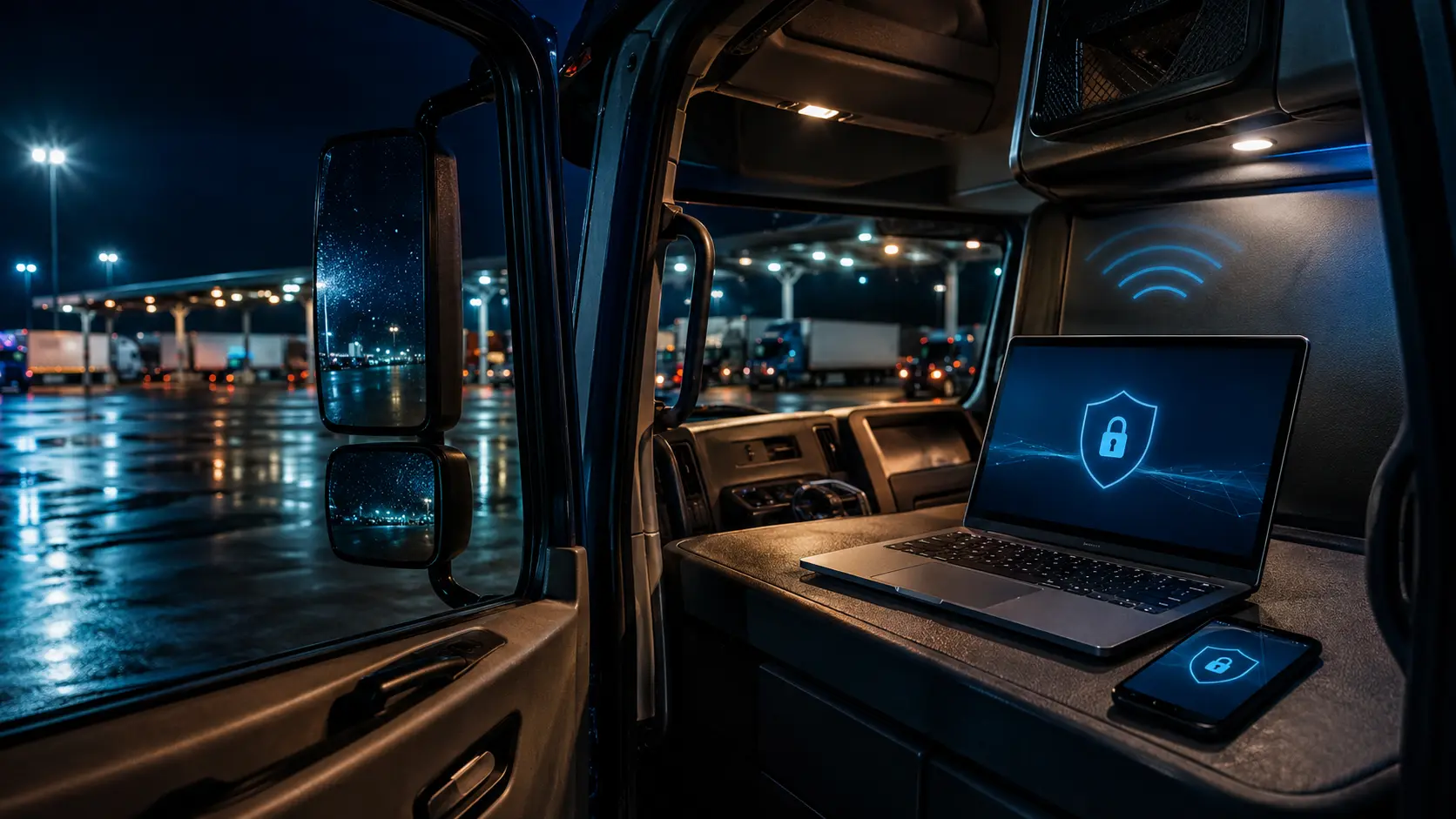
Public Wi-Fi at hotels, travel centers and other roadside locations can expose truck drivers and fleets to credential theft, malware and unauthorized access to company systems. Heavy Duty Trucking outlined the risks August 21 in guidance from a National Motor Freight Traffic Association cybersecurity engineer. The concern is especially relevant for mobile employees who regularly connect laptops and phones away from a secured office network.
Attackers can manipulate the captive portals that appear when users join public networks, redirecting traffic to convincing login pages or fake software-update prompts. A driver who enters a Microsoft 365 password into a fraudulent page may unknowingly give criminals access to email, files and connected fleet systems. Malware installed through a fake update can create another path into company devices and networks.
The safest practical option is often a cellular connection, such as a trusted smartphone or dedicated mobile hotspot. When public Wi-Fi is unavoidable, a properly configured virtual private network can encrypt traffic, while phishing-resistant multi-factor authentication makes stolen passwords harder to reuse. Drivers should confirm the network name with the business, avoid unexpected login or update prompts and stop when a page or connection behaves unusually.
Fleets can add conditional-access policies, device management, suspicious-login alerts and a clear reporting process for drivers. Security training should explain exactly whom to contact and what to do after a questionable connection, rather than expecting drivers to diagnose a cyberattack alone. Public Wi-Fi use is not a CDL violation, but a compromised account can disrupt dispatch, payroll, freight documents and customer data. Treating mobile connectivity as part of fleet safety helps prevent a convenient roadside connection from becoming an expensive operational incident.
Build Your CDL Career With Patriot CDL
Explore professional Class A, Class B and restriction-removal training in Levittown, Pennsylvania.
Talk With Admissions