


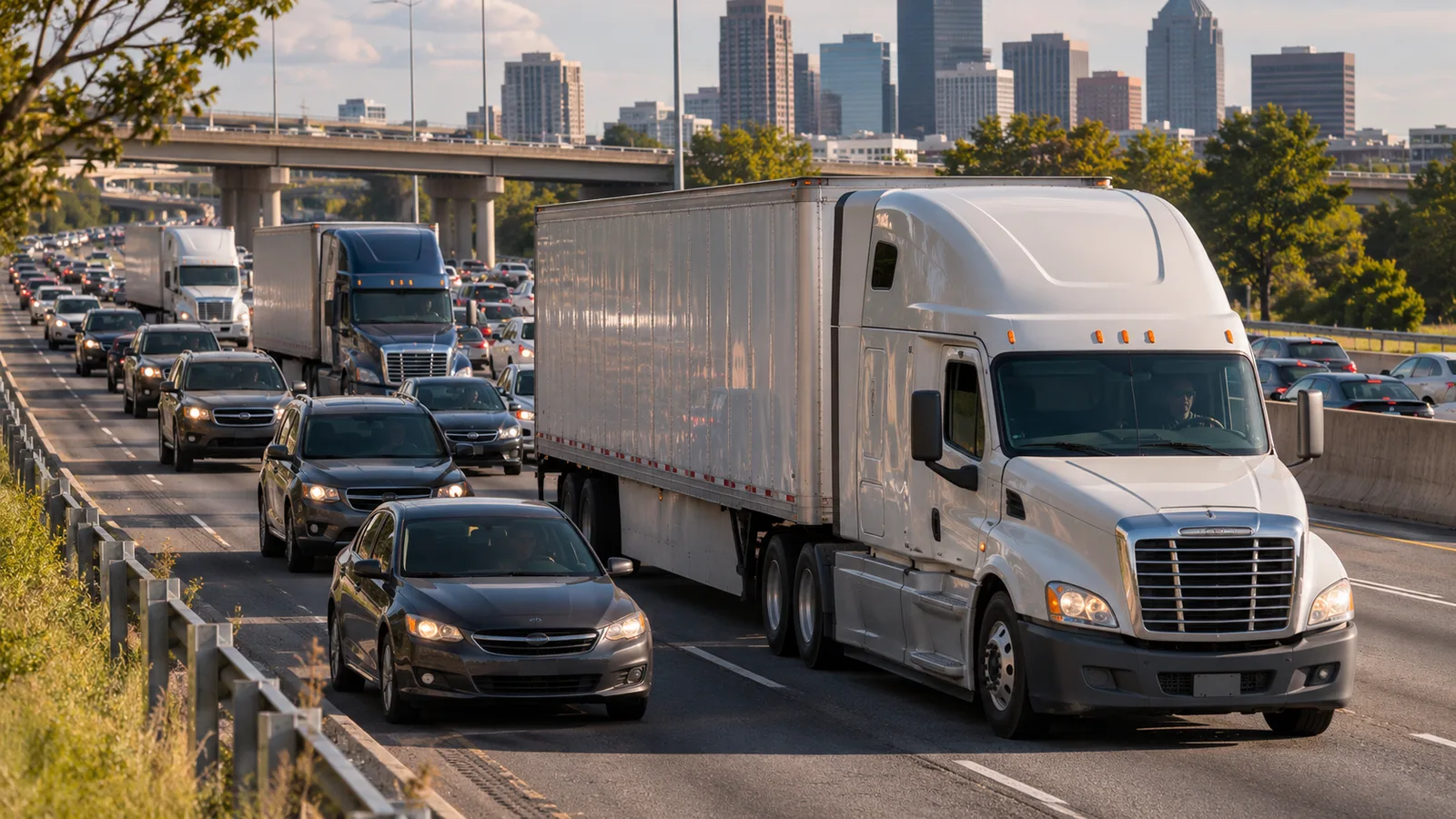
Highway congestion cost the U.S. trucking industry an estimated $128.2 billion in 2024, according to the American Transportation Research Institute's 2026 update covered by Heavy Duty Trucking on November 18. It was the third consecutive year above $120 billion, even though the total eased from the 2023 record of $129.8 billion as the freight recession reduced truck mileage.
ATRI calculated 1.24 billion hours of truck delay, equivalent to more than 450,000 drivers sitting idle for a full work year. Congested operation consumed an estimated 6.66 billion gallons of diesel and added $25.04 billion in fuel expense. The average congestion cost approached $8,000 per truck. Those figures combine speed, truck-volume and operating-cost data across delays ranging from modest slowdowns to gridlock.
The infrastructure gap remains a central concern. Heavy Duty Trucking reported that tractor-trailer mileage on interstate highways grew nearly 25% over the past decade while interstate lane miles increased only 4.5%. Average truck speeds also continued to decline from the unusually open-road conditions of 2020. Delay therefore remains expensive even when fewer freight miles reduce the annual total.
Carriers cannot eliminate public-road congestion, but they can measure it. Fleet managers should compare planned and actual transit times by corridor, track detention separately from traffic delay, and include realistic congestion assumptions in bids and appointment schedules. Dispatchers can use official traffic information to reroute when practical without pressuring drivers to recover time unsafely. Shippers can help by offering flexible appointments and reducing facility dwell. The report is a national estimate, so lane-level planning should still use current local conditions and a fleet's actual cost per hour.
Build Your CDL Career With Patriot CDL
Explore professional Class A, Class B and restriction-removal training in Levittown, Pennsylvania.
Talk With Admissions