Thinking about becoming an owner-operator? It’s a huge leap, one that completely changes your role in the industry. You’re not just a driver anymore; you're stepping up to be a full-fledged business owner. This means getting your CDL and building experience, sure, but it also means setting up a legal business, finding the cash for your own rig, and learning how to hunt down loads that actually pay well.
This guide will walk you through the whole process, from the driver's seat to the corner office.
The Reality of Being an Owner Operator

Let's get real for a minute. Going from a company driver to an owner-operator isn't just about owning a truck. It's about becoming an entrepreneur, warts and all. Suddenly, you're not just responsible for what's in the trailer; you’re responsible for every single cent your business earns and spends.
This requires a massive change in how you think. As a company driver, your main job is to get from A to B safely and on time. As an owner-operator, that’s just the starting point. You’re also the accountant, the HR department, the maintenance chief, and the CEO.
The Good, The Bad, and The Ugly
The dream is powerful: being your own boss, setting your own schedule, and having a much higher income potential. Even with the market cooling off from its 2021 high, a savvy owner-operator who runs 100,000 miles a year can still pull in nearly double what someone outside the industry makes. That kind of money is a big reason people make the jump.
But the flip side is just as real. You’ll be dealing with razor-thin margins, crazy high costs for fuel and insurance, and the nonstop stress of finding your next good-paying load. Success isn't handed to you—you have to earn it with smart business decisions and a ton of self-discipline.
The biggest mental switch you have to make is understanding that your truck is no longer just a truck. It's a business on wheels. Every mile you drive, every stop you make, and every repair bill hits your bottom line directly. You have to start thinking like that from day one.
Building Your Foundation for Success
We’ve put this guide together to give you a solid starting point. We'll cover the essential pillars you need to build a trucking business that can actually last and make you money. Think of it as a playbook for everything from the back-office paperwork to what you do out on the road.
Here's what we're going to break down:
- Business & Legal Setup: We'll look at the pros and cons of an LLC versus a sole proprietorship and get you through the alphabet soup of paperwork like your MC and DOT numbers.
- Financial Planning: This is where we talk money. We'll cover startup costs, how to get a loan, building a budget that works, and keeping your cash flow healthy.
- Equipment & Compliance: We’ll help you figure out how to choose the right truck, get the right insurance coverage, and create a maintenance schedule that keeps you on the road and out of the shop.
- Operations & Growth: This is the day-to-day grind. We’ll get into finding profitable freight, managing dispatch, and handling daily logistics—which includes crucial details like finding a safe place to park using our guide on truck parking solutions.
It's a tough road, no doubt about it. But if you go in with your eyes open and a solid plan, the freedom and rewards of being a successful owner-operator are second to none.
Get Your Business on Paper Before You Get a Truck
I've seen it a hundred times: a driver gets so excited about buying their first rig that they put the cart way before the horse. They spend all their time and energy looking for the perfect truck, but the real secret to a successful start is building your business on paper first.
Getting the administrative side handled isn't just about ticking off boxes on a checklist. It’s about building a solid legal and financial foundation that protects you, your family, and your future profits. Before you even start daydreaming about chrome, you need to decide what your business is going to look like.
Picking the Right Business Structure
How you set up your business legally will affect everything from your personal liability to your tax bill. For a new owner-operator, it usually comes down to two choices: Sole Proprietor or a Limited Liability Company (LLC).
A Sole Proprietorship is the quick-and-dirty way to get started. You and the business are one and the same in the eyes of the law. The upside is it's simple and cheap. The massive downside? If the business gets sued or goes into debt, your personal assets—your house, your truck, your savings—are fair game.
An LLC, on the other hand, puts a legal firewall between you and your business. If something goes wrong with the company, your personal finances are generally safe. It costs a little more to set up and involves some extra paperwork, but that protection is priceless. For my money, the peace of mind an LLC gives you is worth every penny.
Your Pre-Launch Paperwork Checklist
Once you've decided on a structure, it’s time to make it official. This is the part that turns your dream into a real, operational business. You absolutely cannot skip these steps if you want to run a legal operation.
- Get an Employer Identification Number (EIN): This is basically a Social Security Number for your business. The IRS requires it for filing taxes and opening a business bank account. The best part? It’s free and you can get one online in just a few minutes.
- Open a Business Bank Account: Whatever you do, don't mix your personal and business money. A separate business account makes bookkeeping manageable, saves you a world of headaches at tax time, and helps maintain that legal separation you get with an LLC. All revenue in, all expenses out—no exceptions.
- Secure Your Operating Authority: This is your golden ticket to haul freight across state lines. You’ll need to apply for a U.S. Department of Transportation (DOT) number and a Motor Carrier (MC) number from the FMCSA. This isn't an overnight process—it can take a few weeks—so get the ball rolling early.
- File Your BOC-3: This is a federal requirement that names a legal agent for you in each state you run in. This person is designated to receive official documents on your behalf. You can't get your MC authority activated without it.
Getting this paperwork knocked out first is the smartest play you can make. It means that when you finally get the keys to your truck, you can hit the road and focus on making money, not scrambling to get compliant.
Jumping into the owner-operator world means facing some serious hurdles right out of the gate. The market is tough, and the operational demands are high. Only about 16% of all truck drivers are owner-operators, and with the recent drop in carrier authorities, it's clear the conditions are challenging.
Setting your business up correctly from day one is your first major victory against those challenges. It might seem like a mountain of paperwork, but it’s completely manageable if you take it step-by-step. A huge piece of this puzzle is making sure you’re squared away on all the CDL requirements for your state and federal operations. Knowing those rules inside and out will save you from a lot of expensive mistakes later on.
Mastering Your Money from Startup to Profit
Cash flow is the lifeblood of your trucking business. End of story. Without a rock-solid grip on your finances from day one, the best truck and the highest-paying loads in the world won't keep you afloat. This is where you have to flip a switch in your brain—stop thinking like a company driver and start acting like the CFO of your own company. You need to account for every single dollar.
Your first major reality check is understanding what it really costs to get started. It's so much more than the down payment on a truck. That initial cash outlay is a monster, and it catches way too many new owner-operators off guard. You need a serious war chest to cover everything before you even think about hauling your first load.
Calculating Your True Startup Costs
Let's get real about the numbers. Beyond the truck itself, your initial investment has to cover a whole slate of essentials. Getting this right from the beginning is what keeps you from starting in a deep financial hole you can't climb out of.
Here’s a breakdown of the big one-time costs you absolutely must budget for:
- Truck Down Payment: This is the big one, no surprise there. You're typically looking at 10% to 25% of the truck's price. For a decent used rig, that's easily $10,000 to $25,000.
- Insurance Down Payment: Get ready for sticker shock. Commercial truck insurance isn't cheap, and they want their money upfront. Expect to pay 20% to 25% of your annual premium, which could run you $4,000 to $7,000 right off the bat.
- Plates, Permits, and Fees: All that official paperwork adds up fast. This covers your IRP registration, IFTA decals, and other state-specific permits. You should set aside at least $2,000 to $3,000 for these.
- Working Capital: This is your survival fund. You absolutely need cash on hand to cover your business and personal bills for the first month or two while you wait on brokers to pay up. A minimum of $10,000 to $15,000 is a safe bet.
This visual guide breaks down the key steps to getting your business structured and ready to handle money properly.
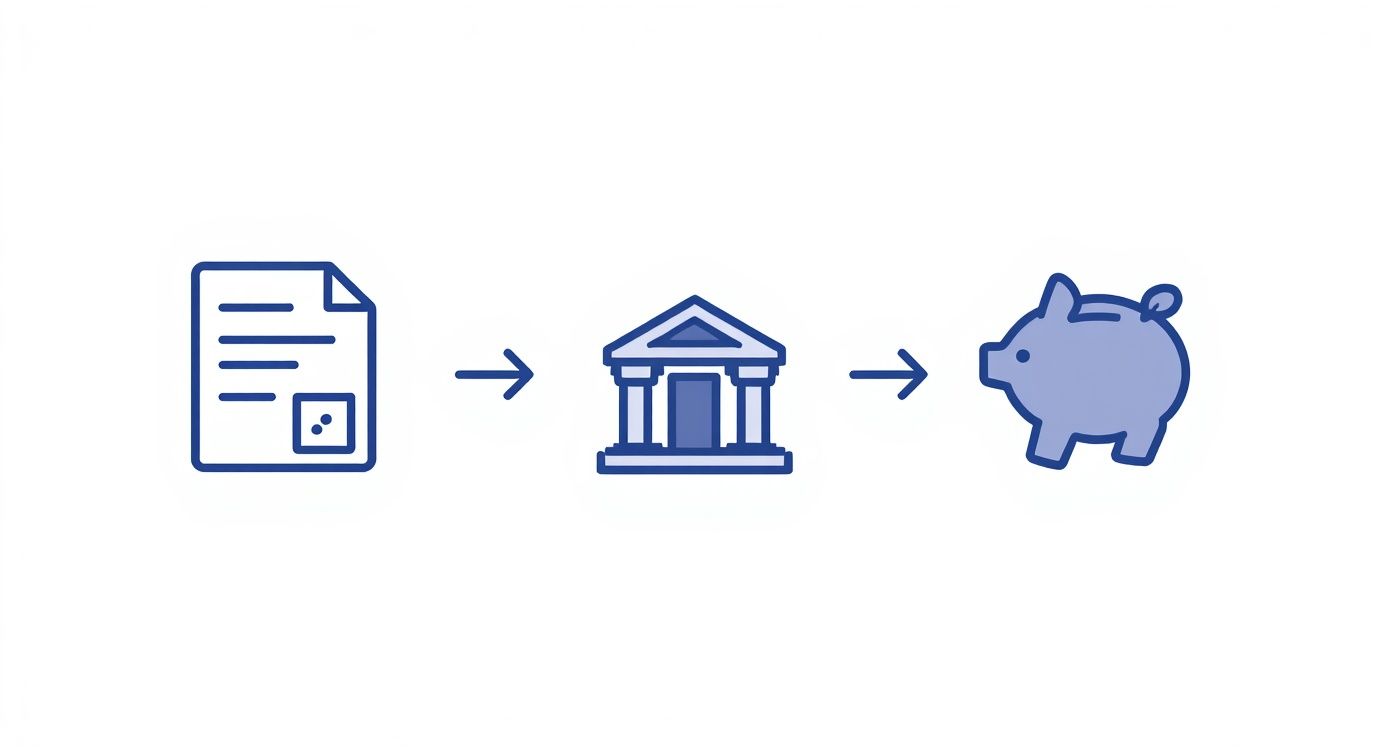
Following these steps ensures your business finances are legally separate from your personal money. This is crucial for protecting your personal assets and keeping your books clean for tax time.
Securing the Right Equipment Financing
How you pay for your truck will dictate the financial health of your business for years to come. I see a lot of guys get tempted by lease-purchase programs because they seem easy to get into, but they often come with sky-high costs and restrictive terms that put you in a really tough spot.
The two safest routes are usually a traditional bank loan or dealership financing. A bank or credit union might give you a better interest rate if you have a strong credit score and a well-thought-out business plan. Dealership financing is convenient, but you might pay for it with a higher interest rate. Always, always shop around. Compare the total cost of the loan, not just the monthly payment.
As you're looking at trucks, don't forget about tax incentives. Knowing which vehicles eligible for Section 179 tax savings can be a game-changer, allowing you to deduct a huge chunk of the purchase price in your first year.
Managing Your Ongoing Expenses
Once you're on the road, your attention has to shift to managing your ongoing costs. Your fixed costs, like the truck payment and insurance, stay the same. It’s the variable costs—fuel, maintenance, tires—that you have to watch like a hawk, since they change depending on how many miles you run.
To give you a clearer picture, here’s a sample breakdown of what your startup and monthly costs might look like. These are just estimates, of course, and your own numbers will vary based on your truck, your operation, and where you're based.
Sample Startup and Monthly Operating Costs for a New Owner Operator
| Expense Category | Estimated Startup Cost (One-Time) | Estimated Monthly Cost (Recurring) |
|---|---|---|
| Truck Down Payment | $15,000 | N/A |
| Insurance Down Payment | $5,000 | N/A |
| Registration & Permits | $2,500 | N/A |
| Working Capital Fund | $12,000 | N/A |
| Truck Payment | N/A | $2,500 |
| Insurance Premium | N/A | $1,500 |
| Fuel (Variable) | N/A | $5,000 – $8,000 |
| Maintenance Fund | N/A | $1,200 (@ $0.12/mile) |
| Tires (Set Aside) | N/A | $300 |
| Other (ELD, Food, etc.) | N/A | $1,000 |
| Total | $34,500 | $11,500 – $14,500 |
This table illustrates why that initial working capital is so critical—it needs to cover more than one full month of operating expenses before your first invoice gets paid.
The most important ongoing expense, and the one that sinks most new businesses, is maintenance. You have to prepare for it. Start a dedicated maintenance fund from day one by setting aside $0.10 to $0.15 for every single mile you drive. This discipline ensures you have the cash ready for anything from a new set of tires to a catastrophic engine failure.
A single breakdown shouldn't be what puts you out of business. It's about proactive planning, not reactive panic. And part of that planning is making sure you have the right skills and endorsements to run your equipment effectively. Check out our guide on the E-restriction removal course to make sure no equipment limitations are holding you back from maximizing your earning potential.
Choosing Your Rig and Staying Compliant
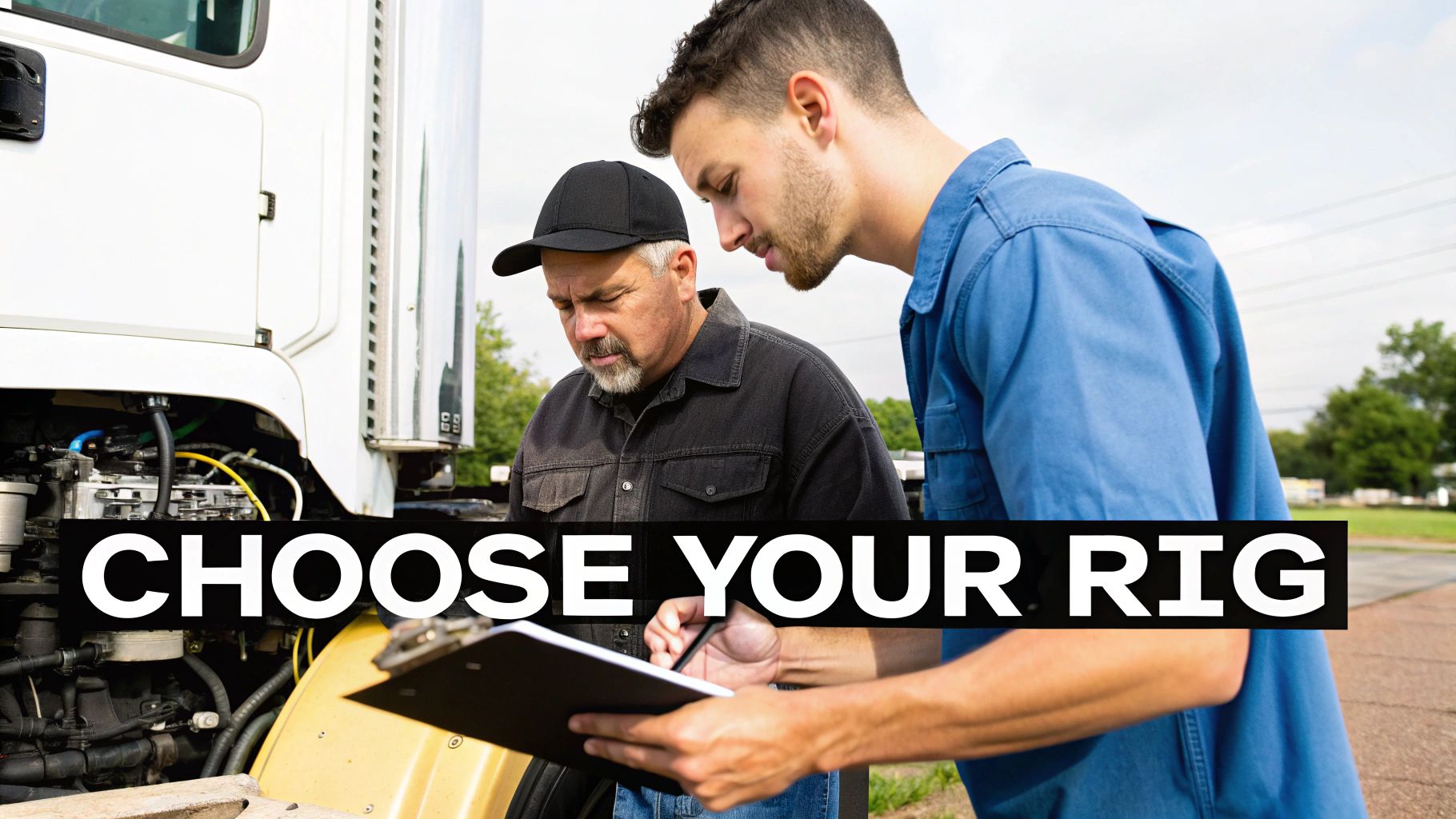
Your truck is more than just a truck. It’s the heart of your entire operation, your number one asset, and easily your biggest expense. The decision you make here will define your balance sheets for years to come. This is where the business plan on paper becomes a real, revenue-generating machine.
There’s no room for emotion here; you need a practical, clear-headed approach. You'll have to balance the appeal of a brand-new rig with the financial reality of a well-maintained used one. Once you have the keys, your focus instantly shifts to the complex web of insurance and regulations that govern every single mile you drive.
New Truck vs. Used Truck: A Calculated Decision
The new-versus-used debate is as old as trucking itself, and frankly, both sides have good points. A new truck comes with the latest tech, better fuel efficiency, and a full factory warranty, meaning fewer surprise repair bills early on. But it also comes with a staggering price tag and loses thousands in value the second you drive it off the lot.
A used truck, on the other hand, means a much smaller initial investment and a lower monthly payment. That's less debt hanging over your head when you're just starting out. The trade-off? You could be inheriting someone else's problems. A poorly maintained used truck can quickly turn into a money pit, and the resulting downtime and repair bills can absolutely sink a new business.
Here's a pro tip: Get pre-approved for financing before you even start looking at trucks. Knowing your exact budget keeps you grounded in business reality. It stops you from falling in love with a rig you can't afford.
Your Pre-Purchase Inspection Is Non-Negotiable
Whether it’s fresh off the factory line or has a few hundred thousand miles on it, a thorough inspection is a must. For a used truck, it’s your only real defense against buying a lemon. Even if you aren't a seasoned mechanic, you can—and should—perform a detailed initial check.
- Engine & Transmission: Pop the hood and look for any signs of oil leaks. Listen for odd noises when you do a cold start. If you can get the engine's history, look for major overhauls or recurring problems. On the test drive, pay close attention to how the transmission shifts. It needs to be smooth, not jerky or hesitant.
- Frame & Tires: Get underneath and inspect the frame rails. You're looking for rust, cracks, or any welds that suggest a past accident. Check the tires for uneven wear, which is a dead giveaway for alignment issues.
- Maintenance Records: Always ask for the complete service history. A thick logbook with consistent oil changes and preventative maintenance is a fantastic sign that the previous owner actually cared for their equipment.
This initial check is vital, but it’s no substitute for a professional opinion. You absolutely must invest a few hundred dollars to have a trusted, independent diesel mechanic perform a full inspection before you sign on the dotted line. This is just as critical as the daily checks you'll perform on the road, which you can master with a comprehensive pre-trip inspection checklist.
Securing the Right Insurance Coverage
Once you own the rig, you can't legally move it an inch without the right insurance. This is a major ongoing expense, and the FMCSA has strict minimums for any owner-operator running under their own authority.
You’ll need to lock in these essential coverages:
- Primary Liability: This is the big one required by federal law. It covers damages or injuries to others if you're at fault. Most brokers and shippers won't even talk to you unless you carry $1,000,000 in coverage.
- Cargo Insurance: This protects the freight you're hauling. The industry standard is $100,000, but this can change depending on the value of the loads you plan to move.
- Physical Damage: This covers your own truck and trailer if they get damaged. If you have a loan on your equipment, your lender will absolutely require this.
To avoid overpaying, get quotes from several insurance agents who specialize in commercial trucking. Your clean driving record and years of experience are your best bargaining chips for lower premiums.
Staying Compliant on the Road
With your truck and insurance sorted, the last piece of the puzzle is staying compliant. This boils down to living by your Electronic Logging Device (ELD) and the Hours of Service (HOS) rules. The ELD is mandatory, automatically tracking your drive time to ensure you take the required breaks.
HOS violations are expensive, tarnish your safety record, and can make it much harder to book good loads. Master your ELD, plan your trips to stay within your legal hours, and always put safety first. This discipline is what separates the true professionals from the amateurs.
Finding Good Freight and Running Your Business
https://www.youtube.com/embed/NBqZmzTI61g
Alright, you've got the truck, the insurance is active, and your authority is in place. Now comes the real work: making that truck make you money. An empty truck sitting in your driveway isn't an asset; it's a cash-burning liability. Insurance premiums, truck payments, and other fixed costs don't stop just because your wheels aren't turning.
The heart and soul of your new business is finding and hauling profitable freight. This is where your skills as a business owner, not just a driver, will make or break you. Learning the landscape of brokers, load boards, and direct shippers is absolutely critical. This is the daily grind that separates the pros from the guys who are out of business in a year. It’s not just about finding any load—it’s about finding the right load, for the right price, going to the right place.
Mastering Load Boards and Broker Relationships
For most new owner-operators, load boards are where the action starts. Think of them as giant online marketplaces where brokers post thousands of available loads every single day. They are an essential tool, but diving in without a plan is a recipe for disaster. Don't just get hypnotized by the highest rate you see.
To use them right, you absolutely have to know your numbers. Specifically, you need to calculate your all-in rate per mile. This isn't just fuel; it's every single cost associated with running that truck—your payment, insurance, maintenance fund, and even your own salary—divided by the number of miles you plan to run. That number is your break-even point. Any rate you accept must be higher than that, or you're literally paying to haul someone else's freight.
Found a load that looks good? Pump the brakes. Before you commit, do a quick online search on the broker. Check their credit score and payment history. A reliable broker who pays in 30 days without a hassle is worth far more than a shady one offering an extra $0.20 a mile who you'll have to chase for 90 days.
The classic rookie mistake is only looking at the loaded rate per mile. You have to account for deadhead—those unpaid miles you drive just to get to the shipper. A load that pays $3.00 a mile looks fantastic on paper, but if you have to drive 200 miles empty to pick it up, your real, all-in rate plummets. Always factor in the deadhead.
Self-Dispatch vs. Hiring a Dispatch Service
You're the boss now, which means you have to decide who's finding the freight. You've got two main choices here: do it yourself or hire it out.
Self-Dispatching: This puts you in the driver's seat, literally and figuratively. You have total control. You pick your lanes, you negotiate your rates, and you keep 100% of the money you earn. The trade-off? It's a massive time-suck. You'll be making calls, filling out packets, and staring at a screen when you could be driving or resting.
Hiring a Dispatch Service: A good dispatcher can be a godsend, especially when you're starting out. They handle all the back-and-forth, tapping into their network of broker relationships to find you quality loads. In exchange for their expertise, they'll take a cut, typically between 5% and 10% of the gross revenue for each load.
For a lot of new owner-operators, paying a dispatcher is a smart investment, at least for the first six months to a year. It lets you focus on driving and learning the ropes without the added stress of constantly hunting for your next load.
Building Direct Shipper Relationships
Load boards are great for keeping the wheels moving, but the long-term money is in direct freight. The ultimate goal for any serious owner-operator is to build relationships directly with shippers—the companies that actually make or move the products.
When you cut out the middleman (the broker), you get to keep their margin for yourself. That's a huge bump to your bottom line.
Start looking around you. What industries are in the lanes you like to run? Are there manufacturing plants, food distributors, or lumber mills? Do some homework. Find the name of the shipping manager and give them a call or send a professional email. Introduce yourself and your company, and emphasize what you bring to the table: reliability, good communication, and professional service.
It won't happen overnight. This is a long game that requires patience and persistence. But landing even one or two direct customers can create a stable, profitable foundation for your entire business.
Finally, remember that finding the load is just one piece of the puzzle. You have to run your operation efficiently. That means planning fuel-efficient routes, managing your Bill of Lading (BOL) paperwork meticulously, and invoicing quickly to keep cash flowing. From your initial training to your daily decisions, everything impacts your success. And speaking of training, make sure your core qualifications are solid by checking out our guide on Entry-Level Driver Training (ELDT) to confirm you meet all federal standards.
Your Top Questions Answered
Stepping out on your own as an owner-operator is a huge move, and it's smart to have questions. Getting straight answers is the first step to building a business that lasts. Let's tackle some of the most common things drivers ask when they're thinking about buying their own truck.
So, What's the Real Take-Home Pay for an Owner-Operator?
This is always the first question, and the honest answer is: it’s all on you. You'll see guys bragging about grossing $200,000 to $300,000+ a year, but that's just a number. It’s not what you put in your pocket.
What truly matters is your net profit. Once you've paid for fuel, insurance, your truck payment, maintenance, taxes, and everything else, a sharp, efficient owner-operator can realistically net $60,000 to $100,000 annually. The secret isn't just about chasing the highest rate per mile; it's about being obsessed with controlling your costs and making every single mile profitable.
Are Lease-Purchase Programs a Good Deal?
Tread very, very carefully here. Lease-purchase programs look like a fast track to getting your own keys, but they're often a dead end. These deals usually come with crushing weekly payments and iron-clad contracts where you're just a renter, building zero real equity in the truck.
Here's the real kicker: you have no safety net. One major breakdown that sidelines you, or one missed payment, and the company can take the truck back. Just like that, you're out of a truck and you lose every dime you've poured into it. For almost everyone starting out, getting traditional financing for a solid used truck is a much smarter, safer bet.
What are the Biggest Mistakes New Owners Make?
I've seen a lot of good drivers fail in their first year, and it usually comes down to a few common mistakes. If you can avoid these, you’re already ahead of the game.
- Not Enough Cash in the Bank: This is the big one. Starting with too little operating cash is a fatal error. You absolutely need enough money set aside to cover at least three months of all your business and personal expenses. Freight gets slow, breakdowns happen—that cash cushion is what will get you through it.
- Putting Off Maintenance: Trying to squeeze a few more miles before an oil change or ignoring a small problem to save a few bucks is a guaranteed way to go broke. That small issue almost always turns into a catastrophic, business-ending breakdown on the side of the highway, where a tow and repair will cost you a fortune.
- Chasing Gross, Not Net: Don't be the rookie who only looks at the big dollar amount on the load board. A savvy business owner knows that a high-paying load with a 300-mile deadhead and a route through expensive fuel states might actually pay less than a "cheaper" load right next door. You have to calculate the true net profit on every single load.
A factoring company can be a game-changer for your cash flow, but you have to know what you're signing. They give you cash up front for your invoices, minus their fee. Always read the fine print and try to get a non-recourse agreement—that means you're protected if the broker goes bust and doesn't pay the factor.
Should I Use a Factoring Company to Get Paid Faster?
Waiting 30, 60, or even 90 days for a broker to pay you can kill a new business. You have fuel to buy today. This is exactly where a factoring company can be a lifesaver. They buy your invoices and pay you almost immediately, usually within 24 to 48 hours.
This service gives you the steady cash flow you need to keep the wheels turning. Of course, it's not free. They charge a fee, typically 2% to 5% of the invoice amount. While it cuts into your profit margin a bit, most new owners find that the financial stability it provides is well worth the cost, especially when you're just getting started.
Going from a company driver to a business owner is a tough climb, but it’s one of the most rewarding things you can do. It all starts with having the right knowledge and discipline from day one. At Patriot CDL, we give you the expert training to operate your truck safely and professionally, laying the groundwork for a long and successful career.
Find out more about our CDL training programs and get started on the right foot.