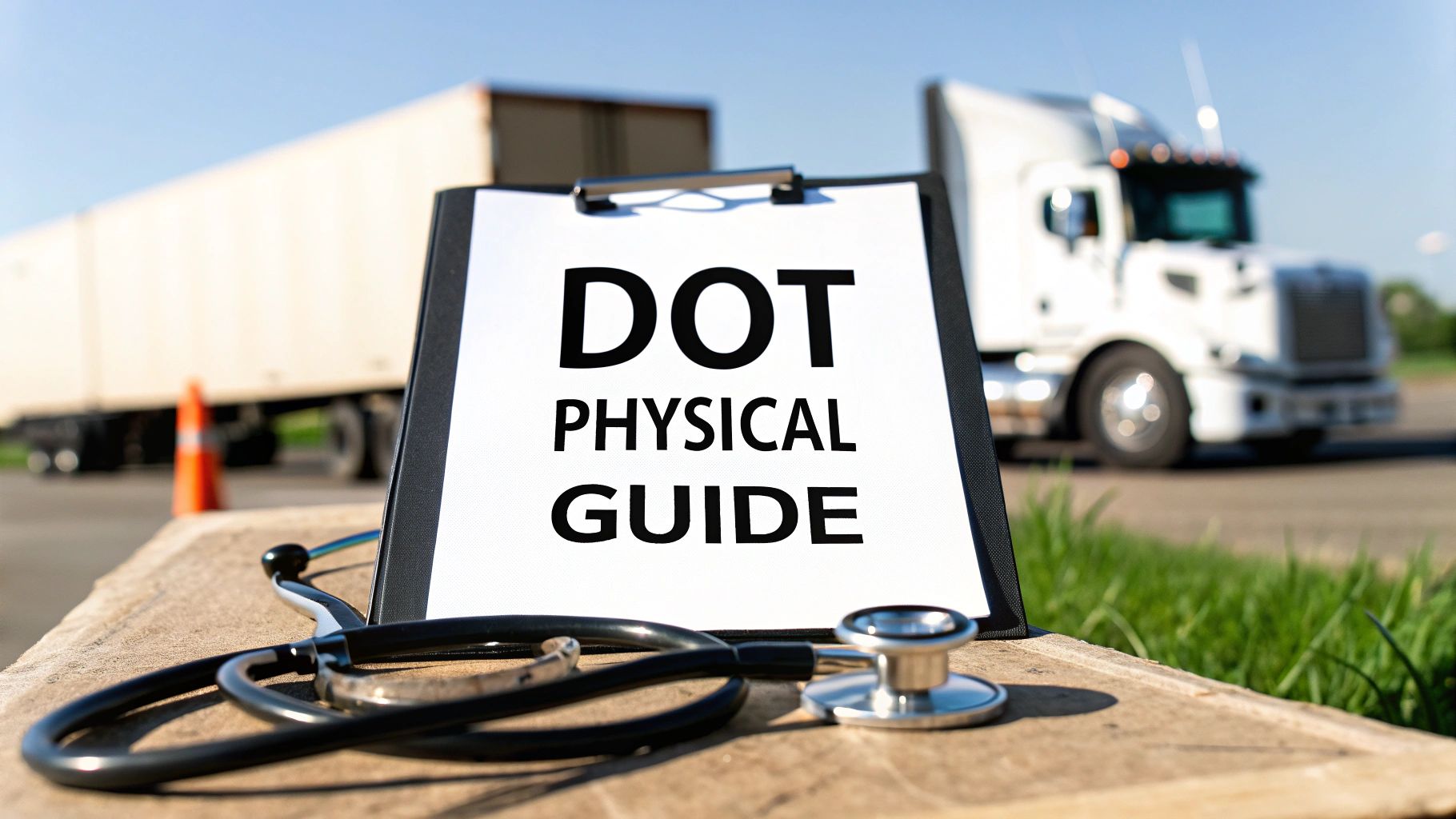
Think of the DOT physical as a safety inspection, but for the most important part of the truck: the driver. It's a mandatory health checkup designed by the Federal Motor Carrier Safety Administration (FMCSA) to make sure you're medically fit to be behind the wheel of a big rig.
This isn't just about ticking a box. It's a comprehensive exam that covers your medical history, includes a head-to-toe physical, and tests your vision, hearing, blood pressure, and more. Let's break down exactly what that involves.
What Does a DOT Physical Consist Of?
The Department of Transportation (DOT) physical is one of the very first hurdles every aspiring commercial driver must clear. Its entire purpose is to spot any potential health issues that could make it unsafe for you to operate a commercial vehicle, protecting not just you, but everyone else on the road.
Driving a truck is physically and mentally demanding. You're dealing with long hours, intense focus, and the responsibility of a massive vehicle. The exam makes sure you’re up to the task.

A Head-to-Toe Evaluation
A certified medical examiner will walk you through several key steps. Each piece of the puzzle helps build a complete picture of your fitness to drive. Here’s what you can expect:
- Medical History Review: The examiner will start by asking detailed questions about your health history, both past and present. Honesty here is critical.
- Hands-On Physical: This is a thorough evaluation of your body's major systems—everything from your heart and lungs to your balance and reflexes.
- Vision and Hearing Tests: These are non-negotiable. You have to be able to see road hazards and hear emergency signals clearly.
- Blood Pressure Check: High blood pressure is a major red flag, so this is a key part of the screening.
- Urinalysis: A quick and simple urine test helps screen for underlying issues like diabetes that could affect your ability to drive safely.
This medical exam is a must for anyone operating a vehicle with a gross vehicle weight rating (GVWR) of 10,000 pounds or more, anyone hauling hazardous materials, or anyone driving a vehicle built for 16 or more passengers. It’s a foundational piece of meeting the official CDL requirements.
Why Every Test Matters
Each component of the DOT physical links directly to real-world safety on the highway. For example, sharp vision is crucial for reading road signs from a distance, and stable blood pressure helps prevent a sudden medical emergency during a long haul. Knowing what the examiner is looking for helps you show up prepared and understand why the process is so important.
The DOT physical isn't just another regulation. It's a proactive safety measure designed to ensure every driver on the road is healthy and capable, minimizing risk for us all.
To give you a clearer picture, here’s a quick summary of what the examiner will be checking during your appointment.
DOT Physical Exam Components at a Glance
This table breaks down the main parts of the exam and what each one is really looking for.
| Exam Component | What It Checks | Purpose |
|---|---|---|
| Medical History | Past surgeries, chronic conditions, and current medications. | To identify any pre-existing conditions that might interfere with safe driving. |
| Physical Exam | Heart, lungs, spine, reflexes, and general physical condition. | To assess your overall physical fitness and look for any potential impairments. |
| Vision Test | Eyesight acuity (20/40 minimum) and peripheral vision. | To ensure you can clearly see road signs, signals, and hazards from a distance. |
| Hearing Test | Ability to hear a "forced whisper" from five feet away. | To confirm you can hear important sounds like horns, sirens, and other warnings. |
| Blood Pressure | Systolic and diastolic pressure readings. | To screen for hypertension, which can increase the risk of a heart attack or stroke. |
| Urinalysis | Sugar, protein, and blood in the urine. | To detect underlying medical problems like diabetes or kidney disease. |
As you can see, each step has a clear and important safety-related goal. It’s all about making sure you’re ready for the road ahead.
Navigating Your Medical History Review
Before the examiner even picks up a stethoscope, your DOT physical begins with some crucial paperwork: the Medical Examination Report Form, MCSA-5875. Don't just see this as a form to fill out; it's the very foundation of your exam. This document gives the medical examiner a complete picture of your health history, guiding everything that comes next.
You'll be asked to provide a detailed rundown of your health background. This means listing any past surgeries, current medical conditions you're managing, hospital stays, and any specific symptoms you've experienced that might affect your ability to safely operate a commercial vehicle.

Why Honesty is Non-Negotiable
Let's be blunt: being anything less than 100% honest on this form is a huge mistake. Hiding a medical condition or a medication you're taking isn't a small fib—it can have catastrophic consequences. If that undisclosed condition causes an accident down the road, you could face legal trouble and lose your CDL for good.
The examiner isn't trying to pry. They use this information to build a clear picture of your overall health and flag any areas that need a closer look. For instance, if you note a history of heart trouble, they'll naturally pay extra attention to your cardiovascular system during the exam.
Think of the medical history form as a conversation with the examiner before you even meet them. It sets the stage, highlights key areas of focus, and ensures that the physical exam is tailored to your specific health needs, all in the interest of safety.
This initial step is all about spotting potential red flags early on. The goal isn’t to fail drivers, but to make sure any existing health problems are well-managed and won't create a risk on the highway.
Key Areas Covered on the Form
Knowing what to expect can make this process a whole lot smoother. Having your information ready to go shows the examiner you’re prepared and professional.
You’ll need to have details on hand for a few key categories:
- Surgical History: Be ready to list any operations you’ve had, along with the approximate dates and the reasons behind them.
- Chronic Conditions: You’ll be asked about any long-term health issues like diabetes, heart disease, sleep apnea, or neurological disorders.
- Medications: This one is critical. You must list every single medication you take—prescriptions, over-the-counter drugs, and even supplements. Have the names, dosages, and prescribing doctors ready.
- Specific Symptoms: The form will ask about things that could signal a deeper problem, such as dizzy spells, shortness of breath, chest pain, or fainting.
The review might also touch on conditions like metabolic syndrome that can affect your fitness to drive. For anyone concerned about this, understanding and potentially reversing metabolic syndrome is a great first step.
Ultimately, being organized is your best bet here. Walking in with your information ready not only speeds things up but also shows the examiner that you take your health—and your career—seriously. It sets a positive tone for the entire exam.
The Hands-On Physical Examination
Once the paperwork and medical history review are out of the way, the certified medical examiner gets to the hands-on part of your DOT physical. This is essentially a head-to-toe inspection to make sure you're physically up to the task of driving a commercial vehicle. It’s far more than a routine checkup; every single test is designed to evaluate a function critical to safe driving.
The examiner will systematically work through your body's major systems, looking for any underlying issues that could put you or others at risk on the road. The whole point is to confirm you have the physical strength, sharp reflexes, and overall health needed to handle a massive vehicle for hours on end.
Assessing Your General Appearance and Vital Systems
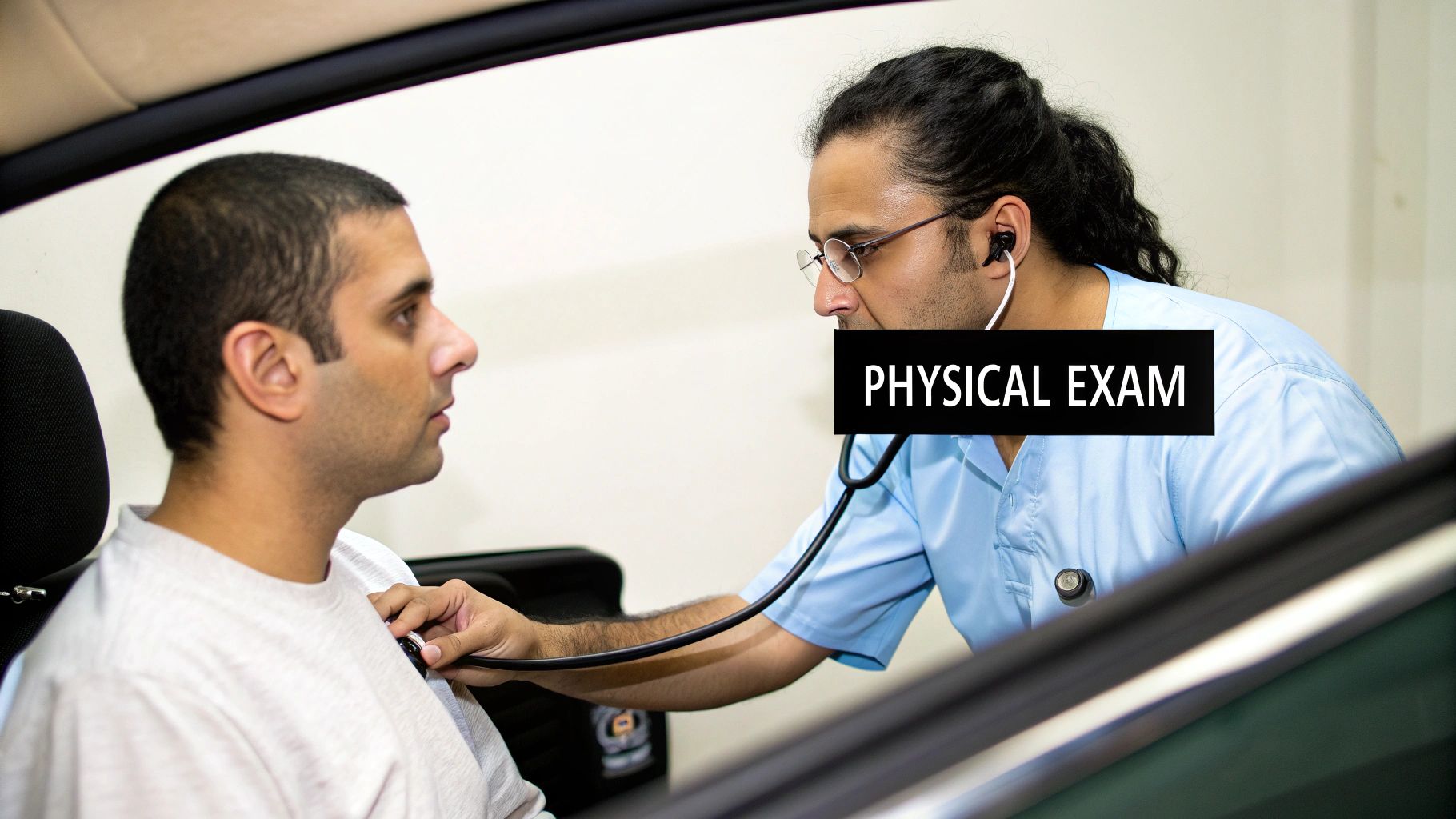
The exam kicks off with a simple observation of your general appearance. The examiner is noting your overall health, how you carry yourself, and your level of awareness. They'll also check your eyes for any signs of jaundice, look inside your ears, nose, and throat, and feel your neck to check your thyroid gland.
From there, they move to your core systems:
- Heart: With a stethoscope, the examiner listens for a steady heartbeat. They're checking for murmurs, irregular rhythms, or anything else that might suggest a cardiovascular problem. A healthy heart is non-negotiable for handling the long, often stressful hours behind the wheel.
- Lungs: Next, they’ll listen to your lungs to make sure you're breathing clearly. Any sounds like wheezing or crackling could signal a respiratory issue that might drain your stamina on a long haul.
It's a big deal. With an estimated 3 to 4 million DOT physicals performed every year, these exams are the front line of safety. Cardiovascular health is especially scrutinized, as heart conditions are one of the top reasons a driver might be disqualified.
Examining Your Abdomen and Vascular Health
The examiner will then check your abdomen, gently pressing on different areas. They're feeling for any tenderness, unusual masses, or hernias. A hernia might not seem like a big deal, but if it acts up on the road, it can become a painful, distracting emergency.
Your circulatory system is also under review. The examiner will feel for the pulses in your wrists and feet to confirm you have good blood flow. They’ll also look for varicose veins or other signs of vascular issues that could increase the risk of blood clots—a serious concern for anyone who sits for long stretches.
Each part of the hands-on exam connects directly to a real-world driving scenario. Strong reflexes are for emergency braking, good balance is for safely exiting your cab, and clear lungs are for the endurance needed on a long haul. It's all about ensuring you're fit for the job.
Musculoskeletal and Neurological Evaluations
Now it's time to check your body’s framework—your bones, joints, and muscles. The musculoskeletal exam is all about confirming you can handle the physical side of the job, from coupling trailers and cranking landing gear to securing a heavy load.
The examiner will assess:
- Range of Motion: You'll be asked to move your arms, legs, and spine to see how flexible you are and if there are any limitations.
- Strength: Simple tests, like pushing against the examiner's hands, are used to gauge your muscle strength.
- Reflexes: A tap on the knee with a reflex hammer isn't just for show. It checks that your reflexes are quick and responsive, which is vital for reacting to sudden hazards on the road.
Finally, a quick neurological screening wraps up the physical portion. This is to ensure your brain and nervous system are firing on all cylinders. The examiner will check your balance, coordination, and how you walk. Simple tasks like walking a straight line or touching your finger to your nose give them a good sense of your motor skills and cognitive function, making sure nothing could impair your judgment behind the wheel.
By the time this thorough exam is done, the medical examiner will have a complete picture of your physical health, giving you the green light to safely start your career on the open road.
A Closer Look at the Key Health Screenings
Beyond the hands-on part of the exam, the DOT physical really zeroes in on four critical health checks. These screenings—vision, hearing, blood pressure, and urinalysis—are the cornerstones of your medical qualification, each designed to measure a specific metric directly related to your ability to operate a commercial vehicle safely.
Knowing what the medical examiner is looking for ahead of time can take a lot of the mystery out of the process. Let’s walk through what each of these tests involves and, more importantly, why it matters so much when you're out on the road.
The Vision Test Requirements
Your eyes are your most important tool behind the wheel, which makes the vision test an absolute must-pass. You don’t need to have perfect 20/20 vision, but you do have to meet the FMCSA's minimum standards to prove you can spot hazards, read signs, and keep track of other vehicles.
The examiner will check two main things:
- Visual Acuity: You need to have at least 20/40 vision in each eye individually and also when tested together. The good news is you can wear your glasses or contacts to meet this requirement.
- Peripheral Vision: You also have to show a horizontal field of vision of at least 70 degrees in each eye. This is crucial for seeing what’s happening in your blind spots when you’re changing lanes or navigating a busy intersection.
Finally, you’ll need to be able to tell the difference between red, green, and amber—the standard colors of traffic lights. While this screening covers the basics for your DOT physical, getting a comprehensive eye check-up is always a smart move for maintaining your overall health as a professional driver.
The Hearing Test Standards
A truck driver’s world is filled with sound cues you can't afford to miss—the faint blast of a train horn, the wail of an approaching siren, or the subtle change in your own engine's rhythm. The hearing test is there to confirm you can pick up on these critical sounds.
The method is surprisingly simple. You’ll need to hear a "forced whisper" from five feet away, either with or without a hearing aid. If you struggle with this part, don't worry. The examiner might send you for an audiometer test, which gives a more detailed measurement of your hearing. Just remember, if you need hearing aids to pass, you have to wear them anytime you’re driving.
Think of these screenings as a pre-flight check for a pilot. Just as a pilot must confirm all instruments are functional, a driver must confirm their vision, hearing, and vital signs are ready for the demands of the journey.
Blood Pressure and How It Affects Your Certification
High blood pressure, or hypertension, gets a lot of attention during the DOT physical for a very good reason: it dramatically increases the risk of a sudden medical emergency, like a heart attack or stroke. The examiner's reading will place you into one of several categories defined by the FMCSA, and that category decides how long your medical card is valid for.
Here’s how the breakdown works:
- Normal (Under 140/90): If your blood pressure is in this range, you're good to go. You’ll receive a standard 2-year medical card.
- Stage 1 Hypertension (140/90 – 159/99): You can still get certified, but it will likely be for a shorter period, usually one year. This is the FMCSA's way of ensuring you get it checked more frequently.
- Stage 2 Hypertension (160/100 – 179/109): This is a bigger red flag. The examiner may issue a temporary 3-month certificate with the requirement that you get your blood pressure below 140/90 before you can be fully certified.
- Stage 3 Hypertension (180/110 or higher): A reading this high results in an automatic disqualification. You won’t be able to get certified until your blood pressure is lowered to a safe level and you have clearance from a specialist.
Keeping your blood pressure in check isn't just about passing a test. It's about protecting your health and ensuring you stay safe for the long haul. If you’d like to learn more about how we help our students prepare, you can check out details about our CDL programs.
What the Urinalysis is Really For
Last but not least, you'll provide a urine sample. This is probably the most misunderstood part of the entire physical. It’s important to be crystal clear here: this is not a drug test. The urinalysis is a health screening, plain and simple.
The lab is looking for key medical indicators, not drugs. Specifically, they check for:
- Sugar: A high concentration of sugar (glucose) can signal undiagnosed or poorly controlled diabetes, a condition that must be properly managed to drive commercially.
- Protein: The presence of protein in your urine can point to kidney issues, which could impact your overall health and ability to handle the physical demands of the job.
Think of the urinalysis as a quick, non-invasive look under the hood. It helps the examiner spot potential health problems that might not have any obvious symptoms, adding another layer to the complete picture of your fitness to drive.
Passing, Failing, and Your Next Steps
The moment of truth after your DOT physical can feel a little nerve-wracking, but it's important to remember that the outcome isn't always a simple pass or fail. Think of it less like a final exam and more like a roadmap for your health. While everyone aims for a clean bill of health, a result that isn't a straightforward pass is rarely the end of the road for your driving career.
It’s actually quite uncommon to get an immediate, permanent "fail." What's far more likely is that the medical examiner finds an issue that needs to be addressed before they can sign off on your certification. This isn't a stop sign; it's a yield sign. It’s a signal to pause, take care of a specific health concern, and then get back on track.
This chart gives you a quick look at how the process works for a couple of the biggest health checks.
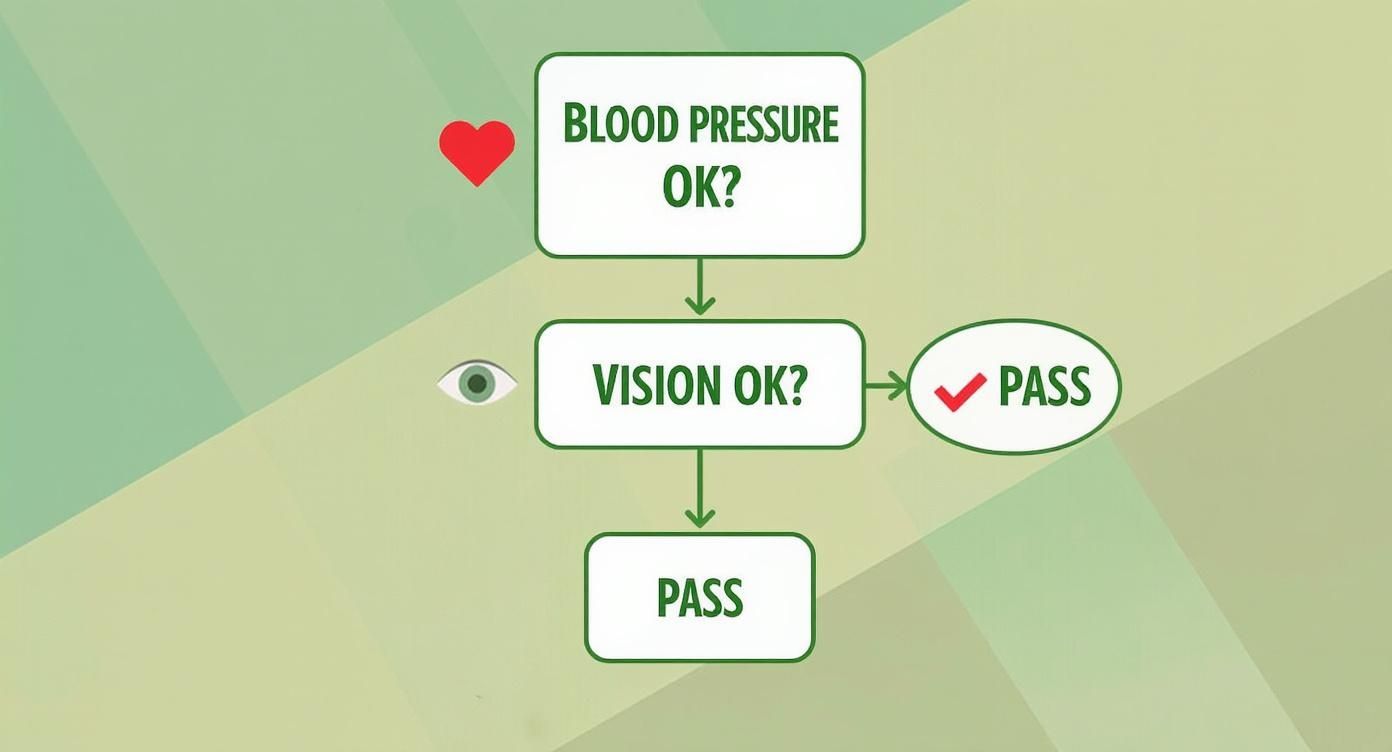
As you can see, hitting the required numbers for things like blood pressure and vision gets you a direct pass. It really underscores just how critical these specific screenings are to your overall certification.
Common Reasons for a Temporary Disqualification
So, what kind of issues typically cause a delay? They're usually conditions that could pose a real danger on the highway if they aren't managed properly. The good news is, most of them are treatable.
Here are a few of the most common reasons an examiner might put your certification on hold for a bit:
- Sky-High Blood Pressure: A reading of 180/110 or higher is an automatic disqualification. You'll have to work with your doctor to get it down to a safe level before you can be certified.
- Uncontrolled Diabetes: If the urinalysis shows a lot of glucose, it’s a red flag for poorly managed diabetes. The examiner will need to see that you have it under control.
- Serious Heart Conditions: If you’ve recently had a heart attack or another major cardiac event, you'll need to get the all-clear from a cardiologist.
- Untreated Sleep Apnea: If the examiner suspects you might have sleep apnea, they'll likely require you to get a sleep study and show proof that you're treating it (usually with a CPAP machine).
These aren't career-enders. They are simply health issues that require you to team up with your doctor, get the condition managed, and bring back the right paperwork to the examiner.
Waivers, Exemptions, and Conditional Cards
What if you have a condition that doesn’t quite meet the strict FMCSA guidelines? You still have options. The system has pathways to help safe drivers stay on the road, even if they have certain medical limitations.
For instance, a driver with vision or hearing loss might be eligible for a federal exemption. This involves a thorough application process to prove you can still operate a CMV safely. Likewise, drivers with certain limb impairments can apply for a Skill Performance Evaluation (SPE) certificate. If you're planning on upgrading your license, maybe through an E restriction removal course, getting your medical certification squared away first is absolutely essential.
A temporary disqualification is not a final verdict. It's a chance to focus on your health, get the right treatment, and come back with the proof you need to show you’re safe to drive.
In some situations, the examiner might issue a conditional or limited-time medical card. This is common for conditions that need to be monitored more closely.
- 3-Month Certificate: Often given to drivers with Stage 2 hypertension (blood pressure between 160/100 and 179/109). This gives you a three-month window to get your numbers down.
- 1-Year Certificate: Typically issued for stable, well-managed conditions like Stage 1 hypertension or diabetes that is under control.
These shorter certifications just mean you'll be re-evaluated more often to make sure your condition remains stable. Your job is to follow the examiner's advice, work with your doctors, and get the paperwork you need to secure your full certification and keep your career rolling.
How to Prepare for Your DOT Physical
Walking into your DOT physical confident and organized makes a world of difference. It's a lot like doing a thorough pre-trip inspection on your rig—a little bit of prep work beforehand can save you from major headaches and delays down the road.
The goal here is simple: give the medical examiner a clear and honest snapshot of your health. This allows them to make a fair judgment about your fitness to drive and, just as importantly, prevents any frustrating hold-ups that could keep you off the road.
What to Bring to Your Appointment
The single most important thing you can do is gather all your paperwork and necessary items before you leave the house. I always tell drivers to get a folder and put everything inside so nothing gets forgotten.
Here’s a quick rundown of what you’ll need:
- Your Driver’s License: Pretty straightforward—you’ll need a valid, government-issued photo ID.
- A Full List of Your Medications: Write down the names and dosages for everything you take. This includes prescriptions, over-the-counter meds, and even supplements.
- Corrective Lenses and Hearing Aids: If you need glasses, contacts, or hearing aids to drive, you must have them with you for the exam.
- Medical Records for Specific Conditions: This is a big one. If you have a known health issue, bring the right documentation.
For instance, if you have sleep apnea, you'll need your most recent CPAP compliance report. A driver with diabetes should bring their latest lab results (like an A1c). If you have a heart condition, you absolutely need a clearance letter from your cardiologist stating you're safe to drive commercially.
Proper preparation for your DOT physical isn't just about bringing paperwork. It's about demonstrating that you are a responsible professional who takes health and safety seriously, setting a positive tone for the entire examination.
Remember, the standard requirement is to get this exam done at least once every two years. However, if you have a condition like high blood pressure, the examiner might certify you for a shorter period and require more frequent checks. Also, make sure your examiner is certified and listed on the National Registry—this ensures they're trained on all the specific FMCSA physical qualification standards.
Tips for the Day Before Your Exam
What you do in the 24 hours before your appointment can have a real impact on your results, especially your blood pressure. A high reading is one of the most common reasons for a temporary disqualification, but you can take a few easy steps to help ensure it’s accurate.
On the day before, try to avoid caffeine and salty foods like fast food or processed snacks. Both can temporarily spike your blood pressure. Getting a solid night's sleep will also help you feel more relaxed and calm. If you're feeling anxious or have questions about what to expect, the team here at Patriot CDL is ready to help—just get in touch through our contacts page. Taking these simple steps helps the examiner get a clear picture so they can get you certified and on your way.
DOT Physical: Your Questions Answered
The DOT physical can bring up a lot of questions, especially for new drivers. Let's clear the air and tackle some of the most common things people ask.
Getting solid, straightforward answers beforehand is the best way to walk into your exam feeling confident and prepared.
How Long Is a DOT Medical Card Good For?
A standard DOT medical card is typically valid for up to 24 months. But think of that as the maximum, not the standard for everyone.
If you have a medical condition that needs a closer eye, like high blood pressure or sleep apnea, the examiner has the authority to issue a certificate for a shorter time. You might get a one-year, six-month, or even a three-month card. This is just to make sure your condition is managed and you're staying safe on the road.
Does the DOT Physical Include a Drug Test?
This is a big point of confusion, but the answer is no. The standard DOT physical does not include a drug test.
You will have to provide a urine sample, but that’s for a completely different reason. The urinalysis is a basic medical screening to check for underlying health issues like kidney problems or signs of diabetes.
So why do people mix them up? Companies often schedule the required DOT pre-employment drug screen around the same time as the physical for convenience. They are two separate requirements.
The physical exam is all about checking your fitness to drive. The urinalysis is part of that health check-up, while the drug test is a separate federal mandate.
What Happens if My Blood Pressure Is High?
High blood pressure during the exam doesn't automatically mean you fail. It really depends on how high the reading is. Many examiners will even take a second reading after you’ve had a few minutes to relax, just in case "white coat syndrome" is at play.
If your blood pressure is just a bit elevated, the examiner might give you a temporary 3-month certification. This gives you time to work on lowering it through lifestyle changes or with your doctor's help.
However, if the reading is significantly high, you'll be temporarily disqualified. You can’t drive commercially until you get it under control with treatment and have your primary care physician sign off that you're safe to be behind the wheel.
At Patriot CDL, we make sure our students know exactly what to expect at every stage of getting their license, including the DOT physical. If you're ready to get your career in gear, sign up for more information and see how we can help.