Before you can get your hands on the wheel, you have to conquer the written CDL exam. Your best friend in this process? A solid practice test for cdl. Think of it as the most direct route from studying the manual to acing the real thing. It’s how you simulate the test environment and truly see if you’re ready.
Why CDL Practice Tests Are Your Secret Weapon
A good CDL practice test is basically a full dress rehearsal. It gives you a sneak peek at what the Department of Motor Vehicles will actually throw at you—from the specific wording on confusing questions to the pressure of a ticking clock. If you skip this step, you’re essentially walking in blind.
When you practice consistently, you're not just memorizing facts. You're building a kind of mental muscle memory. On test day, when you get a question about air brake systems or hazardous materials placarding, you can’t afford to hesitate. That information needs to be right there, ready to go.
Mirror the Real Exam Experience
The best practice tests are designed to perfectly mirror the official exam's structure. It's not just about covering the right topics; it's about the entire feel of the test. Getting comfortable with the format ahead of time kills one of the biggest sources of test-day anxiety: the unknown.
This kind of simulation gives you a huge advantage:
- Question Familiarity: You’ll start to recognize how questions are phrased, which is often the part that trips people up.
- Time Management Practice: You learn the rhythm of the test and figure out how to pace yourself so you're not rushing at the end.
- Anxiety Reduction: Imagine walking into the DMV already knowing you've passed multiple tests just like the one you're about to take. That’s a massive confidence booster.
The point isn't just to scrape by with a passing grade. It's to walk in feeling prepared and confident. Practice tests turn an intimidating exam into a predictable challenge you know you can handle.
Connect Knowledge to Application
Reading the CDL manual is non-negotiable, but a practice test forces you to use what you've read. It’s the critical link between passively reading about pre-trip inspections and actively recalling every single step when it counts. If you're serious about your trucking career, this active recall is everything.
This is what helps you think clearly when the pressure is on. When you feel ready to put what you've learned into action, check out the programs and resources we offer at Patriot CDL. You can sign up and start your journey toward becoming a professional driver.
Finding High-Quality CDL Practice Tests
Let’s be honest, finding a good CDL practice test online can feel like digging through a junk pile. The web is swimming with them, but a lot of what you'll find is outdated, full of errors, or just plain wrong. Your goal isn't just to pass a quiz; it's to find a tool that genuinely prepares you for what you'll see at the DMV.
Your first stop should always be the official source: your state's DMV or DOT website. This is the closest you’ll get to the real thing. Why? Because the questions are usually pulled directly from the same commercial driver's manual the official exam is based on. It’s the most reliable, no-nonsense resource you can get.
Vetting Third-Party Resources
Once you’ve exhausted the official sites, it's time to look at third-party options. There are some fantastic study platforms out there, but you have to know how to spot the good ones. A quality test provider will feel like a professional study partner, not just a random online quiz.
Here’s what I tell all my students to look for:
- Up-to-Date Material: Does the site mention it’s based on this year's CDL manual? Regulations can and do change. You don't want to study last year's rules.
- Specific Endorsement Tests: A solid platform will offer more than a single, generic test. You need dedicated practice for specific endorsements like HazMat, Tanker, or Doubles/Triples.
- Real Explanations: This is huge. A great practice test doesn’t just mark your answer wrong—it tells you why it’s wrong. That's the difference between memorizing answers and actually understanding the concepts.
The score you get on a practice test is secondary. The real win comes from understanding the logic behind each answer. That’s what will help you think on your feet during the actual exam.
What to Avoid in a Practice Test
Knowing what red flags to look for is just as important. If a site is littered with spelling mistakes or grammar errors, close the tab. It’s a sure sign of a low-quality, rushed resource.
I’d also be cautious of any service that demands payment upfront without offering some kind of free trial or sample questions. You should be able to see what you're getting into. If the questions feel way too easy or suspiciously vague, trust your gut and move on.
Your study time is precious. Wasting it on junk tests will only hurt you in the long run. To get a better handle on the foundational knowledge these tests cover, check out our guide on the general knowledge test.
Investing a little time upfront to find a quality CDL practice test is the first real step toward acing your permit exam. You can also create practice tests from your notes for an extra layer of personalized study.
How to Simulate Real Exam Conditions
Knowing the material is one thing. Performing when the clock is ticking and the pressure is on? That's a whole different ball game. To get ready for the real deal, you have to treat your practice sessions like a dress rehearsal.
Think about it like a professional athlete. They don't just run drills; they scrimmage. They play full-speed to see what works and what doesn't under pressure. Taking a practice test for cdl under simulated conditions is your scrimmage. It’s how you turn what you’ve learned into a skill you can rely on when it counts.
Create Your Test Environment
First things first: set the stage. Find a quiet corner where you absolutely will not be interrupted for the entire test duration. No TV, no music. Put your phone on silent and stick it in another room. Let your family or roommates know you're off-limits for a while.
This isn't just about avoiding distractions. It’s about conditioning your brain. The DMV testing center is a sterile, quiet place, and you want that environment to feel familiar, not intimidating. The more you practice in these conditions, the more you build the mental muscle to stay locked in on the questions.
Time Yourself Aggressively
On test day, your biggest enemy isn't a tricky question—it's the clock. Every CDL knowledge test has a strict time limit, and you need to be prepared for that pace. For example, many states require an 80% passing score to move on. That means you can't afford to waste time.
Set a timer and be ruthless about it. When the time is up, pencils down. No exceptions. At first, it's going to feel rushed, and that's exactly the point. This pressure teaches you to budget your time, make quick decisions, and avoid getting stuck on one question at the expense of five others you could have answered.
Here's a pro tip: Enforce a strict "no cheating" rule on yourself. No glancing at your study guide, no quick Google searches. The goal here isn't to get a perfect score; it's to get an honest assessment of what you actually know under pressure.
This is how you find your real weaknesses. An honest practice test will quickly show you if you're fuzzy on the pre-trip inspection or if the air brakes section is giving you trouble.
To give you a clear target, here’s what the numbers typically look like for passing the CDL knowledge tests.
CDL Knowledge Test Passing Score Requirements
| Test Type | Total Questions | Minimum Correct to Pass | Passing Percentage |
|---|---|---|---|
| General Knowledge | 50 | 40 | 80% |
| Combination Vehicles | 20 | 16 | 80% |
| Air Brakes | 25 | 20 | 80% |
| Hazmat Endorsement | 30 | 24 | 80% |
| Tanker Endorsement | 20 | 16 | 80% |
| Doubles/Triples | 20 | 16 | 80% |
As you can see, the 80% standard is consistent across the board. There's very little room for error, which is why disciplined, timed practice is so important.
By the time you walk into the DMV, the quiet room and the ticking clock should feel like old hat. You’ve been there, done that, a dozen times over in your own home. That’s how you turn test-day nerves into pure, focused confidence.
Don't Just Take the Test—Analyze It
Finishing a practice test feels great, but the real work begins after you get your score. The most valuable takeaway isn't just a pass or fail; it's understanding the why behind every single wrong answer. This is the moment you stop being a test-taker and start becoming a strategist.
Think of your wrong answers not as failures, but as bright, flashing signs pointing directly to the knowledge gaps you need to fill. It's how you study smarter, not just longer, making every minute of your precious study time count.
Become a Detective: Categorize Your Mistakes
Don't just scroll past the questions you got wrong. Get a notepad or open a simple spreadsheet and start logging them. Your mission is to uncover the patterns hiding in your mistakes.
For every question you miss, give it a category. This simple habit will bring your real weaknesses into sharp focus.
Try sorting them into buckets like these:
- Topic Gaps: Are you consistently fumbling questions about air brakes? Does the pre-trip inspection section always trip you up? Grouping your errors this way tells you exactly which chapter of the CDL manual to reopen tonight.
- Question Traps: Do you get tricked by "all of the above" options? Do questions with specific numbers, like axle weights or following distances, cause you to second-guess? The issue might be less about the topic and more about how you're reading the question.
- Careless Slips: How many times did you look at a wrong answer and realize you actually knew it but just read the question too fast? This isn't a knowledge problem; it's a test-taking discipline issue that you can fix by slowing down.
Treat yourself like a detective piecing together clues. Each wrong answer is a clue. When you spot a pattern—like missing 4 out of 5 questions on air brakes—you've just identified your top priority.
Create a Personalized Study Plan
Once you've categorized your mistakes, it’s time to build your action plan. A study focus log is your secret weapon here. It’s more than a to-do list; it’s a custom-built roadmap that stops you from wasting time re-reading sections you've already mastered.
Your log doesn't need to be fancy. Just make a few columns: Date, Test Name, Missed Topic, and a quick note on why you think you missed it. This last part is crucial because it forces you to dig a little deeper. Was it a simple slip-up, or do you genuinely not get the concept?
For instance, if air brakes are a recurring problem, you know you need to do more than just skim the chapter. You need to dive in and truly understand the system. This is when you can zero in on resources specifically designed to help you master the air brakes test and turn that weak spot into a strength.
This laser-focused approach is what separates a generic study session from a productive one. Instead of aimlessly re-reading the entire manual, you can now dedicate a solid hour to a single tough subject. That’s how you turn shaky scores into confident passes.
An Accelerated 3-Week Test Prep Schedule
When you're trying to launch a new career, every minute counts. The last thing you need is to feel overwhelmed by a mountain of study material. A solid plan is your best friend, and this three-week schedule is designed to get you test-ready, fast.
The entire approach revolves around using practice tests to steer your study sessions. We'll start by figuring out your baseline and then systematically build your knowledge and confidence from there.
This visual gives you a bird's-eye view of how we'll move from initial analysis to targeted, effective studying.
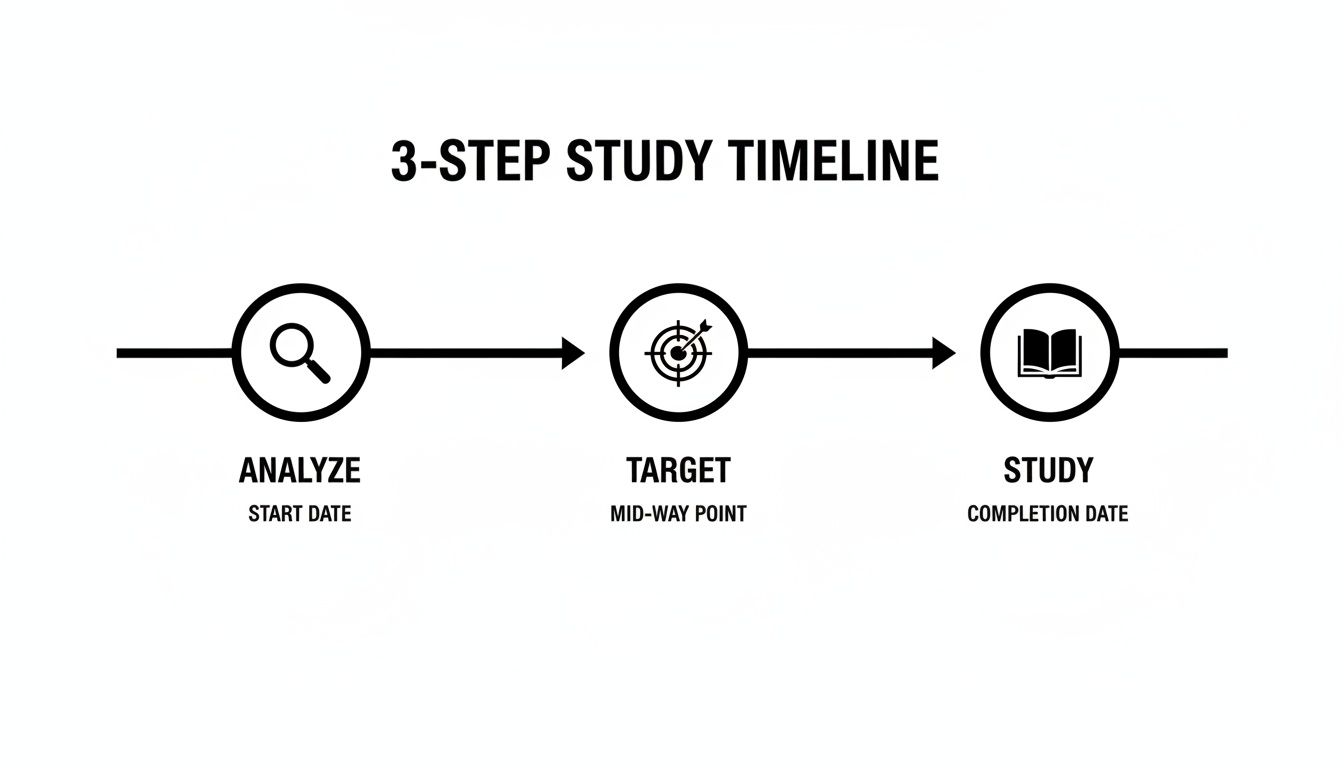
This method ensures you're not wasting time on things you already know. Instead, you'll put all your energy where it'll make the biggest difference on your final score.
Week 1: Laying the Foundation and Finding Your Baseline
The first week is all about discovery. We need to build a solid foundation of knowledge and, just as importantly, figure out where you stand right now. Don't stress about getting a perfect score on your first try—that initial test is just a diagnostic tool.
Here’s your game plan for the first seven days:
- Day 1: Kick things off by taking a full-length general knowledge practice test. This is your starting point. It'll show you exactly what you're up against and instantly highlight your strong and weak spots.
- Days 2-5: Get into the official CDL manual. But don't just read it cover to cover; focus specifically on the sections where your baseline test showed you need the most work. This is targeted studying.
- Days 6-7: Wrap up the week by taking another full-length practice test. Put your first and second scores side-by-side. You should already see some improvement, which is a fantastic confidence booster.
Week 2: Targeted Reinforcement
Week two is where we get surgical. You’ve identified your problem areas, and now it's time to tackle them head-on. This is how you turn that shaky knowledge into rock-solid confidence.
The biggest mistake I see students make is wasting time studying what they already know. Week two is about getting uncomfortable and laser-focusing on the topics that gave you trouble in the first week.
To get the most out of your study time, using effective note-taking methods can make a huge difference in how much information you actually retain.
Your strategy shifts this week:
- Daily Mini-Quizzes: Instead of full exams, take short, 10-15 question quizzes on a single topic each day. Think Air Brakes on Monday, then Combination Vehicles on Tuesday.
- Mid-Week Check-in: Take a full-length practice test for cdl midweek. This is a great way to see if your targeted study sessions are paying off.
- End-of-Week Exam: Finish strong with another full, timed exam simulation. By now, your goal should be to consistently score well above the 80% passing grade on every section.
Week 3: The Final Polish
This last week is all about building mental stamina and locking in everything you've learned. We're moving away from learning new material and focusing on honing your test-taking skills so you can perform your best under pressure.
This is the final push before the real deal.
- Daily Simulated Exams: Take one complete, timed practice test every single day. This builds the endurance you'll need to stay sharp through the entire official exam.
- Review, Don't Cram: Use your study time to review your notes and the explanations for any questions you're still missing. Now is not the time to cram new topics.
- Rest Up: Seriously. The day before your actual test, put the books away. A rested mind will always outperform one that's fried from last-minute cramming. If you want a bit more practice on specific endorsements, you can always quickly review our https://patriotcdl.com/combination-vehicles-test-1-en/ materials.
Here's a quick summary of how the three-week plan breaks down.
3-Week Accelerated Study Plan Overview
| Week | Daily Focus | Practice Test Goal | Key Outcome |
|---|---|---|---|
| Week 1 | Broad review of the CDL manual, focusing on weak areas identified by the first test. | Take 2 full-length tests (start and end of week). | Establish a performance baseline and identify all weak subject areas. |
| Week 2 | Deep dive into specific topics with mini-quizzes (e.g., Air Brakes, HazMat). | Take 2 full-length tests and daily topic-specific quizzes. | Strengthen weak areas and consistently score above the 80% passing mark. |
| Week 3 | Daily timed exam simulations to build stamina and practice test-taking strategies. | Take 1 full-length test daily. | Build confidence, master time management, and be fully prepared for exam day. |
Following this schedule helps break the test prep process into manageable chunks, turning a daunting task into a clear, step-by-step path to success.
Strategies for Test Day and Beyond
You’ve put in the hours, you've run through countless practice tests for cdl, and now the big day is staring you down. Let’s be clear: how you perform is a direct reflection of how you’ve prepared, but success isn't just about what's in your head. It’s also about how you handle the final hours leading up to the test.
The single most important thing you can do the night before is get some real rest. I know the temptation to cram is strong, but it almost always backfires, leading to more anxiety than knowledge. Aim for a solid 7-8 hours of sleep. A mind that's had time to recharge is a mind that can think clearly under pressure.
Mastering Your Test Day Morning
How you start your morning can make or break your performance. Kick things off with a decent breakfast—think sustained energy, not a sugary doughnut that will lead to a crash an hour later. An empty, rumbling stomach is a huge distraction you just don't need.
Get to the DMV testing center with time to spare. Rushing is a recipe for stress. Give yourself an extra 15-20 minutes to deal with parking, get checked in, and just sit for a moment to collect your thoughts.
A calm mind can recall information far more effectively than a stressed one. Before you walk in, take a few deep breaths. Remind yourself that you've prepared for this moment and you're ready to show what you know.
What to Do If You Don't Pass
Look, sometimes it just doesn't go your way on the first try. It happens. Plenty of fantastic, safe drivers didn't ace their written exam on the first go. This isn't a failure; it’s just a detour.
If you come up short, the very first thing you need to do is get your hands on your test results. That piece of paper is gold—it’s a roadmap showing you exactly where you went wrong. This is your new study guide.
Here's how to turn that setback into a comeback:
- Pinpoint the Weak Spots: Take your results and go straight back to your study materials. Zero in on the sections where your score was lowest. Don't just gloss over them; really dig in.
- Switch Up Your Study Method: If rereading the manual didn’t work the first time, try a new angle. Watch explainer videos on those topics or find a new bank of practice questions specifically for those sections. A fresh perspective can make a tricky concept finally click.
- Get Back on the Horse: Don’t let too much time pass. Schedule your retest while the information is still fresh and your motivation is high.
Walking back into the DMV with a targeted game plan is the best way to ensure your next attempt is your last one. You'll be more prepared, more confident, and ready to get it done.
Got Questions About CDL Practice Tests? We've Got Answers.
When you're gearing up for the CDL exam, a few common questions always pop up. It's totally normal. Getting these sorted out early will help you build a solid study plan and walk into the DMV feeling like you own the place.
How Many Practice Runs Should I Do?
Look, there's no single magic number here. It’s more about the strategy than the count.
A great approach is to take one full practice test right at the beginning. This gives you a raw, honest baseline—you'll see exactly where you stand before you really dig into studying.
After that, shift your focus. Instead of grinding through full-length tests over and over, use shorter, topic-specific quizzes to hammer away at your weak spots. If you're shaky on air brakes, find an air brakes-only practice test and do it until the concepts click.
In that final week before your official exam, that’s when you ramp it up. Try to take at least one full, timed practice test every day. This isn't just about knowing the material; it's about building the mental stamina to stay sharp under pressure.
The goal? Don't just aim to pass. You want to be consistently scoring well above the 80% mark on your practice runs. That's your green light.
Can I Trust the Online CDL Tests?
This is a big one. The quality of online tests is all over the map, so you have to be smart about where you spend your time.
Your absolute best bet is always the official practice test offered by your state's DMV. It's coming straight from the source, so you can't get more accurate than that.
That said, plenty of third-party sites are excellent resources. The good ones are constantly updating their question banks to match the latest official CDL manuals. Here's a pro tip: look for sites that specifically mention they are based on the current year's manual. That's a good sign they're keeping things fresh and relevant.
When you're ready to turn that practice into a paycheck, Patriot CDL provides the hands-on training to launch your career. Find out more about our expert-led CDL programs.