The trucking industry is hungry for drivers, and the cost of getting your CDL shouldn't be a roadblock. But let's be clear: finding an affordable truck driving school isn't just about finding the cheapest one out there. It’s about making a savvy investment in your future.
This guide is all about helping you find those high-value programs that give you the skills you need for a long, successful career—without burying you in debt before you even hit the road.
Why an Affordable School Is the Smartest First Move
Getting your Commercial Driver's License (CDL) is the first step toward a career with real opportunity, especially with the ongoing driver shortage. That shortage gives you leverage as a new driver, but the upfront cost of school can feel like a steep hill to climb.
Think of your training not just as a bill you have to pay, but as the most important investment you'll make in your own earning power.
Starting out at a school that fits your budget means you can launch your career with less financial stress. Instead of having a massive loan payment hanging over your head, you can focus on what really matters: getting good at your job and watching your income grow. The whole point is to get a great return on your investment right from the get-go.
Kickstart Your Trucking Career the Right Way
Making a smart financial choice at the beginning really sets the stage for your entire career. The good news is, the industry gets it. Schools are realizing they need to make training more accessible to bring new folks into the field.
This is where you need to be strategic. By choosing an affordable, quality program, you can jump right into a high-demand career without the weight of huge debt. That puts you in a much better position for long-term financial stability and career growth.
We're already seeing some schools make real moves to lower the barrier to entry. Central Tech Truck Driver Training, for example, recently cut the tuition for its Class A CDL program. They dropped the price from $4,800 to $4,300, specifically to help people deal with the rising cost of living.
It's a perfect example of how the industry is adapting to make a career in trucking a real, attainable goal for more people.
So, What Are You Actually Paying For at CDL School?
When you start shopping around for an affordable truck driving school, the tuition numbers can feel a bit like sticker shock. $5,000? $7,000? It’s a big investment. But seeing that price tag is just the first step; understanding what's inside that number is what really matters.
Think of your tuition as a complete package deal designed to get you from square one to a licensed professional ready for the road. The biggest chunk, of course, is the training itself. You're paying for the expert instructors who will guide you through everything from pre-trip inspections in the classroom to backing a 53-foot trailer into a tight dock for the first time.
This isn't just about learning to drive; it's about building a foundation for a career in an industry that's always hiring.
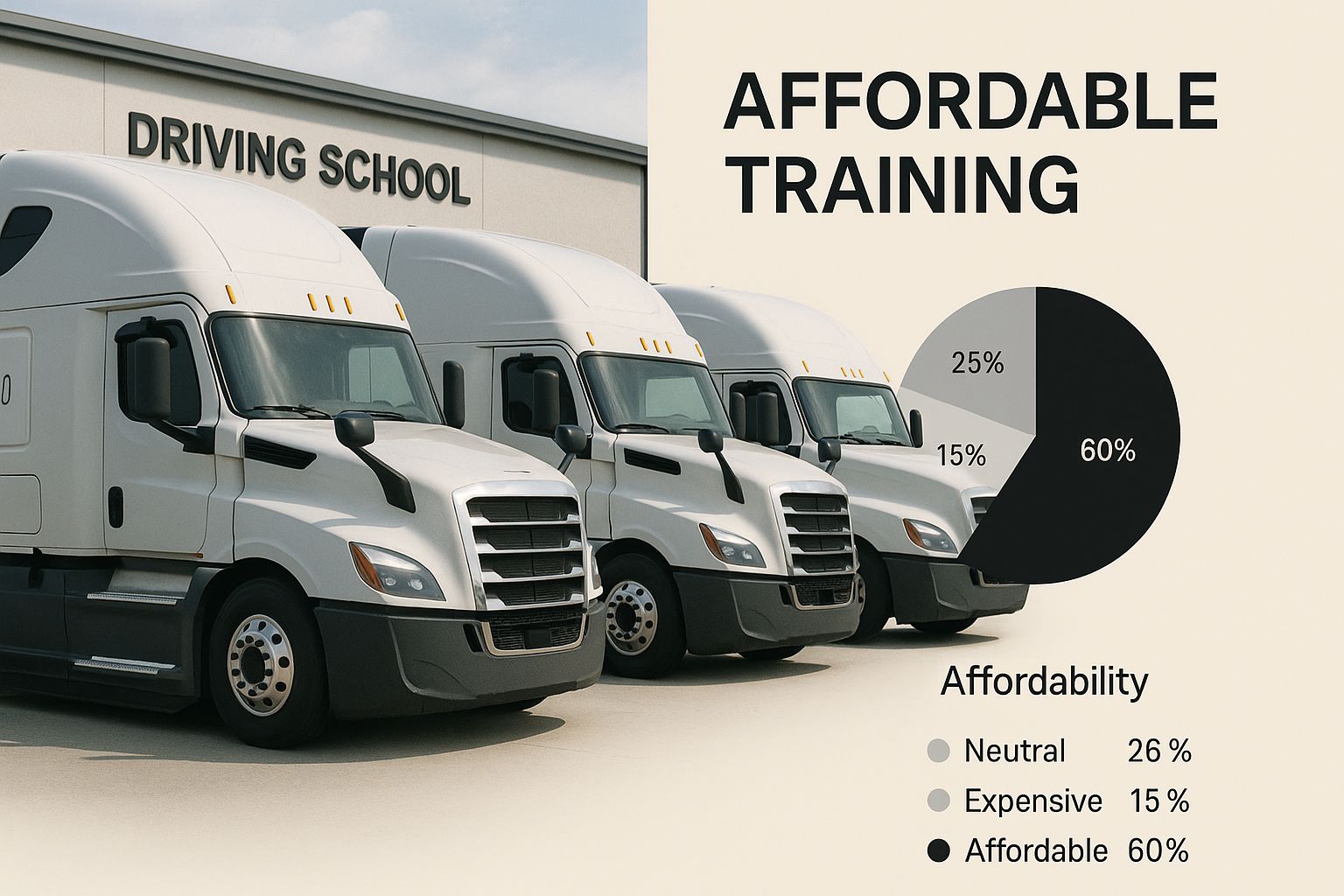
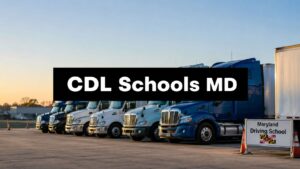
As you can see, the right school provides the modern equipment and professional environment you need to start strong. But let's dig a little deeper into the specific fees.
Breaking Down the Standard Fees
Most quality CDL programs bundle several essential costs into their main tuition fee. These aren't optional add-ons; they're the non-negotiable building blocks for getting your license.
Here’s what’s typically included:
- Instructional Hours: This is the time you spend with seasoned instructors. It covers both the classroom theory and, most importantly, the hands-on, behind-the-wheel practice.
- Truck and Equipment Use: You’re paying for access to a fleet of modern, well-maintained training trucks and trailers. This includes fuel, insurance, and all the wear and tear that comes with learning.
- Permit and Licensing Fees: Many schools roll the administrative costs for your Commercial Learner's Permit (CLP) and the final CDL skills test right into the tuition.
- Required Medical Screenings: A DOT physical and drug screening are federally mandated. Good schools often facilitate this process and include the cost.
Knowing exactly what’s covered makes comparing schools much easier. It's also a good idea to get familiar with all the specific CDL requirements for your state, as these are the hurdles your training is designed to help you clear.
The Hidden Costs to Watch Out For
While most schools are upfront, some have extra fees that can sneak up on you. To avoid any last-minute budget surprises, you have to ask the right questions before you sign anything.
Always ask about retesting fees. What happens if you don't pass an exam on the first try? Are there extra charges for more driving time if you need it? What about books and supplies?
Some students also forget to budget for things like travel and lodging if the school isn't close to home. These "hidden" costs can add up quickly, so a little bit of planning goes a long way.
Comparing Truck Driving School Tuition Models
To help you find the most affordable path for your situation, it's useful to understand the different ways schools structure their tuition. Here’s a look at the common models you’ll run into.
| Training Model | Typical Cost Range | Pros | Cons |
|---|---|---|---|
| Private CDL School | $3,000 – $10,000 | Flexible schedules, small class sizes, and various payment/financing options. | Highest upfront cost of all the options. |
| Company-Sponsored Training | $0 upfront – $6,000+ | No initial out-of-pocket cost and a guaranteed job upon graduation. | You're tied to the company for a set period (usually 1-2 years); leaving early means you owe tuition. |
| Community College Program | $2,000 – $8,000 | Often eligible for federal student aid (FAFSA), more in-depth curriculum. | Programs can be longer and may have less flexible scheduling than private schools. |
Each model has its trade-offs. If you have the savings or can get a loan, a private school offers freedom. If you need a job immediately and don't have cash on hand, company-sponsored training is a great foot in the door. It all comes down to finding the right fit for your budget and your career goals.
How to Fund Your CDL Training Without Debt
Finding an affordable truck driving school is one thing, but figuring out how to pay for it without going into debt is a whole other challenge. The good news is, you don't have to drain your savings account to get started. There are a few solid paths you can take to get your training covered.
Believe it or not, some CDL programs, especially those at community colleges or accredited vocational schools, are eligible for federal financial aid. It's always a smart move to fill out the Free Application for Federal Student Aid (FAFSA). You might qualify for a Pell Grant, which is essentially free money for your education that you never have to pay back.

For veterans, VA benefits are a game-changer. Programs like the Post-9/11 GI Bill® can cover most, if not all, of your training expenses. This is a fantastic way for former service members to pivot into a high-demand civilian career with great stability.
What About Company-Sponsored Training?
This is probably the most common route aspiring drivers take. With company-sponsored CDL training, a trucking company foots the bill for your school. In return, you agree to drive for them for a specific amount of time, usually about a year. It's often advertised as "free," but it’s really a work-for-tuition exchange.
This can be an incredible deal, but you have to go in with your eyes wide open and read the contract. Every last word of it.
The devil is always in the details. You need to know the exact length of your driving commitment, what your starting pay will be, and the consequences if you leave before your contract is fulfilled. Break that contract early, and you'll likely be responsible for the entire cost of the training.
Before you sign anything, make sure you get clear answers from the recruiter on these points:
- What is the full tuition cost I'd owe if I leave early?
- How many months is the employment contract?
- What’s the starting pay per mile for graduates of this specific program?
The upside here is huge: you have a guaranteed job the second you get your license, which takes a lot of pressure off. And for drivers who already have their CDL but want to expand their job prospects, looking into something like an E-restriction removal course can be a great way to boost your skills and earning potential.
What Really Makes a Trucking School Worth the Money?
When you’re looking for an affordable truck driving school, the smartest move is to find the one that’s laser-focused on getting you a job. It's easy to get hung up on the initial tuition cost, but the real value is in a program that molds you into a confident, employable driver that carriers actually want to hire.
Your number one clue? A high job placement rate. If a school boasts a rate of 80% or higher, that’s a massive green flag. It tells you they have solid relationships with good companies who trust the quality of their graduates. That number isn’t just marketing fluff—it’s proof that their training works in the real world.
It's About More Than Just the Price
Cost is obviously a big piece of the puzzle, but the quality of the training you receive will define the start of your career. A school that costs a bit more but offers seasoned instructors and plenty of time in the driver's seat is a much better investment than a cheap program that just pushes you through the test.
You’re paying for quality seat time, so dig into these details:
- Who’s Doing the Teaching? You want instructors who have been out on the road for years, not just people who know how to teach a test. Their stories and real-world advice are gold.
- How Crowded is the Cab? Look for a low student-to-truck ratio. Something like 3-to-1 is ideal because it means more driving time and one-on-one coaching for you.
- What Are You Driving? Is the equipment modern and well-cared-for? Learning on the kind of rig you’ll actually be driving professionally makes a huge difference.
Don't just take the school's word for it. Do your own homework. Read the good, the bad, and the ugly reviews online. Find recent grads on Facebook or LinkedIn and ask them straight-up what they thought. If you can, swing by the school and see it for yourself.
More Schools, More Choices
The trucking industry needs drivers, and new schools are popping up to meet that demand. By early 2024, there were around 395 truck driving school businesses in the U.S., which is up about 2.1% from the year before. This is great for you—more options means you can be picky.
A top-tier school does more than just prep you for the CDL exam; it prepares you for life on the road. You’ll face challenges that aren't on any test, like the nightly headache of finding safe and reliable parking. Mastering these practical skills is what separates the pros from the rookies. To get a head start, you can dive into our guide on finding truck parking solutions.
Ultimately, picking the right program is an investment in your entire career, not just a shortcut to passing a test.
What Can You Realistically Earn After CDL School?
Picking an affordable truck driving school is just the first mile marker. The real question is, what's the return on that investment? Getting your CDL isn't just about passing a test; it's your ticket into a stable, well-paying career with a clear road for advancement right from the start.
Let's talk numbers. The trucking industry is hungry for qualified drivers, and that high demand directly translates to job security and a solid starting salary for you. We're currently facing a persistent driver shortage—as of 2025, it's estimated to be around 78,000 drivers. This isn't just a statistic; it's leverage. It means companies are competing to hire newly licensed pros, pushing entry-level salaries into the $50,000 to $65,000 range annually.
Pushing Your Income to the Next Level
That starting salary? Think of it as your baseline. The real money in trucking comes from making smart moves that build on that foundation. Different driving jobs have completely different pay structures and, just as importantly, different lifestyles.
- Over-the-Road (OTR): This is where you'll often see the biggest paychecks. Long-haul driving pays well because you're out on the road for extended periods.
- Regional Driving: A great middle-ground. You'll cover a specific territory, make good money, and get home a lot more often than an OTR driver.
- Local Routes: If being home every night is your top priority, local gigs are the way to go. The pay might start a bit lower, but the work-life balance is a huge plus for many drivers.
Here’s a tip from a seasoned pro: Specialization is the fastest way to boost your paycheck. Getting endorsements for things like HazMat (hazardous materials) or tanker trucks immediately makes you more valuable. Companies are always looking for drivers with these extra qualifications and they pay a premium for them.
And don't forget, it all starts with a solid foundation. You need to nail the basics. Pouring some real effort into studying for exams like the general knowledge test will put you way ahead of the curve. It means you’ll walk into training with confidence, ready to absorb everything and launch your career on the strongest possible footing.
Answering Your Final Questions About CDL Training
As you get closer to choosing a truck driving school, you probably have a few lingering questions. That's completely normal. Getting these sorted out is the final step before you can confidently commit and start your new career. Let's dig into some of the most common things people ask.

One of the biggest questions is about the time involved. How long does this actually take? Most full-time CDL programs are intense and fast-paced for a reason—to get you working. You should plan on being fully trained and ready for your CDL exam in about three to four weeks.
Think about that. In roughly a month, you could be starting a new career with a professional-level income. That quick turnaround is one of the best parts of this industry.
What Else Should I Know?
A past driving record is often a major worry. While a clean slate is great, a few minor tickets from your past usually won't stop you. What trucking companies really care about are recent, serious offenses like DUIs or reckless driving charges. The best policy is to be honest with the school admissions team. They know what carriers are looking for and can tell you where you stand.
Another thing to get a jump on is your Commercial Learner's Permit (CLP). You can't just show up on day one without it. Most schools require you to have your CLP in hand before you can even think about getting behind the wheel. We've put together a guide on how to prepare and pass your CDL permit test on the first try—it’s worth a read.
Finally, what’s the deal with different license types and costs? It breaks down like this:
- Class A CDL Training: This is the big one. It's the most thorough training, costs a bit more, and lets you drive the classic tractor-trailers you see on the highway. This is the standard for long-haul trucking.
- Class B CDL Training: This option is usually cheaper and a bit quicker. It’s for smaller commercial vehicles like box trucks, dump trucks, or buses.
Ultimately, the choice between Class A and Class B comes down to what you want to do with your career. If you're looking for the most job opportunities and the highest earning potential, the Class A license is almost always the smarter investment, even with the higher upfront cost.
Ready to stop wondering and start driving? At Patriot CDL, we offer accelerated, hands-on training that puts you in the driver's seat of your career, faster. Find the program that fits your goals. https://patriotcdl.com