When you start looking into getting your CDL, one of the first questions is always about the price. Realistically, you can expect the total cost to get a CDL to fall somewhere between $3,000 and $10,000.
This isn't just one flat fee. The final number includes everything from the truck driving school tuition to the mandatory state fees for your permit and license, plus other must-haves like the medical exam. The specific school you choose and the license class you're aiming for will be the biggest factors in where you land in that range.
Your Financial Roadmap to a CDL
Figuring out the cost of a CDL is a lot like planning a cross-country haul. You don't just budget for fuel; you have to account for meals, lodging, and unexpected tolls. In the same way, the final price for your license is a sum of several different costs, not just the school's tuition.
Breaking down these expenses from the get-go helps you build a solid budget and avoid any surprises down the road. Every aspiring driver will run into these core cost categories—they're the fundamental building blocks of your financial plan.
- CDL School Tuition: This is the big one. It covers your classroom instruction and, most importantly, the hands-on, behind-the-wheel training required by law.
- State Licensing and Permit Fees: These are fixed costs you'll pay directly to your state's DMV for the application, written tests, and the physical license itself.
- Medical and Administrative Costs: This covers mandatory items like the DOT physical exam, drug screenings, and sometimes background checks.
Breaking Down the Primary Costs
Let's dig a little deeper into these numbers. While the tuition is the main investment, those other fees are absolutely essential. Forgetting to budget for these smaller, non-negotiable costs can throw a wrench in your timeline and add unnecessary stress.
To give you a clearer picture, here's a quick look at how those expenses typically stack up against each other.
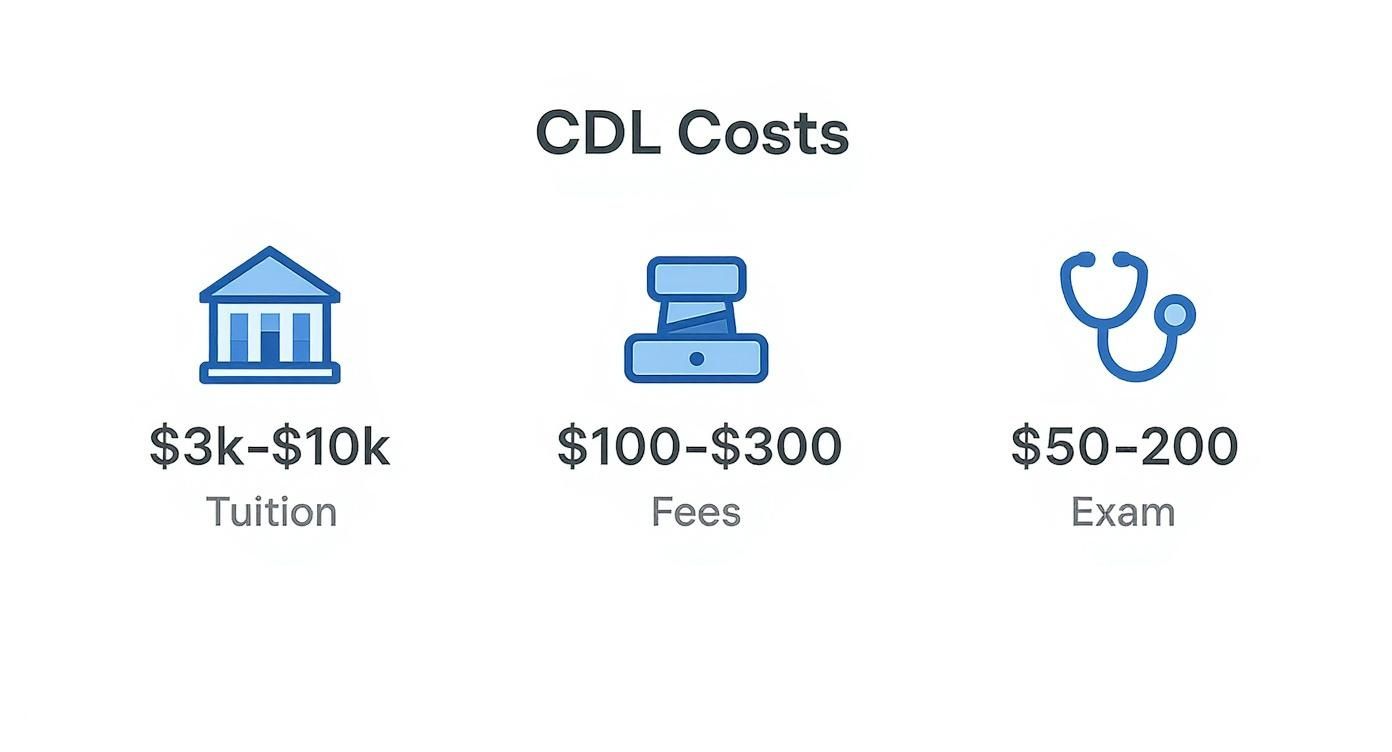
As you can see, the tuition is definitely the biggest piece of the pie. But when you add up the state fees and medical exams, they can easily tack on several hundred dollars to your bottom line.
To make this even easier to digest, here is a summary of the typical cost ranges you can expect for each major component.
Estimated CDL Cost Breakdown at a Glance
| Expense Category | Average Cost Range |
|---|---|
| CDL School Tuition | $3,000 – $10,000 |
| State Licensing & Permit Fees | $100 – $400 |
| DOT Medical Exam | $50 – $200 |
| Endorsement Fees (per endorsement) | $25 – $100 |
This table provides a simple, at-a-glance view of where your money will go. While the school's program will be your main expense, budgeting for those other fixed costs is key to a smooth process.
Think of it this way: getting your CDL is a direct investment in a stable, rewarding career. These initial costs are the price of entry into an industry that's always in high demand. It’s the foundation for long-term financial security and a future on the open road.
Decoding CDL School Tuition Costs
When you start budgeting for your CDL, the biggest line item you'll encounter is almost always the school's tuition. This is the core investment, covering everything from classroom theory to the hands-on, behind-the-wheel training you absolutely need to pass your skills test and launch your career.
So, what's the sticker price? On average, you can expect to see CDL training programs run anywhere from $3,000 to $10,000. That's a pretty wide range, and the final number really depends on the type of school, its location, and the specific license class you're aiming for.
It's tempting to just hunt for the lowest price, but that can be a mistake. A more expensive program might mean more one-on-one driving time, better-maintained equipment, or solid job placement assistance. For a new driver, those benefits can be worth their weight in gold.
Comparing Your Training Options
There are generally three paths you can take to get your CDL, and each has a different price tag and its own set of pros and cons. Figuring out which one is right for you is the first big decision you'll make.
- Private Truck Driving Schools: These are specialized outfits that live and breathe CDL training. They usually offer fast-paced programs that can get you licensed and on the road in a matter of weeks. Their tuition tends to be in the mid-to-high end of the spectrum.
- Community College Programs: Many community colleges have great CDL courses that are often more affordable than private schools. The trade-off is that the training might take a bit longer, but you get a very structured, academic-style learning experience.
- Company-Sponsored Training: This is the "zero-cost" option. Some big trucking companies will foot the entire bill for your training. The catch? You have to sign a contract to work for them for a set amount of time, usually one or two years.
How License Class Impacts Your Tuition
The type of license you're going for has a direct impact on the training involved—and its cost. A Class A license, the one you need for a full tractor-trailer rig, requires the most in-depth training on the most complex vehicles. Naturally, these programs are the most expensive.
On the other hand, a Class B license, which covers single vehicles like dump trucks or buses, involves simpler training. These programs are typically shorter and won't hit your wallet as hard. It's smart to match your license to your career goals right from the start. While you can always upgrade later, doing so means more time and money. Take a look at the different CDL training program options to see what aligns with your ambitions.
A higher tuition fee often translates directly into more hours behind the wheel. When you're checking out schools, always ask about the student-to-instructor ratio and the number of driving hours they guarantee. That hands-on experience is the most important part of your education, and it's where a quality program really shines.
The State and Testing Fees You Can't Ignore
Think of your CDL school tuition as the main ticket price for your new career. But just like any big event, there are a few extra service fees and taxes you'll have to cover along the way. These are the mandatory state and testing fees, and every single driver has to pay them.
These costs are paid directly to your state's DMV (or whatever they call their licensing agency). They’re not huge compared to tuition, but they're non-negotiable. Budgeting for them from the start means no surprise bills will pop up and derail your progress.
Breaking Down Permit and License Fees
Your first official stop on the road to a CDL is getting your Commercial Learner’s Permit, or CLP. This involves passing a written test and getting your application processed, and yes, there's a fee for that.
- Commercial Learner’s Permit (CLP) Fee: This is the fee to get the ball rolling. In a state like Ohio, for example, you can expect to pay around $25 to $30. This usually covers the cost of taking your initial knowledge tests.
- CDL Issuance Fee: After you’ve passed all your exams and proven your skills, you'll pay a final fee to get the actual, physical license in your hands. This can run anywhere from $40 to over $100, depending on your state and how long the license is valid for.
The best move is to check your state’s DMV website for the exact numbers. A little prep goes a long way, and learning more about the CDL permit process will give you a head start on what to expect.
The Financial Reality of Testing and Retesting
Getting your CDL is all about passing tests—first the written ones for your permit, then the hands-on skills test for the real deal. Each test has a cost associated with it.
Often, the fee for your first shot at the tests is bundled into the permit or license fee. But here’s the kicker: what if you don't pass the first time? It happens, but it’s not free to try again.
Failing any part of your CDL skills test—whether it’s the pre-trip inspection, the backing maneuvers, or the road test itself—means you'll have to pay a retesting fee. These can range from $20 to $100 or more per attempt, and that can add up fast.
This is where the quality of your CDL school really shows its value. A great training program that gives you plenty of time behind the wheel and drills you for the test is an investment. It might cost a bit more upfront, but it could easily save you hundreds in retest fees down the road.
Uncovering the Essential and "Hidden" CDL Expenses

It’s easy to focus on the big-ticket items like school tuition and state licensing fees, but those aren't the whole story. Several other non-negotiable costs pop up along the way, and if you haven't budgeted for them, they can throw a real wrench in your plans.
Think of these as the necessary pre-flight checks before your career can take off. You simply can't get cleared for the road without ticking these boxes first.
The Mandatory DOT Physical and Drug Screening
Before you can even touch the paperwork for your Commercial Learner's Permit (CLP), you have to pass a Department of Transportation (DOT) physical exam. This is a head-to-toe check-up with a licensed medical examiner to confirm you're physically fit to handle a big rig safely.
You can expect this exam to cost anywhere from $50 to $200. A drug screening is almost always rolled into this appointment or done separately, so be sure to account for that. This isn't just a formality; your medical certificate is a cornerstone of your entire CDL application.
Passing the DOT physical is your official green light from a health perspective. It’s the proof that you meet federal standards for vision, hearing, blood pressure, and more. It’s not just about paperwork—it’s a fundamental part of keeping our roads safe for everyone.
Background Checks and Security Clearances
If you’re aiming for certain endorsements, especially for hauling hazardous materials (HazMat), you’ll need to go through a more serious vetting process. This means a few extra fees for background checks and security clearances.
- Fingerprinting and Background Check: Getting a HazMat endorsement requires a full Transportation Security Administration (TSA) Security Threat Assessment. This involves getting fingerprinted and usually runs between $85 and $100.
- Driving Record Check: The DMV will also pull your complete driving history. The fee for this is typically bundled into what you pay for your permit application.
Don't Forget Study Materials
While your CDL school will give you the core training, many aspiring drivers find it helpful to grab some extra study materials. A little extra prep can make all the difference when you're facing those tough written knowledge tests.
Things like practice test apps, detailed study guides, or online courses can help you nail down tricky subjects like air brakes or combination vehicles. Setting aside a little extra, maybe $20 to $50, for these tools is a smart move to help you pass your exams on the first try. It’s all about being prepared, especially with the federal Entry-Level Driver Training (ELDT) now a standard part of the process. You can dig into the specifics of ELDT requirements to see how they’ve shaped modern CDL training.
So, What About the Added Cost of Endorsements?
Think of your standard CDL as your general admission ticket to the world of trucking. Endorsements? They're your VIP pass. These special certifications unlock more specialized jobs—the kind that often come with a bigger paycheck and better routes.
Adding endorsements will bump up the total cost to get a CDL, but it's one of the smartest investments you can make in your career. Each one proves you're qualified to handle a specific type of cargo or vehicle, which requires passing an extra knowledge test and sometimes a skills test.
These little add-ons are where you'll see some extra fees pile up. The exact cost will depend on your state and which endorsements you're going for.
Breaking Down Common Endorsement Costs
While your school gets you ready for the standard license, you're on your own for studying for and paying for each endorsement test. You'll typically pay these fees directly to the DMV when you sit for the written exam. Here's a look at what you can expect for the most common ones.
- T Endorsement (Double/Triple Trailers): This one lets you haul multiple trailers at once. The test fee is usually between $15 and $30, making it a cheap and incredibly valuable add-on for a Class A driver.
- N Endorsement (Tanker): If you want to haul bulk liquids or gasses, you need this. It’s a requirement for a lot of high-paying gigs, and the test fee is usually under $30.
- P Endorsement (Passenger): Planning to drive a bus or another vehicle built to carry 16 or more people? You'll need the P endorsement. The test cost is right in line with the others, around $15 to $30.
An endorsement isn't just another line on your license; it's a signal to employers that you have specialized skills. Investing a small amount upfront can open doors to career paths with significantly higher salaries and more responsibility.
The Special Case of the HazMat Endorsement
The Hazardous Materials (H) endorsement is a different beast altogether, mainly because of the strict security hoops you have to jump through. It gives you the green light to transport materials that require placards—a specialized and often very well-paid corner of the industry.
Beyond the usual written test fee at the DMV, getting your HazMat endorsement involves a full-blown federal security screening. You'll have to pass a Transportation Security Administration (TSA) Security Threat Assessment, which means getting fingerprinted and undergoing a thorough background check. The whole process usually runs between $85 and $100.
This makes the H endorsement the most expensive one to get, but it also makes you one of the most in-demand drivers on the road. On a similar note, drivers with an automatic-only restriction can seriously expand their job options by completing an E-restriction removal course, which qualifies them to operate manual transmission trucks.
How to Finance Your CDL and Lower Costs
That initial price tag for getting a CDL can feel like a steep hill to climb, but it’s really just the on-ramp to a lucrative career. The good news is, you don’t have to pay for it all out of pocket. There are a ton of financing options and cost-saving strategies out there that can make your training much more affordable.
From government-backed programs to companies that will foot the bill, you have practical paths to get your education funded. A little research here can dramatically reduce the financial burden, turning a major expense into a smart investment in your future.
Company-Sponsored Training: The Zero Upfront Cost Option
One of the most common ways people get their CDL is through company-sponsored training. The setup is simple: a trucking company pays your full tuition for CDL school. In return, you sign a contract agreeing to work for them for a set amount of time, usually one to two years.
This is a fantastic deal if you want to avoid upfront costs and have a job lined up the moment you get your license. But you have to read the contract carefully. If you decide to leave before your commitment is fulfilled, you’ll almost certainly have to repay the full tuition cost.
Grants, Scholarships, and Veteran Benefits
Beyond company sponsorships, you can find other resources to help chip away at the cost. These take a bit more legwork—filling out applications and doing some digging—but they can provide serious financial relief without locking you into a long-term work contract.
- Grants and Scholarships: Several organizations offer scholarships specifically for students heading into truck driving. It's also a good idea to check with your state’s workforce development agency to see what programs they might have available.
- Veteran Benefits: If you're a veteran, don't forget about programs like the GI Bill®. This is a well-earned benefit that can cover your CDL training costs and make the transition into a civilian trucking career much smoother.
- Tuition Reimbursement: Some companies use tuition reimbursement as a hiring incentive. With this model, you pay for your schooling upfront, and your new employer pays you back in installments over your first year or so on the job.
It's worth noting that while some federal grants, like the FMCSA's CDL Program Implementation (CDLPI) grant, give out around $89 million a year to states, that money usually goes toward improving state-level processes, not directly to individual students.
"Company-sponsored training is a game-changer for many aspiring drivers. It removes the biggest financial barrier to entry, but it's a two-way street. You get a free education, and the company gets a committed driver. It’s a powerful partnership when it’s the right fit."
Other Smart Financial Strategies
If you’re going the independent route, there are still plenty of ways to manage the cost. Many schools offer in-house payment plans, letting you spread the tuition bill over several months.
Personal loans are another popular option. For those with a less-than-perfect credit history, getting a loan even with bad credit can be the key to funding their CDL education and getting on the road.
When you're ready to explore your options, you can always sign up for program information and speak directly with an admissions advisor. They’ll have the most current details on the financial aid and payment plans available to you.
Frequently Asked Questions About CDL Costs
It's only natural to have a lot of questions about the financial side of getting your CDL. Let's tackle some of the most common ones I hear from aspiring drivers so you can move forward with confidence.
Can I Get My CDL for Free?
The short answer is yes, but it’s not quite “free” in the traditional sense. You can definitely get your CDL with zero out-of-pocket cost through a company-sponsored training program.
Here's the deal: a carrier will front the bill for your entire schooling. In return, you commit to driving for them for a specified period, which is usually about a year. It's a fantastic option if you don't have the cash upfront.
Beyond that, some government grants or programs for veterans will cover the full cost for those who qualify, so it's always worth checking if you're eligible.
What Does It Cost if I Fail My CDL Test?
Failing a part of the CDL exam stings, and unfortunately, it comes with a retesting fee. These fees are set by the state and can vary quite a bit. You’ll have to pay to retake each specific part you failed, whether it’s a written test or one of the hands-on driving sections.
You can expect to pay anywhere from $20 to over $100 for each attempt. Some schools might include one free retest in their tuition package, but many don't. This is a critical detail to ask about before you sign on the dotted line.
Honestly, the best way to avoid retesting fees is to invest in a quality school that gives you plenty of time behind the wheel. Solid preparation is your best insurance policy for passing the first time around, saving you a lot of money and frustration.
Is a More Expensive CDL School Always Better?
Not always. A higher price tag can sometimes mean you're getting more guaranteed driving hours, newer trucks to train in, or better job placement services, and those are definitely valuable. But a more affordable program at a fully accredited community college can get you just as prepared for the exam.
The "best" school is the one that checks all the boxes for you. It needs to meet federal ELDT standards, have a great reputation with high pass rates, and fit your budget and learning style. My advice? Always dig into reviews from recent graduates before you make a final decision.
Ready to start your journey on the open road with a team that has your back? The expert instructors at Patriot CDL are here to guide you through every step, from permit prep to passing your final exam.
Learn more about our CDL training programs at patriotcdl.com