

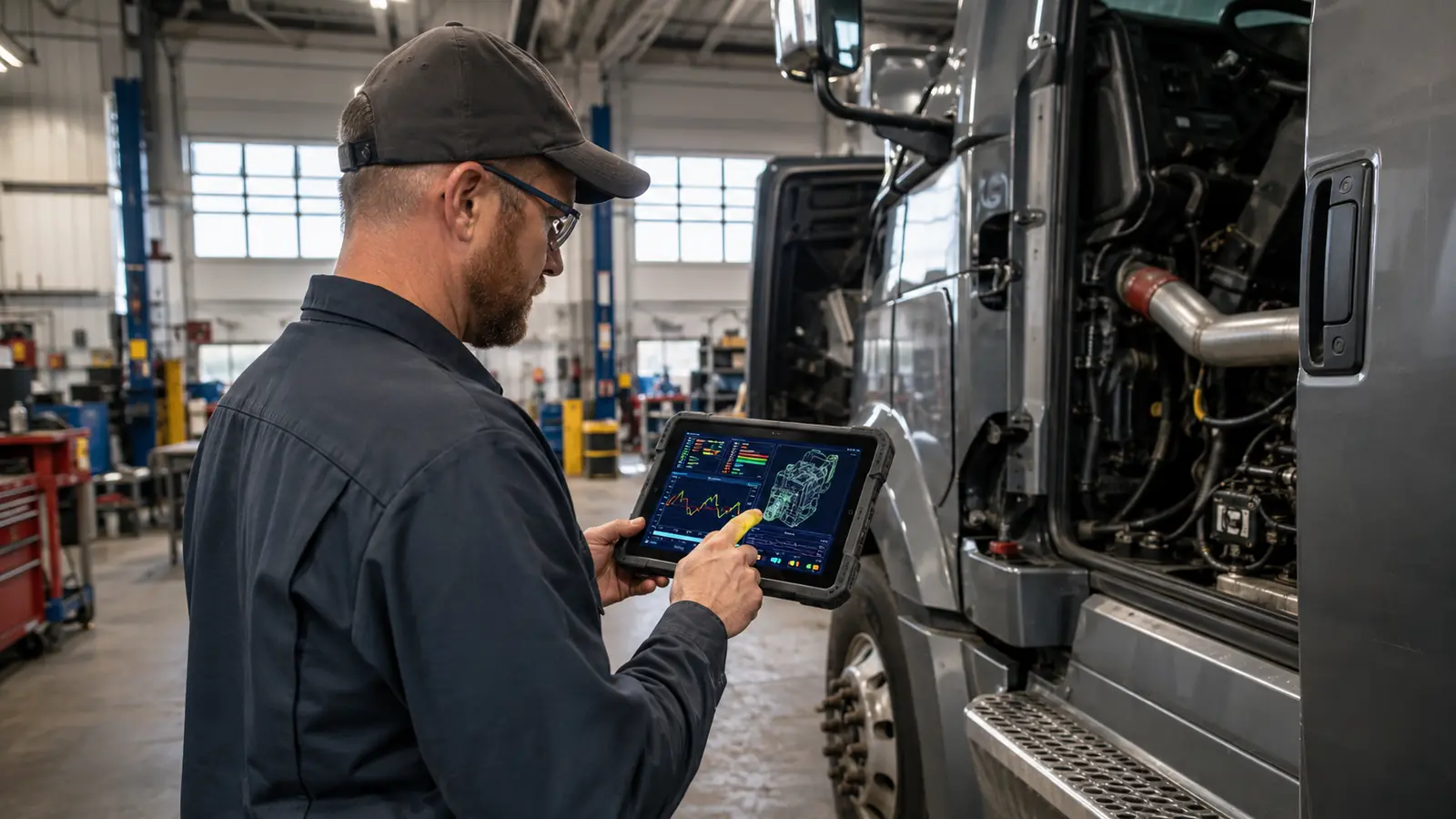
Motive is expanding into AI-assisted fleet maintenance as carriers face record operating costs and fragmented shop data. FreightWaves reported September 2 that the new system combines truck fault codes, driver-inspection defects, work orders, repair spending, telematics and fuel-card information in one operating view.
The cost pressure is substantial. FreightWaves cited ATRI's 2026 operating-cost analysis, which put the 2025 average marginal cost at $2.336 per mile. Maintenance and repair expense increased 8.6% year over year and was 45% higher than in 2019. Separate industry benchmarks showed parts costs continued rising even as labor costs eased slightly.
The technology is designed to translate diagnostic codes into plain-language descriptions, rank severity and connect road reports with the technician's work record. Motive's research with FreightWaves found 80% of respondents named rising maintenance and repair costs as a leading operational challenge. Only 13% said their fleet systems were well integrated and shared data automatically, leaving many shops dependent on disconnected applications or spreadsheets.
AI recommendations do not replace qualified technicians, required inspections or a carrier's responsibility to keep vehicles safe. Fleets evaluating maintenance platforms should test data accuracy, access controls, system integration and whether alerts produce timely work orders. Useful measures include unplanned downtime, repeat repairs, road calls, preventive-maintenance compliance and cost per mile. Drivers remain essential: detailed defect reports and early warnings can prevent a minor issue from becoming a roadside breakdown. The strongest return comes when technology supports a consistent repair process rather than adding another isolated dashboard.
Build Your CDL Career With Patriot CDL
Explore professional Class A, Class B and restriction-removal training in Levittown, Pennsylvania.
Talk With Admissions