


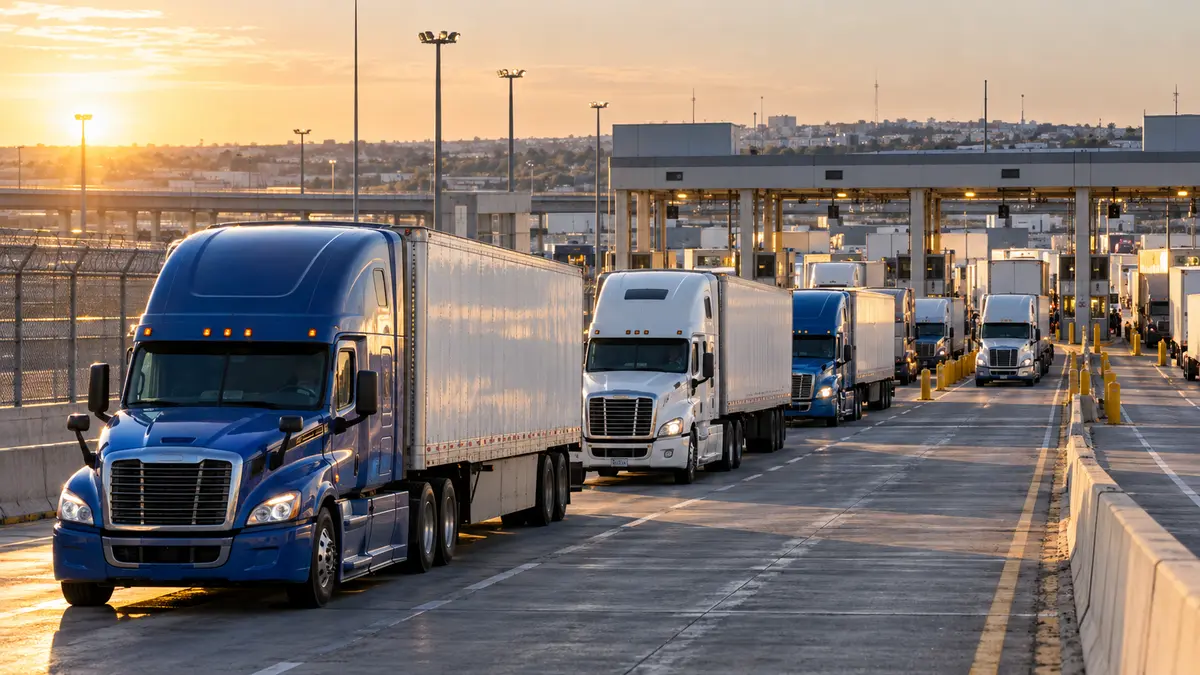
North American cross-border trucking capacity could remain constrained into 2027 as driver shortages, visa restrictions, high operating costs and expensive equipment financing limit expansion. FreightWaves reported October 12 that TRAFFIX's Cross-Border Index registered 57 for Canada and 54 for Mexico. Readings above 50 signal tighter conditions, including limited truck supply and elevated costs.
The pressure is visible around Laredo. FreightWaves said outbound tender volume rose from 39.95 in mid-September to 51.95 by October 11, while its weighted rejection measure moved from negative territory to positive. In Mexico, qualified cross-border drivers and trucks authorized for U.S. service remain limited. Financing costs near 8% to 9% also discourage new carriers and equipment purchases.
Canadian lanes face a different imbalance. Stronger southbound demand is not always matched by freight returning north, leaving carriers exposed to empty miles. TRAFFIX executives said some corridor rates have climbed 25% to 35% over roughly the past month and a half, while more contracted freight is moving into the transactional market when older rates no longer cover costs.
Shippers should tender loads earlier, verify border documentation and maintain backup capacity instead of assuming softer demand will produce easier coverage. Carriers need lane-level pricing that includes border delays, repositioning and the probability of a weak return load. Drivers should confirm crossing restrictions, appointments and customs paperwork before departure. The current pattern favors reliable, compliant operators, but it also makes equipment utilization and detention control more important to profitability.
Build Your CDL Career With Patriot CDL
Explore professional Class A, Class B and restriction-removal training in Levittown, Pennsylvania.
Talk With Admissions