

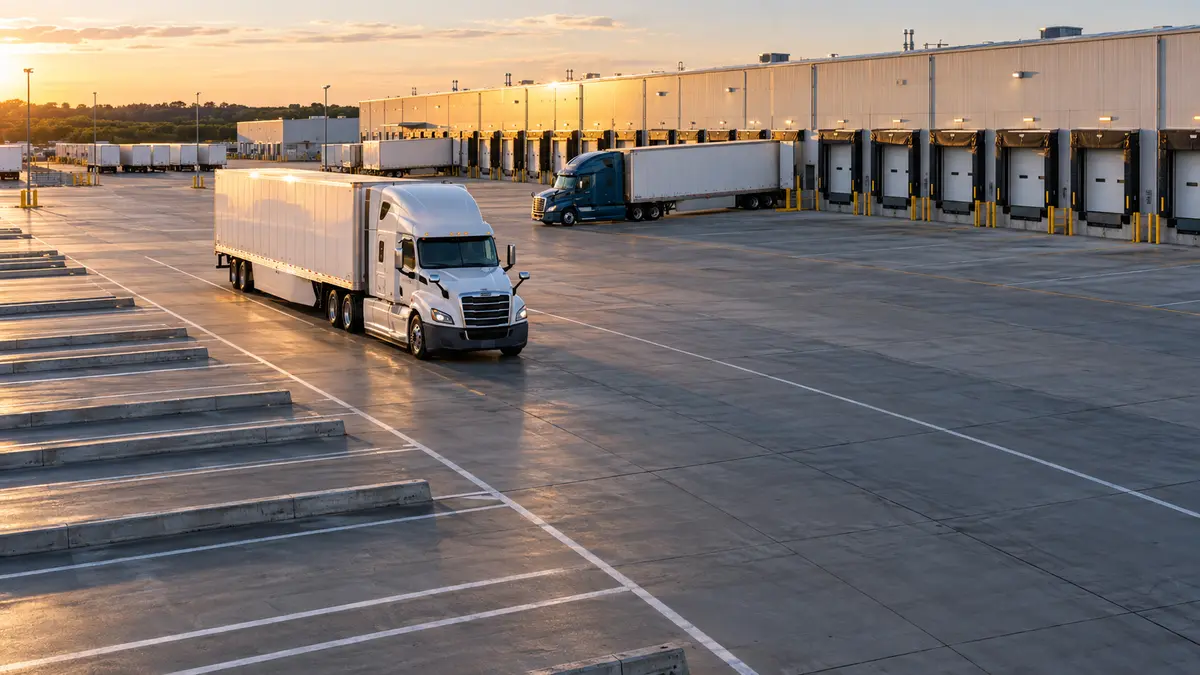
New entrants are not replacing trucks that have left the for-hire market fast enough to loosen capacity. FreightWaves reported October 7 that newly registered for-hire fleets accounted for 19,520 tractors in August, about 14% below the average pace during the first half of 2026. At the same time, its SONAR Truckload Rejection Index was near 14%, roughly three times the range common from 2023 through 2025.
The market signal is not simply a rush of stronger freight demand. Tender rejections have risen 268% over three years while volume is up about 9%, according to the report. Insurance prices, equipment costs and a narrower pool of compliant drivers are limiting expansion. Although federal registration data showed more than 2,000 weekly net authority additions during parts of August and September, FreightWaves said the Motus registration transition distorted those counts and estimated that genuine new grants remained about 17% below the first-quarter pace.
Another indicator is insurance conversion. The report found that only about two-thirds of new interstate registrants now purchase the liability coverage needed to activate authority, compared with more than nine in ten in 2019. It also cited an August decline of approximately 51,000 for-hire tractors. Together, those measures suggest that a new registration does not automatically represent usable freight capacity.
Carriers should still avoid assuming that tight national conditions guarantee profitable rates on every lane. Watch tender rejections, loaded miles, deadhead, insurance and customer mix before adding equipment. Shippers can reduce exposure by forecasting earlier, limiting detention and maintaining backup carriers. For CDL candidates, a tighter market may support hiring at stable fleets, but the best offer still depends on pay structure, home time, equipment and training quality.
Build Your CDL Career With Patriot CDL
Explore professional Class A, Class B and restriction-removal training in Levittown, Pennsylvania.
Talk With Admissions