

Truck capacity is tight in both the Northwest and Midwest, but FreightWaves reported October 10 that the two regions are being driven by different market forces. The national tender-rejection rate was about 13.8%, while the Northwest reached 20.27% on October 8, more than triple its 6.2% level a year earlier. The Midwest followed at 18.61%.
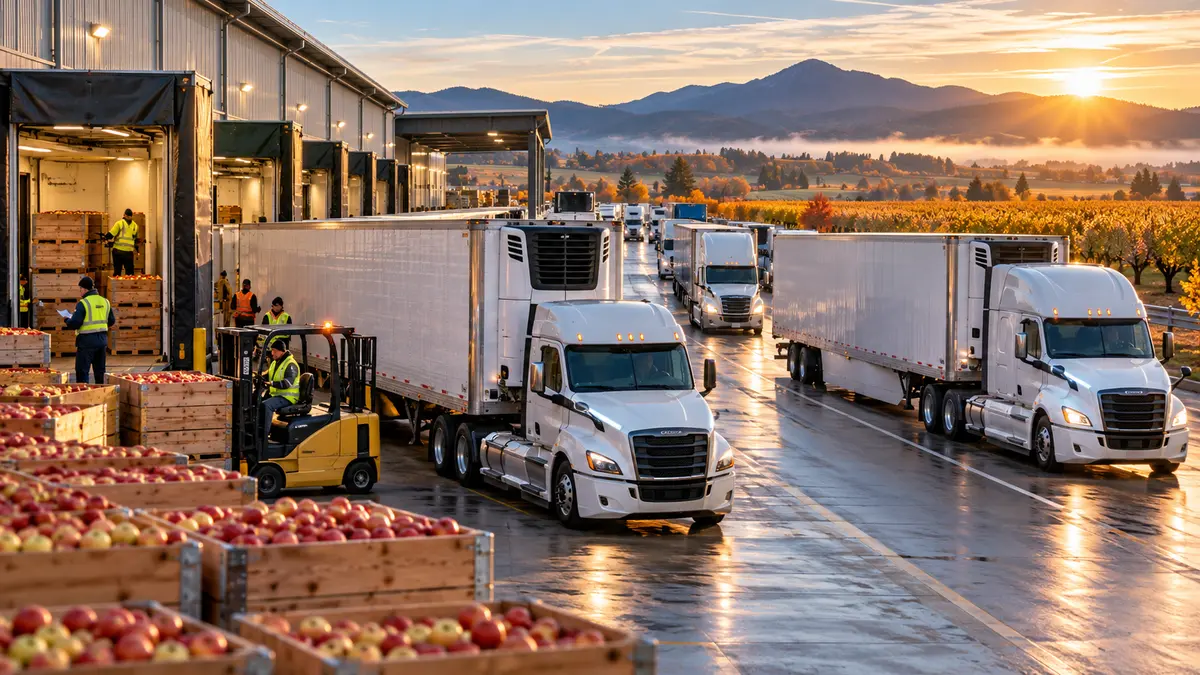
Northwest pressure is concentrated in temperature-controlled freight. Reefer tender rejections have averaged roughly 41% in October, even as dry-van rejections stayed below 5%. Reefer tender volume has climbed 65% since July and was 35% higher than a year ago, reflecting harvest-season demand. That combination can produce volatile rates and difficult reload planning, but the seasonal surge is likely to fade as agricultural activity slows and winter conditions arrive.
The Midwest shows a broader, more durable imbalance. Dry-van rejections were near 15%, reefer rejections approached 29%, and total tender volume was about 10% above last year. Unlike the Northwest's produce-driven spike, Midwest tightening spans several equipment types and reflects sustained freight demand against limited truck supply.
Carriers should price these markets separately instead of applying one national assumption. Reefer operators entering the Northwest can capture strong outbound demand, but they should secure a return load and budget for detention, washouts and weather. Midwest fleets may find steadier negotiating leverage across van and refrigerated lanes. Shippers should tender earlier, shorten facility dwell and maintain qualified backup capacity. Drivers should confirm appointment windows and seasonal equipment needs before dispatch, because a high rejection rate can create opportunity while also increasing schedule disruption.
Build Your CDL Career With Patriot CDL
Explore professional Class A, Class B and restriction-removal training in Levittown, Pennsylvania.
Talk With Admissions