
So, you're wondering how old you have to be to get a Commercial Driver's License (CDL). The short answer is 18 years old. At that age, you can start a professional driving career hauling freight, but there’s a catch: you have to stay within your home state's borders.
If you want to drive a commercial truck across state lines, federal law says you need to be 21 years old.
Unlocking Your Trucking Career at 18
Starting a trucking career right after high school isn't just a dream; it's a real path for motivated young people. The world of commercial driving is built on a two-tiered age system, which creates different opportunities for drivers depending on how old they are. This setup is perfect for younger drivers, allowing them to get their feet wet and build valuable experience locally before hitting the big national routes.
Think of it like playing in a local league before getting called up to the pros. At 18, you can get your CDL, learn the ropes of the industry, and start earning a great income—all without ever leaving your home state. This is what we call intrastate driving.
The Two Tiers of CDL Age
The difference between state and federal rules is probably the most important thing for a new driver to grasp. It directly shapes what jobs you can get and what your career path will look like.
- 18 Years Old (Intrastate): You can legally operate a commercial vehicle, but only within the borders of the state that issued your license.
- 21 Years Old (Interstate): This is the magic number for federal clearance. Once you turn 21, you can transport cargo across state lines, which opens the door to long-haul routes and nationwide job opportunities.
This age requirement is crucial across many fields. For example, many folks in the movers and relocation services industry need a CDL to operate their vehicles. Getting that license at 18 for local jobs is a fantastic way to start, with the option to go interstate at 21.
To make it simple, here's a quick breakdown of how the CDL age requirements work.
CDL Age Requirements at a Glance
| Driving Type | Minimum Age | Description |
|---|---|---|
| Intrastate Driving | 18 | Driving a commercial vehicle only within the borders of your home state. |
| Interstate Driving | 21 | Driving a commercial vehicle across state lines, anywhere in the country. |
| Hauling Hazmat | 21 | Transporting hazardous materials, regardless of state lines (federal rule). |
This table shows the clear progression built into the system.
The two-tiered structure acts as a launchpad, letting new drivers build crucial real-world experience in a familiar environment before taking on the more complex world of interstate trucking.
It’s a smart system that helps you grow into the role. If you want to dive deeper, you can learn more about the complete list of CDL requirements to make sure you're ready to hit the road.
Intrastate vs. Interstate Driving: What's the Difference?
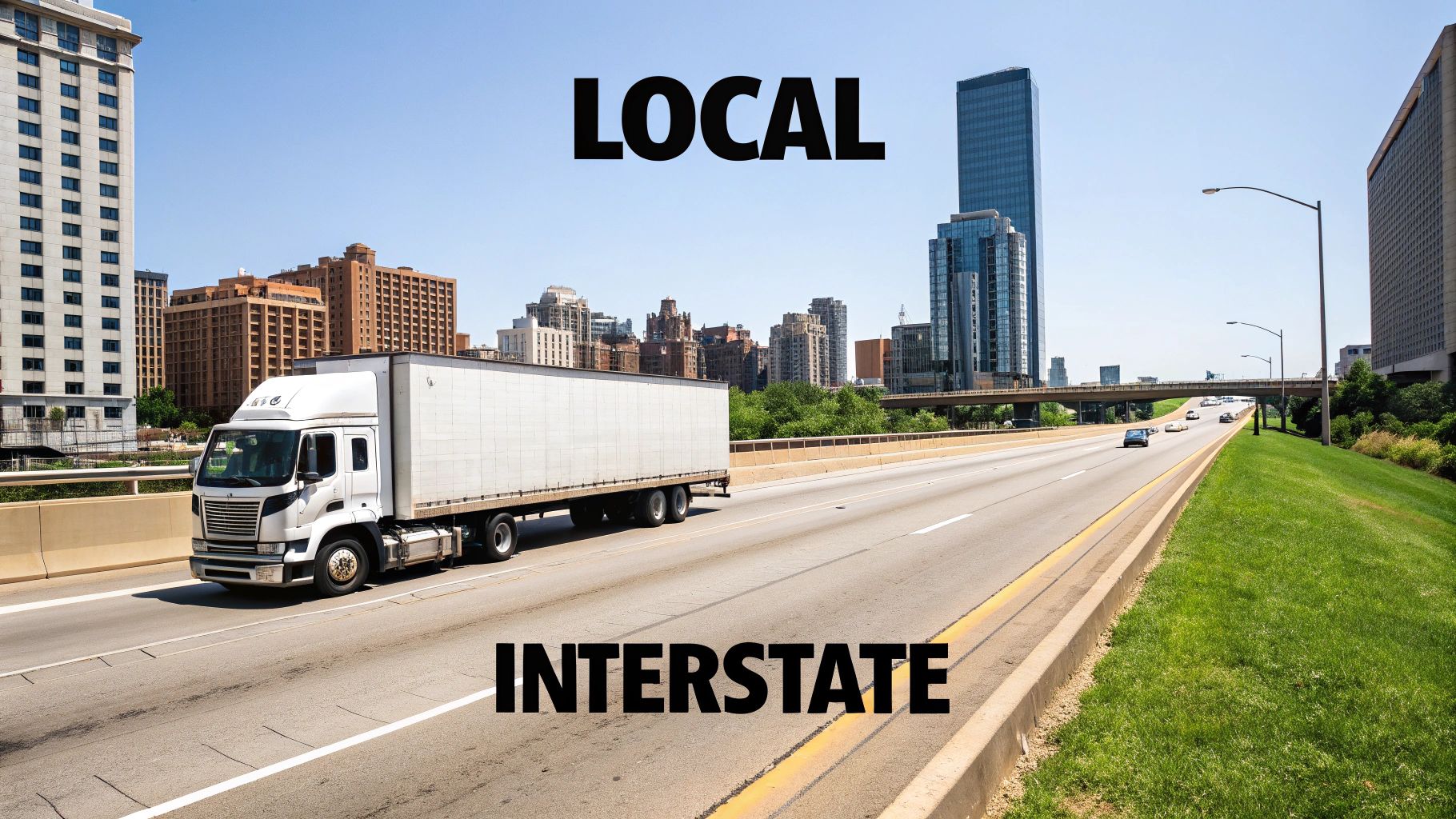
For any driver under the age of 21, the single most important distinction to grasp is the line between intrastate and interstate driving. This isn't just about following the rules; it's about understanding the career paths that open up the day you earn your CDL at 18.
Intrastate driving simply means you're operating a commercial vehicle within the borders of one state. On the other hand, interstate driving is what most people picture when they think of trucking—hauling freight across state lines. This is the core reason why there seem to be two different minimum ages for a CDL.
Think of it like this: an intrastate driver is like a city's dedicated delivery expert. They know every back road and shortcut, understand the local traffic patterns, and are masters of their specific territory. An interstate driver is more like a long-haul pilot, navigating a vast network of highways that connect the entire country.
Building Your Career Within State Lines
For drivers aged 18 to 20, intrastate work is anything but a holding pattern. It’s a fantastic training ground to build a solid resume and earn a good living right out of the gate. The experience you get here is the foundation for a successful long-haul career later on.
Plenty of crucial industries depend entirely on skilled intrastate drivers, creating a ton of job opportunities close to home.
By mastering local routes and equipment, you aren't just killing time until you turn 21. You are actively building the skills, safety record, and professional reputation that top-tier national carriers look for when hiring for their interstate fleets.
Some of the most common jobs for intrastate drivers include:
- Local Delivery and Logistics: Moving goods from distribution centers to local stores and businesses.
- Construction: Hauling gravel, sand, concrete, and heavy equipment to job sites.
- Agriculture: Transporting crops, livestock, and supplies between farms, silos, and processing plants.
- Waste Management: Operating specialized trucks for sanitation services.
These roles are perfect for getting thousands of hours behind the wheel in different types of trucks. If you're looking to get started, it pays to research the specific opportunities in your area. For instance, you can find more details about launching a trucking career in California. This kind of local, hands-on experience makes you a prime candidate for the best interstate jobs once you hit the federal minimum age.
Why Federal Rules Set the Interstate Age at 21
You might wonder why an 18-year-old can drive a massive semi-truck all over Texas but can't cross the border into Oklahoma. It seems a bit arbitrary, but the rule has deep roots in a landmark piece of legislation: the Commercial Motor Vehicle Safety Act of 1986. This law was all about creating a single, high standard for commercial drivers across the country.
At its core, the higher age for interstate driving boils down to two things: safety and perceived risk. Federal regulators have long held that long-haul trips—the kind that span multiple days and states—demand a different level of maturity and quick-thinking than shorter, local routes.
Think about it. A cross-country haul introduces a ton of variables that a local driver might not face. You're navigating totally unfamiliar cities, dealing with wild weather changes from one region to the next, and managing your sleep schedule far from home. The age for cdl for interstate travel was set at 21 with the belief that drivers at this age are simply better prepared to handle that kind of pressure.
The Safety Data Behind the Age Requirement
This whole debate is fueled by some pretty serious safety statistics. Large trucks, while essential, are involved in a higher percentage of fatal accidents compared to how many of them are on the road. Safety advocates often point out that younger drivers, especially those under 21, have statistically higher crash rates in general, no matter what they're driving.
This isn't just a hunch; it's backed by data. For example, groups like the National Safety Council have highlighted stats showing that while large trucks made up just 4% of registered vehicles in a given year, they were involved in 9% of fatal crashes. Data like this makes regulators take a very cautious approach to lowering the interstate driving age.
The federal government's position is that the three-year gap between 18 and 21 acts as a crucial training ground. It lets young drivers build real-world experience in a less risky intrastate setting before they tackle the big leagues of cross-country hauling.
But this rule definitely has its critics. The trucking industry is staring down a massive driver shortage, and many companies see that 18-to-20-year-old group as a huge pool of untapped talent. They argue that with today's advanced training programs and in-cab technology, younger drivers can be just as prepared for the demands of the open road. It's a constant balancing act between keeping our highways safe and keeping our country's supply chain moving.
For more insights on trucking industry trends, you might be interested in our blog.
New Pathways for Younger Drivers: A Look at Pilot Programs
The trucking industry has a bit of a logistics problem of its own: you can get a CDL and drive within your state at 18, but you have to wait until you're 21 to cross state lines. That three-year gap is a long time to wait, and the industry is actively looking for ways to safely get qualified young drivers behind the wheel for interstate jobs sooner.
To bridge this divide, several new initiatives are being tested. These pilot programs are essentially a structured on-ramp for ambitious drivers between 18 and 20 years old. Instead of sitting on the sidelines, they can start gaining real-world interstate experience under strict, supervised conditions. It’s a smart way to tackle the driver shortage while keeping safety the top priority.
How Apprenticeship Programs Work
The most talked-about initiative right now is the Safe Driver Apprenticeship Pilot (SDAP) Program. The best way to think about it is like a residency for a doctor, but for truckers. It pairs a young apprentice with a seasoned professional driver who serves as a mentor, not just a passenger. This is far more than just logging miles; it's a deep-dive, hands-on learning experience.
The program is built in carefully planned stages to make sure the apprentice is ready for every challenge:
- Phase 1: Probationary Period: First, apprentices have to complete a 120-hour probationary period. This is where they prove they've mastered the fundamentals of maneuvering the rig and following safety protocols.
- Phase 2: Advanced Training: Once they pass probation, they move on to 280 hours of supervised driving. During this entire time, the experienced driver is right there in the passenger seat, coaching and guiding them.
- Performance Benchmarks: It's not just about time in the seat. Apprentices are constantly evaluated on critical skills like backing, maintaining vehicle control in different conditions, and using defensive driving techniques.
This mentorship model is the key. It prevents young drivers from being thrown into the deep end. They learn all the unwritten rules of the road—from managing logbooks and fatigue to handling tricky urban traffic—with an expert guide right beside them.
These programs are a direct answer to the industry's call for more drivers. They create a safe, supervised pathway for the next generation to launch their interstate careers before turning 21. If this sounds like the route for you, getting started with a comprehensive training program is the perfect first step to becoming eligible for these kinds of opportunities.
How Your Age Impacts CDL Endorsements
Think of your basic Commercial Driver's License as the key to the truck. The endorsements are what unlock the different trailers and career paths you can hook up to it. These special certifications prove you’ve got the specific skills to haul everything from milk to heavy machinery. But here's the catch: the age for a CDL plays a big role in which endorsements you can actually get.
While you can grab valuable endorsements like Tanker (N) or Doubles/Triples (T) at age 18 for driving within your state, a couple of the big ones are off-limits until you hit 21. Understanding this difference right from the start is critical for mapping out your first few years in the industry.
Endorsements You Can't Get Until You're 21
Some endorsements are tied directly to federal rules, which means there’s no getting around the age minimum, no matter what your state allows.
- Hazardous Materials (H): If you want to transport anything the federal government considers hazardous, you'll need a Hazmat endorsement. Because of the serious safety and security involved, this is strictly for drivers who are 21 years old and can pass a thorough TSA background check.
- School Bus (S): The immense responsibility that comes with transporting children means the S endorsement also has a higher age requirement. You must be 21 before you can get certified to drive a school bus.
This system is all about building experience and trust, creating a clear path for young drivers to grow into seasoned professionals who can handle more demanding roles.
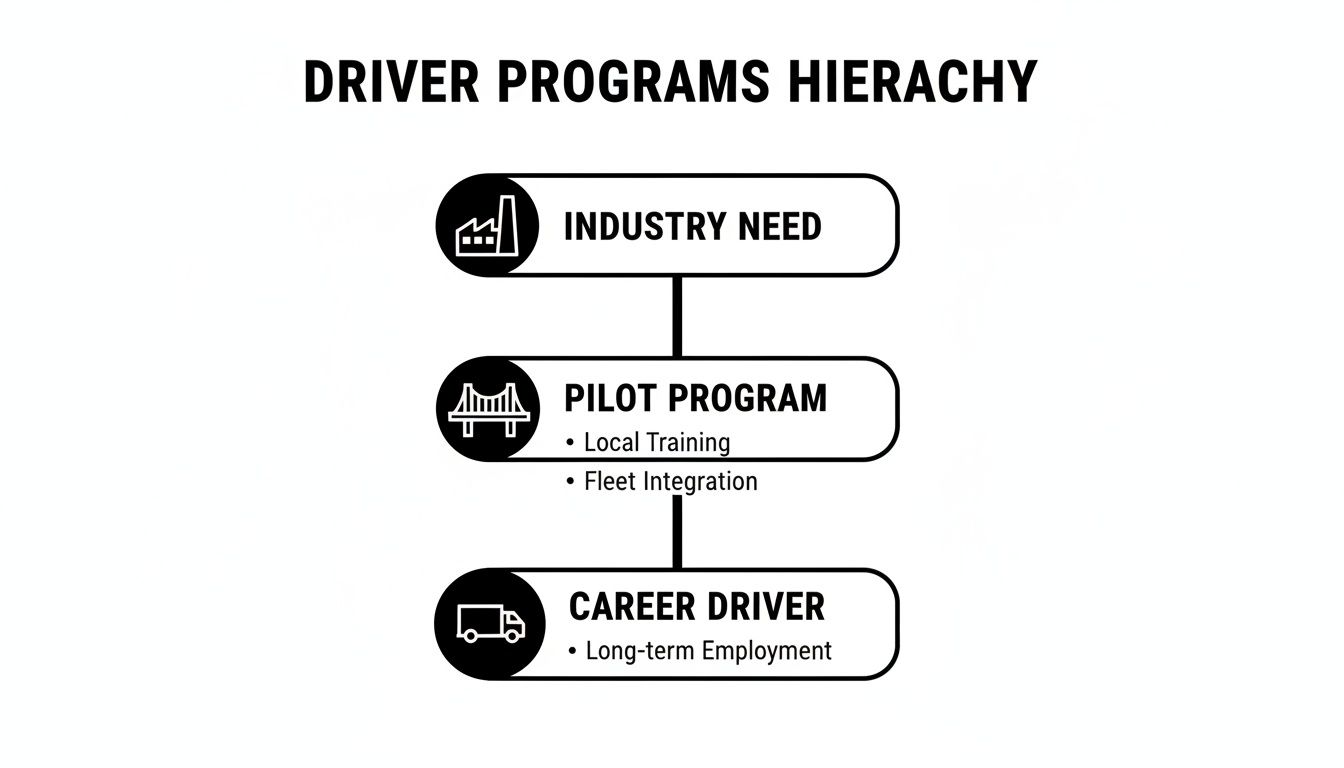
As you can see, the industry builds career pathways from the ground up. By mastering the endorsements you can get at 18, you’re not just waiting—you’re building a rock-solid foundation for those more advanced certifications later on. The best way to get ready for any specialized test is to make sure your fundamental knowledge is sharp. A great place to start is by reviewing our guide on the general knowledge test.
Strategic planning is key. An 18-year-old driver can focus on gaining valuable experience with a Tanker or Doubles/Triples endorsement within their state, making them a highly qualified candidate for Hazmat or long-haul jobs the moment they turn 21.
Common Questions About CDL Age Requirements
Diving into the world of commercial driving brings up a lot of questions, especially around age. Let's tackle some of the most common ones aspiring drivers ask so you can map out your career path with confidence.
Can I Start CDL School Before I'm 18?
Yes, you absolutely can. Many top-tier truck driving schools will let you enroll at 17 as long as you'll turn 18 by the time you graduate and are scheduled to take your official CDL test. It's a fantastic way to get a jump-start on your career.
Think of it this way: the schools know training isn't an overnight process. By starting a bit early, you can wrap up all your classroom work and behind-the-wheel hours and be perfectly positioned to get your license the day you're legally able to. Just remember, you can't get the actual permit or license in your hands until you hit that state-mandated age.
How Does My Age Impact Insurance Rates?
Age is a huge piece of the puzzle for commercial trucking insurance, particularly for drivers under 25. From an insurer's point of view, younger drivers have less road experience, which unfortunately labels them as a higher risk. This almost always means higher insurance premiums for the driver or the company that hires them.
It's also why you'll see some trucking companies with hiring policies that set their own minimum age at 23 or even 25, well above the legal interstate requirement of 21. It’s not personal—it’s a business decision they make to keep their insurance and liability costs manageable.
For any young driver, the single best thing you can do is build a squeaky-clean driving record. A history of safe driving with zero violations speaks volumes and can help balance out the higher costs tied to your age, proving you're a reliable professional.
Are There Trucking Industry Jobs for People Under 21 Besides Driving?
Definitely. If you're passionate about the industry but not quite 21 yet—or maybe long-haul driving isn't your goal—there are plenty of other crucial jobs that can give you a solid foundation. These roles offer incredible experience and often serve as a perfect launchpad into a driving career down the road.
Here are a few paths to consider:
- Diesel Mechanic: Get your hands dirty keeping the rigs running. This is a highly skilled and constantly in-demand trade.
- Dispatcher: Be the brains of the operation. You’ll coordinate logistics, manage routes, and be the lifeline for drivers on the road.
- Freight Broker or Agent: Play matchmaker by connecting companies that need to ship goods with the trucking carriers that can move them.
- Yard Jockey: This is a great gig where you move trailers around a company's yard or distribution center. Since you don't leave the property, it’s a way to operate a big rig without needing an interstate CDL.
Each of these roles provides a ground-level view of how the supply chain really functions. That kind of experience is priceless and makes you a much more well-rounded candidate when you're finally ready to hit the open road.
Ready to start your journey on the open road? Patriot CDL offers expert, hands-on training to get you licensed and career-ready in as little as three weeks. Learn more and enroll today at https://patriotcdl.com.