The CDL General Knowledge Test is the very first hurdle every aspiring truck driver in the United States has to clear. It’s a mandatory written exam, required in all 50 states, that you must pass before you can even think about getting behind the wheel for your skills test.
Your First Milestone on the Road to a CDL
Think of the General Knowledge Test as the foundation of your entire trucking career. Before you can get into the nitty-gritty of shifting a 10-speed or backing a 53-foot trailer, you have to prove you understand the rules of the road from a professional driver's perspective.
This isn’t just about checking a box for the DMV. It’s about building the core knowledge that prevents accidents, keeps you and others safe, and ensures the freight you're hauling gets where it's going in one piece.
Every single driver has to pass this exam, no matter what state they live in or what kind of rig they plan to drive. It’s the universal starting line for a career in commercial driving and sets the stage for any specialized endorsements, like Hazmat or doubles/triples, that you might add later on.
Understanding the Test Format
Knowing what you’re walking into is half the battle. The test is designed to be comprehensive, but the format is straightforward.
For a quick overview of what to expect on test day, here’s a simple breakdown.
CDL General Knowledge Test at a Glance
| Test Component | Requirement |
|---|---|
| Question Type | Multiple-Choice |
| Number of Questions | 50 |
| Time Limit | 60 minutes |
| Passing Score | 80% (at least 40 correct answers) |
These are the numbers that matter. You have one hour to correctly answer at least 40 out of 50 questions to move on to the next step.

Your goal isn't just to memorize answers but to truly understand the concepts behind them. This deeper knowledge will not only help you pass the test but will also make you a safer, more confident driver on the road.
By preparing for these specific parameters, you can walk into the testing center feeling ready and in control. To get a better feel for the questions and topics, you can dive deeper into our complete guide on the general knowledge test.
Getting to Know the Core Exam Topics
To pass the CDL General Knowledge Test, you can’t just rely on memorization. The best way to prepare is to see the test questions for what they really are: reflections of a professional driver's day-to-day responsibilities. This test isn’t designed to trick you. It's built to make sure you have a solid grasp of the principles that keep you, your cargo, and everyone else on the road safe.
Instead of looking at the topics as a long list to cram, let's group them into four practical themes that mirror a driver's real-world duties. When you understand how these concepts fit together, you’re not just studying for a test—you're laying the groundwork for a long, safe career.
Vehicle Operations and Control
This is where the rubber meets the road, literally. Questions in this group are all about the physical act of handling a massive commercial vehicle. Think of it as the "how-to" manual for your driving career, covering everything from basic maneuvers in a parking lot to making complex decisions in rush-hour traffic.
You'll need to know your stuff on:
- Basic Controls: This goes beyond just turning the wheel. It's about proper steering techniques, accelerating without jerking, and braking with precision.
- Managing Your Gears: You have to know how to shift smoothly to keep your momentum and maintain control, especially when tackling steep grades.
- Speed and Space Management: This is a huge one. Questions will hit on maintaining a safe following distance—the rule of thumb is one second for every 10 feet of vehicle length, plus an extra second for speeds over 40 mph. You'll also be tested on managing speed on curves and navigating tight spots in traffic.
- Visibility: It’s all about knowing where to look. You must be an expert at using your mirrors to constantly monitor your surroundings and keep tabs on your blind spots.
These questions are really testing your ability to think ahead and operate your rig with foresight.
Vehicle Systems and Inspections
Long before you even turn the key, your job as a professional driver has already begun. This part of the CDL General Knowledge Test is designed to confirm you understand your truck's mechanical systems and the critical importance of a thorough inspection. A commercial vehicle is a complex machine, and you are always its first line of defense against mechanical problems.
Don't ever think of the pre-trip inspection as just another box to check. It's a life-saving procedure. Federal data shows a scary number of truck-related accidents are tied directly to component failures—things that a proper inspection could have caught.
This section gets into the nitty-gritty of:
- Pre-Trip Inspection: You have to know the seven-step inspection method like the back of your hand, checking everything from tire pressure and brake components to lights and fluid levels.
- Engine and Brake Systems: This is where knowing your air brakes inside and out is absolutely essential. You’ll need to understand how the whole system works, how to test for leaks, and what the warning signs of failure look and sound like. To get a feel for the questions, try our air brakes test.
- Coupling and Uncoupling: For any driver pulling a trailer, mastering the correct and safe procedure for connecting and disconnecting is completely non-negotiable.
Safe Driving Principles
This is the real heart of being a professional. It’s less about the "how" and more about the "why" behind every decision you make on the road. These questions test your situational awareness and your ability to spot and react to a hazard before it escalates into an emergency.
Expect to be tested on how you'd handle all kinds of scenarios, including:
- Hazard Perception: This is about seeing trouble before it starts—identifying distracted drivers, spotting poor road conditions, or anticipating a sudden traffic jam far ahead.
- Extreme Conditions: You'll need to know the right strategies for driving in fog, heavy rain, snow, and high winds, as well as how to manage the unique challenges of driving at night.
- Emergency Maneuvers: When things go wrong, you have to react correctly. Knowing the proper response for a tire blowout, brake failure, or a sudden evasive swerve is vital knowledge.
Cargo and Regulations
Finally, remember that your job isn't just to drive a truck—it's to move freight safely and legally from point A to point B. This section of the test covers the rules of the road for hauling cargo. When a load is secured properly, it's stable and safe. When it isn't, it can be downright deadly.
Key topics you'll need to master include:
- Cargo Securement: This means understanding the federal rules for blocking, bracing, and tying down different types of cargo to make sure nothing shifts or falls.
- Weight Distribution: It’s a balancing act. You have to know how to distribute the weight of a load correctly to maintain the truck's stability and avoid going over legal axle weight limits.
- Legal Compliance: This covers your knowledge of federal regulations on vehicle weight, length, and width restrictions. Breaking these rules leads to big fines and unsafe conditions.
Your Actionable Study Plan for First-Time Success
Let’s be honest: passing the CDL General Knowledge Test isn’t something you can just cram for the night before. It’s about methodically building a solid foundation of knowledge, piece by piece. A structured plan is your best friend here, turning what feels like a mountain of information into a series of manageable steps.
This roadmap is designed to get you test-ready with real confidence, focusing on genuine understanding, not just memorizing answers. We'll break it down into three distinct phases. Think of it like building a house: first, you pour a strong foundation, then you frame the structure, and finally, you add the finishing touches.
Phase 1: Build Your Foundation
This first phase is all about getting your tools together and learning to speak the language of trucking. Before you can even think about complex driving scenarios, you have to get comfortable with the machine you'll be operating.
Your first move is simple but critical: get the official CDL manual for your state. This isn't just a suggestion—it's the source material for every single question on the test. Treat it like your bible.
During this phase, concentrate on:
- Mastering the Lingo: Get familiar with all the key terms for vehicle parts, driving maneuvers, and safety rules.
- Understanding Vehicle Systems: You need a rock-solid grasp of how major systems work, like the engine, transmission, and especially the air brakes. It’s not enough to know what they do; you need to understand why they do it.
Getting this foundation right makes everything that comes next so much easier to absorb.
Phase 2: Deep Dive into Safety and Rules
Okay, you know the truck. Now it's time to connect that knowledge to how it actually behaves on the road. This phase covers the regulations and defensive driving techniques that are heavily weighted on the CDL General Knowledge Test.
Your focus shifts to internalizing the rules of the road that govern every mile. You'll dig into topics like speed and space management, identifying hazards before they become emergencies, and handling the truck when the weather turns nasty. You’ll also need to become an expert on federal rules for securing cargo and distributing weight properly.
A common mistake I see is drivers just skimming these sections. Don't do it. A huge chunk of the test questions—often 30% to 40%—comes directly from these safety and regulatory topics. Spending quality time here pays off big time on test day.
This is also the perfect time to understand how Entry-Level Driver Training (ELDT) fits into the picture. Knowing the federal mandates for new drivers gives your studies valuable context. You can find more details on how ELDT prepares you for your CDL and see how it all connects.
Phase 3: Reinforce and Test Your Knowledge
This is where it all comes together. The final phase is about sharpening what you’ve learned, finding your weak spots, and getting a feel for the actual test-taking experience. The goal here is to walk in with no surprises, just the confidence to get it done right the first time.
This timeline shows how the topics build on each other, moving from basic vehicle operations to more complex cargo rules.
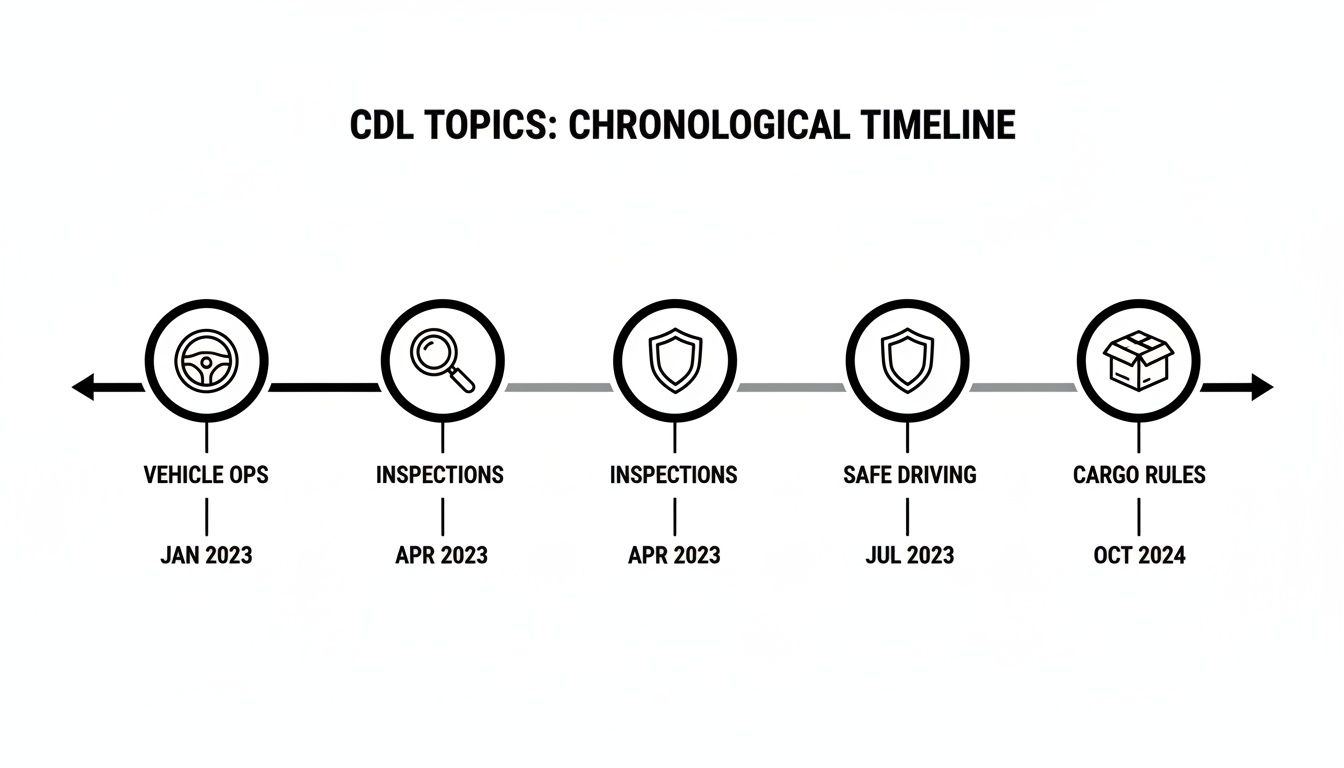
As you can see, each stage of learning builds directly on the last, ensuring you have a complete understanding before moving on.
Your main tool in this phase? High-quality practice tests. They are the single best way to know if you're really ready.
- Simulate the Real Exam: Use timed tests to get used to the 60-minute clock. You don’t want to be fighting the clock and the questions at the same time.
- Find Your Weak Spots: After every practice test, review your results. Did you keep missing questions about air brakes? Go back and re-read that chapter in the manual.
- Drill Down on Tough Topics: Use what you learned from your practice tests to focus your final study sessions where they'll do the most good.
Finally, put together a simple checklist the night before your test. It's a small thing, but it helps reduce stress and makes sure you arrive focused and ready to go.
Your Test-Day Checklist
- Required Documents: Valid driver's license, Social Security card, proof of residency, and your DOT medical card.
- Confirmation: Double-check your appointment time and the testing center location.
- Rest and Nutrition: Get a full night of sleep and eat a good meal before you go.
- Arrival: Plan to get to the testing center at least 15-20 minutes early. Don't start the test already stressed out from rushing.
Why a High First-Time Pass Rate Is Your Best Investment
When you're shopping around for a CDL school, it's easy to get bogged down comparing tuition prices and class start dates. But there's one number that tells you more about your future success than almost anything else: the school's first-time pass rate for the CDL General Knowledge Test.
This isn't just a fancy stat for a brochure. It's a direct reflection of how good the training really is. A high pass rate means the curriculum works, the instructors know their stuff, and the school is genuinely committed to getting you on the road, not just getting you in the door.
Think about it this way: if you needed a guide to climb a mountain, would you hire the one whose clients always seem to turn back? Or the one with a solid reputation for getting people to the summit? A CDL school is your guide, and the test is your mountain.
The Financial Impact of Pass Rates
Choosing a school with a high first-time pass rate is one of the smartest financial decisions you can make. When you pass the CDL General Knowledge Test on your first try, you get your license faster, you land a job sooner, and you start earning a professional driver's paycheck right on schedule.
Failing, on the other hand, slams the brakes on your career. Suddenly you're dealing with mandatory waiting periods before you can retest, shelling out extra fees, and feeling the stress of falling behind. Every week you're stuck studying for a retake is a week you could have been out there earning money.
The first-time pass rate on the CDL General Knowledge Test is the gold standard for measuring a school's quality. It directly predicts how employable you'll be in America's massive $800 billion trucking industry. Top-tier schools consistently see pass rates over 90%. The average is closer to 70%, and some struggling schools even dip below 50%. That difference can mean months of lost income for their students.
A great school doesn't just teach you the material; it prepares you to ace the test that unlocks your entire career.
How Top Schools Achieve High Pass Rates
Schools with outstanding pass rates aren't just lucky. They have a system. They constantly track how students are doing and use that data to make their teaching methods even better. They know exactly which topics—like air brakes or combination vehicles—give people the most trouble and they have a plan to tackle those areas head-on.
This smart approach usually involves:
- Data-Driven Instruction: Instructors look at practice test scores to pinpoint where the class is struggling. Then, they'll spend extra time breaking down those complex subjects until everyone gets it.
- Realistic Test Simulation: The best schools use practice exams that feel just like the real CDL General Knowledge Test. They have the same format, timing, and types of tricky questions, so there are no surprises on test day.
- Expert Guidance: You're not just memorizing answers. Experienced instructors give you one-on-one feedback, helping you understand why an answer is correct in a real-world driving scenario.
This dedication to quality ensures you walk into the testing center feeling prepared and confident, not just hopeful.
The table below paints a clear picture of how your choice of school can dramatically alter your career launch.
Pass Rate Impact on Your Career Timeline
| Metric | High Pass Rate School | Low Pass Rate School |
|---|---|---|
| Time to License | 3-4 weeks (on schedule) | 6-10 weeks (with retests) |
| Additional Costs | Minimal to none | Multiple retest fees, lost wages |
| Job Placement | Immediate opportunities | Delayed job search, missed openings |
| Initial Confidence | High; ready for the road | Low; stressed and discouraged |
When it comes down to it, putting your money into a school with a proven, high first-time pass rate is the fastest and most reliable way to start your trucking career and secure a high-paying job from day one.
How to Handle a Failed Test and Succeed Next Time
Failing the CDL general knowledge test can feel like a huge setback, but it’s a hurdle that many of today's best professional drivers have had to clear. Seeing a non-passing score isn’t a judgment on your ability—think of it as a diagnostic report showing you exactly where to focus your energy. This isn't about getting discouraged; it's about getting smart.

The key is to turn this experience into the perfect setup for a guaranteed pass on your next try. Let's walk through a solid game plan for your comeback.
Analyze Your Results with a Plan
Your first move after getting your results is the most critical: take a hard look at the score report. That piece of paper is your personalized roadmap to success. It pinpoints the exact topics that tripped you up, whether it was air brakes, cargo securement, or vehicle inspections.
Instead of starting from scratch and re-studying everything, you now have the advantage of laser focus. You can build a review plan that zeroes in on the sections where you lost points. This saves a ton of time and ensures you’re patching up your weak spots, not just going over things you already know well.
Create a Targeted Comeback Strategy
Once you know where the problems are, it's time to double down with a smarter study strategy. Don't just passively reread the manual—you need to actively engage with the material.
- Ask for Help: If a concept like brake lag or proper weight distribution still isn't clicking, grab an instructor. They've seen it all and can give you real-world examples that make abstract rules make sense.
- Drill the Tough Stuff: Hunt down practice tests that focus specifically on your weak sections. Hammering those questions over and over builds both your knowledge and your confidence.
- Understand the 'Why': Don’t just memorize rules. Go back and figure out why a regulation exists. Understanding the reason behind a rule makes it far easier to remember under pressure.
Your goal isn't just to scrape by with a pass; it's to actually master the material. A failed test gives you invaluable feedback that, if you use it right, will make you a more knowledgeable and safer driver in the long run.
For extra practice and a focused review, check out our complete resources for the general knowledge test. It’s a great way to build your confidence before heading back.
Reschedule with Confidence
Finally, you'll need to know your state's specific rules for retesting. Every state has a different waiting period before you can reschedule the CDL general knowledge test, which could be anywhere from a day to a full week. You’ll almost certainly have to pay the testing fee again, too.
Don’t look at that waiting period as a penalty; it’s a built-in study window. Stick to your targeted plan, get clarification on anything you're unsure about, and walk into that testing center the second time knowing you’ve plugged every hole in your knowledge. This approach turns a frustrating moment into a powerful learning opportunity.
Got Questions About the CDL General Knowledge Test? We've Got Answers.
Even with the best study guide in hand, it’s natural to have some questions rattling around in your head before the big test day. That’s completely normal. Getting these cleared up beforehand can make all the difference, helping you walk into the DMV feeling cool, calm, and ready to ace the exam.
Let's dive into some of the most common questions we hear from aspiring drivers.
How Many Tries Do I Get?
This is a big one, and the short answer is: it depends on your state. Most states will let you retake the test if you don't pass on the first try, but they usually make you wait a bit. This waiting period could be just one business day, or it might be a full week.
Just remember, you'll likely have to pay the test fee again for each attempt. A solid training program is designed to help you pass the first time to avoid those extra costs and delays. But if a retest is needed, a good school will have a plan to get you back on track.
Is This the Only Written Test I Need to Pass?
The General Knowledge Test is the main hurdle, but it might not be your last. Think of it as the foundation—every single CDL applicant has to pass it.
But if you want to drive specific rigs or haul certain types of cargo, you'll need to tack on endorsements. Each one comes with its own written exam. Some of the most common ones include:
- Air Brakes: A must-have for any truck with an air brake system.
- Combination Vehicles: This is essential for getting your Class A license to drive tractor-trailers.
- Hazardous Materials (HazMat): Required for hauling anything the government classifies as hazardous.
- Tanker: Needed if you plan on transporting liquids or gasses in a tank truck.
Are Practice Tests Really Accurate?
Absolutely. A high-quality practice test is probably the single best tool in your study arsenal. They are built using the official state CDL manual, which is the exact same source material the real test questions come from.
Taking these practice runs is the perfect way to see where you stand, find any weak spots in your knowledge, and get used to the pressure of that 60-minute time limit. Always make sure your practice materials are up-to-date with the latest test standards.
Can I Take the Test in a Language Other Than English?
Federal rules are very clear on this: all CDL knowledge tests must be taken in English. Some states might offer the official CDL study manual in other languages, which can be a great help for learning the material. When it comes to the actual test, though, English is the only option.
This rule is in place for safety. It ensures every commercial driver can read road signs, speak with law enforcement, and understand shipping documents and regulations no matter where they are in the country.
Getting a handle on all the state and federal rules is a key part of your journey. For a complete rundown, you can learn more about the full CDL requirements to make sure you’ve checked every box.