Before you can get behind the wheel of a big rig, you need to pass a specific health screening known as the CDL physical examination, or more commonly, the DOT physical. It's a mandatory check-up designed to make sure you're medically qualified to handle the demands of operating a commercial vehicle safely.
Think of it this way: it's not your typical annual physical. This exam specifically looks for any health issues that could put you or others at risk on the road.
Why the DOT Physical Matters for Highway Safety
The CDL physical examination isn't just bureaucratic red tape—it's one of the most important pillars of road safety in the country. A truck driver's health directly affects their alertness, reaction time, and ability to manage the physical strain of long-haul driving.
The exam acts as a crucial safety net. It's there to ensure drivers don't have medical conditions that could suddenly prevent them from controlling a vehicle that can weigh up to 80,000 pounds. The whole process is overseen by the Federal Motor Carrier Safety Administration (FMCSA), the government agency in charge of preventing accidents involving commercial vehicles. It's the FMCSA that sets the medical bar every driver has to clear.
The Key Players in Your Examination
Getting a handle on who's involved makes the whole process feel a lot less intimidating. There are really just three parties in every DOT physical:
- You, the Driver: Your job is to provide an honest and complete medical history and keep yourself healthy enough to meet the federal standards.
- The Certified Medical Examiner (CME): This isn't just any doctor. A CME is a licensed healthcare provider who has received special training and is certified by the FMCSA to conduct these exams. You can't just go to your family doctor unless they're on the FMCSA’s National Registry.
- The Federal Motor Carrier Safety Administration (FMCSA): This is the agency that writes the rulebook. They set the medical standards to ensure every driver in every state is held to the same safety requirements.
The primary goal of the DOT physical is preventative. It aims to identify potential health risks before they can lead to an incident on the road, making it a proactive measure for public safety rather than a test designed to disqualify drivers.
At the end of the day, the exam confirms that everyone with a CDL meets a consistent, federally required health baseline. It’s a critical piece of the puzzle among all the CDL requirements a driver must meet. This provides peace of mind for the public, trucking companies, and for you as a driver, knowing you're fit for this vital and challenging profession.
Breaking Down Each Step of the DOT Physical
Walking into your CDL physical examination for the first time can feel a little intimidating, but it’s really just a series of straightforward health checks. It's not one big pass/fail test. Instead, think of it as a methodical review where each step gives the examiner a clearer picture of your fitness to safely operate a commercial vehicle.
The whole process kicks off with your medical history, which you'll fill out on the official form. Don't gloss over this part—being honest and thorough gives the Certified Medical Examiner (CME) the context they need for the rest of the exam. After that, you’ll move through a few key assessments.
Vision and Hearing Assessments
Out on the road, your eyes and ears are your first line of defense. The vision test is there to make sure you can spot hazards, read signs from a distance, and judge space correctly—all critical skills when you’re behind the wheel of an 80,000-pound rig. The Federal Motor Carrier Safety Administration (FMCSA) sets a very clear bar.
- Visual Acuity: You need to have at least 20/40 vision in each eye, and with both eyes together. Good news is, you can wear your glasses or contacts to meet this standard.
- Peripheral Vision: The examiner also checks your horizontal field of vision. This ensures you’re able to catch movement and see potential dangers in your blind spots.
- Color Recognition: You’ll also need to prove you can tell the difference between red, green, and amber traffic lights.
Just as important is your hearing. A professional driver has to be able to hear sirens, horns, and even subtle changes in their truck's engine that might signal a problem. To pass, you must be able to hear a "forced whisper" from five feet away, either with or without a hearing aid.
Blood Pressure and Pulse Rate Check
Next up, the examiner will take your blood pressure and pulse. This isn't just a formality; it's a critical check on your cardiovascular health and your body’s ability to handle the stress that comes with long hours of driving.
A dangerously high blood pressure reading could signal a risk for a sudden medical emergency on the road, like a heart attack or stroke. According to FMCSA guidelines, a blood pressure reading under 140/90 mmHg generally gets you a full two-year medical certificate. If your numbers are higher, you might get a shorter certification period while you work with your doctor to manage it.
This part of the exam is a crucial health screening. Catching high blood pressure early not only keeps your CDL active but also protects your long-term health by flagging a serious condition before it gets worse.
Urinalysis for Health Screening
The urinalysis is probably the most misunderstood part of the CDL physical examination. It’s important to know that this is not a drug test. The urine sample is simply a screening tool for underlying medical issues, specifically by looking for sugar and protein.
Sugar could be a red flag for undiagnosed or poorly controlled diabetes, a condition that can seriously affect a driver's awareness. Protein, on the other hand, can point to kidney problems. Finding these markers helps the examiner determine if there's a condition that might interfere with your ability to drive safely.
The Hands-On Physical Assessment
The final piece of the puzzle is the hands-on physical exam. Here, the CME will assess your body's major systems to make sure everything is in good working order. You can think of it like the hands-on safety check you perform during a pre-trip inspection on your vehicle; the examiner is simply looking for any red flags that could compromise safety.
To give you a better idea of what's involved, here’s a quick rundown of what the examiner is looking for.
CDL Physical Examination Checklist
| Exam Component | What Is Checked | Why It Matters for Safety |
|---|---|---|
| General Appearance | Your overall health, posture, and alertness. | Provides a quick, initial assessment of your fitness. |
| Neurological | Reflexes, coordination, balance, and grip strength. | Ensures you can react quickly and maintain control of the vehicle. |
| Musculoskeletal | Strength, range of motion in limbs, back, and joints. | Confirms you can physically operate controls like the clutch, brake, and steering wheel for long periods. |
| Cardiovascular | Heart rate, rhythm, and sounds (for murmurs). | Checks for heart conditions that could lead to a sudden incapacitating event. |
| Respiratory | Lung sounds and breathing capacity. | Assesses for breathing issues that could cause fatigue or dizziness. |
| Abdomen | Checks for hernias or enlarged organs. | Identifies conditions that could cause sudden, severe pain and distract you from driving. |
Each of these steps builds on the last. By systematically evaluating your senses, cardiovascular health, and physical capabilities, the CME can confidently sign off that you're ready for the immense responsibility that comes with being a professional truck driver.
Understanding Medical Conditions and Disqualifications
https://www.youtube.com/embed/GSyWtKvaSIA
Getting a new medical diagnosis can feel like a career-ending event, but it's rarely an automatic disqualification from driving. The whole point of the CDL physical examination isn't to kick drivers off the road; it’s to make sure any health issues are managed well enough that they don't create a safety risk for you or anyone else.
Many common conditions are perfectly fine to have as a CDL holder, as long as they're under control. The key is showing the Certified Medical Examiner (CME) that your condition is stable and won't get in the way of you operating a big rig safely. This usually means working with your own doctor on a treatment plan and sticking to it.
Navigating Common Health Concerns
Some health issues get a closer look during the DOT physical, simply because they have the potential to directly affect your ability to drive. But for most of these, the Federal Motor Carrier Safety Administration (FMCSA) has clear guidelines that allow drivers to stay certified if they're properly managing their health.
Here are a few of the most common conditions we see and how they're usually handled:
- High Blood Pressure (Hypertension): This is probably the number one reason drivers get a shortened medical card. If your blood pressure is between 140–159/90–99 mmHg, you'll likely be certified for one year. However, if you walk in with a reading of 180/110 mmHg or higher, that's an immediate disqualification. You'll need to get it below 140/90 mmHg before you can be reconsidered, and even then, you'll probably get a six-month certificate to start.
- Diabetes Requiring Insulin: Years ago, using insulin was a deal-breaker. That’s not the case anymore. Now, you can get certified by showing the CME records from your doctor that prove your blood sugar is stable and well-controlled.
- Heart Conditions: Any history of a heart attack, bypass surgery, or other serious cardiac event will require a thorough evaluation. Expect to provide clearance from your cardiologist and possibly undergo a stress test to prove your heart can handle the job's physical demands.
- Sleep Apnea: Obstructive Sleep Apnea (OSA) is a huge red flag because it can cause dangerous daytime sleepiness. If the CME thinks you're at risk, they can require you to get a sleep study. The good news? If you're diagnosed and successfully use a CPAP machine, you can be certified.
This flowchart gives you a good visual of how the process plays out.
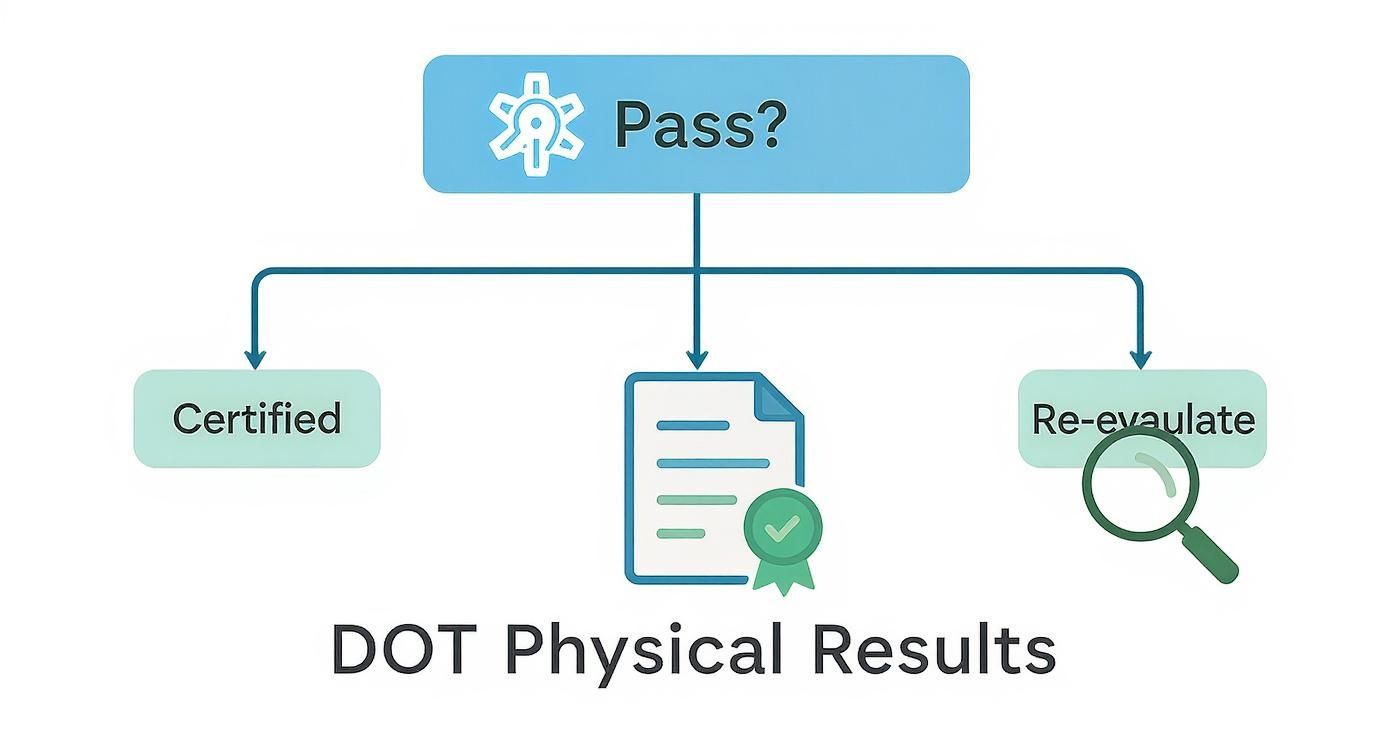
As you can see, even if you don't pass on the first try, it’s not the end of the line. It's just the start of a process to manage the issue and get re-evaluated.
Pathways to Certification: Waivers and Exemptions
So, what if you have a condition that doesn't fit neatly into the standard guidelines? The FMCSA has specific programs that give individuals a chance to prove they can still drive safely. These aren't loopholes; they're structured, official processes for unique situations.
"A disqualifying medical condition is often just the beginning of a conversation, not the end of a career. With the right documentation and management, many drivers can continue to operate safely and legally."
A great example is the Skill Performance Evaluation (SPE) certification. This program is designed for drivers who have a missing or impaired limb. Through the SPE, you can demonstrate that you're able to handle a commercial vehicle just as safely as anyone else. It involves a road test and a review of your ability to perform all the necessary tasks.
For vision and diabetes, there are federal exemption programs. These are a bit more involved and require a detailed application with extensive reports from your medical specialists. The goal is to provide overwhelming proof that your condition is under control and won't compromise safety on the road.
Since your DOT physical might include a urine test or blood work, learning about interpreting blood test results can be incredibly helpful. Understanding what those numbers mean allows you to take control of your health and have more informed discussions with your doctor, which is a win for both your well-being and your career.
How to Prepare for a Successful Exam
Walking into your CDL physical examination ready to go is the best thing you can do to guarantee it goes off without a hitch. It’s less like cramming for a test and more like getting your paperwork in order before a big meeting. A little bit of prep work can be the difference between leaving with your medical card in hand and getting a long to-do list of follow-up tasks.
This process really begins before you even pick up the phone to book the appointment. Your first job is finding the right professional. You can't just go to any doctor; you have to see a Certified Medical Examiner (CME) who is listed on the Federal Motor Carrier Safety Administration’s (FMCSA) National Registry. This is an absolute, non-negotiable requirement.
Your Pre-Exam Checklist
Once you've found a CME and set a date, it’s time to get all your ducks in a row. Showing up with missing documents is one of the most common reasons for a delay. Use this checklist to make sure you’ve got everything you need.
- Valid Photo ID: Your driver’s license is the go-to here.
- Complete List of Medications: Don't just list them from memory. Write down every single medication you take, including the exact name, the dosage, and who prescribed it.
- Corrective Lenses and Hearing Aids: If you need glasses, contacts, or hearing aids to pass the vision and hearing tests, you absolutely must bring them with you.
- Medical Records for Ongoing Conditions: If you’re managing a condition like diabetes, sleep apnea, or any heart issues, bring recent notes or test results from your specialist. This proves to the examiner that your condition is stable and well-managed.
Being proactive about your health documentation is a game-changer. The reality is that chronic health issues are common among commercial drivers. In fact, a major analysis found that 23% of drivers struggle with hypertension, 33% have diabetes, and 19% deal with sleep disorders. Handing the examiner proof that you're on top of your health shows them you take both your well-being and public safety seriously.
24 Hours Before Your Appointment
What you do in the day leading up to your CDL physical examination can make a real difference in your results, especially when it comes to your blood pressure. A high blood pressure reading is one of the biggest reasons drivers get a shortened medical card or even a temporary disqualification.
To help ensure your numbers are where they should be, just follow these simple tips:
- Skip the Caffeine and Nicotine: Both can jack up your blood pressure and heart rate temporarily.
- Ease Up on Salty and Processed Foods: A high-sodium meal can make your body hold onto water, which can push your blood pressure up.
- Get a Good Night’s Sleep: When you're well-rested, your body is calmer, which usually leads to better, more stable vital signs.
- Stay Hydrated: You’ll need to provide a urine sample, so drink plenty of water throughout the day. Just don't chug a huge bottle right before you walk in.
A successful exam is a partnership between you and the examiner. By preparing thoroughly, you provide the CME with a clear and accurate picture of your health, making their job easier and your certification process faster.
Think of it like this: this preparation is the first step of your pre-trip inspection, but the vehicle is you. Just as you need to master the vehicle inspection, mastering your health prep is a critical professional skill. That same level of preparedness is also key to acing your written exams; you can check out our guide on the general knowledge test for more tips on how to succeed.
Managing Your Medical Certificate and Renewals
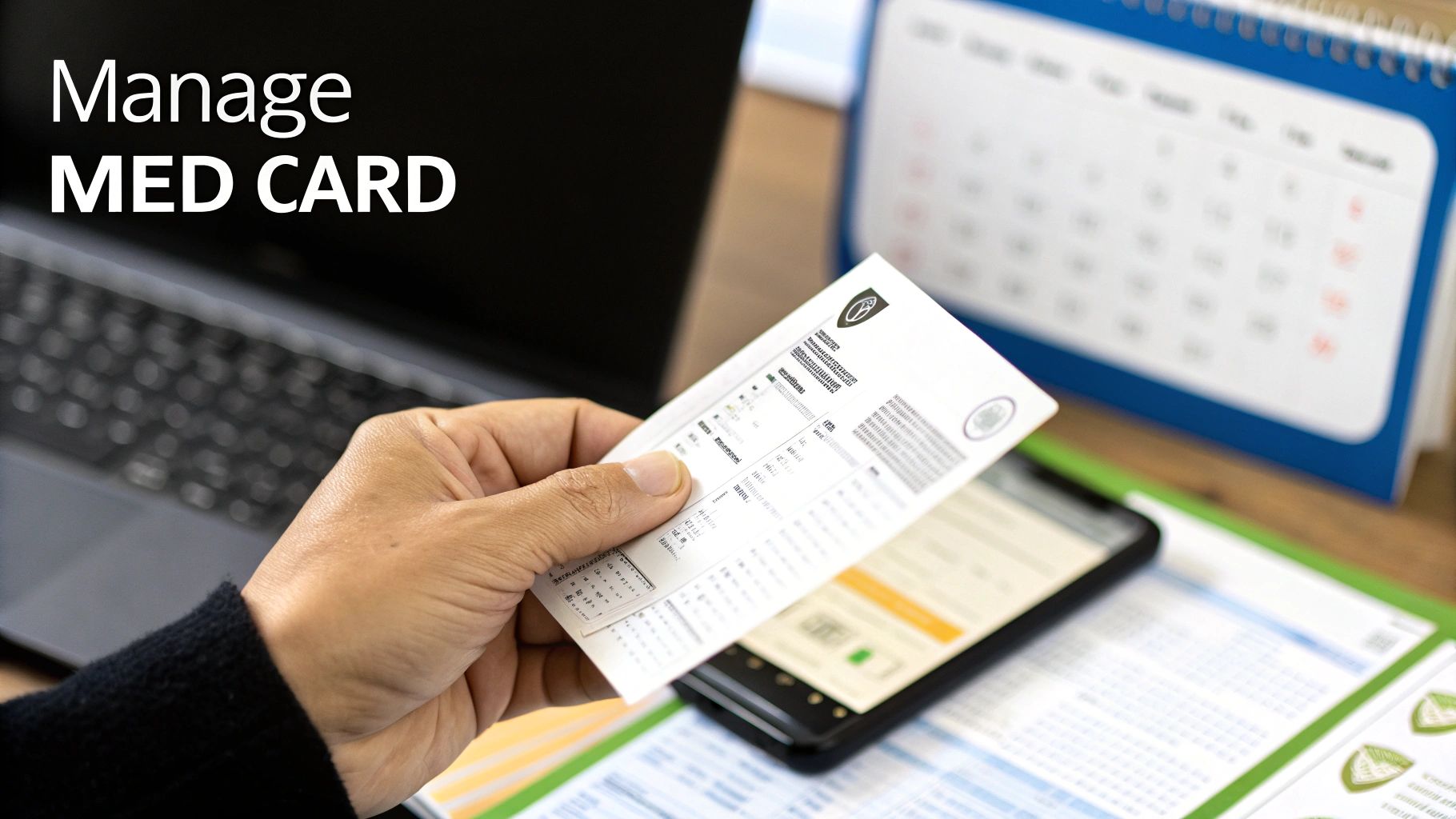
Passing the CDL physical examination is a huge milestone, but your work isn't quite done. Once the Certified Medical Examiner (CME) gives you the green light, they'll hand you a Medical Examiner's Certificate (MEC), which most drivers just call a "med card." This little card is your official proof that you're medically fit to be behind the wheel.
Think of your med card as a critical part of your professional license. You have to carry the original or a copy with you anytime you're operating a commercial vehicle. It's every bit as important as your CDL for staying on the right side of the law.
Understanding Your Certification Period
Not everyone walks out of the exam with the same expiration date on their card. The length of time your MEC is valid is based entirely on your health, as assessed by the CME. They make the final call on the duration, sticking to strict federal guidelines.
You'll typically see one of three outcomes:
- Two-Year Certificate: This is the gold standard and the maximum time allowed. It's for drivers with no health conditions that need closer observation.
- One-Year Certificate: This is pretty common for drivers who are managing a condition like high blood pressure or diabetes well. The shorter timeframe is a way to ensure they check in annually to confirm their health is still stable.
- Three-Month Certificate: A short-term certificate might be issued if you have a temporary issue or a new one that needs attention, like a high blood pressure reading. It gives you a short window to get the problem under control before the examiner will consider a longer-term certification.
It's worth noting that certain health factors can really impact how long your certificate is good for. Obesity, for instance, is a major one. A recent study found that 53.3% of commercial drivers were classified as obese, and these drivers were far less likely to get the standard two-year card because of the chronic health issues often linked to it.
Submitting Your Certificate and Staying Compliant
Getting your MEC is the first step. The second, and just as crucial, is getting it filed with your state's licensing agency. This is an administrative task that's 100% your responsibility. You have to submit a copy of your new med card to your state's DMV or equivalent agency.
This process, sometimes called "self-certification," officially links your medical status to your CDL record. If you forget or neglect to do this, the consequences are severe—it can lead to your CDL being downgraded or even suspended. Every state has its own specific procedures, so you need to know what's required where you live. For example, if you're looking to learn more about the CDL process in Alabama, you'll find they have their own set of rules for submission.
Keeping your medical certification current isn't just a good idea; it's non-negotiable. An expired med card is legally the same as not having one at all, which puts your career at immediate risk if you're stopped for an inspection.
The best advice? As soon as you get your new med card, mark the expiration date on your calendar. Plan to schedule your next CDL physical examination at least a month or two before it expires. That buffer gives you plenty of time to handle any unexpected health hiccups without letting your certification lapse and taking yourself off the road.
Common Questions About the CDL Physical
Getting your CDL involves a lot of moving parts, and the DOT physical is one of those steps that always brings up questions. It's completely normal to wonder about the specifics. After all, your medical certificate is your ticket to getting behind the wheel.
Let's clear the air and tackle some of the most common questions we hear from drivers every day.
What Happens If I Don't Pass the Physical?
First things first: failing to meet a standard during your DOT physical is almost never the end of the road for your driving career. Think of it less as a "fail" and more as a "pause." It's simply a sign that a specific health concern needs to be addressed before you can be medically cleared to drive.
The Certified Medical Examiner (CME) won't just send you on your way. They'll tell you exactly what the issue is and what you need to do next.
- Temporary Hold: If your blood pressure is too high, for instance, you'll likely be disqualified temporarily. The CME will give you a target to hit—like getting your pressure below 140/90 mmHg—before you can come back to be re-certified.
- Specialist Referral: For concerns that need a deeper look, like a potential heart condition or sleep apnea, the CME will require you to see a specialist for a full evaluation and clearance.
- Follow-Up Exam: Once you've managed the condition and have the right paperwork from your doctor, you simply return to the CME for a re-evaluation.
This process is a safety net. It's designed to make sure you're healthy enough to handle the job without putting yourself or others at risk.
Is the Urinalysis a Drug Test?
This is probably the single most common question we get, and the answer is a straightforward no. The urinalysis done during the DOT physical is purely a medical screening, not a drug test.
The CME uses the urine sample as a quick health check. They're looking for red flags that could point to underlying medical conditions.
Specifically, the sample is tested for:
- Sugar (Glucose): High levels can indicate undiagnosed or poorly managed diabetes.
- Protein: This can be a sign of kidney problems.
A DOT drug test is a completely separate requirement. That test is typically done before you're hired, randomly, after an accident, or if there's reasonable suspicion. The physical exam's urinalysis is strictly about your health.
Knowing this difference is key. The goal here is to get a quick snapshot of your metabolic health, not to screen for substances.
How Much Does the Exam Cost?
There's no single set price for a DOT physical, so the cost can vary. Most of the time, you can expect to pay somewhere between $85 and $150.
A few things can affect the final price tag:
- Your Location: A clinic in a major city might charge more than one in a rural town.
- The Facility: Prices can differ between a dedicated occupational health center, an urgent care clinic, or a private doctor’s office.
- Insurance: Don't count on your regular health insurance to cover this. Because it's a requirement for a job, it's almost always an out-of-pocket expense for you or your employer.
Your best bet is to call a few certified clinics in your area and ask for their price upfront. And while you might find clinics that offer general walk-in physicals, always double-check that they have a registered CME on staff who can perform the official DOT exam.
Can My Family Doctor Perform the Exam?
This is a big one. Your family doctor can only perform the DOT physical if—and only if—they have gone through the official training and are listed on the FMCSA National Registry of Certified Medical Examiners. This isn't optional; it's a federal requirement.
The government put this rule in place for a good reason. CMEs receive special training on the unique physical and mental demands of commercial driving. They know exactly how conditions like diabetes, vision problems, or high blood pressure can impact a driver's ability to operate a rig safely.
How to Check if a Doctor is Certified
Before you even make an appointment, you have to verify the examiner is on the list.
- Head to the official FMCSA National Registry website.
- You can search for an examiner by their name, location, or registry number.
- This simple step guarantees the Medical Examiner's Certificate you receive is valid.
If you go to a doctor who isn't on the registry, your certificate will be rejected by the state, and you'll have to pay for another exam with a certified provider. A two-minute check online can save you a ton of time, money, and frustration.
At Patriot CDL, we walk our students through every part of this process, including getting ready for the medical exam. Our team makes sure you know exactly what to expect, setting you up for success right from the start. Ready to begin your journey? Visit us at patriotcdl.com to learn more about our programs.