Typing "CDL school near me" into a search bar is more than just a query—it's the first real step toward a career with serious staying power. But finding the right school isn’t just about getting a license to pass a test. It’s about learning to safely command an 80,000-pound machine and building a solid future on the open road.
Why Your Local CDL School Matters
Choosing a CDL school close to home is a huge decision, one that lays the groundwork for your entire trucking career. It's not just about convenience. You're looking for a program that can genuinely transform you from a complete beginner into a confident, professional driver ready for anything.
Think of it this way: quality training is the bedrock of safety and skill in an industry that literally keeps our country running. This guide will give you a clear roadmap, helping you see past the simple map pin and evaluate what really counts—the quality of the curriculum, how much time you'll spend behind the wheel, and what kind of job placement support you can expect.
The Opportunity in Trucking
You’re not just looking for a job; you’re stepping into an industry that’s booming. The need for qualified truck drivers has never been higher, making a Commercial Driver's License a golden ticket to financial security.
The numbers don't lie. The U.S. driving school industry has grown into a $2.0 billion market, driven almost entirely by a massive truck driver shortage. We're talking over 80,000 unfilled positions nationwide. On top of that, the U.S. Bureau of Labor Statistics expects steady 5% growth for heavy and tractor-trailer driver jobs through 2033. That works out to about 240,300 openings every single year. The jobs are out there waiting for trained drivers.
The path to getting behind the wheel is pretty straightforward: find the right school, get the hands-on training, and then start your career.
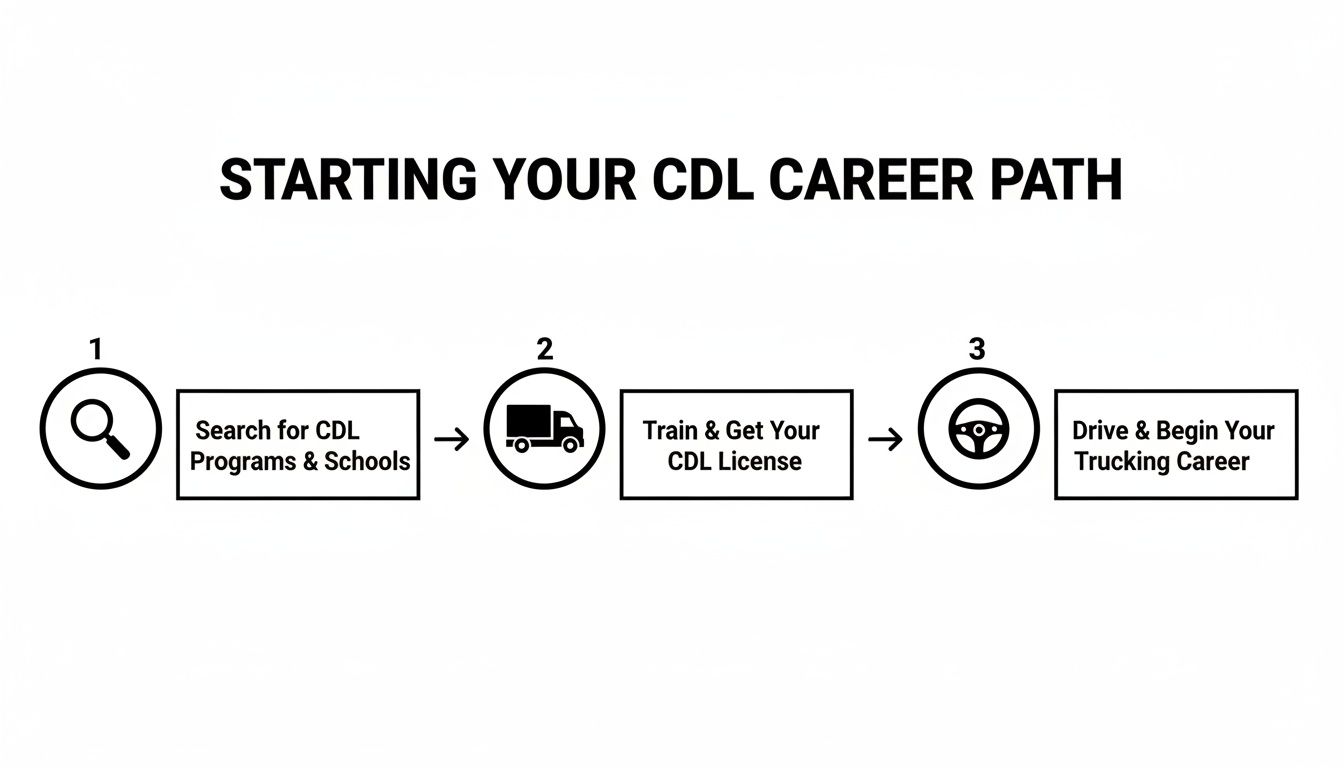
This simple flow—Search, Train, Drive—shows just how quickly a great school can get you on the road to a new profession.
Setting the Stage for Success
Your training program is where everything clicks. It’s where you develop the muscle memory and instincts you'll rely on every day. You'll learn how to handle a massive rig in tight city traffic, nail a perfect alley dock on the first try, and conduct a pre-trip inspection so thorough it could prevent a serious accident.
A top-notch program prepares you for the real world, not just the CDL exam. As you weigh your options, it's smart to see how programs are structured in your area. For instance, you can learn more about CDL training in California to get a feel for what to expect.
Let's get you ready for the road ahead.
Finding the Right CDL School in Your Area
Your journey to a CDL starts with finding a great local school, but a quick "cdl school near me" search can be overwhelming. The trick is to look past the top ads and find programs that are genuinely respected, conveniently located, and have a solid track record.
Let's start by building a shortlist. Aim for about three to five solid options to keep your research manageable and focused.
Use Your Phone to Build a Shortlist
Your best first tool is probably already in your pocket: Google Maps. Punch in "CDL training" or "truck driving schools" and you'll get an instant visual of every school in your driving radius. This is huge for figuring out your daily commute.
But don't stop at the map pins. Click into each school's profile and dive into the student reviews. What you're looking for are patterns. Are multiple people praising the same instructor? Are there consistent complaints about old equipment or a lack of help with job placement? A high star rating is nice, but the detailed comments from recent grads tell the real story.
Tell the Real Schools from the Fakes
As you start clicking through websites, you'll notice a big difference between legitimate schools and what we call "lead-generation farms."
A real school, like Patriot CDL, is an open book. Their website will show you exactly what they teach, who their instructors are, and what their facility is like. You can usually get a complete overview of what they offer by checking out their website sitemap, which lays out all their important pages.
Lead-gen sites are the opposite—they’re vague and full of stock photos. Their main goal is to get your contact info so they can sell it to a bunch of different schools. If you fill out their form, get ready for your phone to blow up. For real, accurate information, always stick to the school's official website.
Pro Tip: A genuine school website is transparent. It tells you about its programs, location, and team. If a site feels generic and just wants your name and number without giving you specifics, it's probably best to just close the tab.
The Most Important Check: FMCSA Certification
This part is absolutely critical. Since 2022, the Federal Motor Carrier Safety Administration (FMCSA) has mandated that all new drivers must complete Entry-Level Driver Training (ELDT) from a certified school. No exceptions.
Before you even think about calling a school, you must confirm they are on the official FMCSA Training Provider Registry.
This government database is the only official source. You can search by the school's name or city to see if they're listed. If a school isn’t on that registry, they are not legally allowed to provide the training you need to get your CDL. It's a simple search that saves you from wasting time and money on a program that won't get you licensed.
What to Look for in a Quality CDL Program
Okay, you've got a shortlist of local schools. Now the real work begins. It’s time to look past the shiny brochures and dig into what truly makes a CDL program worth your time and money.
Remember, the goal isn't just about passing a test. It's about launching a career and gaining the skills to keep yourself—and everyone else on the road—safe. A great program stands on three solid pillars: a practical curriculum, instructors who’ve been there, and equipment that’s ready for the real world.
A Curriculum Built for the Real World
The best training programs teach you how to be a professional driver, not just how to pass an exam. Look for a curriculum that builds a strong foundation before throwing you into complex situations. You want a school that hammers home the fundamentals.
What does that look like? It means they dedicate serious time to:
- Pre-Trip Inspections: This isn’t just a checklist. It's a non-negotiable safety routine. A good school will teach you how to spot issues that could lead to a major breakdown.
- Backing Maneuvers: You’ll be doing a lot of backing. The curriculum should include extensive practice on straight-line backing, offset backing, and the dreaded alley dock until you can do it in your sleep.
- Defensive Driving: You need to learn how to see trouble before it happens. This includes managing your space cushion in traffic, handling bad weather, and anticipating what other drivers might do.
- Real-World Scenarios: The training should cover everything from tight city streets to busy interstates, giving you a feel for the different environments you'll face.
The federal Entry-Level Driver Training (ELDT) mandate now ensures all new drivers receive training from a certified school. This has been a huge step forward, pushing schools to provide comprehensive training that covers everything from the written tests to road skills.
A strong curriculum doesn’t just teach you how to operate a truck. It teaches you how to think like a professional driver—prioritizing safety, efficiency, and compliance at all times.
Instructors and Equipment Make the Difference
The person in the passenger seat and the truck you're driving are just as critical as the lesson plan. You want an instructor with years of over-the-road experience—someone who can share stories and practical wisdom you won't find in any textbook. Those are the lessons that stick.
Ask about the student-to-instructor ratio. A lower ratio is always better. If a school puts more than 4 students in a truck at one time, your actual behind-the-wheel time will be severely limited. That hands-on practice is where the real learning happens.
The training fleet also tells you a lot. Are the trucks modern, clean, and well-maintained? Or are you learning on old equipment that doesn't reflect what you'll be driving on the job? Training on outdated trucks can build bad habits and leave you unprepared for a modern fleet.
Once you find a school that ticks these boxes, you can dive into the specific CDL programs they offer and find the perfect match for your career goals.
To help you stay organized during your search, use this checklist to compare the schools on your list side-by-side.
CDL School Quality Checklist
| Feature | What to Look For | Why It Matters |
|---|---|---|
| Accreditation & ELDT Certification | School is listed on the FMCSA's Training Provider Registry. | This is a federal requirement. Without it, you can't take your CDL test. |
| Instructor Experience | Instructors have extensive, real-world trucking experience (5+ years is a great sign). | They provide practical insights and mentorship that go beyond the textbook. |
| Student-to-Truck Ratio | 4:1 or lower. The fewer students per truck, the better. | Maximizes your time behind the wheel, which is essential for building skills. |
| Equipment Quality | Modern, clean, well-maintained trucks similar to what companies use today. | Prepares you for the equipment you'll actually operate in your career. |
| Yard & Road Training Balance | A good mix of time practicing maneuvers in a closed yard and driving on public roads. | Develops both precision skills (backing) and real-world road management. |
| Job Placement Assistance | Active partnerships with reputable carriers and dedicated staff to help with placement. | A good placement rate shows the school is trusted by the industry. |
| Transparent Pricing | All costs (tuition, fees, testing) are clearly stated upfront. No hidden surprises. | Allows you to budget accurately and avoid unexpected financial stress. |
This checklist isn't exhaustive, but it covers the most important factors that separate a diploma mill from a career-launching institution. Using it will help you make a confident and informed decision.
Comparing Costs, Scheduling, and Program Length
You can find the best training program on the planet, but it's useless if it doesn't fit your budget or your life. After you've vetted a few schools for quality, the next step is to get practical. It's time to dig into the nitty-gritty of cost, scheduling, and how long you'll actually be in training.
Honestly, these factors are just as important as the curriculum when you're searching for a "CDL school near me."
What's the Real Price Tag?
Cost is usually the biggest elephant in the room. Tuition for a Class A CDL program can swing wildly, anywhere from $3,000 to $10,000. This gap depends on the school's location, its reputation, and how comprehensive the training is. But please, don't just look at the sticker price.
A cheap program isn't a good deal if it’s loaded with hidden fees. It's absolutely critical to ask for a complete, itemized breakdown of what’s included. Does that tuition number cover your exam fees, the DOT medical exam, and permit processing? A transparent school will lay this all out for you, preventing nasty surprises later.
Finding a Schedule That Fits Your Life
Your current job, family commitments, and how quickly you want to start earning will steer you toward the right program. Most CDL schools get this and offer a few different scheduling options.
You'll generally see two main flavors:
- Full-Time Accelerated Programs: These are intense. Think of it as a 3-4 week boot camp for truckers. They're perfect if you can hit pause on everything else and dedicate yourself completely to training. The goal here is speed to employment.
- Part-Time Weekend or Evening Classes: This is the way to go if you need to keep your current job while you train. These programs stretch the curriculum over a few months, letting you learn at a more manageable pace without giving up your paycheck.
There’s no "better" option—just the one that works for you. An accelerated course gets you on the road and earning faster, but a part-time program offers stability and flexibility.
Understanding the Pace of the Program
The length of a program is really just a reflection of its intensity. That three-week course? It demands your full attention, often running eight hours a day, five days a week. It’s basically a full-time job where you're the student.
On the flip side, a part-time schedule might have you in class a few hours on weeknights and then for a longer session on a Saturday. While it takes more calendar weeks to finish, this structure is way less disruptive to your family and work life.
Here's the key takeaway: The total hours of instruction and behind-the-wheel time should be pretty similar no matter which schedule you choose. The only real difference is how those hours are spread out. Be honest with yourself and pick a pace you can stick with without burning out.
Ultimately, finding that sweet spot—a high-quality program that lines up with your budget and your calendar—is the final piece of the puzzle. At Patriot CDL, we get that everyone's situation is different, which is why we offer flexible options. We focus on giving you a clear, realistic path to your license that actually fits into your life.
Your Pre-Enrollment Action Plan
Before you ever step foot on a training yard, there are a few things you need to get squared away. Think of this as your prep work—knocking out these items now means you'll walk into the admissions office ready to go, without any last-minute surprises or paperwork headaches holding you up.
This isn't just busywork; it's a required part of the process. You'll need to get your learner's permit, pass a specific medical exam, and have your documents in order. Let’s walk through what that looks like.
Nailing the Commercial Learner's Permit
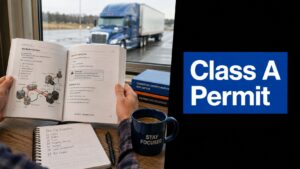
The first real hurdle is getting your Commercial Learner's Permit, or CLP. You simply can't get behind the wheel of a commercial truck without one. To get it, you'll have to pass a written knowledge test at your local DMV that covers general knowledge, air brakes, and combination vehicles (for a Class A license).
Don't just wing this test. It requires some real study time with your state's Commercial Driver's Manual. I've seen plenty of people have to retake it because they didn't take the prep seriously.
Focus your study time on these key areas:
- Vehicle Inspection: You need to know the pre-trip inspection process inside and out.
- Basic Vehicle Control: Get comfortable with the concepts of shifting, proper braking, and how to handle wide turns.
- Sharing the Road: This is all about managing space, spotting hazards, and communicating your intentions to other drivers.
Give yourself at least a week to really dig into the manual. For a deeper dive, there are great resources available that explain everything you need to know about getting your commercial learner's permit and the specific tests you’ll face.
Passing the DOT Medical Exam
Every single commercial driver has to be medically certified. This isn't your average physical; it’s a specific exam conducted by a professional listed on the National Registry of Certified Medical Examiners. The whole point is to make sure you're physically capable of handling the demands of driving a big rig.
The examiner will check your vision, hearing, blood pressure, and general health. Be honest about any medical conditions or medications. Things like high blood pressure can often be managed, but trying to hide a condition will get you disqualified fast.
Pro Tip from the Field: Lay off the coffee and salty snacks the morning of your exam. It can help keep your blood pressure reading from spiking, potentially saving you the hassle of a re-test.
Gathering Your Essential Documents
Once you have your CLP and medical card, the last piece of the puzzle is your paperwork. Schools need to verify who you are and that you’re eligible to train. It’s a simple but non-negotiable step.
Make sure you have these documents handy:
- Your valid driver's license
- Your Social Security card
- Proof of U.S. citizenship or legal residency (a birth certificate or green card works)
- The DOT medical certificate you just earned
Having this stuff organized and ready to go makes the application process a breeze. You can get signed up and lock in your spot in the next class without any delays. Getting these ducks in a row first is the smartest way to kick off your CDL journey.
Critical Questions to Ask Before Enrolling
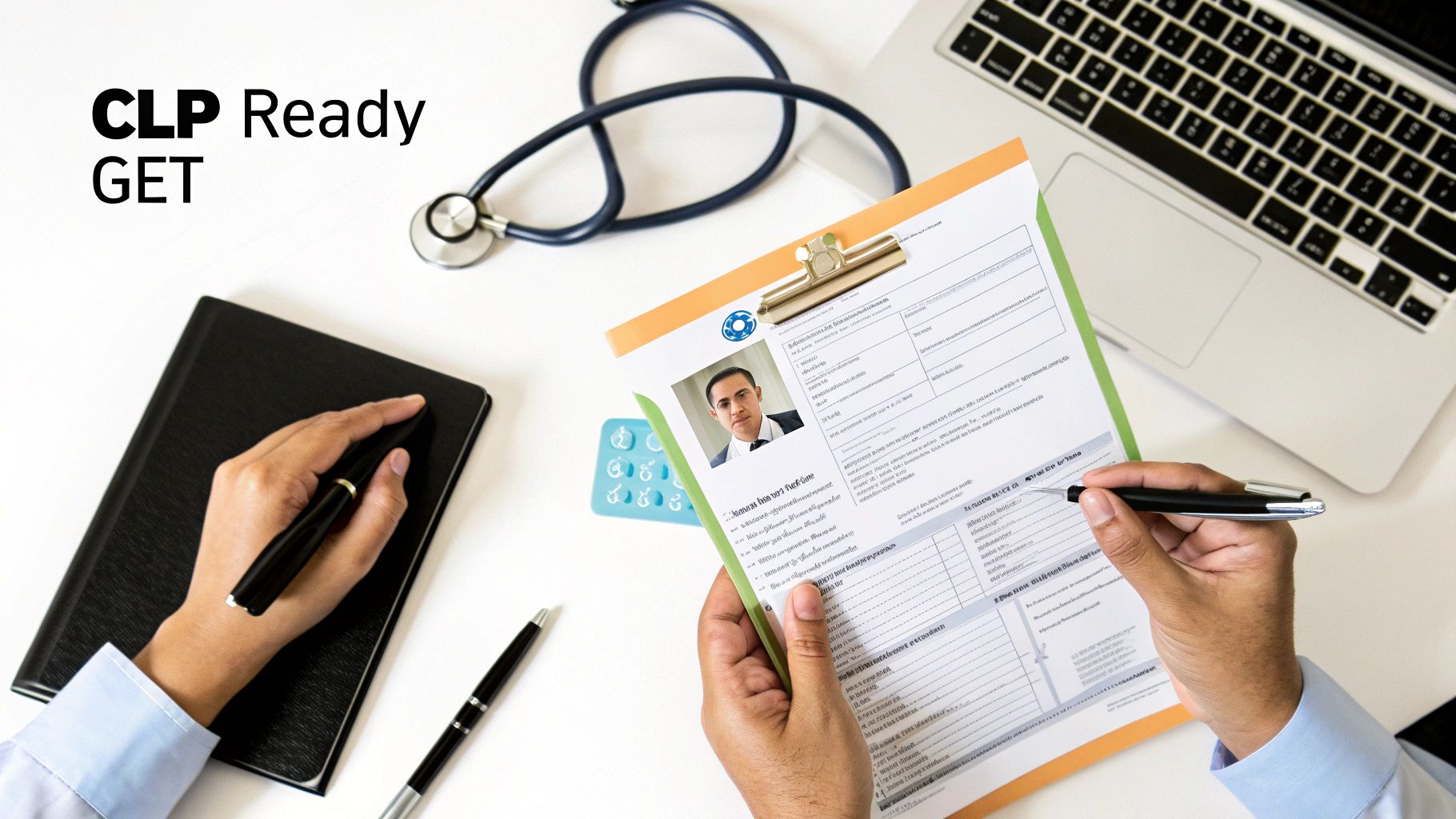
The glossy brochures and slick websites tell you one side of the story. The real story comes out when you start asking direct, pointed questions.
Walking into an admissions office armed with the right list of inquiries is the single best way to protect your investment and make sure you're picking the right school. It's time to dig deeper than just tuition costs and class start dates. These questions will give you a clear, unfiltered picture of what you can actually expect.
To help you get the full picture, we've put together a checklist of essential questions to ask when you're talking to a school representative. Don't be shy—a good school will have good answers.
Key Questions for CDL School Representatives
| Category | Question to Ask |
|---|---|
| Instructor Experience | Are all instructors former professional drivers with real-world OTR experience? |
| Class Size & Drive Time | What’s the maximum number of students in a truck at one time? |
| Training Breakdown | How many actual hours will I spend behind the wheel on public roads vs. just in the yard? |
| Equipment Quality | What kind of trucks will I be training on? Are they the same type used by major carriers? |
| Exam Retests | What happens if I don't pass the CDL exam on the first try? What’s your retest policy? |
| Endorsements | Which endorsements (Hazmat, Tanker, Doubles/Triples) are included in the training program? |
| Job Placement | What is your verified job placement rate for graduates in the last 6 months? |
| Carrier Partnerships | Which specific trucking companies do you partner with for recruitment? |
| Hidden Costs | Are there any extra fees for drug screens, physicals, or licensing that aren't in the tuition price? |
| Career Support | Do you actively help with job applications and interview prep after I graduate? |
These questions cut through the sales pitch and get to the heart of what matters: the quality of the training and the real-world value it provides.
Getting straight answers on these points is non-negotiable. A reputable school will be transparent about behind-the-wheel time and instructor qualifications because they're proud of the training they provide.
When you ask a school, "What is your verified job placement rate for recent graduates?" you're not just asking a question. You're testing their confidence in their own program. Follow up by asking which specific carriers they partner with and if they'll actually help you with applications.
This is how you uncover the true value and find a partner for your new career, not just a place to get a license.
Frequently Asked Questions About CDL Schools
Diving into the world of commercial driver training always brings up a ton of questions. We get it. Here are some straightforward answers to the things we hear most often from folks trying to find the right CDL school.
How Long Does It Take To Get a CDL?
The timeline really hinges on the type of program you choose. If you can go full-time, an accelerated course can have you licensed and ready to hit the road in as little as three to four weeks.
On the other hand, part-time or weekend programs are designed for people juggling other jobs or responsibilities. These stretch the training out over several months, giving you the flexibility you need to make it work.
Can I Get Financial Aid for CDL School?
Absolutely. There are quite a few avenues to explore for funding your CDL education. Many schools offer their own in-house payment plans, and others have partnerships with third-party lenders.
For veterans, the GI Bill® is often a fantastic option. Don't forget to look into state workforce development programs and grants, which can sometimes cover a significant chunk of the tuition for those who qualify.
Your best first step is always to talk directly with the school’s admissions or financial aid office. They know the ins and outs of every program they offer and can walk you through finding the best fit for your situation.
What Happens If I Fail the CDL Exam?
First off, don't panic—it happens. Failing the exam isn’t the end of your trucking career before it starts. Any good school will have a clear policy for retesting.
Typically, they'll give you more practice time behind the wheel or in the classroom and help you schedule a retake. It's smart to ask about their specific retesting process and any potential fees upfront so there are no surprises. A solid program prepares you to pass, but it also has a plan for you if you don't succeed on the first try.
Good preparation also means acing the written exams. You can find some great study materials to help you master the CDL general knowledge test and walk into test day feeling confident.
Can My CDL Be Transferred to Another State?
Yes, it can. A Commercial Driver's License is a federal license, which means it’s recognized in all 50 states.
If you move, you won't have to go through training or retake the skills test all over again. You'll just need to follow the local DMV's process for transferring your existing license to your new home state.
Ready to stop searching and start driving? At Patriot CDL, we provide the hands-on training and expert guidance you need to launch your career with confidence. https://patriotcdl.com