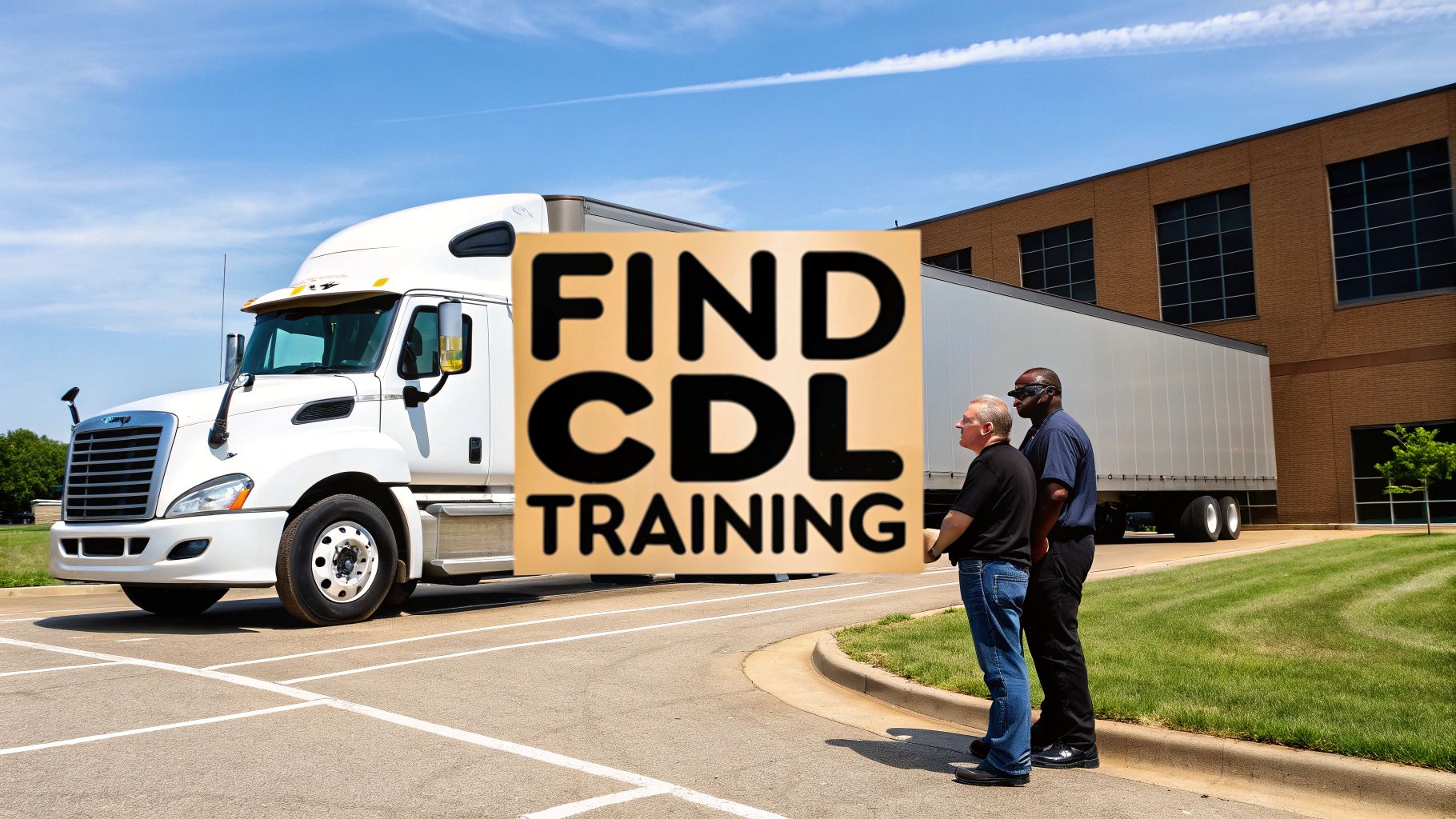
Deciding where to get your Commercial Driver's License isn't just about passing a test. It’s the first real investment you'll make in your trucking career. That "CDL training near me" search you just ran is a critical first step, because the right school will open doors to great employers and build safety habits that will protect you for a lifetime.
Think of it this way: this isn't an expense. It's the foundation for a secure, profitable future on the open road.
Why Your CDL School Choice Matters So Much
The school you choose has a direct impact on your career from day one. This is about so much more than a certificate; it's about gaining real, practical skills that make you a professional driver that companies are eager to hire. A top-tier program gives you the hands-on experience you need to feel truly confident behind the wheel.
And that's not just my opinion—the industry numbers back it up. The demand for well-trained drivers is fueling serious growth in the CDL training world. Market analysis shows the driving school industry has been growing steadily, with revenues expected to hit $2.0 billion by 2025. Even through the economic mess of 2020, the industry still grew by over 3%. That tells you just how resilient this field is and how desperate the supply chain is for qualified drivers. For a deeper dive, you can check out the full industry report on IBISWorld.com.
It's About More Than Just Passing the Exam
A great truck driving school is obsessed with one thing: your success after you graduate. Their mission is to create safe, competent drivers that the best carriers want to hire right away.
That means they have to deliver on a few key promises:
- Serious Behind-the-Wheel Time: You can't learn to drive an 80,000-pound rig from a manual or by doing laps in a parking lot. Good schools get you out on actual roads, dealing with real traffic.
- Instructors with Real-World Miles: Nothing beats learning from someone who's spent years, or even decades, living the life. They give you the kind of insights and tricks of the trade you'll never find in a book.
- Modern, Relevant Equipment: You want to train on the same kind of well-maintained, modern trucks you'll be driving in your first job. It makes the transition from student to employee seamless.
Your initial training is the single biggest factor in shaping your safety habits. A school that emphasizes a culture of safety doesn't just help you pass the exam; it prepares you for a long, accident-free career.
How Your School Choice Affects Your Paycheck
The quality of your training is directly tied to your first job offers and your starting salary. It’s that simple. Top carriers actively recruit from schools with a reputation for producing skilled, road-ready graduates.
Choosing a well-respected school can lead directly to:
- Better starting pay from day one.
- Access to dedicated job placement teams who have connections you don't.
- A shot at working for premier companies that offer better benefits, newer trucks, and more desirable routes.
Opting for an accelerated yet comprehensive program, like the one we offer at Patriot CDL, ensures you're not just licensed but truly prepared. We focus on intensive, hands-on instruction but offer the flexibility to get you on the road earning a paycheck faster—without ever cutting corners on the skills that actually matter. It’s the difference between just getting a CDL and truly launching a career you can be proud of.
How to Find Reputable Local CDL Schools
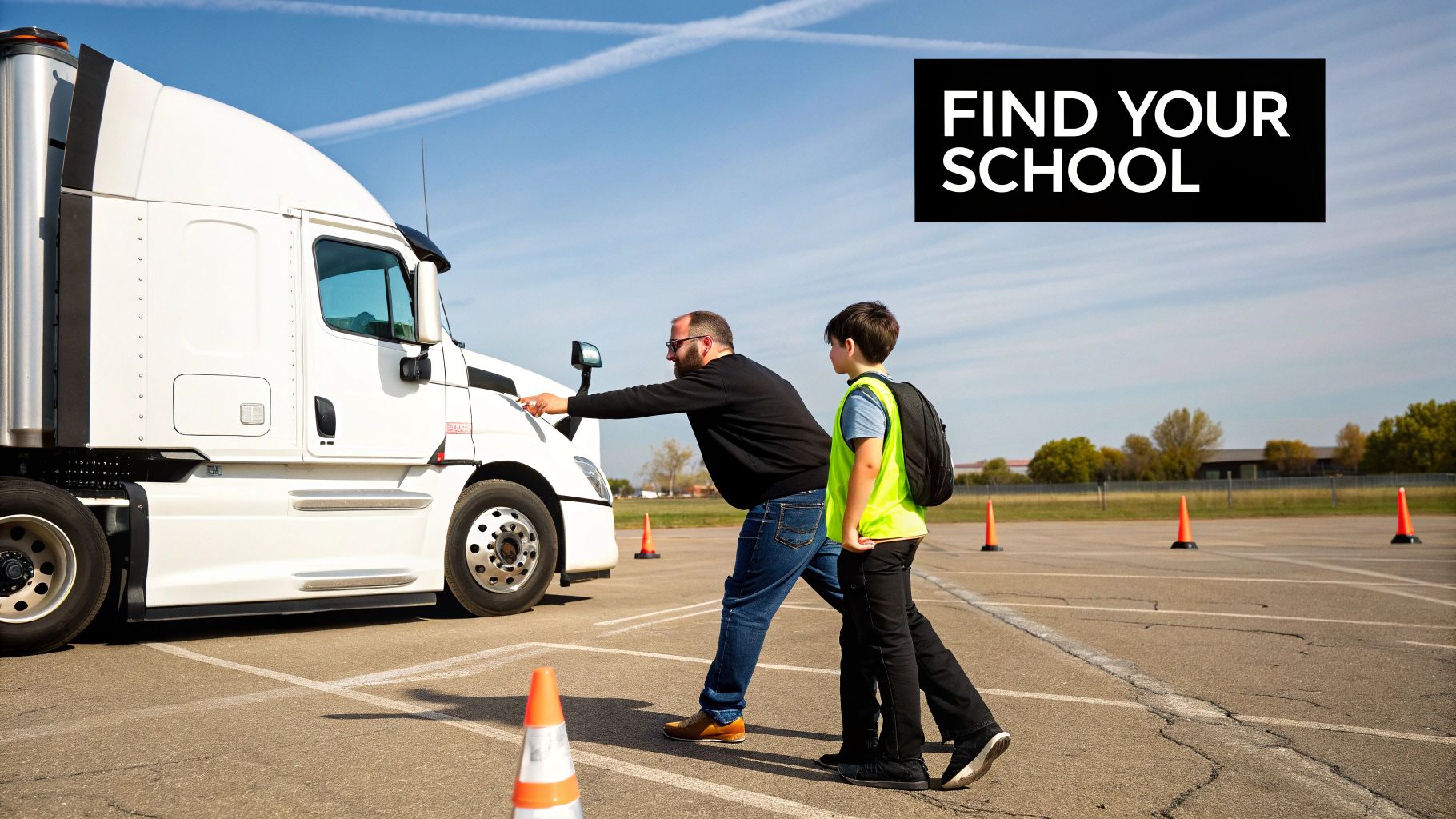
Typing "CDL training near me" into a search bar is easy. The hard part is sifting through those results to find a school that’s actually worth your time and money. A little bit of smart, organized research upfront will help you create a solid list of programs to really dig into.
Don't just stick with that first generic search. Get specific right away to narrow the field. If you’re working a full-time job, try searching for "part-time Class A CDL training" or "weekend CDL programs near me." This simple tweak instantly eliminates schools that can't accommodate your schedule.
Tapping Into Official Resources
While online reviews are helpful, your first stop should be official, unbiased sources. State and federal organizations keep lists of accredited schools, and these databases are your best bet for finding programs that meet strict quality and compliance standards.
Here’s where I always tell people to look first:
- Your State's DMV Website: Most DMV sites will have a list of approved third-party CDL training providers. This is the quickest way to confirm a school is licensed and in good standing with the state.
- The Commercial Vehicle Training Association (CVTA): The CVTA is a major industry player that pushes for high standards in driver training. Their member list is a goldmine for finding reputable schools.
- Local Workforce Development Offices: These government offices often connect people with vetted vocational schools for high-demand careers. They’re a fantastic resource and might even have info on grants to help pay for tuition.
Once you’ve got a short list of schools, do a quick self-check. Before you even pick up the phone, make sure you meet the basic state and federal requirements to get a CDL in the first place. You can find a clear breakdown of the essentials in our guide to common CDL requirements.
Uncovering Honest Student Feedback
Official lists tell you a school is legitimate, but they don't tell you what it's really like to be a student there. For that, you need to hear directly from the people who’ve gone through the training. This is where you get the unfiltered truth.
Nothing beats the raw feedback from a recent graduate. They'll tell you what the school's website won't—like how much behind-the-wheel time they really got or how helpful the instructors were when they struggled with a specific maneuver.
Dive into online communities where drivers hang out. Trucker forums, subreddits like r/Truckers, and Facebook groups for new drivers are packed with honest opinions. When you see a school from your list mentioned, look for patterns. One person’s bad experience could be a one-off, but if you see five different people complaining about the same thing, that’s a huge red flag.
By cross-referencing official sources with this kind of real-world feedback, you’ll build a much more reliable list of local CDL schools worth looking into.
Evaluating and Comparing CDL Programs
You've got a shortlist of schools from your "CDL training near me" search. Now comes the most critical part: figuring out which one will actually turn you into a safe, hireable professional driver. This is where you have to look past the sticker price and start asking the hard questions.
Honestly, the cheapest school is rarely the best deal. A low-cost program that skimps on actual road time is a waste of money. The real goal is to find a school that makes you feel confident and capable behind the wheel—the kind of new driver that top-tier companies are eager to hire. That means you need to dig into the details of what they teach and, more importantly, how they teach it.
Beyond the Price Tag: What Really Matters
The quality of your training experience boils down to a few essential elements. When you call up a school or go for a visit, you need to be ready to evaluate them on more than just tuition. A truly good program will be proud to share these details, so don't be shy about asking.
Here’s what I always tell people to look for:
- Behind-the-Wheel (BTW) Hours: This is the big one. Ask for the exact number of hours you will spend driving the truck on actual public roads—not just puttering around a parking lot. More time on the road means more confidence on test day and during your first week on the job. It's non-negotiable.
- Student-to-Instructor Ratio: How much personal attention will you really get? A smaller ratio, especially for the in-truck training, is crucial. A 1-on-1 or 2-on-1 ratio in the cab is ideal. If a school tells you they put three or four students in the truck for a driving session, that's a red flag. You'll spend most of your time just watching.
- Instructor Experience: Who is actually teaching you? Ask about their background. Are they former drivers with years of real-world, over-the-road experience? Learning from someone who has lived the life provides insights you'll never find in a textbook.
- The Equipment: Take a look at their training fleet. You want to learn on modern, well-maintained trucks that are similar to what you'll be operating once you're hired. Learning on old, beat-up equipment can teach you bad habits.
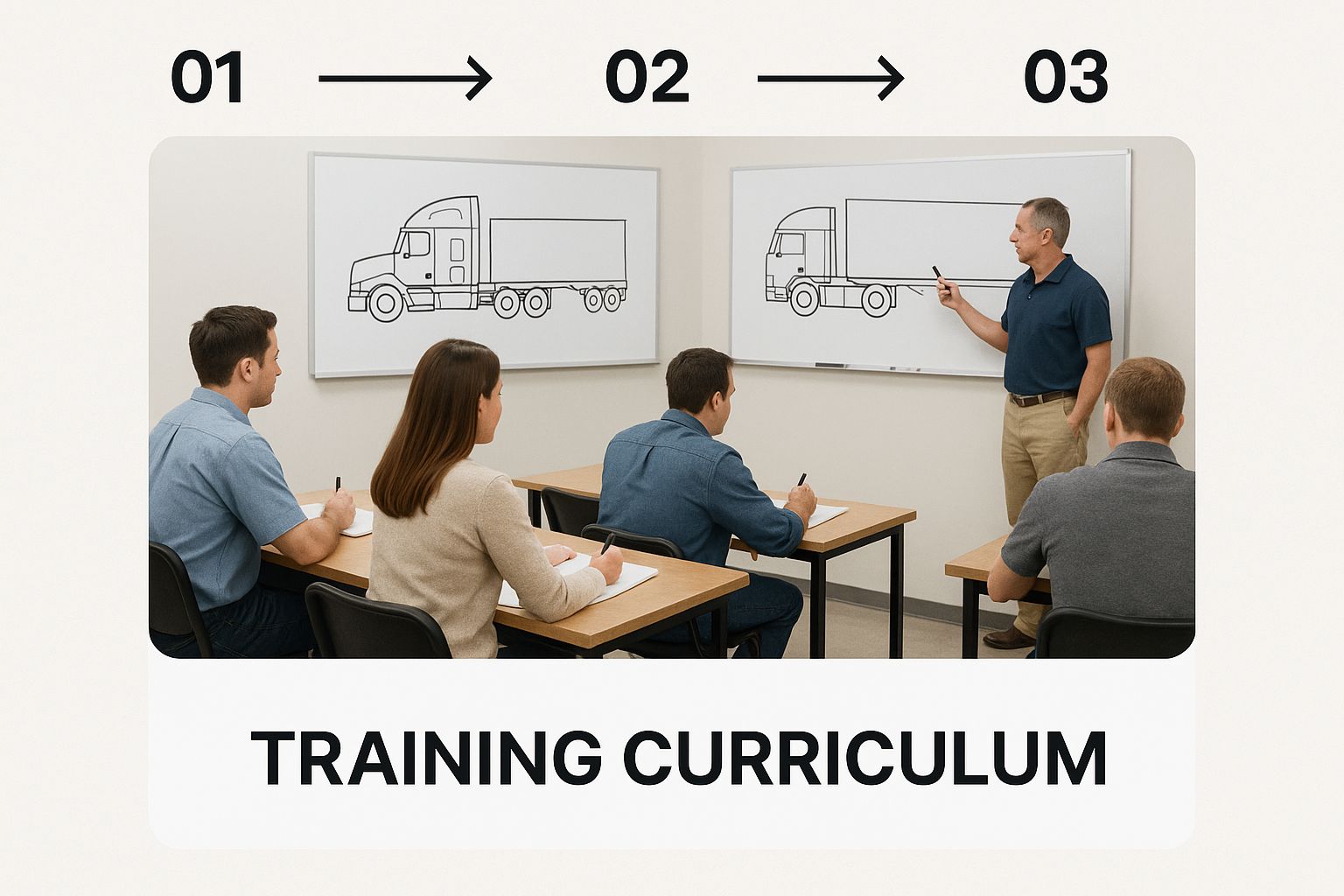
The classroom is where you'll build your foundation, mastering the knowledge needed to pass the written exams before you ever climb into the cab.
To keep your research organized, I recommend creating a simple comparison chart. It helps you see everything side-by-side and make a truly informed decision.
Key Comparison Points for CDL Schools
| Evaluation Criteria | School A | School B | School C |
|---|---|---|---|
| Tuition Cost (Total) | |||
| Behind-the-Wheel Hours (On-Road) | |||
| Student-to-Instructor Ratio (In-Truck) | |||
| Instructor Experience (Years OTR) | |||
| Job Placement Assistance (%) | |||
| Included Fees (Permit, DOT Physical, etc.) |
Using a table like this makes it much easier to spot the program that offers the best overall value, not just the lowest initial price.
Look at What You'll Actually Be Learning
A solid CDL program strikes a fine balance between classroom theory and hands-on, practical driving. The classroom is essential for learning the rules of the road and getting you ready for those written tests. For some extra help, check out our guide on how to ace the CDL general knowledge test.
But let's be real—the true learning happens when you're in the driver's seat.
A comprehensive program will be structured to get you job-ready. For example, some accelerated programs can get you fully prepared for a Class A license with all endorsements in about six weeks. This often involves around 240 hours of combined training, covering everything from on-road driving to complex yard maneuvers and in-depth classroom work.
The best schools don't just teach you how to pass a test; they teach you how to be a professional truck driver. This means a heavy focus on safety protocols, mastering pre-trip inspections, and knowing how to handle bad weather.
Don't Get Blindsided by Hidden Costs
Finally, before you sign anything, get a clear, itemized list of every single thing the tuition fee covers. A low upfront price can be incredibly misleading if you get hit with a bunch of extra fees down the line.
Make sure you ask if the following costs are included:
- DOT physical and drug screen fees
- Permit and licensing fees
- Exam re-test fees (it happens!)
- Required books and materials
A transparent school like Patriot CDL will give you a clear cost breakdown from the start, so you know exactly where your money is going. Choosing a program with flexible and accelerated options helps you get on the road and earning a paycheck faster, giving you a much better return on your investment.
Choosing the Right CDL and Endorsements
Before you even start Googling "CDL training near me," you need a roadmap for your career. The world of trucking is incredibly diverse, and the license and endorsements you get will literally steer your future. Getting the right credentials from day one is a huge time-saver and puts you on the fast track to better pay.
The first big decision is your license class. Think of it as the key that unlocks a specific type of rig.
Class A CDL: This is the big one—the most versatile license you can get. It lets you operate combination vehicles (like a tractor-trailer) with a Gross Combination Weight Rating (GCWR) of 26,001 lbs. or more, as long as the trailer you’re towing is heavier than 10,000 lbs. If you're dreaming of hitting the open road with a big rig, this is your ticket for most over-the-road (OTR) and regional jobs.
Class B CDL: This license is your go-to for single, heavy vehicles. We're talking straight trucks, dump trucks, concrete mixers, and city buses. The rule here is a single vehicle with a Gross Vehicle Weight Rating (GVWR) of 26,001 lbs. or more, or if you're towing, the trailer can't be over 10,000 lbs.
Class C CDL: This is a more specialized class. It covers vehicles that don't fit into A or B but are either built to carry 16 or more people (including you, the driver) or are used to transport hazardous materials that legally require a placard.
While many people immediately think of long-haul trucking, a Class B license opens up a ton of local jobs that get you home every night. Some hands-on programs, for example, focus specifically on preparing students for careers driving buses or dump trucks, mixing classroom theory with crucial time behind the wheel. You can see how some colleges, like GTCC, structure these specialized CDL programs.
Unlocking Higher Pay with Endorsements
Now, let's talk about leveling up. Endorsements are special certifications you add to your CDL. They prove you have the specific skills and knowledge to handle different types of cargo or equipment, and they are a direct line to better-paying, more specialized jobs.
Think of endorsements as career accelerators. Each one you add to your license makes you a more skilled, valuable, and flexible driver. This immediately widens your job options and boosts your earning power. An endorsement like Hazmat (H), for example, can easily add $10,000 or more to your annual income.
Here are the key endorsements you should seriously consider:
- H – Hazardous Materials (Hazmat): This is essential if you want to transport anything classified as flammable, explosive, or otherwise dangerous. It requires a background check but pays very well.
- N – Tanker: If you plan on hauling liquids or gases in a tanker truck, you'll need this one. It’s a completely different driving experience.
- T – Doubles/Triples: This allows you to pull two or three trailers at once. You see these rigs a lot in certain parts of the country, and it's a skill that carriers pay a premium for.
Choosing a school like Patriot CDL that integrates accelerated training for these key endorsements is smart. It means you graduate not just with a license, but with the credentials needed to qualify for the best jobs right from the start.
Making It Official: How to Enroll and Pay for Your CDL Training

So, you've done your homework, vetted the local schools, and picked a winner. Excellent. Now it's time to shift gears from researcher to student. The final stretch involves some official paperwork, a couple of quick medical checks, and clearing what for many is the biggest hurdle: figuring out how to pay for it all.
Before you can officially claim your spot in the class, every reputable school will have you clear a few mandatory checkpoints. These aren't just school policies; they're federal requirements for anyone who wants to get behind the wheel of a commercial truck. You’ll need to pass a Department of Transportation (DOT) physical and a drug screening, which confirm you’re medically fit for the job's demands.
The First Real Step: Your Commercial Learner’s Permit
The most critical prerequisite is securing your Commercial Learner's Permit (CLP). Think of it as your golden ticket—you legally cannot start any hands-on, behind-the-wheel training without one. This permit is what allows you to practice driving a rig on public roads, as long as a licensed instructor is in the passenger seat.
To get your CLP, you'll need to pass a series of written knowledge tests at your local DMV. Any good school will provide solid classroom instruction and study materials to get you prepped. If you want a head start, check out our guide on how to get your CDL permit in three simple steps. Nailing this is a huge first milestone on your journey.
Tackling the Tuition Hurdle
Let's talk about the elephant in the room: cost. The sticker price of CDL training can seem intimidating, but don't let it derail your plans. View this as an investment in a high-demand career, not just an expense. There are more ways to make quality training affordable than you might think.
Paying for school isn't a one-size-fits-all deal. The key is to explore every single option—from company sponsorships to state grants—to find a path that fits your financial situation without compromising on the quality of your education.
Let's break down the most common funding sources you'll find when looking for "cdl training near me."
Exploring Your Payment and Funding Options
Many aspiring drivers are genuinely surprised by how many resources are out there to help cover tuition. It’s very likely you’re eligible for at least one of these programs.
- Company-Sponsored Training: This is a popular route. Some large trucking companies will pay for your training upfront. The catch? You commit to driving for them for a set period, usually around a year. It's an incredible way to get trained with zero out-of-pocket cost, but make sure you read the contract carefully and understand the terms of your commitment.
- Federal Financial Aid (FAFSA): If your chosen school is an accredited institution, you might qualify for federal grants and loans. The first step is filling out the Free Application for Federal Student Aid (FAFSA).
- Veterans' Benefits: If you've served, your GI Bill® benefits are a fantastic resource for funding your CDL education. At Patriot CDL, we’re proud to work with veterans and help them use the benefits they’ve earned to start a new career.
- State and Local Grants: Don't overlook local resources. Programs like the Workforce Innovation and Opportunity Act (WIOA) are designed to provide funding for training in high-demand fields like trucking. Your local workforce development office is the best place to start to see if you qualify.
By looking into all these avenues, you can build a financial plan that makes your trucking career a reality. Any good school should have an admissions team that knows this process inside and out and is ready to help you navigate your options.
Answering Your Top Questions About CDL Training
Making a career change is a big deal, and when that change involves getting behind the wheel of a big rig, you're going to have questions. It's only natural. Let's tackle some of the most common ones we hear from people just like you, with straight-up answers based on what really matters out on the road.
How Long Does It Really Take to Get My CDL?
This is probably the first question everyone asks, and the answer is: it depends on the program and your own schedule. For a full-time, immersive Class A program, you're typically looking at anywhere from three to seven weeks.
But what if you can't just drop everything? That's where part-time or weekend classes come in. They cover the exact same material but stretch it out over a few months, letting you learn without quitting your day job. For those who want to fast-track their new career, accelerated programs, like the ones we offer at Patriot CDL, can get you licensed and ready for hire in less than a month.
What's the Single Most Important Thing to Look for in a Trucking School?
Cost is a factor, and location matters, but the one thing you absolutely cannot compromise on is behind-the-wheel (BTW) time. I can't stress this enough. Simulators are fine for practice, and classroom learning is necessary, but nothing—absolutely nothing—replaces real-world driving experience.
The most valuable part of your training won't happen in a classroom. It will be on an actual highway, with a seasoned instructor in the passenger seat, guiding you through the same traffic, merges, and backing situations you'll face every day as a professional driver.
When you talk to a school, don't be shy. Ask them for the specific number of hours you'll spend driving on public roads. Dig deeper and ask about the student-to-instructor ratio in the cab. The more direct, one-on-one coaching you receive, the faster you'll build the skill and confidence needed to succeed.
Should I Find a Trucking Job Before I Go to School?
Nope, you don't need a job offer in hand before you even start training. In fact, it's usually the other way around. One of the biggest perks of choosing a quality school is tapping into their job placement support.
Reputable schools are trusted by carriers. They've built solid relationships with local, regional, and even national trucking companies that are always on the lookout for well-trained, safe drivers. These companies actively recruit from schools they know produce quality graduates.
When you're checking out a school, make sure you ask them about:
- Their verifiable job placement rate—ask for the numbers.
- Which specific companies hire their students.
- What kind of support they offer, like help polishing your resume or prepping for interviews.
A school with a strong placement rate isn't just a statistic; it's proof that the industry respects the quality of their training.
Can I Get CDL Training Part-Time or on Weekends?
Absolutely. Many schools get that you have a life—a job, a family, and other commitments. That's why flexible scheduling is becoming more common. When you're searching for "CDL training near me," try adding phrases like "evening classes" or "part-time CDL program" to your search to find schools that can work with your schedule.
These programs deliver the same top-notch curriculum as their full-time counterparts; they just spread it out. This lets you make a smart investment in your future career without having to sacrifice your current paycheck. Just be sure to talk directly with the school's admissions team to confirm their exact schedule and see if it's a good fit.
Ready to stop wondering and start driving? The team at Patriot CDL is here to give you straight answers and help you find an accelerated, hands-on program that aligns with your goals. It’s time to get the training you need for a long and successful career on the open road. Visit us online to learn more.
Article created using Outrank